
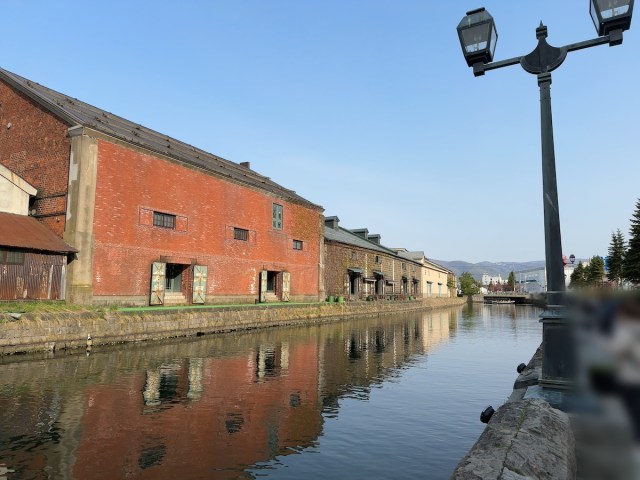
Our reporter takes a northern pilgrimage to an important port city in Hokkaido in search of runaway trains, skewered sweet dumplings, and more.
Our travel-and-anime-loving Japanese-language reporter Saya Togashi has recently been immersed in Golden Kamuy, a historical fiction manga originally serialized from 2014 to 2022 and adapted into an ongoing TV anime series as well as a live-action film earlier this year. Set mainly on the northern island of Hokkaido after the Russo-Japanese War (1904-1905), its story follows war veteran Saichi Sugimoto and local Ainu girl Asirpa on their race to find a hidden stash of gold before the 7th Division of the Imperial Japanese Army.
One of the reasons that Saya loves the series so much is because author Satoru Noda conducted extensive research in order to accurately depict everything from indigenous Ainu cultural traditions to contemporary city backgrounds. In particular, the Hokkaido city of Otaru is noted to be close to Asirpa’s kotan (village) as well as the base of operations for First Lieutenant Tsurumi of the 7th Division, and Noda actually modeled many locations depicted in his manga on real-world buildings and locales in Otaru.
That alone was enough for Saya to justify a trip to Otaru to visit some of the places that inspired Noda. Read on to learn more about her discoveries, though please note that there are small spoilers for the manga/anime ahead.
● Otaru Canal area
As the most famous tourist spot in the city, perhaps it’s no surprise that the Otaru Canal appears time and time again within Golden Kamuy. While today the canal is considered a romantic place to stroll with many preserved historical warehouses and structures lining the embankment, it serves as the approximate location for multiple action scenes in the manga.
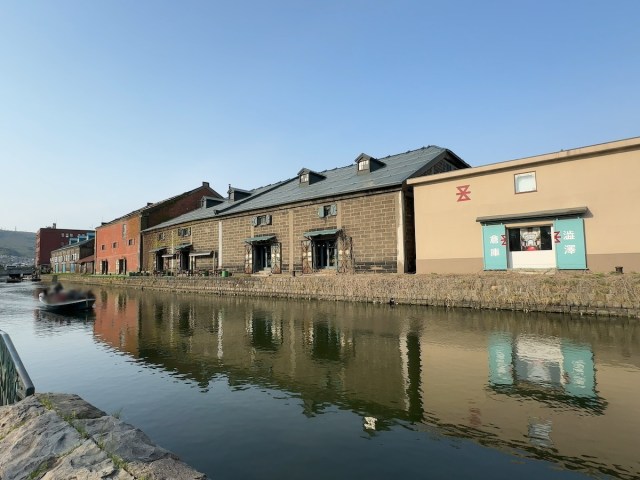
For instance, there’s a scene in Volume 4 of the manga when Tsurumi is testing out some newly imported guns. In the background is an old warehouse with a distinctive shachihoko [a mythical sea monster with a dragon’s head and carp’s body] roof ornament. These days, this building serves as the Otaru Museum of History and Nature. A century ago, you could board a boat directly from the wharf on the canal there to go out to sea.
It’s also in this area where Sergeant Tsukishima discards the lock of his former lover Igogusa’s hair that he received from Tsurumi in Volume 15. This scene is important because it marks the point when he becomes emotionally hardened, ready to forget his past and move forward by serving loyally under Tsurumi. However, he can’t completely let go of his sympathy for the suffering of others, and his original empathetic persona still manifests at times when interacting with certain people.

Finally, the Otaru Canal marks the place where the Lightning Bandit fled while being pursued by Second Lieutenant Koito in Volume 11. It’s thought that the front of the Former Ohie Warehouse, pictured below, is where the Lightning Bandit and his lover, O-gin the Pit Viper, finally meet their ends. Saya particularly appreciated this scene when she first read it because it adds some depth to Tsurumi’s villainous character, especially once the contents of the Pit Viper’s bag are revealed and he remarks that the couple must have been truly in love.
Speaking of Tsurumi, his base is supposed to be not far from the canal, though the building itself is modeled on the open-air museum called the Historical Village of Hokkaido, which is located on the edge of Sapporo City.
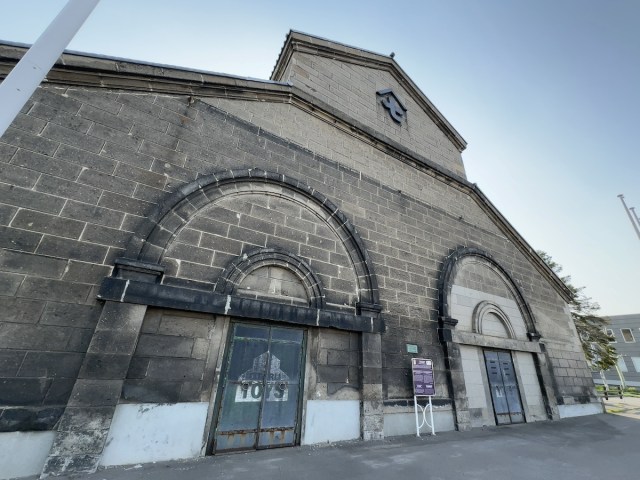
● Hyakujusan Bank Otaru Branch
In Volume 4, former Shinsengumi Vice-Commander and current leader of the Abashiri Prison convicts, Toshizo Hijikata, robs a bank with his men in order to retrieve his famous sword Izuminokami Kanesada. The bank depicted is based on the Former Otaru Branch of Hyakujusan [113] Bank, which is about a five-minute walk from the Otaru Canal area. Nowadays, the building is a popular retail store called the Otaru Romankan, which sells various kinds of glass decorations and accessories.
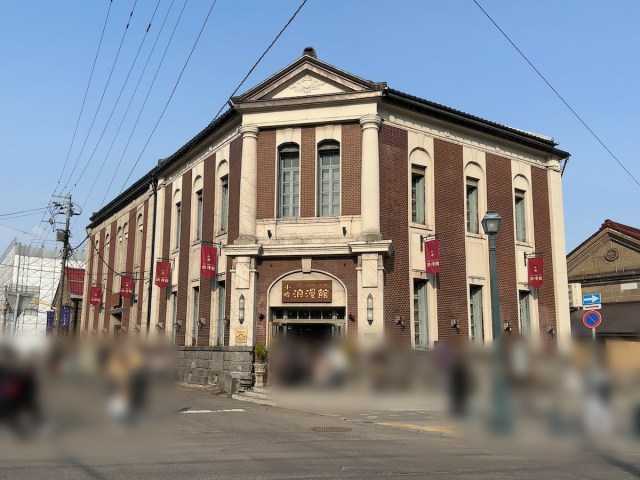
These twin windows look exactly like the spot in the scene when Hijikata and Tsurumi first cross paths.
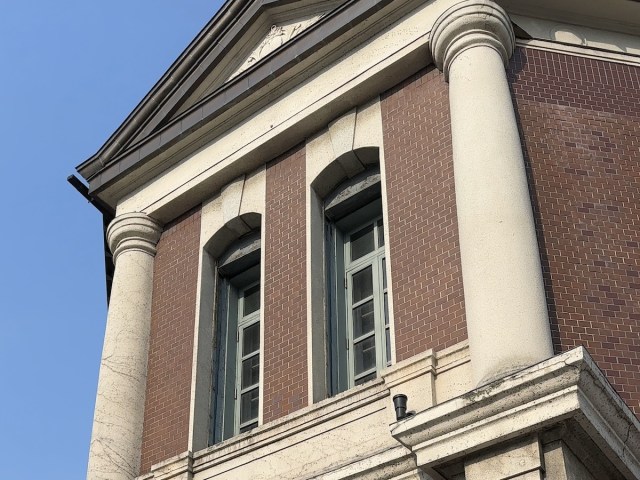
Some historical photos of the building in its former bank days remain, which depict its exterior coloring and distinctive arch-shaped entrance as in Photo 7 below. The manga, however, seems to draw its inspiration from the building’s modern-day appearance. Saya was excited to recognize some of its different features as a modern fan.

Directly across from the former bank is the Former Natori Takasaburo Store.

Check out the udatsu (raised roof edges) on the first-level roof, which historically functioned as firewalls to prevent any flames from spreading to neighboring structures. Since only people with significant money could afford udatsu, the expression “Udatsu ga agaranai” (literally “The udatsu do not rise”) developed in Japanese, referring to a situation where there’s no hope of getting ahead.
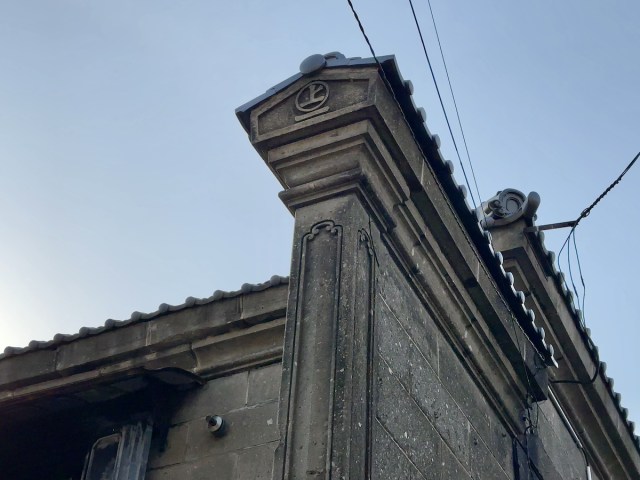
This building looks similar to the one in the background of a scene in Volume 2 when the Nikaido Brothers confront Sugimoto inside of a soba restaurant but are soon stopped by Tsurumi firing his gun. The actual soba restaurant in real life was relocated to the previously mentioned Historical Village of Hokkaido from Otaru. Also, Saya thought that the nishin (herring fish) soba that Sugimoto is eating in that scene looked super tasty!
● Otaru City General Museum
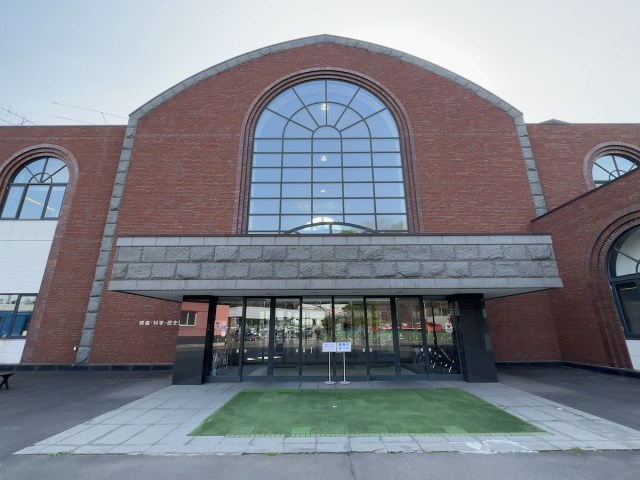
Saya next headed a bit to the north to the Otaru City General Museum, which is considered to be one of the preeminent railroad museums in all of Japan. It preserves and exhibits dozens of railway cars in both indoor and outdoor spaces.
The steam locomotive Shizuka-go displayed inside is a must-see for any visitor.
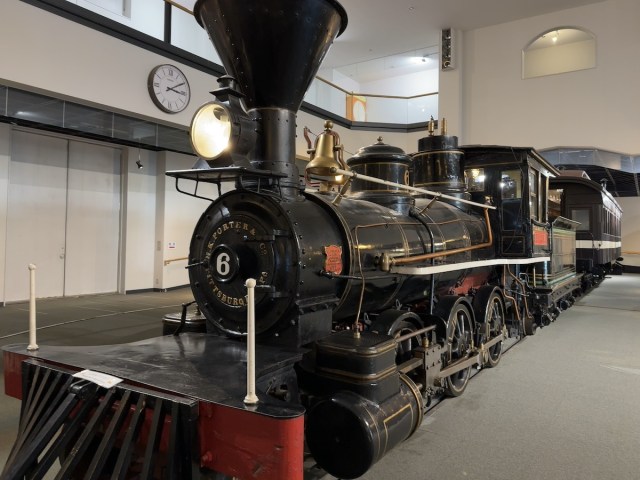
It’s the clear inspiration for the exterior of the “runaway train headed straight for hell” introduced at the very end of Volume 30 of the manga.
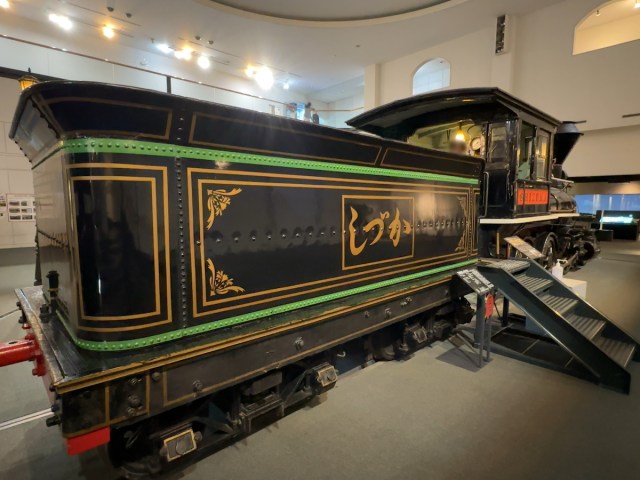
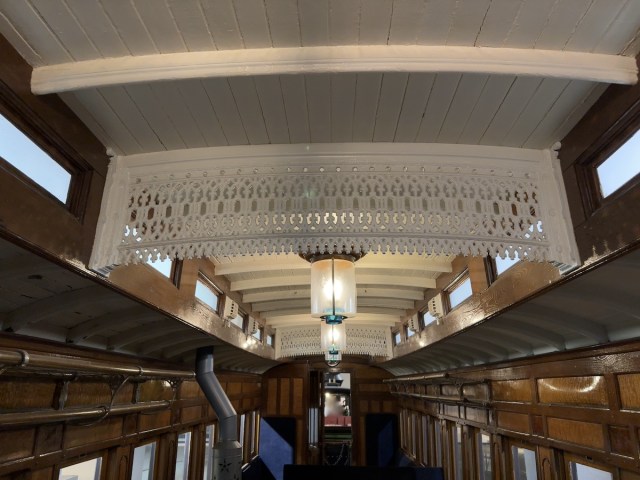
However, the interior of the runaway train’s first passenger car, as well as the interior of the train depicted in Volume 28 when Asirpa and the others attempt to decode the tattooed skins, are modeled after the I-1 train in the museum. The manga features an almost exact replica of the site, right down to the same stove with its five-pointed star motif and the comfy-looking benches on which Sugimoto dozes off for a bit while reminiscing about his life in Tokyo.
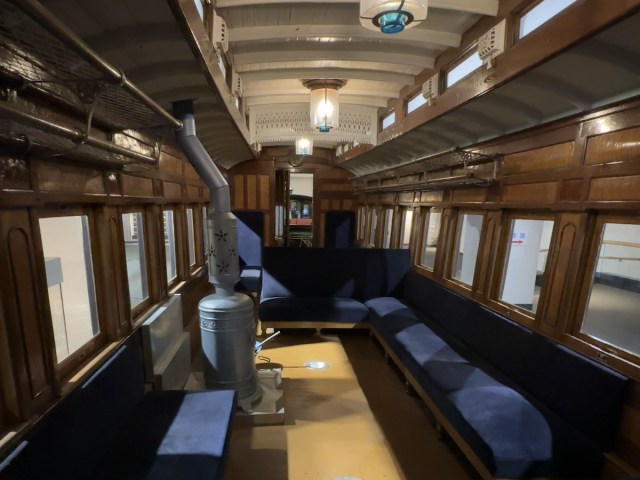
According to the Otaru City General Museum’s official Twitter/X account, when Noda visited the museum for his research, he enthusiastically asked some of the engineers on staff how locomotives can become runaway trains. Saya hoped that they were able to provide him with some good tips for his storytelling.
● Herring Mansion (Former Aoyama Villa)
Herring has already come up once in this artcile, and with good reason, since many past residents of Otaru built their fortunes in the herring industry. A long time ago, the ocean surrounding the city turned white and cloudy as a result of the annual herring run when the fish spawned. The elegant house pictured below, now known as the Former Aoyama Villa, was one of the so-called “herring mansions” that belonged to families who became wealthy from the fish in the early 20th century.

When you think of herring within the story of Golden Kamuy, you probably think of serial killer and escaped convict Kazuo Henmi.
The interior of the Former Aoyama Villa appears in Volume 5 as the house of Henmi’s boss who oversees some fishing grounds (Noda also partially modeled the house after another one of the existing herring mansions, but at the time of this writing it’s currently closed to the public). Tsurumi visits this residence while looking for new investors and runs into Sugimoto again by chance.
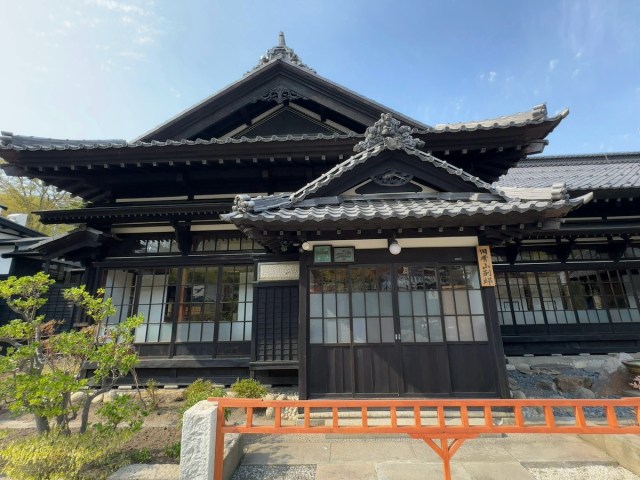
In particular, the villa’s courtyard makes an appearance in the background of the scene when Tsurumi is playing the piano. This unusual skill is evidence that he must have had something of a well-to-do upbringing.
Photography isn’t allowed inside of the villa, which is a Registered Tangible Cultural Property of Japan, but Saya was thrilled to be able to see the Peony Room where Sugimoto runs away from the Maxim machine gun fire, the Tenrai Hidai Room where the piano is located, and even the Arita-ware porcelain toilet that Asirpa is surprised by.
Ultimately, the fate of the house in the manga is quite different from the well-preserved state of the Former Aoyama Villa today.
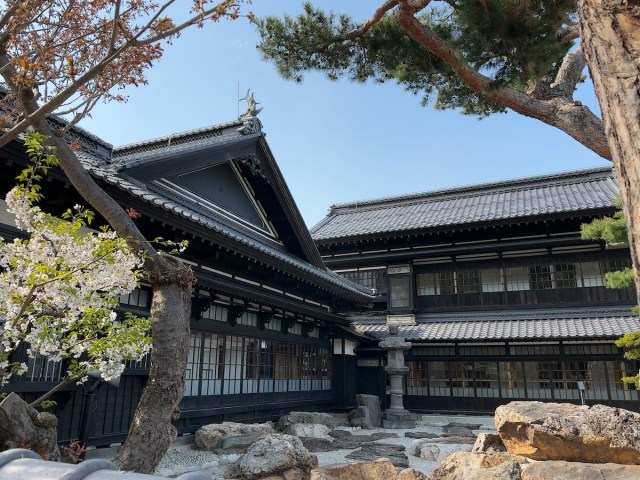
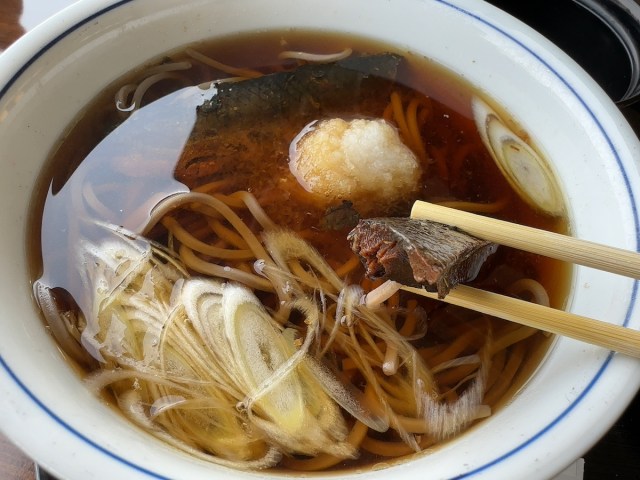
On a final note, the attached Kihinkan property houses a restaurant which offers herring soba on the menu. Saya couldn’t resist trying it for herself and was delighted by the way that the sweet herring melted in her mouth, just like in the pages of the manga. It was a simple but effective combination with soba–something that even someone who doesn’t usually like seafood, such as herself, could enjoy.
● Hanazono dango [Hanazono sweet dumplings]
The sweet dumplings skewer scene from Volume 2 of the manga is (in)famous in both the Golden Kamuy manga as well as the live-action film adaptation. The dumplings in that scene are described as a specialty of Hanazono Park (modern-day Otaru Park), and apparently there was actually a shop that sold them in the area during the Meiji Period (1868-1912). Today, you can enjoy this same style of Hanazono dango at an eatery called Otaru Niikuraya, pictured below.
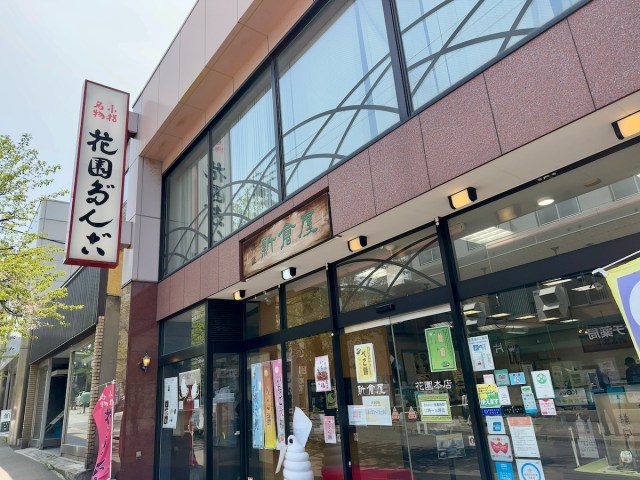
This was the final stop on Saya’s miniature tour of Otaru. As she approached the door, she was delighted to see a keychain of Tsurumi among the display dumplings through the window.

The dumplings themselves are exquisitely prepared and can be purchased either as takeout or for eating inside with a drink. Saya opted for two different flavors, both of which were fluffy and light enough that she felt she could keep eating them forever. The soy sauce glaze ones gave off a gentle salty-sweetness that whetted her appetite even more, and the black sesame-flavored ones were absolutely covered with the ground seeds. She would recommend them to anyone, whether they’ve read Golden Kamuy or not. In the words of the Ainu, hinna hinna (“delicious, delicious”).
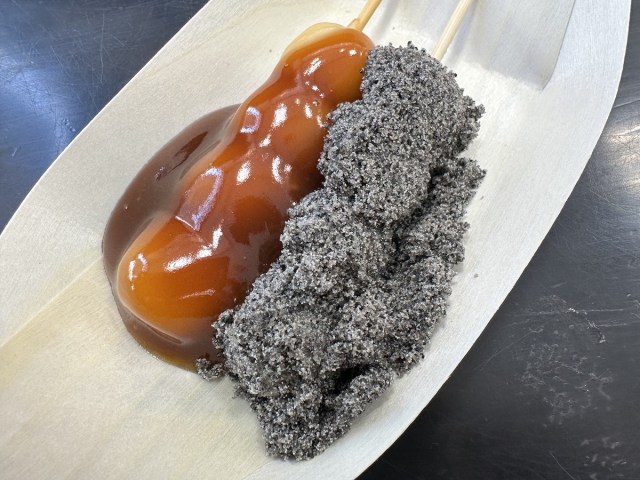
After finishing her snack, Saya couldn’t help but be wary of the empty skewer, though. She decided to dispose of it quickly before anyone could use it as a weapon.

In conclusion, while a lot about Otaru has changed over the decades, Saya was still able to recognize many of the locations that were depicted in scenes in Golden Kamuy.
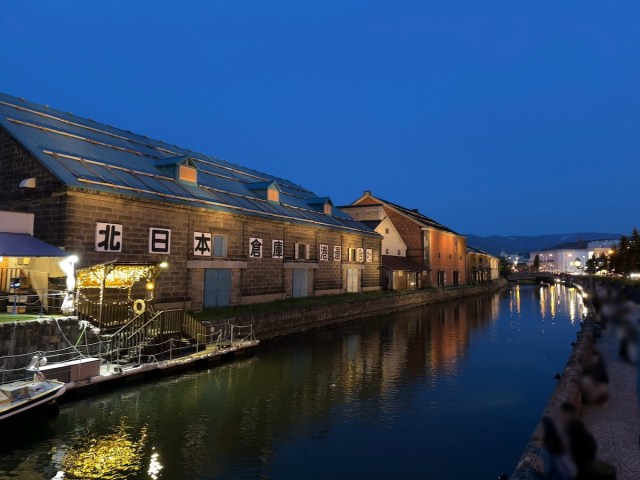
Saya would like to leave readers with a photo she took of the Otaru Canal after sunset. She hopes that you’ll have a chance to visit someday and think about all of the characters from the manga passing you by as you stroll through history, modernity, and fiction all at once.
Related: Otaru Tourism Association
All images © SoraNews24
● Want to hear about SoraNews24’s latest articles as soon as they’re published? Follow us on Facebook and Twitter!
[ Read in Japanese ]
 Three beautiful outside-the-cities places to visit in Hokkaido with a connection to Golden Kamuy
 Wisteria season starts early with blooming of Japan’s Great Wisteria in its beautiful garden
 Japan’s best conveyor belt sushi restaurant of seven years ago has now, finally, come to Tokyo
 Japanese government wants overseas anime market to roughly triple in 10 years, but are they crazy?
 Fading Tokyo – Horikiri Station, the Arakawa River, and Kinpachi-sensei[Walking course]
 Japanese trains in Sapporo might be better than those in Tokyo, thanks to one special feature
 Starbucks Japan releases FIVE new Frappuccinos in a day, and we try them all in 90 minutes
 Never been into a girl’s room before? Then this reference photo book is for you
 Tokyo turns its phone booths into free Wi-Fi hotspots, and here’s how to use them
 Godiva’s Tokyo bakery is FINALLY easy to get into and shop at
 Lawson convenience store at popular tourist site is one of the most unusual in Japan
 Japan reportedly adding Japanese language skill requirement to most common foreigner work visa
 Mt. Fuji decorated with a 500,000-flower pink carpet is Japan’s ultimate spring view
 30 Pikachus want to share a Tokyo hotel room with you that has separate Grass, Water, Fire spaces
 You can assemble a well-balanced team of Pokémon, them eat them, thanks to Japanese cake chain
 Man bites woman at cherry blossom park in Japan, dies shortly after
 7-Eleven Japan’s new baked-in-store sweet treat is only available in three parts of the country
 Starbucks Japan closing only Shinkansen platform branch for popularity-triggered renovations
 Pokémon and Ikea Japan cross over into each other’s worlds with collaboration events
 Japan now has a special desk for people who work at home with a pet cat[Photos]
 Famous Tokyo cherry blossom spot installs view-blocking screens to fight overcrowding[Video]
 Uniqlo announces new T-shirts for One Piece, Naruto and more for manga publisher’s 100th birthday
 Train station platform ramen store closes its doors on half a century of history in Tokyo
 Starbucks Japan releases new My Fruit³ Frappuccino at only 34 stores around the country
 Krispy Kreme releases Super Mario doughnuts in Japan for a limited time
 Japanese onsen egg maker from 100-yen store Daiso needs to be on your shopping list
 Survey asks foreign tourists what bothered them in Japan, more than half gave same answer
 Japan’s human washing machines will go on sale to general public, demos to be held in Tokyo
 Starbucks Japan releases new drinkware and goods for Valentine’s Day
 We deeply regret going into this tunnel on our walk in the mountains of Japan
 Starbucks Japan releases new sakura goods and drinkware for cherry blossom season 2026
 Studio Ghibli releases Kodama forest spirits from Princess Mononoke to light up your home
 Japan’s newest Shinkansen has no seats…or passengers [Video]
 Major Japanese hotel chain says reservations via overseas booking sites may not be valid
 Put sesame oil in your coffee? Japanese maker says it’s the best way to start your day【Taste test】
 No more using real katana for tourism activities, Japan’s National Police Agency says