
We head to Osaka’s world-famous canal district and see who’s thriving and who’s struggling with the drop in travelers from China.
In November, both the Chinese central government and the Chinese Embassy in Tokyo issued statements telling Chinese citizens to refrain from traveling to Japan, and they haven’t yet done anything that could be construed as taking those words back. Since China accounts for the largest single source of leisure tourists to Japan, this frosty mood could potentially have a major effect on some of Japan’s most famous travel destinations, and we’ve headed to Tokyo’s Asakusa and Shibuya neighborhoods, as well as Kyoto, Nara, and Yokohama, to see what the current situation is like.

One place we hadn’t checked in on yet, though, is Osaka. As Japan’s third-largest city, and the biggest metropolis of the Kansai region, Osaka has also become a major magnet for inbound foreign travelers, especially since it’s just a short ride from Kyoto while offering a wider variety of hotel, shopping, and dining options than Japan’s former capital. Osaka’s biggest tourist draws are the Namba neighborhood and canal area of Dotonbori, so that’s where our Japanese-language reporter Haruka Takagi went on a recent morning, arriving at the Ebisubashi bridge at roughly 11 a.m.
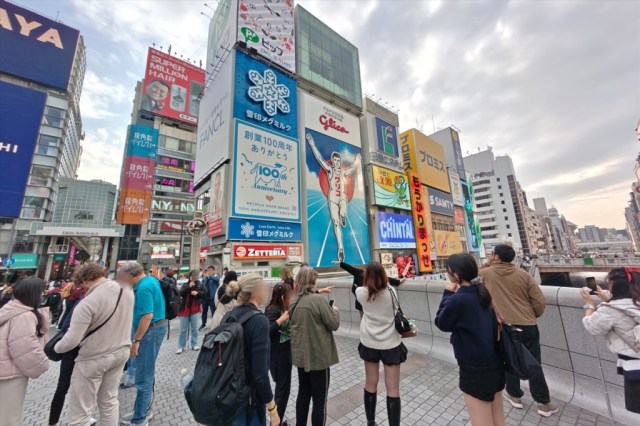
Even this early in the day, there were large crowds of tourists standing on the bridge to snap pictures of Osaka’s world-famous signage, including the running man on the sign of snack food maker Glico.

There were as many foreign tourists as Japanese ones, and out of the overseas visitors those coming from other Asian countries were the largest demographic, followed by travelers from Europe and North America. However, out of the Asian sightseers the majority seemed to hail from southeast Asia, with those from east Asian countries, including China, the minority within the subset.
Haruka also noticed that Dotonbori’s atmosphere, in her opinion, is greatly improved compared to how she remembers it from 10 years ago. She recalls walking through the area in her more youthful days and finding it full of shady-looking teens and twenty-somethings, plus pushy barkers for bars trying to convince you to come to their establishments by making dubious discount promises. Granted, on this visit it was still pretty early in the day for any significantly seedy shenanigans to be afoot, but still, Haruka prefers the touristy vibe the neighborhood seems to have acquired compared to how the place used to feel.
However, a cleaned-up aura isn’t the only way Namba and Dotonbori have changed since becoming a travel hotspot, and Haruka was shocked by the number of drugstores in the neighborhood.
▼ You can spot drugstores in Japan by the kanji for medicine (薬) on their storefront signs.

Pictured above is a branch of Daikoku Drug, but without even seeking them out, Haruka also stumbled across shops from the Matsuoto Kiyoshi, Koko Kara Fine, Sugiyakkyoku, Sun Drug, Tsuruha Drug, Kokumin Drug, and Cosmos chains. It seemed like she couldn’t walk more than 10 seconds before suddenly finding herself in front of another.
Japanese cosmetics and skincare products are perennially among the most popular shopping items for Chinese tourists in Japan, due to their high quality, low prices, and tax-free status when purchased by foreign travelers in sufficient quantities, and it’s even become the norm for drugstores in heavily-touristed areas to employ Chinese-speaking staff to assist Chinese shoppers.
That explains the rapid proliferation of drugstores around Namba, but as Haruka poked her head into them, one after another she found them to be almost completely devoid of customers.

She visited close to a dozen stores, and in each one she could practically hear crickets chirping in the emptiness. On the other hand, there were a lot of employees standing around, some wearing “Chinese speaking” badges, without much to do.

It was kind of nice for Haruka to be able to browse as easily and freely as she wanted, then not have to wait in any kind of line when she found some eyeliner she was looking for. She can’t help worrying, though, about what now seems to be a whole lot of overcapacity in terms of drugstores in the area, and how that’s going to affect their long-term ability to stay in business and continue employing their workers.
One clerk, in a store that had zero customers in it at the time, told Haruka that they usually start getting more patrons in the evening, but when she came back for another look sometime after 3 p.m., there were maybe five shoppers in the store. Even when Haruka did see people making purchases, they were in quantities consistent with individual personal use, not the giant bundles she’s become accustomed to seeing Chinese tourists make at drugstores in Japan.

Haruka came away with a similar impression when she made the rounds of some of the neighborhood’s stores that specialize in brand-name fashions and accessories, both new and used. These types of establishments have also been enjoying significant popularity with foreign tourists during Japan’s weak yen-triggered inbound travel boom, but none of the stores she checked out were crowded with customers or making rapid sales.

Stopping to chat with the operator of one of the canal boat tours, for which almost all of the passengers were foreign tourists, the employee told Haruka that most of their customers are from Europe and southeast Asia, and confirmed that they’ve had a drop in Chinese bookings lately.

And yet, Haruka can’t say the crowds were sparse, especially as it got to be later in the day. By 4 p.m., there were so many people on the Ebisubashi Bridge, including a European tour group, that she had to weave back and forth through them when making her way across.
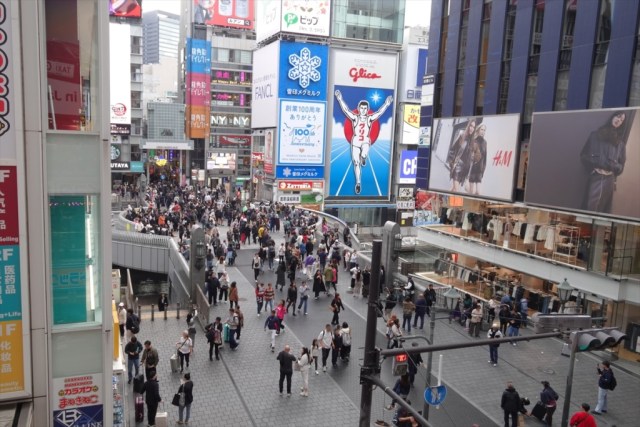


The Dotonbori shopping street was also full of travelers, and Haruka observed long lines for local street food favorites like takoyaki octopus dumplings…

…Rikuro’s cheesecake…
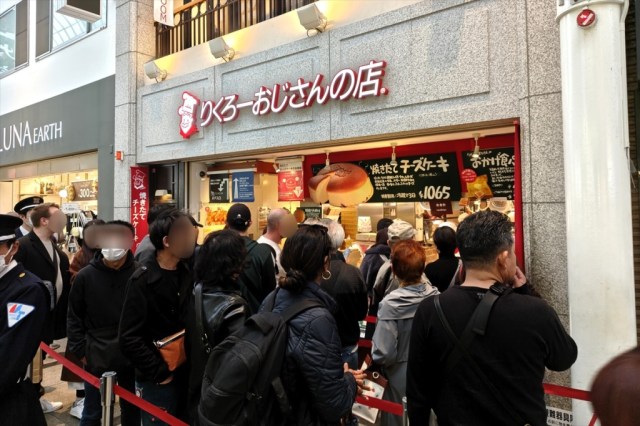
…and 551 Horai steamed pork buns.

Adventurous foreign tourists were even exploring the neighborhood’s less famous side streets, seeking out new dining experiences in their smaller restaurants and pubs.

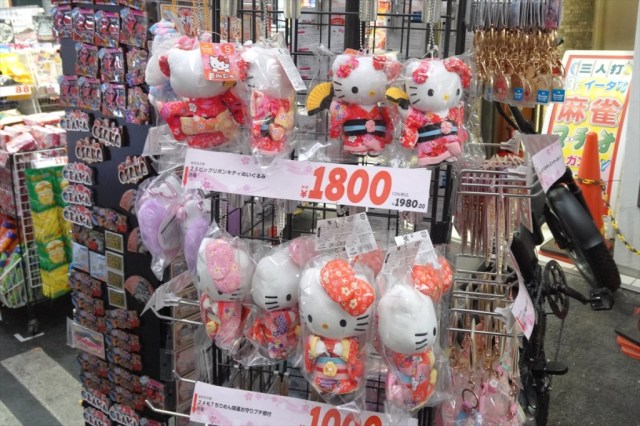
In contrast, Haruka felt like the more overtly consumerist touristy stores were getting less attention, like the ones displaying hodgepodge collections of anime souvenirs or cheap suitcases.

Overall, Namba and Dotonbori have by no means become ghost towns during the Chinese government’s travel advisory, and one of the first impressions you’re likely to have when arriving is “Wow, there sure are a lot of foreign tourists here.” However, from what tourists there are, Haruka can definitely detect decreased interest at stores that have long been the beneficiaries of wealthy Chinese tourists’ passion for shopping.
Photos ©SoraNews24
● Want to hear about SoraNews24’s latest articles as soon as they’re published? Follow us on Facebook and Twitter!
[ Read in Japanese ]
 Is China’s don’t-go-to-Japan warning affecting tourist crowd sizes in Nara?
 Is Kyoto less crowded with tourists after China’s don’t-go-to-Japan warning?【Photos】
 Is China’s don’t-go-to-Japan warning affecting tourist crowds in Tokyo’s Asakusa neighborhood?
 China’s don’t-go-to-Japan warning looks to be affecting tourist crowds on Miyajima
 Is China’s don’t-go-to-Japan warning affecting tourist crowds in Shibuya’s Don Quijote?
 Pokémon and Ikea Japan cross over into each other’s worlds with collaboration events
 Two food hacks take Japan’s convenience store fried chicken to amazing new sandwich heights
 Beautiful Ghibli earrings allow you to finally reunite two of the studio’s star-crossed lovers
 Can a downtown Tokyo super sento bathhouse beat a hotel for a one-night stay?
 Pokémon Centers across Japan cancel April events after stabbing in Tokyo
 Cardcaptor Sakura Chinese Cafe opens in Tokyo, coming to other cities with special merch【Pics】
 Japan now has stricter requirements for foreigners applying for citizenship
 Testing Japan’s fluffy mayonnaise pancake cooking hack【SoraKitchen】
 We try McDonald’s Japan’s new teriyaki burgers
 Ryokan etiquette: What not to do when staying at a traditional Japanese inn
 Tokyo’s best museum for foreign travelers finally reopens after being closed for four years
 Pokémon lacquerware series expands for Year of the Horse with new handcrafted design[Video]
 Famous Tokyo cherry blossom spot installs view-blocking screens to fight overcrowding[Video]
 Tokyo subway and almost all Tokyo train lines now accepting credit card tap payments
 Fading Tokyo – Searching for signs of the Showa era as local neighborhoods evolve[Photos]
 Totoro Fund line of beautiful artwork and apparel lets you help the real-world Totoro Forest
 Tokyo turns its phone booths into free Wi-Fi hotspots, and here’s how to use them
 Studio Ghibli adds new My Neighbour Totoro 2026 Corn Gift to its anime store for Mother’s Day
 Japan now has a special desk for people who work at home with a pet cat[Photos]
 Uniqlo announces new T-shirts for One Piece, Naruto and more for manga publisher’s 100th birthday
 Train station platform ramen store closes its doors on half a century of history in Tokyo
 Starbucks Japan releases new My Fruit³ Frappuccino at only 34 stores around the country
 Studio Ghibli releases Catbus pullback keychain that runs like the anime character
 Krispy Kreme releases Super Mario doughnuts in Japan for a limited time
 Japanese onsen egg maker from 100-yen store Daiso needs to be on your shopping list
 Nine great places to see spring flowers in Japan, as chosen by travelers (with almost no sakura)
 Survey asks foreign tourists what bothered them in Japan, more than half gave same answer
 Japan’s human washing machines will go on sale to general public, demos to be held in Tokyo
 Starbucks Japan releases new drinkware and goods for Valentine’s Day
 We deeply regret going into this tunnel on our walk in the mountains of Japan
 Studio Ghibli releases Kodama forest spirits from Princess Mononoke to light up your home
 Starbucks Japan releases new sakura goods and drinkware for cherry blossom season 2026
 Japan’s newest Shinkansen has no seats…or passengers [Video]
 Major Japanese hotel chain says reservations via overseas booking sites may not be valid
 Put sesame oil in your coffee? Japanese maker says it’s the best way to start your day【Taste test】
 No more using real katana for tourism activities, Japan’s National Police Agency says
 Is China’s don’t-go-to-Japan warning affecting the lines at a popular Tokyo gyukatsu restaurant?
 Osaka establishes first designated smoking area in Dotonbori canal district to fight “overtourism”
 Has China’s don’t-go-to-Japan warning shortened queues at this Ichiran ramen restaurant in Tokyo?
 Chinese government’s don’t-go-to-Japan warning has heartwarming non-effect on Yokohama Chinatown
 Japan just had its first same-month foreign tourist decrease in four years
 Japan’s foreign tourist numbers projected to fall for first time in years in 2026
 Japanese avoiding domestic travel as foreign tourists increase, possibly creating vicious cycle
 Chinese government tells citizens to not travel to Japan during Chinese New Year
 Giant hotel rooms in Osaka reflect the new non-niche face of travel in Japan.
 These are Osaka’s three best digital rail passes for travelers
 We make pills the old-fashioned way in Japan’s former medicine capital, Toyama Prefecture
 Foreign tourists in Japan break inbound fall tourism record, are spending their money differently
 Disillusionment at Tsukiji’s tourist-target prices led us to a great ramen restaurant in Tokyo
 Ramen restaurant’s English menu prices are nearly double its Japanese ones, denies discriminating
 Tokyo considering law requiring more trash cans following litter increase in heavily touristed area
 Tokyo’s Tsukiji sushi neighborhood asks tour groups to stay away for the rest of the month