
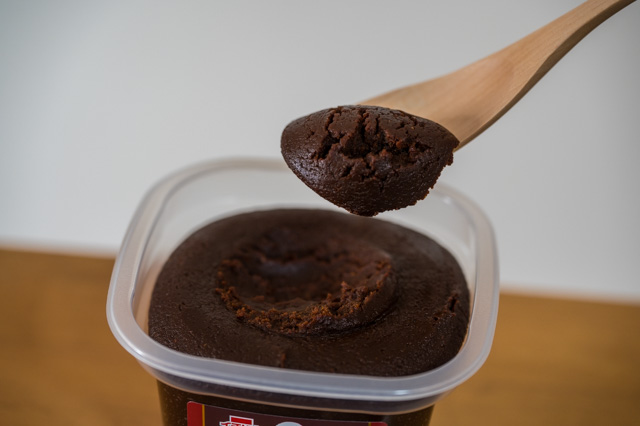
One taste and lighter varieties may never be enough for you again.
If your idea of miso is a light-colored soup, gentle and mild in flavor, then Nagoya would very much like to have a word with you. Miso in Japan’s central Tokai region, consisting of Aichi, Gifu, and Mie Prefectures, is much bolder and far more intense than its more frequently seen counterparts in the rest of the country. Red miso, or “akamiso”, as it’s called in Japanese, can certainly be found nationwide, but it’s a specific type of soybean akamiso that is beloved by so many in Nagoya, Aichi, and the wider Tokai area.
▼ For many Nagoyans, this miso soup is too pale.

“Red miso” is a broad label for miso that is darker in color as a result of a longer fermentation process and a moderate-to-high salt content, when compared to the lower-salt and short-fermented rice misos. Most miso in Japan is made by mixing soybeans and salt with malted rice, or malted barley if you’re on the islands of Shikoku and Kyushu, and both types can come in white and red colorations. Red rice miso has made quite the name for itself in places like Sendai and Hokkaido, and is delicious in its own right, but the umami of the pure soybean miso, called mamemiso, is on another level.
▼ But it’s this dark soybean miso, made from just soybeans and salt, that’s at the heart of Nagoyan cuisine.


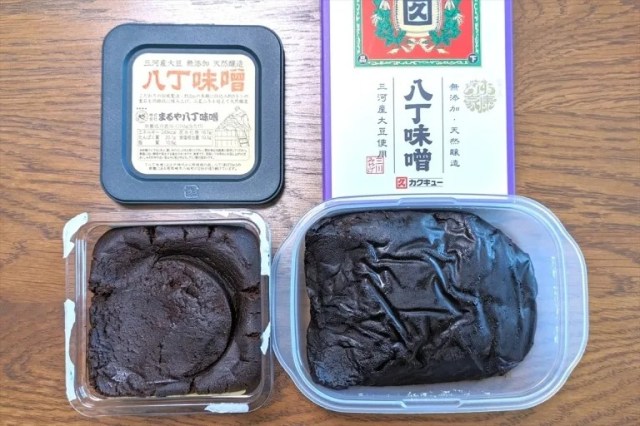
The most famous example of soybean miso is Hatcho miso, which has been produced since the early 1600s in what is now Okazaki City, just a short train ride from Nagoya.
▼ Like this Hatcho Miso made by Ichibiki, a company based in Aichi

Despite having a simple recipe of just soybeans and salt, the production process for Hatcho miso can take one-to-three years, and sometimes more. Soybeans are packed tight into giant wooden vats, weighed down by heavy stones, and are left to ferment. The result is the dense, dark paste that is so beloved by Nagoya, low in sweetness, high in umami, and slightly bitter.
So, how is it that Nagoya steered clear of the rice miso that is prevalent elsewhere in Japan? Well, part of it is due to geography. Even compared to the rest of Japan, Nagoya has especially hot, humid summers and dry winters, a climate that is well-suited to long fermentation, which normally poses quite a challenge for food preservation, including rice miso. Back when preserving food was more difficult, rice miso was quick to spoil in the region, which meant soybean miso, due to its longer fermentation process that makes it less likely to spoil, was more heavily favored.
Another part is the area’s history, with local samurai warlord and eventual unifier of Japan Tokugawa Ieyasu valuing miso as a long-lasting, protein-rich food, which was perfect for feeding armies. As the years passed, this soybean miso became a staple of the region, shaping local tastes and dishes to become the Nagoya of today.
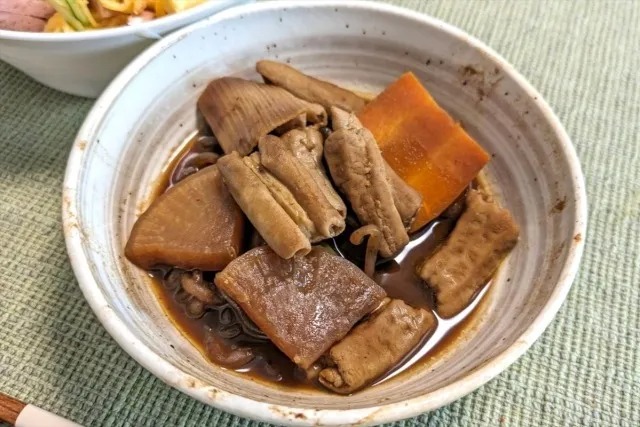
Unlike other regional dishes, which may be famous but eaten only on special occasions, this soybean miso has ingrained itself into daily life, often finding its place on the daily dinner table in the form of miso soup, the slow-cooked dote-ni, consisting of beef tendon or offal slowly simmered in miso, or countless other variations of household cooking.
▼ Dote-ni
▼ Miso dengaku: cooked vegetables and tofu topped with a sweet and salty miso glaze

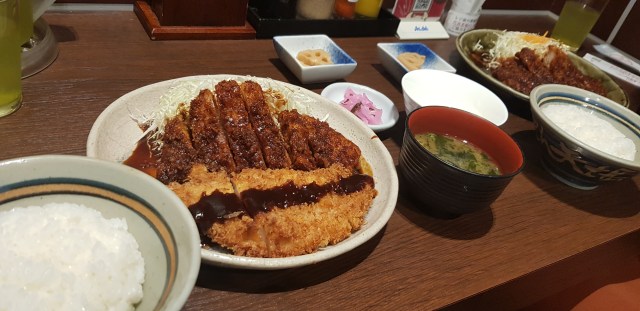
For tourists to the area, by far the easiest way to encounter it is by ordering miso katsu, a dish of crispy tonkatsu (pork cutlet) topped with a rich, soybean miso-based sauce, at a local restaurant, like the famous chain Yabaton.
▼ Waraji Tonkatsu Teishoku is a taster dish at Yabaton, consisting of two different types of miso katsu: one in the style of miso-ni where the miso is mixed with a broth for a delicious seasoning of the entire katsu, and the other closer to a miso sauce spread on top for a more impactful flavor, like in miso dengaku.
Or perhaps in miso nikomi udon, where firm udon noodles are simmered until piping hot in a Hatcho miso-based broth.
Japan has many misos to love, but the soybean-based akamiso is something special. For many people in Nagoya and central Tokai, it’s long been a mainstay in their diet. To them, miso is not a light and sweet flavor, but instead a bold and rich food that captures both the stomach and the heart.
Related: Yabaton
Photos ©SoraNews24
Top and insert images: PR Times
● Want to hear about SoraNews24’s latest articles as soon as they’re published? Follow us on Facebook and Twitter!
 How much difference does the choice of mold make in fermenting food?
 Krispy Kreme releases Super Mario doughnuts in Japan for a limited time
 7-Eleven Japan releases a crazy new viral sandwich: Chocolate Sprinkles and Whipped Cream
 Japan’s ministry of economy reminds us to “use sound judgment” before buying toilet paper
 “Online streamer” tops dream job poll for young Japanese kids, older kids not so interested
 Ramen restaurant in top Tokyo tourist neighborhood skips price gouging, but how does it taste?
 Can you make butter by running with a pouch filled with cream? Let’s find out[Taste test]
 We predict 7-Eleven’s new Zero Cider Triple drink is gonna be the hit drink of 2022【Taste Test】
 Japanese bonsai trees made from paper stay beautiful without water or pruning
 Study finds Japan to be the country that most prefers aisle seats on airplanes
 Ghibli Museum building becomes a cuddly cushion
 Japanese onsen egg maker from 100-yen store Daiso needs to be on your shopping list
 Starbucks Japan releases new My Fruit³ Frappuccino at only 34 stores around the country
 Tokyo government organizes food truck event to clear out delinquent/homeless teen gathering area
 Cherry blossoms begin blooming in Japan with record-early starts for sakura season
 Nine amazing off-the-beaten-path cherry blossom spots in Japan for yaezakura and shidarezakura
 Stunning central Japan wisteria festival is like a purple fantasy straight out of a Ghibli movie
 Create a tiny Ghibli anime world on your bookshelf with new miniature papercraft art kits
 Studio Ghibli releases the My Neighbour Totoro tea caddy, with a magical self-closing lid
 Japan now has a “for foreign tourists only” Mt. Fuji sightseeing train[Video]
 When will the cherry blossoms reach full bloom in Japan this year?[Forecast]
 Starbucks Japan unveils new sakura cherry blossom collection for hanami season 2026
 Train station platform ramen store closes its doors on half a century of history in Tokyo
 Studio Ghibli releases Catbus pullback keychain that runs like the anime character
 Nine great places to see spring flowers in Japan, as chosen by travelers (with almost no sakura)
 Starbucks Japan releases first-ever Hinamatsuri Girls’ Day Frappuccino
 Studio Ghibli adds new Mother’s Day gift sets to its anime collection in Japan
 Virtual idol Hatsune Miku redesigned with look that adds new elements and brings back old ones
 Survey asks foreign tourists what bothered them in Japan, more than half gave same answer
 Japan’s human washing machines will go on sale to general public, demos to be held in Tokyo
 Starbucks Japan releases new drinkware and goods for Valentine’s Day
 We deeply regret going into this tunnel on our walk in the mountains of Japan
 Studio Ghibli releases Kodama forest spirits from Princess Mononoke to light up your home
 Starbucks Japan releases new sakura goods and drinkware for cherry blossom season 2026
 Japan’s newest Shinkansen has no seats…or passengers [Video]
 Major Japanese hotel chain says reservations via overseas booking sites may not be valid
 Put sesame oil in your coffee? Japanese maker says it’s the best way to start your day【Taste test】
 No more using real katana for tourism activities, Japan’s National Police Agency says