
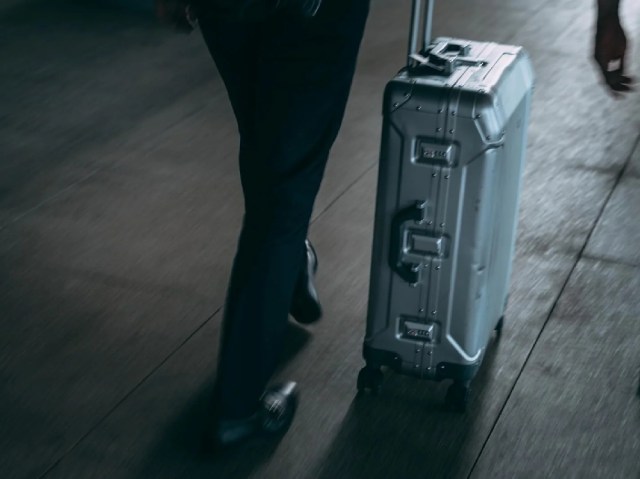
Three robbery attempts, all connected to Hong Kong currency exchange, take place within 14 hours of each other.
Even in our modern world of credit cards, digital bank transfers, and cashless payment apps, it’s still advisable to have some cash on you when you’re out and about, just in case there’s any sort of glitch or other problem occurring within the necessary technological infrastructure. Of course, you don’t want to carry too much cash around, as physical currency comes with the inherent risk that it could get lost, damaged, or stolen.
How much cash is too much? That’s a question that everyone will have their own individual answer to, but I think most of us would agree that it’s wise to draw the line somewhere far, far below 420 million yen (approximately US$2.7 million). But it turns out that there are at least five people in the world who think that’s an acceptable amount to stuff into suitcases and then start loading into the trunk of a car parked on an unsecured Tokyo street. Unfortunately for them, they’re also five people who got robbed.
The incident occurred in downtown Tokyo’s Ueno neighborhood, about 200 meters (656 feet) from Okachimachi Station, on the night of January 29. At around 9:30 p.m., a group of two Japanese men, two Chinese men, and one Japanese women were loading the cash-filled suitcases into the back of a car when they were approached by a group of three robbers who sprayed them with pepper spray, grabbed the suitcases, and escaped in their own vehicle.
▼ A reenactment of the attack
A hit-and-run accident was reported nearby shortly after, and an abandoned car was found by the police farther down the street, but neither the thieves or the stolen money have been located.
When asked what they were doing with so much cash, the five robbery victims said that they work as speculative money exchangers, and were planning to drive the cash to Tokyo’s Haneda airport and from there fly it to Hong Kong to sell.
Speaking of Haneda, just a few hours later, at around 12:10 a.m. on January 30, a Japanese man in his 50s was getting out of a car in Parking Lot #5 for Haneda Airport’s Terminal 3. His colleague had driven him there, and after he exited the vehicle and began removing his suitcase, another car pulled into the spot next to him, with three men inside. “Hey, what are you up to?” one of the men called out through a lowered window, and when the 50-something man looked over to see who was talking to him, the man in the second car sprayed him with pepper spray while another man began striking the first car’s windshield with a hammer. This was all part of an attempt to steal the 50-something man’s suitcase, inside of which he had 190 million yen in cash.
▼ A reenactment of the second attack can be seen at the point in the video queued up here.
The 50-something man was able to resist the attackers, and they drove off without successfully taking anything from him. Though this man wasn’t present at the robbery that took place in Ueno, when interviewed by the police about the incident, he had the same explanation for why he was carrying around so much cash: he’s a currency speculator who was headed to Hong Kong to sell yen.
At this point, you’d think that anyone involved in such ventures would take a moment to reconsider their career path, or at least take some steps to bolster their personal security. And yet, less than 12 hours later two Japanese men who were carrying around large sums of yen were once again targeted by criminals. This third robbery didn’t take place in Tokyo, though. Any guesses as to where it happened?
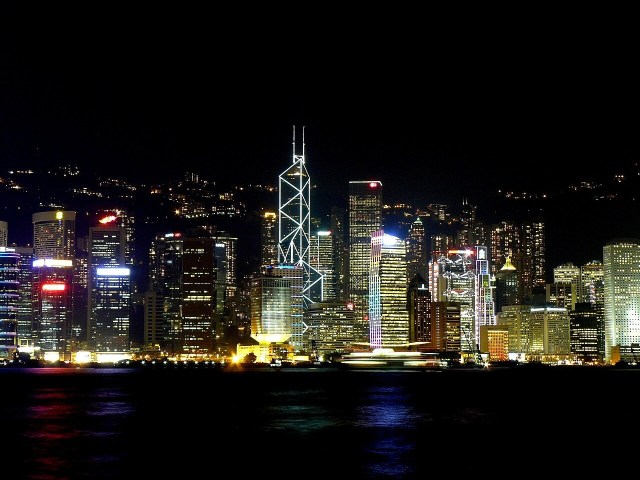
That’s right, Hong Kong. At around 9:45 a.m. local time on January 30, or 10:45 a.m. of the same day in Japan, two Japanese men got out of a taxi in Hong Kong’s Sheung Wan neighborhood, each with a backpack and one with a suitcase. They were quickly set upon by two other men who stole one of the men’s backpacks, which had roughly 58 million yen in cash inside, and then escaped by car.
Though none of the victims’ names in any of the incidents have been publicly released, the Hong Kong police said that one of the Sheung Wan victims is a 51-year-old Japanese man who had just arrived in Hong Kong that morning, and who was in Sheung Wan for an appointment with a currency exchange shop to sell a large quantity of yen. As for the suitcase and second backpack that weren’t stolen, those two contained yen, with the victims saying that total amount of cash that they’d had on them was 190 million yen. So barring an unbelievable coincidence of two unrelated 50-something Japanese men flying to Hong Kong on the exact same day to sell the exact same amount of yen, it seems pretty safe to say that the same guy got attacked at Haneda Airport, flew to Hong Kong, and then almost immediately got successfully robbed.
Look, as someone whose finances are decidedly more in the realm of “I gotta go to Daiso to get a cheap coin pouch for my 1-yen coins” than “Man, I got so much cash I gotta start stuffing it into suitcases!”, I’ll admit to not having any personal experience in transferring and transporting such large sums of money. That said, things like armored cars and bodyguard services exist for a reason, and seem like the sort of things a legitimate, above-ground business would contract for instead of saying “Hey, Tanaka, I know you just got pepper-sprayed in the face, but go ahead and carry this backpack full of money around town. Don’t get robbed though, ’kay?” Perhaps, for whatever reason, the currency speculators felt it was in their best interest to try to fly under the radar by transporting the money in the manner of regular luggage. Still, and to be fair, I’m not a detective, it seems like maybe, just maybe, there’s a leak somewhere in their communications pipelines that’s vulnerable to exploitation by criminals, so they might want to look into that, especially with Okachimachi not necessarily being the safest part of Tokyo to begin with.
So far only one arrest has been made, by the Hong Kong police for a Hong Kong resident suspected to have been involved in the Sheung Wan robbery. The investigations of all three incidents are still ongoing, with the police attempting to establish concrete connections between them.
Source: TBS News Dig (1, 2), TV Asahi, Yomiuri Shimbun (1, 2), Tokyo Shimbun, South China Morning Post, YouTube/ANNnewsCH
Top image: Pakutaso
Insert image: Wikipedia/File Upload Bot (Magnus Manske)
● Want to hear about SoraNews24’s latest articles as soon as they’re published? Follow us on Facebook and Twitter!
 Typhoon Mangkhut strikes Hong Kong, literally shakes skyscrapers and blows people down the street
 Tokyo police arrest two men for theft of 4.98 million-yen Yu-Gi-Oh! card
 Pokémon lacquerware series expands for Year of the Horse with new handcrafted design[Video]
 Tokyo’s best museum for foreign travelers finally reopens after being closed for four years
 Studio Ghibli adds new My Neighbour Totoro 2026 Corn Gift to its anime store for Mother’s Day
 New cafe in trendy Tokyo neighborhood is staffed by grannies and grandpas with average age of 73
 Uniqlo announces new T-shirts for One Piece, Naruto and more for manga publisher’s 100th birthday
 Why is Yoshinoya called Yoshinoya?
 Three ways going to see cherry blossoms alone is better than seeing them with other people
 Krispy Kreme releases Super Mario doughnuts in Japan for a limited time
 Totoro Fund line of beautiful artwork and apparel lets you help the real-world Totoro Forest
 We mixed all 31 flavors of Baskin Robbins ice cream and created a Frankenstein dessert【Video】
 Japan now has a special desk for people who work at home with a pet cat[Photos]
 Famous Tokyo cherry blossom spot installs view-blocking screens to fight overcrowding[Video]
 Totoro and Calcifer become little light-up lanterns for Ghibli-style excursions or at-home decor
 7-Eleven Japan releases a crazy new viral sandwich: Chocolate Sprinkles and Whipped Cream
 Picturesque Tokyo park plays host to millions of flowers and soap bubbles this spring
 Fatal stabbing at Pokémon Center in Tokyo reignites concern over rising stalking cases in Japan
 Final Fantasy invites you to adventure in Fukushima with Fukushima Fantasy Chocobo fun[Video]
 Starbucks Japan unveils new sakura cherry blossom collection for hanami season 2026
 Train station platform ramen store closes its doors on half a century of history in Tokyo
 Starbucks Japan releases new My Fruit³ Frappuccino at only 34 stores around the country
 Studio Ghibli releases Catbus pullback keychain that runs like the anime character
 Japanese onsen egg maker from 100-yen store Daiso needs to be on your shopping list
 Nine great places to see spring flowers in Japan, as chosen by travelers (with almost no sakura)
 Survey asks foreign tourists what bothered them in Japan, more than half gave same answer
 Japan’s human washing machines will go on sale to general public, demos to be held in Tokyo
 Starbucks Japan releases new drinkware and goods for Valentine’s Day
 We deeply regret going into this tunnel on our walk in the mountains of Japan
 Studio Ghibli releases Kodama forest spirits from Princess Mononoke to light up your home
 Starbucks Japan releases new sakura goods and drinkware for cherry blossom season 2026
 Japan’s newest Shinkansen has no seats…or passengers [Video]
 Major Japanese hotel chain says reservations via overseas booking sites may not be valid
 Put sesame oil in your coffee? Japanese maker says it’s the best way to start your day【Taste test】
 No more using real katana for tourism activities, Japan’s National Police Agency says
.jpg)