
Yes, Japan’s most famous sakura spots and species draw big crowds for good reasons, but they’re not all that cherry blossom season has to offer.
Going out to see cherry blossoms is one of the most quintessential Japanese springtime activities, but fighting crowds is also often another. That’s because the blossoms only bloom for a short period of time, and so pretty much the whole country concentrates its visits to the most famous parks and gardens with near-identical timing.
To be fair, Japan’s top cherry blossom venues are still beautiful even when they’re crowded, and you could even argue that the big crowds help contribute to a fun, party-like atmosphere. However, if you’d rather skip the standard touristy places and look for a more personalized experience, Japanese travel portal Jalan is here to help with a list of its top nine off-the-beaten-path sakura spots in the country.
The rankings were compiled from an Internet survey of 1,054 respondents between the ages of 20 and 59, and instead of the most common cherry blossom variety, Somei Yoshino, the list focuses on two other sakura types, yaezakura, whose flowers bloom in thicker double-layered clusters, and shidarezakura, whose branches arch downwards like those of a weeping willow. Note that some of these places aren’t exactly entirely unknown and might have crowds during peak times or on the weekends, but they should all still be less congested than the best-known, more heavily touristed venues in places like Tokyo or Kyoto.
8 (tie). Arisugawa-no-miya Memorial Park (Tokyo)
Best viewing time: Late March-Early April
Website
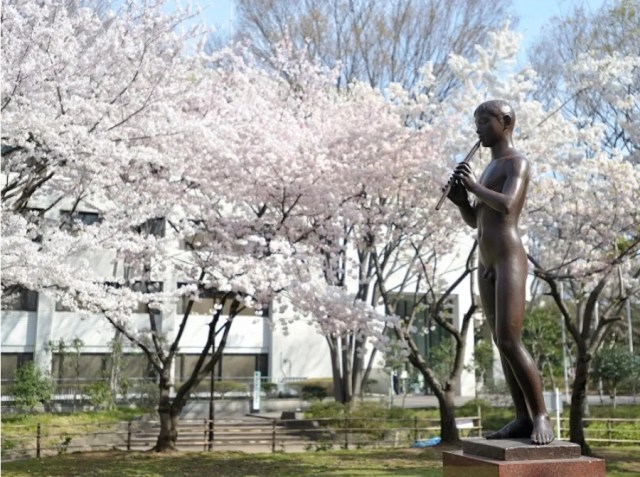
That said, even in downtown Tokyo you can find sakura spots that most people don’t know about. Once the estate garden of a samurai lord, the garden-turned-park is just a short walk from Hiroo Station and has a variety of sakura species, including yaezakura, to be found on its hillside grounds.
8 (tie). Oniushi Park (Hokkaido Prefecture)
Best viewing time: Mid-March
Website
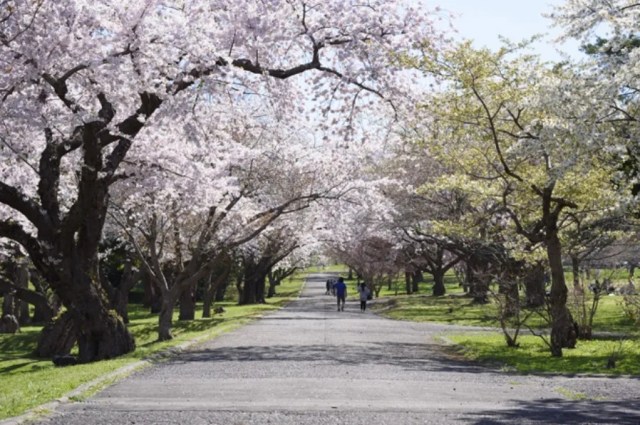
Hakodate is the closest major tourist attraction to Oniushi Park, which is located on the opposite coast of the Oshima Peninsula in the town of Mori. This seaside park has roughly 500 cherry blossom trees, and with yaezakura being a later-blooming variety and Hokkaido’s cool weather meaning a later start to sakura season in general, Oniushi is a great option if you’re too busy to travel during the regular peak cherry blossom flowering. Oniushi also boasts yaebenishidare trees, a hybrid weeping yaezakura type.
7. Nagatoro Pass (Saitama Prefecture)
Best viewing time: Mid-late April
Website
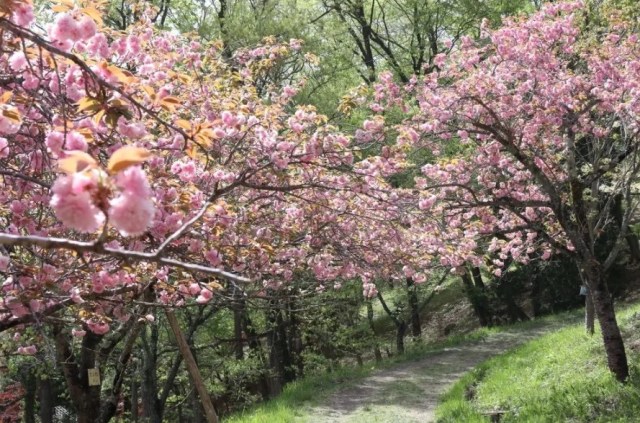
Some 500 trees from 31 different varieties of yaezakura form a cherry blossom tunnel in Nagatoro in the Chichibu mountains. Not only are they beautiful to view from below, if you take the ropeway cable car up to the bearby Fudoji Temple, you can admire the pink path from above too.
6. Takebe no Mori Park (Okayama Prefecture)
Best viewing time: Late March-mid-April
Website
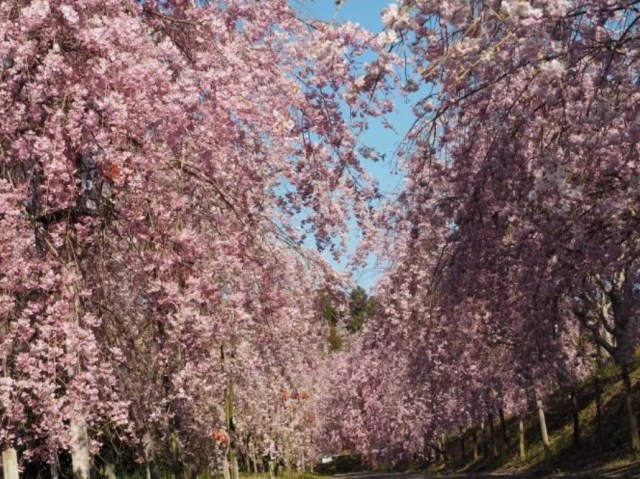
Situated in the mountainous northern sector of Okayama City, there are over 100 different types of cherry blossoms to see in this park, which owes part of its creation to Toemon Sano, a botanist known as the “Sakura Protector” for his work with the plants. Sano was the third botanist to take that name and devote his life’s work to cherry blossoms, and though he passed away in 2025, the park, with its tunnel of weeping yaezakura, remains a part of his living legacy.
4 (tie). Yuka no Sato (Tokushima Preecture)
Best viewing time: Late March-early April
Website
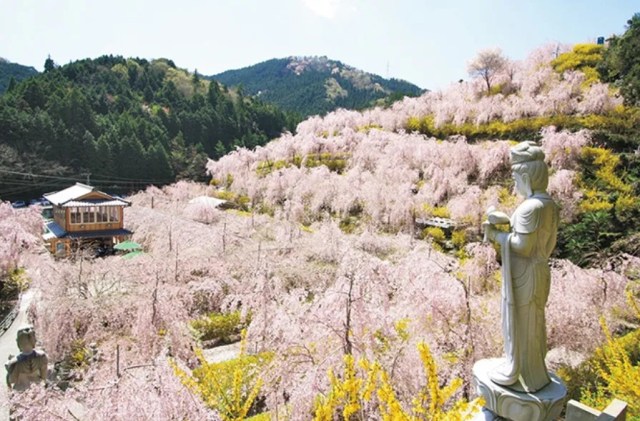
Located in the town of Kamiyamacho, Yuka no Sato’s unique walking course winds its way up a terraced hillside lined with 3,000 cherry blossom trees, including 500 shidarezakura. Standing amongst the trees are statues of Kannon, the Buddhist goddess of mercy, and gazing out on the sakura from above creates a sensation similar to seeing the “sea of clouds” from a mountaintop.
4 (tie). Kakunodate Samurai Residence Street (Akita Prefecture)
Best viewing time: Mid-late April
Website
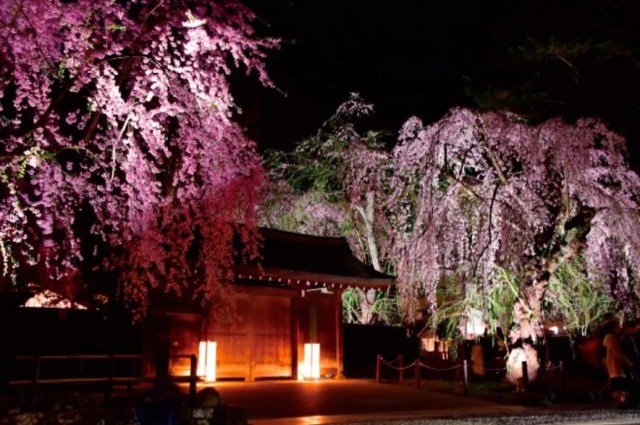
The town of Kakunodate’s claim to fame is its preserved samurai quarter, and as you might imagine, some of those samurai families had very nice gardens. In particular, the shidarezakura trees shown in the above photo are said to have been brought to Kakunodate from Kyoto as part of the dowry of a noble lady who was marrying into one of the local samurai clans, and seeing these sakura trees and others against the backdrop of the traditional architecture, especially at night, will have you feeling like you’re out for a luxuriously leisurely stroll in the Edo era.
3. Rakuozakura (Fukushima Prefecture)
Best viewing time: Early-mid-April
Website
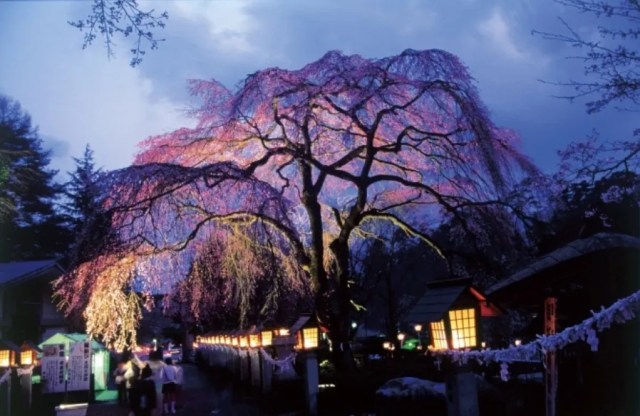
With yaezakura and shidarezakura being types of cherry trees, you might assume that Rakuozakura is another. Actually, though, the Rakuozakura is a single, specific tree that grows on the grounds of Nanko Shrine, which is itself inside of Nako Park in the town of Shirakawa. How does a single cherry blossom tree get its own name? By being more than 200 years old, and from being so awe-inspiringly majestic in both size and shape.
2. Miho Museum, (Saga Prefecture)
Best viewing time: Early-mid-April
Website
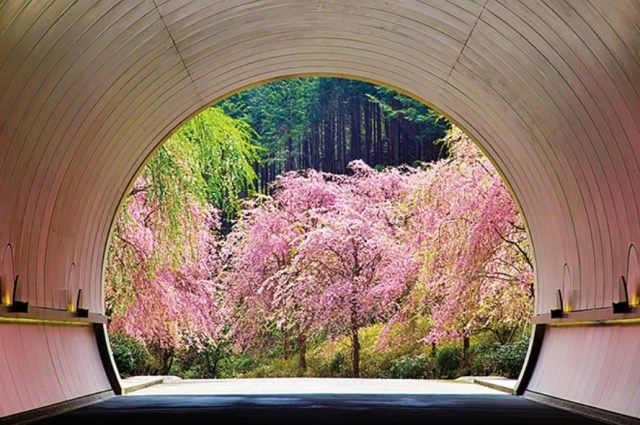
The city of Koka’s Miho Museum contains thousands of paintings, sculptures, and ceramic and lacquerware pieces, but there’s also beauty to be found outside its walls. The museum is perched atop a forested mountain and accessed through a tunnel, and in spring the 100 shiradezakura trees greet you with waves of pink petals as you come out the exit. This one does tend to get crowded with flower viewers on the weekends, so a weekday visit is best if you want to quietly contemplate them, especially when the sakura are bathed in morning light.
1. Nicchu Line Weeping Sakura (Fukushima Prefecture)
Best viewing time: Mid-April
Website
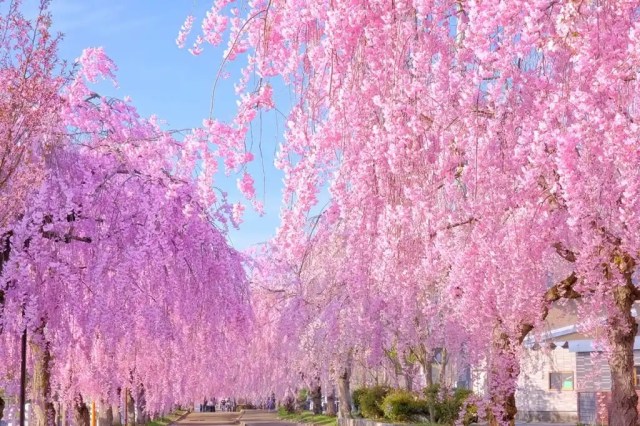
Trains used to run along the Nicchu Line, but once it was shut down this section of the tracks in the town of Kitakata was converted into a pedestrian pathway, and there’s no better time to walk it than in spring. You’ll pass under roughly 1,000 sakura trees along the three-kilometer (1.9-mile) course, and while ordinarily it wouldn’t take more than an hour to cover that distance, it’s hard to imagine a walking course better suited to taking your time to figuratively stop and smell the roses, by looking at the sakura, than this one.
Source: Jalan (1, 2), PR Times
Images: PR Times
● Want to hear about SoraNews24’s latest articles as soon as they’re published? Follow us on Facebook and Twitter!
[ Read in Japanese ]
 Sakura 2017: The best places to see cherry blossoms in Japan
 Sakura in Japan 2019: The best spots for hanami cherry blossom viewing
 Japan’s top 10 open-air hot spring baths with cherry blossom views【Survey】
 Nine great places to see spring flowers in Japan, as chosen by travelers (with almost no sakura)
 The most popular places in Japan for viewing sakura in 2024, according to local travel agency
 Drink vending machines disappearing in Japan as number drops to lowest in 30 years
 30 Pikachus want to share a Tokyo hotel room with you that has separate Grass, Water, Fire spaces
 Mt. Fuji decorated with a 500,000-flower pink carpet is Japan’s ultimate spring view
 Howl’s Moving Castle’s scene-stealing dog is here to clean your home as a plushie mop
 Chinese man holds in vomit, esophagus explodes
 A visit to the oldest Yoshinoya chain in Japan for one last beef bowl before it closes for good
 Fried sandwiches arrive in Tokyo, become hot topic on social media
 Viral Japanese cheesecake from Osaka has a lesser known rival called Aunt Wanda
 Sanrio changes Hello Kitty lead designer for first time in 46 years
 Foreign man arrested for walking on Shinkansen tracks, claims he was on the run from yakuza
 Japan reportedly adding Japanese language skill requirement to most common foreigner work visa
 Pokémon and Ikea Japan cross over into each other’s worlds with collaboration events
 Starbucks Japan closing only Shinkansen platform branch for popularity-triggered renovations
 You can assemble a well-balanced team of Pokémon, them eat them, thanks to Japanese cake chain
 Two food hacks take Japan’s convenience store fried chicken to amazing new sandwich heights
 7-Eleven Japan’s new baked-in-store sweet treat is only available in three parts of the country
 Man bites woman at cherry blossom park in Japan, dies shortly after
 Peanuts and Coke becomes a viral hit in Japan, but is it a trend worth joining?
 Japan now has a special desk for people who work at home with a pet cat[Photos]
 Famous Tokyo cherry blossom spot installs view-blocking screens to fight overcrowding[Video]
 Uniqlo announces new T-shirts for One Piece, Naruto and more for manga publisher’s 100th birthday
 Train station platform ramen store closes its doors on half a century of history in Tokyo
 Starbucks Japan releases new My Fruit³ Frappuccino at only 34 stores around the country
 Krispy Kreme releases Super Mario doughnuts in Japan for a limited time
 Japanese onsen egg maker from 100-yen store Daiso needs to be on your shopping list
 Studio Ghibli releases Catbus pullback keychain that runs like the anime character
 Survey asks foreign tourists what bothered them in Japan, more than half gave same answer
 Japan’s human washing machines will go on sale to general public, demos to be held in Tokyo
 Starbucks Japan releases new drinkware and goods for Valentine’s Day
 We deeply regret going into this tunnel on our walk in the mountains of Japan
 Starbucks Japan releases new sakura goods and drinkware for cherry blossom season 2026
 Studio Ghibli releases Kodama forest spirits from Princess Mononoke to light up your home
 Japan’s newest Shinkansen has no seats…or passengers [Video]
 Major Japanese hotel chain says reservations via overseas booking sites may not be valid
 Put sesame oil in your coffee? Japanese maker says it’s the best way to start your day【Taste test】
 No more using real katana for tourism activities, Japan’s National Police Agency says
 The top 9 sakura cherry blossom viewing spots in Japan that you should know about
 Cherry blossom beer is coming back to Japan this spring!
 Mark your calendars for the return of Japan’s popular cherry blossom-inspired beer
 Beyond sakura: How to tell a cherry blossom from a plum or peach flower
 Cherry blossom forecast updated with later start date, full-bloom predictions added
 These stunningly beautiful seasonal pink flowers from Japan are NOT cherry blossoms【Photos】
 Cherry blossom taxi tours are a great way to save steps and see sakura in Tokyo and its neighbors
 The not-so-fleeting beauty of the cherry blossoms: An alternate perspective
 Hanami on the go — Take a whirlwind bus tour of the best cherry blossom spots in Tokyo
 Central Japan’s most famous cherry blossom spot now has sakura helicopter sky cruises
 Beautiful Tokyo water bus tour shows you off-the-beaten-path sakura from the land and river【Pics】
 Cherry blossoms are blooming in Japan in October, but why?
 When will the cherry blossoms reach full bloom in Japan this year?[Forecast]
 It’s time to get a jump on beautiful pink blossoms at this forest garden in Japan【Photos】
 Cherry blossom forecasts map shows Japan’s OTHER sakura season is starting right now