Toilets (Page 6)
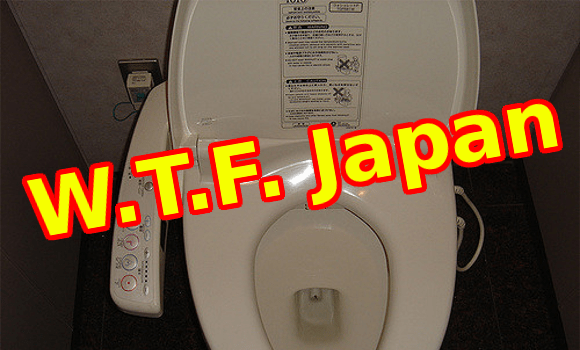
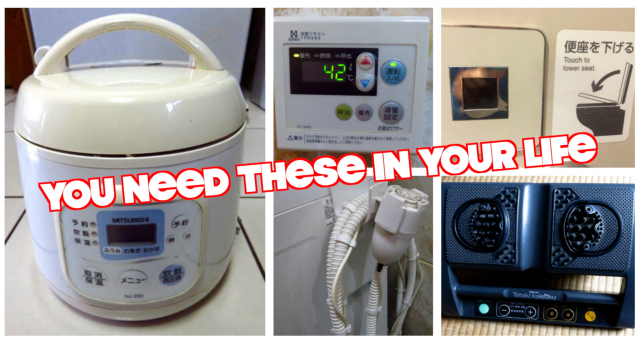
The Japanese are known for being incredibly efficient, so you’d expect them to also have the most efficient gizmos. Today, we’re looking at eight Japanese gadgets that we’ve become so dependent on, we can’t live without them!
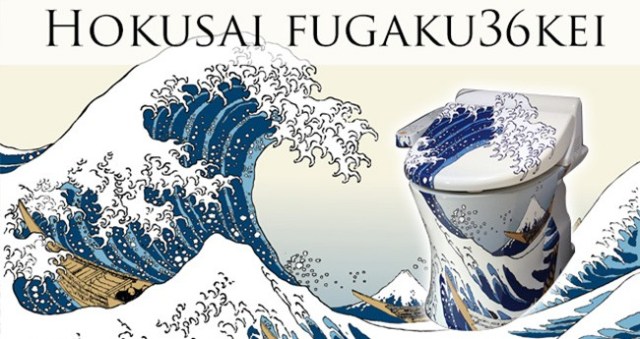
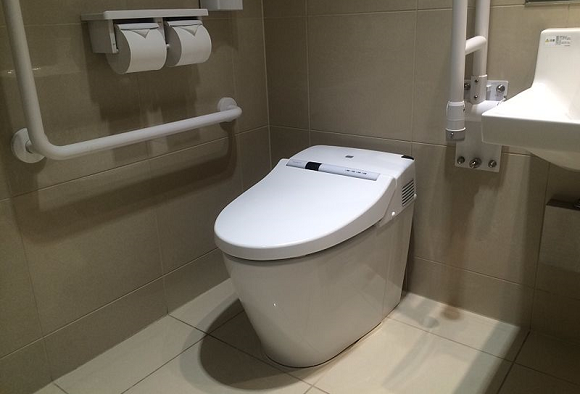
Japanese toilets continue to lead the way with a new range of beautifully decorative models.
Earlier this year, nearly 1,200 rail stations in Japan chose to ban the use of selfie sticks in reaction to the dangers of users not paying attention to their surroundings and the general nuisance caused by the photo-snapping peripherals in crowded areas. Now, East Japan Railways, Japan’s largest train operator, is taking aim at another problem: people walking through the station while staring at their smartphones instead of watching where they’re going.
But while you can ban selfie sticks and only ruffle the feathers of tourists and other leisure-oriented train passengers, millions of people rely on their smartphones during their daily commute to keep in touch with family, coworkers, and clients. So instead of prohibiting them, East Japan Railways has started a campaign to remind people not to use their smartphones while walking, and the reminder is so gentle that you can put it in your butt.
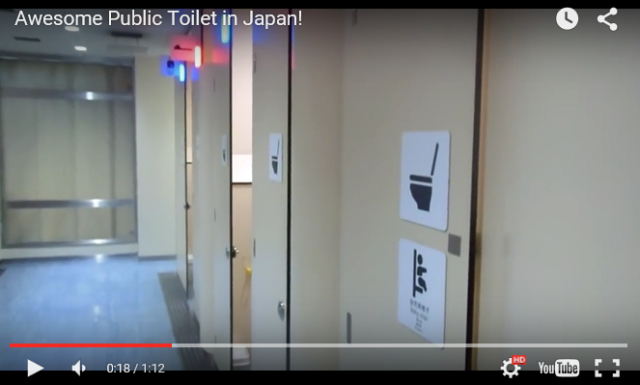
On long car trips in the U.S., I didn’t really find the prospect of using a highway rest stop bathroom significantly more appealing than just holding it until I got to my destination, whether that meant waiting until the next city or the next state. Honestly, given how filthy a lot of the public toilets were, I was generally happier with a deserted stretch of road or a grove of trees I could pull over near.
In Japan, though, it’s a different story, as this video of a rest stop bathroom shows it to be cleaner and classier than the one in many people’s homes.
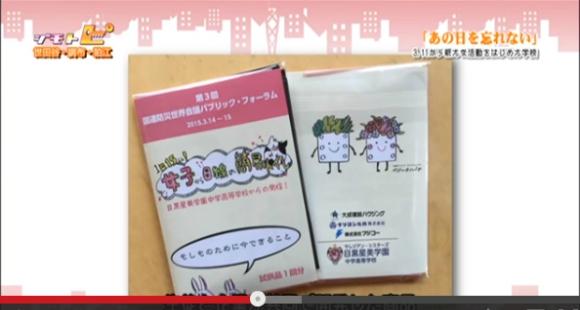
Although we explored public restrooms the world over in a previous article, we left out the fact that many refugees, natural disaster survivors, and other displaced people have no access to the modern plumbing many of us take for granted. For those living in areas where public toilets are unavailable, a trip to the bathroom is at best a chore, and at worst a major sanitary concern.
Luckily technological advances are being made in order to help remedy these problems, and so far 2015 has been a promising year in that regard. UK researchers and volunteers were able to successfully create an urine-powered outhouse, while over in Japan a high school girls’ volunteer club recently came up with a new economic and hygienic portable toilet option.
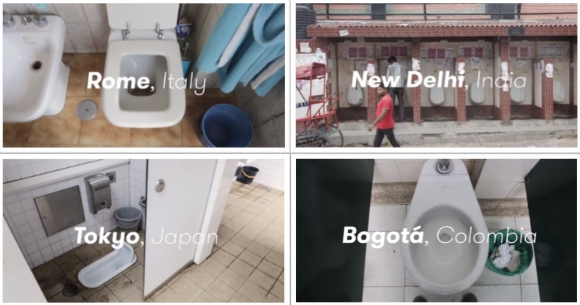
Love and music may not have borders, but neither do other universal concepts like the call of nature.
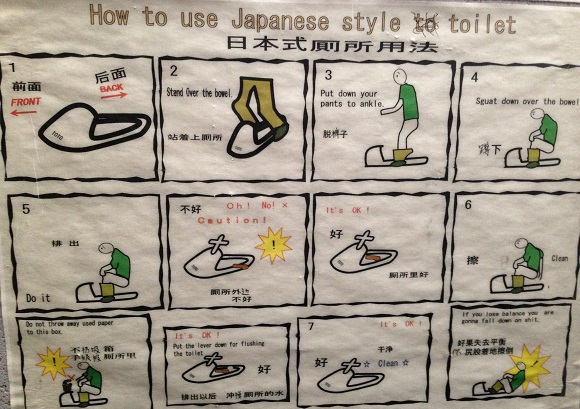
Although Japan is famous for its modern toilet technology (there’s even a museum now), many non-Eastern Asians are often taken aback when they visit the country and have their first encounter with the older, squatting kind. Love ‘em or hate ‘em, they’re a staple in most Japanese schools, parks, and stations.
The fact that there’s such a gap in modern toilet technology got us curious about how toilet models and their degree of upkeep varies worldwide, and fortunately one brave soul has gone through the trouble of filming bathrooms across the globe to answer this very question.
Read More
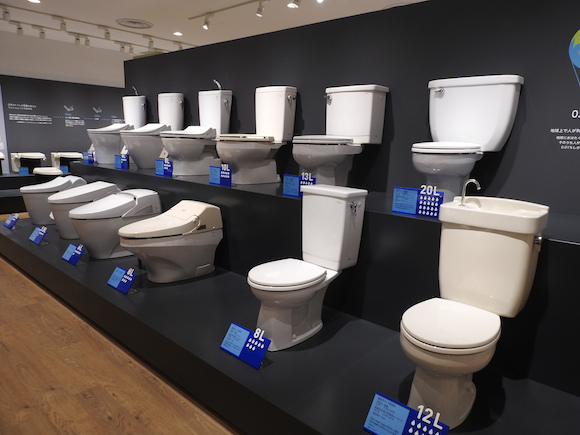
What would modern life be like without the humble toilet? Actually, we’d rather not think about that.
Many of us around the world should direct our thanks to TOTO Ltd., the world’s largest manufacturer of toilets and the very company that invented the washlet. In fact, Friday, August 28 marked the grand opening of the new TOTO Museum in Fukuoka Prefecture, where the company was originally founded in 1917.
Takashi Harada, our Japanese reporter who proclaims that he couldn’t survive a day without a washlet, immediately made a bee line to the new sanctuary to give thanks to the toilet gods and to learn a bit about the historical evolution of the toilet.

Earlier this week, what is being hailed as Japan’s “trial of the century” by many (in our office) has come to an abrupt end. The Osaka District Court handed down some rough justice in the case of a company president who sued the building he was renting office space from to the tune of 840,000 yen (US$6,800).
The president’s claim that the building’s urinals had caused excessive splash-back of pee were dismissed due to several reasons including the president’s own “pee experiments” being deemed inadmissible by the courts.
Was the president a quack who didn’t know how to urinate correctly? Or was he a victim of greedy cost cutting landlords and toilet moguls? This is their story based on court documents.
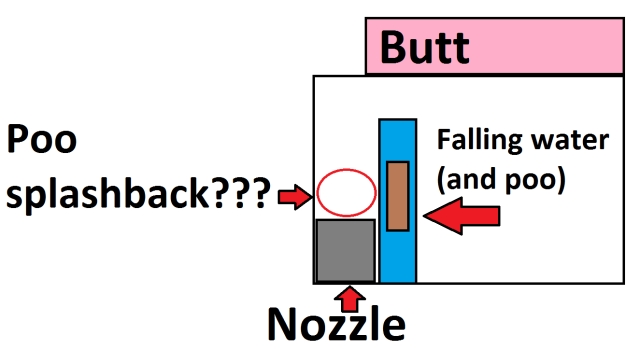
After cars and video game consoles, fancy toilets just might be Japan’s best-known technological achievement. In a society that prizes cleanliness, it’s no surprise that being able to push a button and have a warm stream of water wash your backside has become one creature comfort many can’t do without.
As such, just about everyone in Japan is happy to have a washlet, as bidet-equipped toilets are called here, in their home. Some people can’t help but wonder, though, if they’re spraying someone else’s fecal matter back up on themselves when they use a washlet in a public restroom.

Picture the scene: you’re waiting for your number to be called at City Hall or some other municipal building in rural Japan, when suddenly your stomach starts growling and your gut begins to twitch and spasm as that super-greasy kimchi ramen you had for lunch is pushed at top speed through your digestive tract. If you don’t go now – right now – things could get messy fast, so you make a beeline for the restroom and hope that there’s a stall free. Inside the restroom, you charge towards the half-open door on the end, a layer of sweat forming on your brow as your body starts counting down, T-minus 10 seconds to total evacuation.
Then it hits you: the stall you’re standing in is fitted not with a luxurious, bidet-equipped, warms your backside and plays music at you Washlet brand of toilet, but an old-school, upside-down urinal built into the floor Japanese squat toilet.
There’s no backing out now. The deed must be done. The question is, how traumatised will you be after using it?

We at RocketNews24 previously told you about 10 Things Japan Gets Awesomely Right. Now we want to tell you about ten more things that are equally awesome, but especially for women in Japan. It doesn’t mean that men don’t also find these things impressive, but we’re betting that some of these have never been noticed by men, because, well, they were designed with women in mind.
Every woman likes to be pampered every now and then, and in Japan it’s just too easy to get used to some of the every day niceties we enjoy! Of course the Japanese are known for being polite, which helps tremendously to get through any stressful day, but Japan goes that extra step sometimes to make things that much nicer. After all, it’s the little things in life that matter, right?
So here’s our list of 10 things that make it so darn nice to be a woman in Japan. Get ready, ’cause you’re gonna love these!
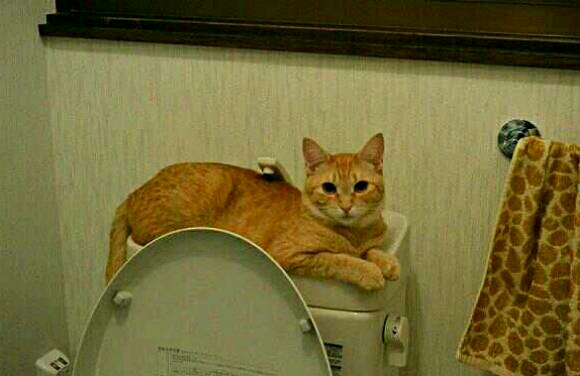
Cats are known throughout the world for their amazing ability to put themselves exactly where they don’t belong. Whether they’re plunged deep where the sun doesn’t shine into a narrow crawl space or looking down on their “hoomans” from the attic, there’s no end to their hiding spots.
However, one Japanese Twiter user found her cat in what could best be described as a “compromising” position…under the toilet faucet!
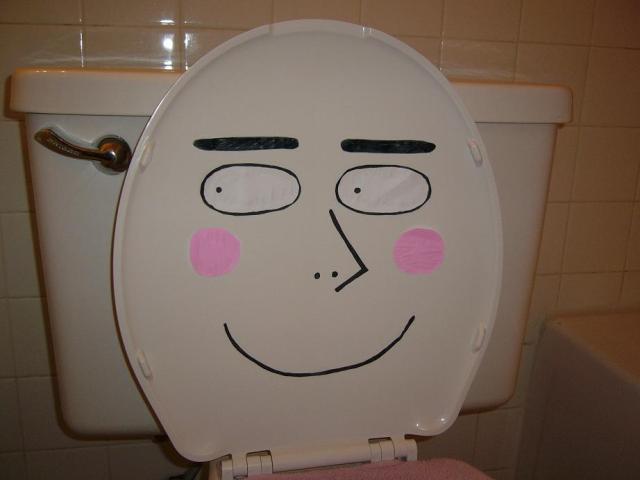
Here at RocketNews24 we love a good toilet story, whether it’s the health benefits of old-school squatters or a visit to a long drop. And the washlet toilet, with its wash-and-blow dry function, noise-masking function and hilariously perplexing control panels, is one of Japan’s most famous inventions.
But what if, just like Napoleon’s height and the Vikings’ spiky helmets, the ultimate icon of technological wizardry is also surrounded by misconception and mystery? What if (almost) everything we know about super-toilets is wrong?
Think you know your washlet? Think again.
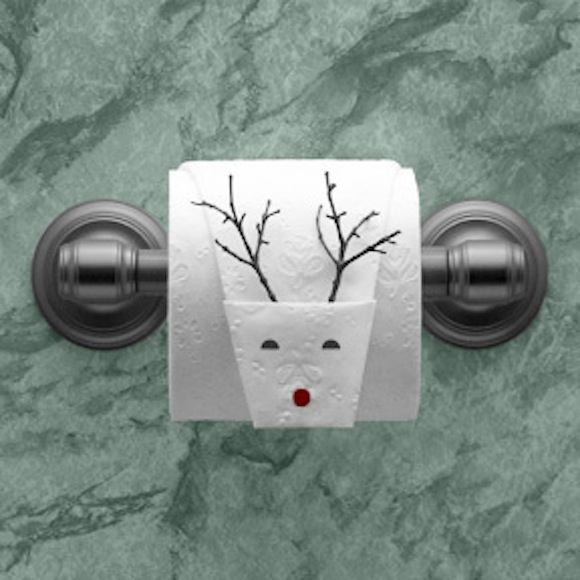
Hotel and restaurant bathrooms have really done a number on us by introducing a new level of hospitality through toilet paper etiquette. When the next sheet of paper on the roll is folded into a neat triangular point, we’re made to feel that extra bit special, safe in the knowledge that the area has recently been attended to, as if the place was just done up in anticipation of our arrival.
One lady in the United States has taken the triangular toilet paper fold to a whole new level, incorporating traditional Japanese origami concepts to produce a book of cute, funny and surprisingly beautiful designs to dress up the toilet roll in your bathroom. From swans to candles, who knew toilet paper could be so adorable?
Have you ever gotten on an elevator in the lobby, pressed the button for the seventh floor, and then groaned with the realization that you needed the sixth? Or had to throw out a pair of scissors grown dull through years of use?
There are millions of small annoyances and frustrations that seem basically unavoidable. They’re not really serious, but wouldn’t it be nice if someone could go around making our lives easier? While that probably won’t happen until the robot revolution (come on, WALL-E!), there are a few tricks that you can use to fix these tiny frustrations, so join us after the break for some awesome life hacks from Japan!
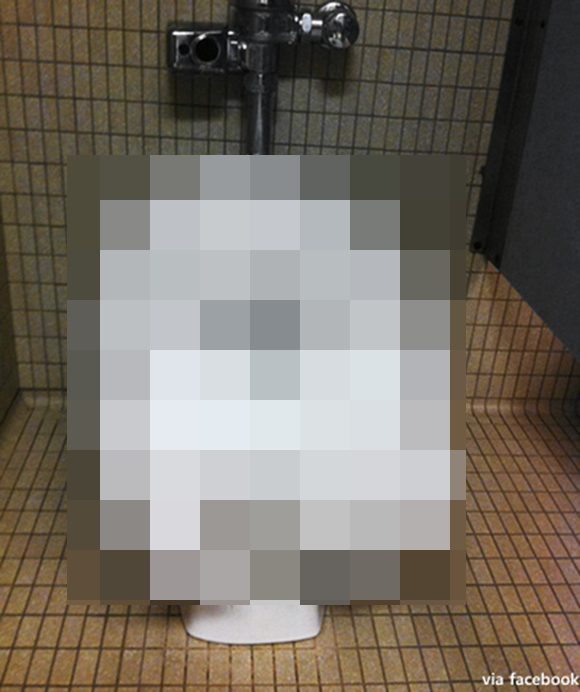
No one likes using public toilets, do they?
With the smell, the uncomfortable and unfamiliar surroundings, and the fear of butt-cooties latching onto our heinies, it’s only out of desperation that most people will drop their pants and park their naked butts onto a public toilet seat. So when one of the more fastidious members of society is faced with a dire situation, what do they do?
MOST POPULAR
Now
 Japanese manhole lid raises eyebrows with fertility god symbol that looks like… well, you know
 Foreign man arrested for walking on Shinkansen tracks, claims he was on the run from yakuza
 Man bites woman at cherry blossom park in Japan, dies shortly after
 Family Mart unveils new Japanese bread that elevates convenience store food to mocchiri levels
 Häagen-Dazs releases new Green Tea sandwich in Japan for a limited time
 Survey reveals Japan’s Generation Z dresses for social media, not for self-expression
 Tokyo turns its phone booths into free Wi-Fi hotspots, and here’s how to use them
 Naruto and Converse team up for new line of shinobi sneakers[Photos]
 Sleep next to the railroad tracks at the closest hotel to a train station platform in Japan
 This easy, camp-friendly gratin dish will keep you warm this winter with hot cheesy creaminess
Weekly
 Pokémon and Ikea Japan cross over into each other’s worlds with collaboration events
 Japan reportedly adding Japanese language skill requirement to most common foreigner work visa
 Starbucks Japan closing only Shinkansen platform branch for popularity-triggered renovations
 Two food hacks take Japan’s convenience store fried chicken to amazing new sandwich heights
 You can assemble a well-balanced team of Pokémon, them eat them, thanks to Japanese cake chain
 Fading Tokyo – Searching for signs of the Showa era as local neighborhoods evolve[Photos]
 Pokémon lacquerware series expands for Year of the Horse with new handcrafted design[Video]
- Tokyo turns its phone booths into free Wi-Fi hotspots, and here’s how to use them
 Tokyo teahouse serves up a sakura matcha dessert you won’t find anywhere else
 Totoro Fund line of beautiful artwork and apparel lets you help the real-world Totoro Forest
Monthly
- Pokémon and Ikea Japan cross over into each other’s worlds with collaboration events
 Japan now has a special desk for people who work at home with a pet cat[Photos]
- Japan reportedly adding Japanese language skill requirement to most common foreigner work visa
 Famous Tokyo cherry blossom spot installs view-blocking screens to fight overcrowding[Video]
 Uniqlo announces new T-shirts for One Piece, Naruto and more for manga publisher’s 100th birthday
 Train station platform ramen store closes its doors on half a century of history in Tokyo
 Starbucks Japan releases new My Fruit³ Frappuccino at only 34 stores around the country
 Studio Ghibli releases Catbus pullback keychain that runs like the anime character
 Krispy Kreme releases Super Mario doughnuts in Japan for a limited time
 Japanese onsen egg maker from 100-yen store Daiso needs to be on your shopping list
Yearly
 Survey asks foreign tourists what bothered them in Japan, more than half gave same answer
 Japan’s human washing machines will go on sale to general public, demos to be held in Tokyo
 Starbucks Japan releases new drinkware and goods for Valentine’s Day
 We deeply regret going into this tunnel on our walk in the mountains of Japan
 Studio Ghibli releases Kodama forest spirits from Princess Mononoke to light up your home
 Starbucks Japan releases new sakura goods and drinkware for cherry blossom season 2026
 Japan’s newest Shinkansen has no seats…or passengers [Video]
 Major Japanese hotel chain says reservations via overseas booking sites may not be valid
 Put sesame oil in your coffee? Japanese maker says it’s the best way to start your day【Taste test】
 No more using real katana for tourism activities, Japan’s National Police Agency says
RECOMMENDED STORIES
 Survey reveals Japan’s Generation Z dresses for social media, not for self-expression
 Tokyo turns its phone booths into free Wi-Fi hotspots, and here’s how to use them
 Naruto and Converse team up for new line of shinobi sneakers[Photos]
 Sleep next to the railroad tracks at the closest hotel to a train station platform in Japan
 This easy, camp-friendly gratin dish will keep you warm this winter with hot cheesy creaminess
 Taiwan’s most beautiful politician kicks groper in balls during visit to Japan
 New 7-Eleven sandwich goes viral in Japan, but is it everything it’s cracked up to be?
 You can assemble a well-balanced team of Pokémon, them eat them, thanks to Japanese cake chain
 Schoolkids learn life skills through shopping field trips at street markets in Kochi Prefecture
 This upcycled Kyoto train cafe is the ultimate kawaii spring experience
 Shikadamari: The Nara deer summer gathering phenomenon that baffles visitors every year
 Kyoto planning surprise late-night inspections of Airbnb-style rentals to fight overtourism
-
