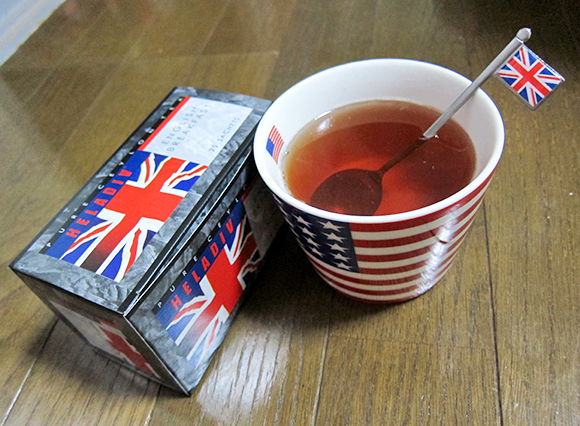
From elementary school all the way through high school, Japanese kids are required to study the convoluted subject of English as a second language. It’s an enormous struggle for many, as Japanese natives must familiarize themselves with not only the vocabulary and grammar points, they must adjust their ears to pick up on the plethora of sounds that do not exist in their mother tongue. To top it all off, when the existence of various English accents is brought to light, their brains can become confused even further.
A recent post on a Japanese message board asked people to list the differences between British English and American English. The comments extended far over 100. Here’s what some of the respondents had to say.
The differences between English accents aren’t always quantifiable, especially when understood through the filter of a different language. Those that are quantifiable were listed off exhaustively. Many of the people who responded to the online question focused in on differences in spelling and commonly used words. For example, color and colour, theater and theatre, elevator and lift, soccer and football, subway and underground. The list goes on and on.
Many other commenters made an effort to explain the differences in pronunciation as they understood them through a Japanese filter, keeping in mind that Japanese people have a difficult time hearing and denoting the sound of the letter R. To a Japanese person the word “water” spoken with an American accent sounds like “wa-daa,” while a British accent comes out sounding like “woh-ta.” The same is true for “better.” To a Japanese ear, an American accent comes across as “beh-daa,” and a British one sounds more like “beh’taa.”
Of course, there were some instances where differences between American and British English were mentioned, where in fact none exist! One person was under the impression that people speaking British English are more likely to ask, “Have you got a pen?” while Americans default to the phrase, “Do you have a pen?” I don’t know about the rest of you Americans, but if I’m speaking with other natives, I opt for the former. Another commenter made it sound as though the words “fall” and “autumn” are used exclusively in one country over the other, though I know that in America that these two are wholly interchangeable.
In the end though, things like spellings and region-specific vocabulary do little to capture feelings associated with hearing different English accents. What I’d like to know are the impressions that Japanese people get when hearing different forms of English. So, here’s what some of the respondents had to say on that front.
- I get the impression that British pronunciation tends to stay more faithful to the spelling.
- British English is like a Kansai accent, while American English is like standard Japanese.
- ^ You’ve got that backwards.
- I feel like British English is crisper.
- It’s like, British English *laughs* where American English would have LOL’d.
- Isn’t it that British English is easier for Japanese people to understand?
- I did a 3-year study abroad in America, but for the most part I still can’t understand British English. I feel as though American English is more spoken, while British English is more written.
- British: Just like we learned in middle school.
American: The T sound is strange. These examples may be extreme, but water becomes “woh-daa” and 20 is pronounced “tu-we-nee.” - ^ Most middle schools are taught American English.
- British English is hard to understand.
- British people often make American English sound idiotic.
- British people never lisp.
- Harry Potter is more like British English.
- ^ Harry Potter IS British English.
- Look up US vs. British on YouTube, and you’ll understand.
- British English is undoubtedly more refined.
- British English is nobler. It feels nice to listen to.
- I’d really like to learn British English, but because Japan is America’s lapdog, that not very likely huh…
- There are differences in stuff like pronunciation? How much they use the F-word?
Very astute observations all around! Some of them seem a little off, but I’ll leave it up to you guys to debate which points are closest to the truth.
Source: VIPPER na Ore
Image: RocketNews24