
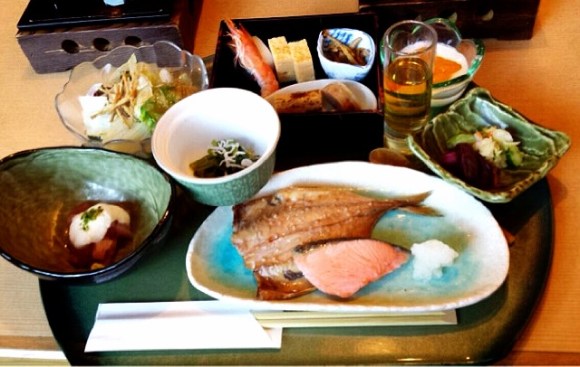
If you’ve noticed, many of our writers here at Rocketnews24 have crossed the seas to make Japan their second home. Sure, we love the local flavor, but sometimes we just crave a solid meal that smells of our hometown. The same goes for Japanese nationals living abroad.
Even though Japanese cuisine has more or less infiltrated most of the major cities worldwide, domestic foodstuffs and condiments still remain mostly inaccessible and rare in most countries. Japanese blogger Madame Riri shares a list of 10 Japanese foods that can be made at home, no matter where that may be! We’d like to call it the lifesaver list for Japanese abroad, or the inspiration list for non-Japanese who would love an authentic taste of Japan in their own kitchen!
1. Pseudo Chinese Noodles
In Japan, yakisoba or Chinese noodles can be readily bought at supermarkets for as low as 30 yen (US$0.30) per serving. These versatile noodles are a common sight on the dining tables of Japanese families, be it stir-fried, in soup, or even as hiyashi chuka (chilled Chinese noodles), disputably the most popular Chinese dish among the Japanese. But in many western countries, the Asian noodles tend to be pricey and sometimes hard to find. But here’s a neat trick that turns the number one “noodle” in the West – Spaghetti – into pseudo Chinese noodles in your very own kitchen!
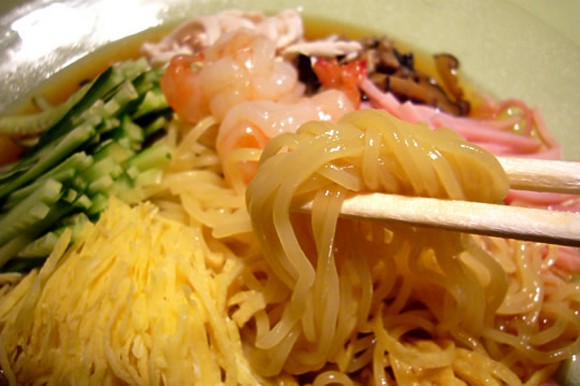
Simply throw in some sodium bicarbonate, otherwise known as baking soda, together with some salt when boiling the pasta. And that’s all there is to it! The sodium bicarbonate works its magic on the pasta, giving it a texture and taste that is uncannily similar to Chinese noodles. Madame Riri also suggests experimenting with pasta of different thickness to suit the dish; spaghetti for champon and cappellini (angel hair pasta) for ramen.
2. Homemade Natto
Natto, fermented soybeans, is a traditional Japanese food known for its slimy texture and characteristic smell, which earned it the nickname of “stinky beans” among many non-Japanese people. If you’re able to stand the stink though, this Japanese acquired taste is a healthy source of protein and vitamins, and is said to prevent cancer, lower your chances of heart attacks and enhance health in general. While natto is commonly found in Japan at economical prices, exported batches available overseas are often expensive and less flavorful, having had its strong smell and taste mellowed down to adapt to foreign consumer tastes.

Ultimately, natto is made from soybeans, which are way more accessible than the fermented food itself in most countries. All you have to do is soak the beans in water for half a day or longer, boil or steam the beans for a couple of hours so that they’re thoroughly cooked and soft, then put them in a container for fermentation. Keeping the beans at a temperature of 40 degrees Celsius is the key to ensure quality fermentation, which can be a challenge to maintain, but if you have a yogurt maker at home, it will make the process as simple as pouring the cooked beans in and switching the machine on. Soaking and boiling the beans may be slightly time-consuming, but having made homemade natto is definitely an awesome addition to your Facebook profile if you ask me!
3. Sesame Dressing
The all-time favorite Japanese style dressing within and outside of Japan. Its delicate balance of sweet, sour and savory flavors, slightly milky texture, and the appetizing fragrance of sesame seeds works wonders to invigorate appetites, and is most commonly used on salads (duh!), cold tofu, or as a dipping sauce for cold shabu-shabu.
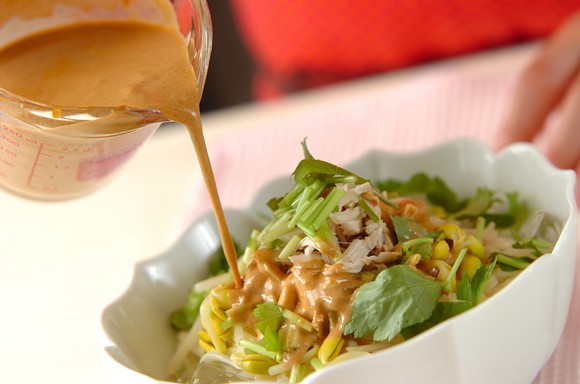
You might not be able to find it at your local supermarket, and even if you do, it probably costs twice or three times the price it is in Japan. The good news is, as sophisticated as it sounds, you can actually mix up your own sesame dressing with just a couple of simple ingredients. All you need is roasted sesame seeds, mayonnaise and rice vinegar (best to use Japanese variations for these two to achieve authentic flavor), and a pinch of sugar and salt if you prefer. Mix around until you get the right consistency and taste you like, and voila! You’re ready to wow your friends with a Japanese style dish!
4. Homemade Tofu
Tofu (bean curd) is recognized as a healthy ingredient pretty much all over the world. The soybean product is stunningly cheap in most Asian countries, but can be slightly pricey over in the West. Apparently it costs about 400 yen (US$4) in Paris, more than four times its price in Japan. Why pay the hefty price tag when you can make your bean curd out of soy milk?
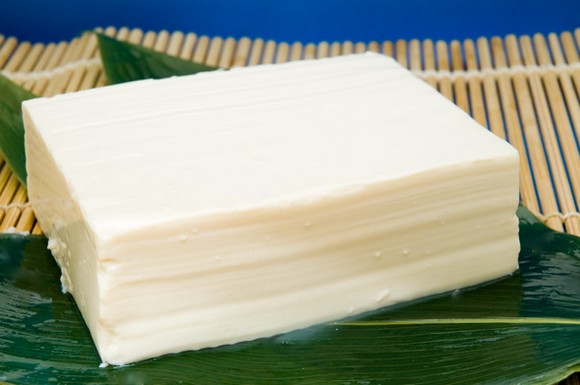
Apart from soy milk, you will need some nigari (magnesium chloride) to help the soy milk coagulate into a solid form. Be sure to use food grade magnesium chloride flakes or liquid for this. Detailed instructions can be found on this wonderful recipe!
5. Shiozake
Unlike smoked salmon, shiozake (salted salmon) can rarely be found in supermarkets outside of Japan. But fresh salmon cuts are commonly sold in supermarkets, especially in the West. Simply by sprinkling salt (amounts of 2% the weight of the filet seems to be the perfect ratio) over the fresh salmon and letting it sit in the refrigerator for two days, you’ll have deliciously flavored salted salmon ready for cooking!
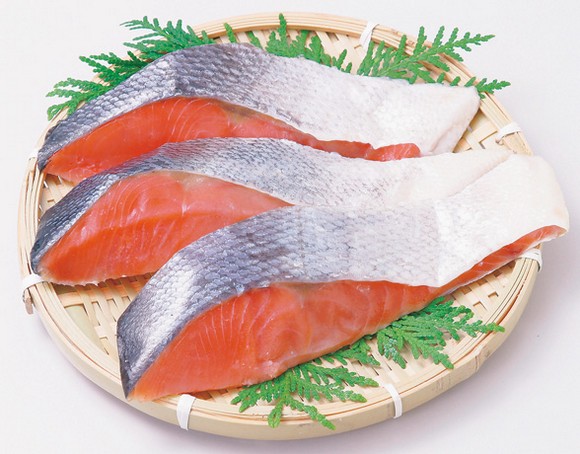
Preparing the shiozake is as simple as pan-frying it, or putting it on the grill for a couple of minutes. Enjoy it whole and fresh from the pan, cut up as fillings for a sandwich or sushi, or break it down into flakes as a topping for salads or onigiri (Japanese rice balls)!
6. Dried Mackerel
Similar to salted salmon, dried mackerel is another popular Japanese food that is rarely available outside of Japan, but can be easily made with simple ingredients at home. In this variation, you’ll need fresh horse mackerel, some salt, and skewers. Carefully remove the scales of the fish, then slice the fish open from its back, remove its innards, then clean and pat it dry with a paper towel. Sprinkle some salt on both sides. Put a skewer through the fish horizontally to keep it flat and open as it dries, and hang it up, leaving it to air dry for a day in a well-ventilated place (just like hanging out your laundry). Pan-fry or grill it and you’ll have an authentic Japanese home-cooked dish!
7. Umeshu
Umeshu (plum wine) is a type of Japanese alcohol that can be easily made at home. Although umeshu can be bought at supermarkets or convenience stores in Japan, many families enjoy the process of concocting their own variation at home when plums are in season, usually from June through July.

Even if you reside overseas and have no access to Japanese liquor, you can easily make your own umeshu out of fresh plums, vodka and rock sugar. Wash and dry the plums (you could also use apricots as an alternative if you can’t get ume plums), layer the plums and rock sugar proportionally in a large jar or plastic container, then pour in the vodka. Make sure the container is sealed air-tight. Let it soak for at least three months before enjoying your homemade umeshu. Patience is the key! The alcohol-soaked fruits can also be eaten! Have it with your glass of umeshu, or with a scoop of vanilla ice cream and a drizzle of honey as a classy dessert!
8. Handmade Udon
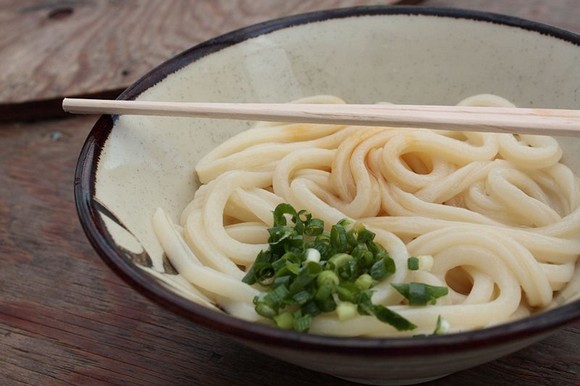
Udon, the thick, chewy Japanese noodles popular among Japanese and foreigners alike, takes a good kneading to achieve its characteristic texture, but requires nothing more than medium ground wheat flour, water and some salt to make! Traditional methods involve stepping on the dough in order to make it nice and chewy. If you have children brimming with unspent energy, or would love some interesting interaction at a home party, here’s the recipe for this marvelous kitchen activity!
9. Warabi-mochi
If you’re a fan of traditional Japanese sweets, you must be familiar with mochi. It can be challenging to make since it involves strenuous pounding of glutinous rice flour, but warabi-mochi, on the other hand, can easily be made by heating potato starch, sugar and water over a stove. It’s so easy to make, we won’t even bother writing it out, just check out the video below!
10. Homemade Miso
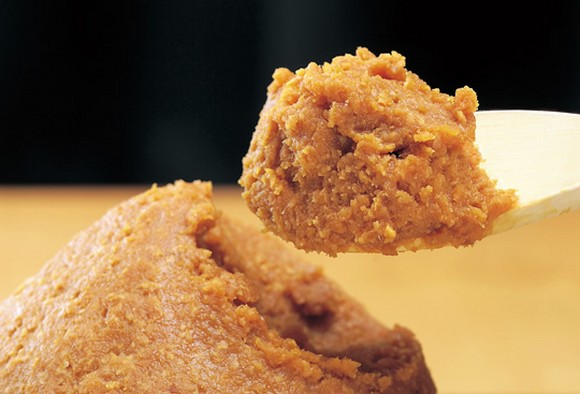
Of course, the all-mighty seasoning that represents Japanese cuisine, miso! Anybody who loves Japanese food knows about miso soup. But did you know that the Japanese use miso in a multitude of ways? Miso is used in stews, stir-fry and even grilled dishes. It’s barely even exaggerating to say that the Japanese can’t live without it. But like many of the items listed above, miso is difficult to get, or expensive, in many countries apart from Japan. You’ll need koji (fermented rice) in order to make your own miso, and it takes quite a bit of time and effort, but if you’re a Japanese person living overseas with limited access to miso, this could be the best way out!
Source: Madame Riri
Top image: RocketNews24
Inset images: Shokusai Yawa, Gajetto Tsushin, E.recipe, Ono Blog, Okaimono Gekijo, CHR’s Diary, Wikipedia, Shinshu Ogawa no Sho
 10 vegetarian foods you can order at almost any Japanese restaurant
 The top 30 foods that go best with white rice, according to Japanese netizens
 Do try this at home! 5 foods that you can recreate in taste by combining other foods
 Natto-infused ramen is a thing — we tried it, we love it【Taste test】
 Top 10 food disasters prepared by Japanese wives who have extraordinary talent in the kitchen
 Japan reportedly adding Japanese language skill requirement to most common foreigner work visa
 Man bites woman at cherry blossom park in Japan, dies shortly after
 New 7-Eleven sandwich goes viral in Japan, but is it everything it’s cracked up to be?
 How to take your home ramen to the next level by making your own chashu pork in a frying pan
 Peanuts and Coke becomes a viral hit in Japan, but is it a trend worth joining?
 Foreign man arrested for walking on Shinkansen tracks, claims he was on the run from yakuza
 7-Eleven Japan’s new baked-in-store sweet treat is only available in three parts of the country
 Deer that appeared in downtown Osaka gets a new home, a new name, and a lot of snacks[Video]
 Japanese man gets drunk and falls asleep on Tokyo streets, then gets robbed by foreign national
 Kanamara Penis Festival draws huge crowds from around Japan【Photos】
 Pokémon and Ikea Japan cross over into each other’s worlds with collaboration events
 Starbucks Japan closing only Shinkansen platform branch for popularity-triggered renovations
 Two food hacks take Japan’s convenience store fried chicken to amazing new sandwich heights
 You can assemble a well-balanced team of Pokémon, them eat them, thanks to Japanese cake chain
 Fading Tokyo – Searching for signs of the Showa era as local neighborhoods evolve[Photos]
 Pokémon lacquerware series expands for Year of the Horse with new handcrafted design[Video]
 Tokyo turns its phone booths into free Wi-Fi hotspots, and here’s how to use them
 Tokyo teahouse serves up a sakura matcha dessert you won’t find anywhere else
 Totoro Fund line of beautiful artwork and apparel lets you help the real-world Totoro Forest
 Japan now has a special desk for people who work at home with a pet cat[Photos]
 Famous Tokyo cherry blossom spot installs view-blocking screens to fight overcrowding[Video]
 Uniqlo announces new T-shirts for One Piece, Naruto and more for manga publisher’s 100th birthday
 Train station platform ramen store closes its doors on half a century of history in Tokyo
 Starbucks Japan releases new My Fruit³ Frappuccino at only 34 stores around the country
 Studio Ghibli releases Catbus pullback keychain that runs like the anime character
 Krispy Kreme releases Super Mario doughnuts in Japan for a limited time
 Japanese onsen egg maker from 100-yen store Daiso needs to be on your shopping list
 Survey asks foreign tourists what bothered them in Japan, more than half gave same answer
 Japan’s human washing machines will go on sale to general public, demos to be held in Tokyo
 Starbucks Japan releases new drinkware and goods for Valentine’s Day
 We deeply regret going into this tunnel on our walk in the mountains of Japan
 Studio Ghibli releases Kodama forest spirits from Princess Mononoke to light up your home
 Starbucks Japan releases new sakura goods and drinkware for cherry blossom season 2026
 Japan’s newest Shinkansen has no seats…or passengers [Video]
 Major Japanese hotel chain says reservations via overseas booking sites may not be valid
 Put sesame oil in your coffee? Japanese maker says it’s the best way to start your day【Taste test】
 No more using real katana for tourism activities, Japan’s National Police Agency says
 How to make epic umeboshi like a Japanese grandpa
 Japan’s first made-to-order natto store will make you fermented beans without the putrid smell
 What’s really for breakfast? 20 Japanese people give us a peek at their morning meal【Photos】
 Easy yet tasty instant miso soup ball recipe will help you clear out your kitchen【SoraKitchen】
 BonAppetour startup lets you cook and dine with Tokyo locals in their homes
 Make your best-tasting onigiri taste even better with this easy recipe! 【RocketKitchen】
 Natto for beginners? How to half-make Japanese fermented soybeans at home【SoraKitchen】
 Japan’s 10 weirdest ice cream flavors
 10 distinctly Japanese comfort foods
 We put weird food in curry to make it “un-curry-like”, find a killer secret ingredient instead
 How to make pickled plums like the Japanese grandparents you may or may not have【Part 1】
 The top 10 most mildly infuriating kitchen disasters, as presented by Japanese Twitter
 Is British food really that bad? Our Japanese writer tries her hand at some UK dishes
 New magic powder purports to make natto edible even for bean-haters
 We tried making natto the old-fashioned way, and the result was unexpected but delicious 【SoraKitchen】
 Onigiri without the nigiri – Japan’s traditional rice balls get an update