

It’s no secret that Japan continually lands at the bottom in global gender gap reports. In 2012, the World Economic Forum ranked Japan 101 in regard to women’s participation in the economy and politics. In 2013, Japan placed 105 (out of 135 countries), putting it behind Burkina Faso in gender equality.
Based on these findings, you may think it doesn’t seem like Japan is a very good country for women, but you’d be wrong. While there are huge shortcomings in gender gaps in the workplace, economy and politics, in other sectors of Japanese society some would would argue that Japanese women have “too much” power.
Let’s take a look at five areas where women are most powerful in Japan.
Prime Minister Shinzo Abe’s new initiative, dubbed “womenomics,” aims to break down traditional male-oriented corporate culture and make it easier for women to keep jobs and advance their careers while raising children. Currently, 50 to 60 percent of Japanese women quit work after giving birth. The womenomics initiative will put one million women into the workforce, says Abe, and he hopes to propel at least a portion of the 54.5 percent of females in part-time work into full time jobs.
While this is an admirable goal and one perhaps necessary to offset an aging and shrinking workforce, the plan may well backfire. The reason is that women in Japan are already pretty powerful and they may not be willing to trade their efficacy in some areas for that in others.
1. In Japan, motherhood is a highly respected career
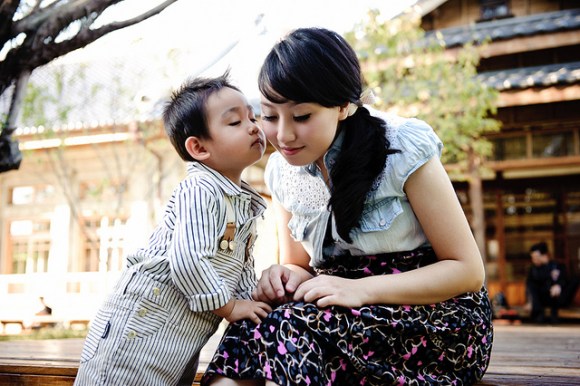
And I do mean career. A Japanese mother is 100 percent dedicated to raising her children, overseeing their education, and managing the household. And this she is extremely proud of. Indeed, many Japanese people can’t understand why being a housewife isn’t as highly regarded in many Western countries. Much emphasis is placed on bonding with children (ie: being there all the time), educating them (kindergarten starts at three years old) as well as the usual child-minding, cooking nutritious meals, and taking care of kids’ health. The mother is expected to completely devote herself to taking care of her children in every way. If you have any doubts, check out the current kyaraben trend, where women put hours of work into making the perfect cute lunch for their child to take to preschool. Once children enter kindergarten, mothers are expected to painstakingly follow school instructions on everything from attaching permanent name tags to every personal item to making sure children give proper greetings to each other, their teachers and elders.
2. Japanese women enjoy high global standards of education

While many women go on to four-year colleges and universities, a large percentage attend two-year junior colleges where they may learn secretarial skills such as book-keeping, they can also major in subjects such as nutrition, childhood education, nursing, music and literature. Notice a pattern here? All these latter subjects are aimed at producing good mothers who can raise well-rounded, educated children. After all, if she’s going to raise a family, she may as well spend two years learning how to do it properly, just like you would for any other career.
3. In Japan, the woman holds the purse strings

With such a woman at the helm of the household, it should be no surprise that when she gets married, she is also in charge of the finances. The husband turns over his salary to his wife who takes care of all the outgoings and gives him an allowance to spend, which is reportedly around US$500 per month. Yep, women rule the roost here. She also has her own “secret” bank account which she adds to each month in order to cover her own needs, an occasional splurge or even to start a retirement nest egg.
4. Japanese women enjoy greater maternity care support
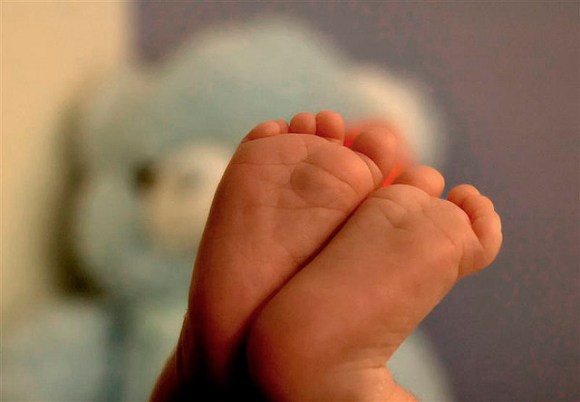
When it comes to having babies, no one does it better than the Japanese. Along with maternal and infant mortality rates being among the lowest in the world, there is no going home immediately after the woman has given birth. Instead, the mother is given 5 to 10 days in the maternity ward to rest and recover. During this time, new mothers will be instructed, by professionals, on how to care for their newborn. Women can choose either a public or private institution in which to give birth and Japan’s National Health Insurance pays out a standard 420,000 yen (US$3,927) to the mother, an amount based on the cost of an average delivery.
In addition, her own mother will often come to stay at her house for the first month after the baby is born to help with cooking and cleaning as well as to look after any other small children already at home and to be there to offer support, encouragement and child-rearing advice.
5. Women almost always get custody of the children in a divorce

According to the Civil Code in Japan regarding divorce, parental rights are given to either the mother or the father, not both. Joint custody is illegal and history has shown that courts will favor the mother 80 to 90 percent of the time. The parent who does not receive custody often never sees their child again. While visitation can be arranged informally among the parents, many women choose to not allow it.
Hajime Tanoue, a visa immigration lawyer with Frontier International Legal Office, explains: “Prior to World War II fathers were granted sole custody of their children. After the war Gen. Douglas MacArthur reversed the law, giving the rights to mothers in divorce cases.”
“Mothers win 90 percent of court decisions concerning custody. Some ex-wives are insistent that their ex-husbands never see their children again. Even when a court decides that [the] husband can see the children once a month the ex-wife can refuse to comply and not suffer consequences for it,” says Tanoue-san.
So in Japan, it’s not always a man’s world. As a matter of fact, when it comes to family life, the man spends most of his time devoted to the workplace and doing overtime so that he can bring home the bacon.
With motherhood elevated to such an art, it’s hard to see why women would want to toss away a career in child-rearing in favor of Japanese corporate culture that dictates long working hours, job over family, and low wages–the real culprits in Japan’s lack of full-time women in the workplace.
Once you start seeing motherhood as a career, it makes you wonder if it is fair to ask or even expect women to switch to a different career just because it is more lucrative or because it fills employment needs. If women choose motherhood as a career and feel fulfilled, isn’t that good enough? If a man has decided to go to trade school to fulfill his dream of becoming a mechanic, would you ask him to change his career? And, if more women leave the home to work, who is going to fill the void at home?
In the U.S., it would be unfair to say that a man isn’t as capable of raising a a child as a woman. But that’s because we have a different work-life balance between our jobs and families. Japan’s work-life balance is more distinct: the men work, the women balance.
Top image: World Economic Forum
 What’s it like to be a working mother in China? We asked a Chinese mom
 Is Japanese language becoming less discriminatory towards women?【Women in Japan Series】
 6 surprising things about having a baby in Japan
 Japanese business women who’ve beaten the system 【Women in Japan Series】
 What’s the best way to close the gender gap in Japan? Japanese women weigh in
 Studio Ghibli releases the My Neighbour Totoro tea caddy, with a magical self-closing lid
 Starbucks Japan releases new My Fruit³ Frappuccino at only 34 stores around the country
 7-Eleven Japan releases a crazy new viral sandwich: Chocolate Sprinkles and Whipped Cream
 Create a tiny Ghibli anime world on your bookshelf with new miniature papercraft art kits
 Here are the top ten foodie factory tours for the fall throughout Japan
 Foreign tourists in Japan will get free Shinkansen tickets to promote regional tourism
 A man-made cave of wonders: the world’s biggest underground storm drain in Kasukabe, Japan
 Japan’s Mos Burger discontinues old teriyaki burger and rolls out new recipe, but is it as good?
 Criminals of Japan’s Edo Period Were Often Punished by Getting Face Tattoos
 Japan’s Mos Burger creates tempura rice bowl bento boxed lunch burger, but not for its menu
 Japanese onsen egg maker from 100-yen store Daiso needs to be on your shopping list
 Cherry blossoms begin blooming in Japan with record-early starts for sakura season
 Tokyo government organizes food truck event to clear out delinquent/homeless teen gathering area
 Nine amazing off-the-beaten-path cherry blossom spots in Japan for yaezakura and shidarezakura
 Stunning central Japan wisteria festival is like a purple fantasy straight out of a Ghibli movie
 When will the cherry blossoms reach full bloom in Japan this year?[Forecast]
 Studio Ghibli unveils new Rollbahn notebook in honour of Howl’s Moving Castle
 Studio Ghibli adds new anime tumblers to its cool streetwear brand in Japan
 Universal Studios’ Sailor Moon theme park attraction is finally coming to America
 Starbucks Japan unveils new sakura cherry blossom collection for hanami season 2026
 Train station platform ramen store closes its doors on half a century of history in Tokyo
 Studio Ghibli releases Catbus pullback keychain that runs like the anime character
 Nine great places to see spring flowers in Japan, as chosen by travelers (with almost no sakura)
 Starbucks Japan releases first-ever Hinamatsuri Girls’ Day Frappuccino
 Studio Ghibli adds new Mother’s Day gift sets to its anime collection in Japan
 Virtual idol Hatsune Miku redesigned with look that adds new elements and brings back old ones
 Survey asks foreign tourists what bothered them in Japan, more than half gave same answer
 Japan’s human washing machines will go on sale to general public, demos to be held in Tokyo
 Starbucks Japan releases new drinkware and goods for Valentine’s Day
 We deeply regret going into this tunnel on our walk in the mountains of Japan
 Studio Ghibli releases Kodama forest spirits from Princess Mononoke to light up your home
 Starbucks Japan releases new sakura goods and drinkware for cherry blossom season 2026
 Japan’s newest Shinkansen has no seats…or passengers [Video]
 Major Japanese hotel chain says reservations via overseas booking sites may not be valid
 Put sesame oil in your coffee? Japanese maker says it’s the best way to start your day【Taste test】
 No more using real katana for tourism activities, Japan’s National Police Agency says
 10 things that make Japan female-friendly【Women in Japan Series】
 5 Japanese women who can kick your ass (in martial arts)【Women in Japan Series】
 Why aren’t there more female entrepreneurs in Japan? Pull up a chair… 【Women in Japan Series】
 What Japanese women really think about the gender gap in Japan【Video】
 Four more things women are banned from doing in Japan【Women in Japan Series】
 Reasons why it’s harder to raise kids in Japan than in other countries…or not
 Is Japan’s “Daughter in a box” a myth?【Myth-Busters Series】
 Four frustrating attitudes women in Japan run into when interviewing for jobs, grouped by age
 Can you name 5 traditional Japanese arts that are distinctly female? 【Women in Japan Series】
 Three reasons why it’s okay to be a girly girl in Japan
 5 reasons why Japanese expats say “sayonara” to their homeland for good
 Four things women are banned from doing in Japan【Women in Japan Series】
 How old is too old for a boy to go into the women’s hot spring bath in Japan?
 Most female doctors in poll can understand Tokyo medical school reducing female applicant scores
 Young Japanese women like alcohol more than any other age group, almost as much as old men【Survey】
 New interview series with China’s unmarried women shows, shrinks attitude gap between generations