
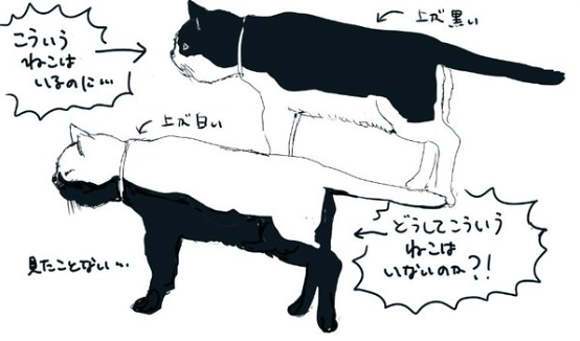
Japanese Twitter alights over one of the great mysteries of the cat world.
For all the time we’ve spent watching cat-related videos on the internet and idly scrolling through cute pictures of kittens on our phones, there was one thought that never crossed our minds: why don’t black-and white cats have pale backs and dark bellies? This is exactly the question that one Twitter user thought to ask last week, and the answers that are coming to light are almost as puzzling as the question posed.
▼ Ami Sugimoto was so intrigued by the elusive colour combination that she drew an anime-style sketch to illustrate her point. The black-and-white cat on the right is often seen, but why not a cat-like the one on the left?
いつもねこの事で疑問に思っている pic.twitter.com/xaTNTFGwPm
— 杉本亜未 (@SugimotoAmiInfo) May 31, 2016
With thousands of retweets, fellow Twitter users have been scratching their heads over the concept. One person, however, presented an interesting theory as to the reason why this occurs. According to @Valquasard, we have to go right to the very early stages of embryonic development to understand the entire process. While animals all carry a specific combination of genes which influence the colouring and patterns they will be born with, cells play a large part in producing those colours and patterns.
基本は色素の無い白色で、発生過程で色素を作る細胞が脊椎付近に発生→色素と対抗因子のT.ウェーブにより斑紋や縞模様に、初期に色素因子が多すぎると単一色に… で腹まで広がらないところで止まれば、背黒腹白模様に。
— バルカサード (@Valquasard) May 31, 2016
With white being the natural, unpigmented shade, as the embryo develops, the cells responsible for pigmentation move downwards from the vicinity of the spinal area. As these pigmentation cells migrate they encounter inhibitors, causing T-wave patterns that may form speckles or stripes. For solid colours, the cells responsible for pigmentation will migrate from the back and all the way to the front of the animal. In the case of two-tone piebald cats however, these cells stop before the journey is complete, creating the black-back-white-belly combination we see today.
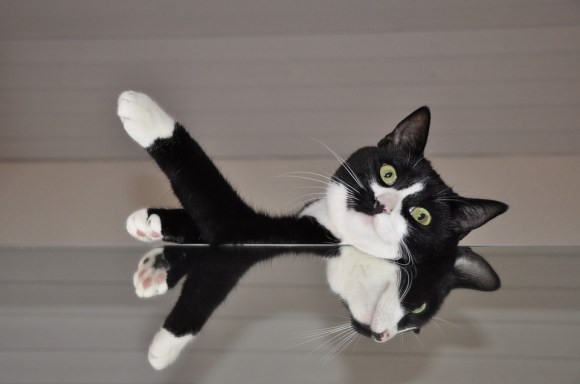
▼ Sometimes the pigmentation cells move randomly, which explains the reason for the adorable love-heart shape on the chest of current Instagram star Zoe the cat
Musing on the wonders of the world and nature’s ability to form seemingly random patterns and markings, @Valquasard then dived deeper, bringing up the mystery of Fibonacci number patterns which occur frequently in nature; a system of numbering that can be reflected in the growth and development of a wide variety of living things like leaf and petal arrangements in plants.
「波紋と螺旋とフィボナッチ-数理の眼鏡でみえてくる生命の形の神秘」で、最近知ったばかりのネタです。お時間有ったらどうぞ(背黒腹白の話はなかったかもしれませんが、ヤッコダイやシマウマの模様の話が面白く書かれています)
— バルカサード (@Valquasard) May 31, 2016
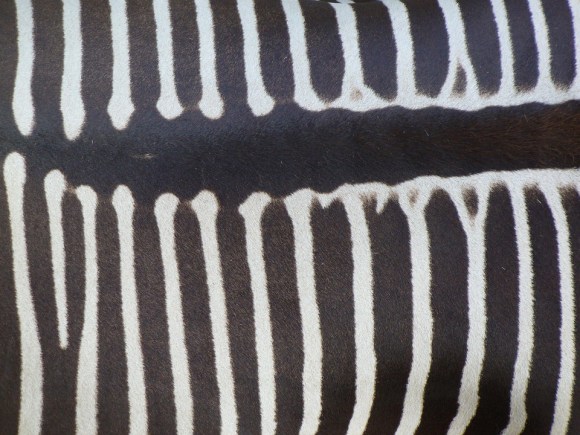
Each number in the sequence, which begins with 1, 1, 2, 3, 5, 8, 13, comes from adding the two numbers before it, and is considered to be one of the principal laws of nature. The number of petals on many flowers, for instance, is a Fibonacci number: lilies have three petals, buttercups have five petals and daisies can have 34, 55 or 89 petals. These numbers are also connected to the creation of patterns in butterfly wings, zebra stripes and nautilus shells, suggesting that the series can be related to the growth of every living thing, including cells that create patterns on piebald cats.
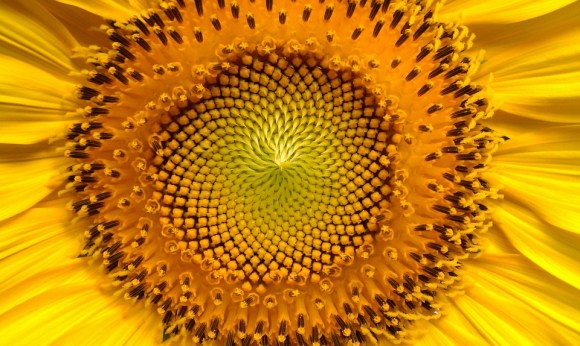
▼ If you count the spirals of the seeds in a sunflower in a consistent manner, you will always find a Fibonacci number.
As for the black-and-white cat mystery, Ami Sugimoto, who initially brought the topic to everyone’s attention, was thrilled to receive a plausible explanation to her query, impressed with the ideas put forward by @Valquasard and thanking him for his input. His suggestions are actually in line with pigment cell development theories presented in a number of research papers like this study, which examines the formation of patterns and colours on mice and zebrafish.
As for the reason why pigmentation cells fail to complete their journey of migration to the stomachs of black and white cats, a paper published earlier this year by researchers at the Univeristies of Bath and Edinburgh suggests a faulty gene reduces cell multiplication rates, meaning there aren’t enough pigment cells to cover the entire skin, leaving the animal with a white belly.
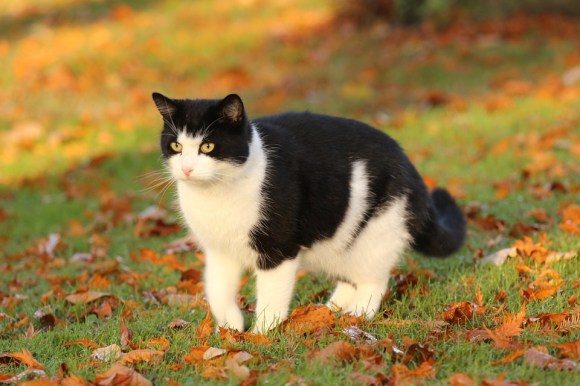
This finding may prove useful in studying why cells fail to move to their correct positions during early stages of development, opening up a range of possibilities for further investigation into embryonic diseases. All thanks to the humble piebald cat.
Sources: Togech, Featherland Cattery, BBC World Service Trust, National Center for Biotechnology Information, U.S. National Library of Medicine
Top Image: Twitter/@SugimotoAmiInfo (edited by RocketNews24)
Insert Images: Pixabay (1, 2, 3, 4)
 You should visit Osaka’s first rescue cat cafe so I don’t have to
 You can assemble a well-balanced team of Pokémon, them eat them, thanks to Japanese cake chain
 Pokémon and Ikea Japan cross over into each other’s worlds with collaboration events
 Japan reportedly adding Japanese language skill requirement to most common foreigner work visa
 Sailor Moon’s Artemis is part of the Artemis II NASA mission control team[Video]
 Can a downtown Tokyo super sento bathhouse beat a hotel for a one-night stay?
 Japan named most sleep-deprived country for fourth year in a row, according to survey
 Starbucks Japan closing only Shinkansen platform branch for popularity-triggered renovations
 Pokémon lid becomes Japan’s most overprotected manhole cover, melts hearts across the country
 This overlooked neighborhood east of Tokyo is awesome in many ways, left us with just one regret
 Daiso unveils new official mascot, Daizo the elephant
 Tokyo’s best museum for foreign travelers finally reopens after being closed for four years
 Pokémon lacquerware series expands for Year of the Horse with new handcrafted design[Video]
 Two food hacks take Japan’s convenience store fried chicken to amazing new sandwich heights
 Tokyo subway and almost all Tokyo train lines now accepting credit card tap payments
 Totoro Fund line of beautiful artwork and apparel lets you help the real-world Totoro Forest
 Fading Tokyo – Searching for signs of the Showa era as local neighborhoods evolve[Photos]
 Famous Tokyo cherry blossom spot installs view-blocking screens to fight overcrowding[Video]
 Tokyo turns its phone booths into free Wi-Fi hotspots, and here’s how to use them
 Studio Ghibli adds new My Neighbour Totoro 2026 Corn Gift to its anime store for Mother’s Day
 Japan now has a special desk for people who work at home with a pet cat[Photos]
 Uniqlo announces new T-shirts for One Piece, Naruto and more for manga publisher’s 100th birthday
 Train station platform ramen store closes its doors on half a century of history in Tokyo
 Starbucks Japan releases new My Fruit³ Frappuccino at only 34 stores around the country
 Studio Ghibli releases Catbus pullback keychain that runs like the anime character
 Krispy Kreme releases Super Mario doughnuts in Japan for a limited time
 Japanese onsen egg maker from 100-yen store Daiso needs to be on your shopping list
 Nine great places to see spring flowers in Japan, as chosen by travelers (with almost no sakura)
 Survey asks foreign tourists what bothered them in Japan, more than half gave same answer
 Japan’s human washing machines will go on sale to general public, demos to be held in Tokyo
 Starbucks Japan releases new drinkware and goods for Valentine’s Day
 We deeply regret going into this tunnel on our walk in the mountains of Japan
 Studio Ghibli releases Kodama forest spirits from Princess Mononoke to light up your home
 Starbucks Japan releases new sakura goods and drinkware for cherry blossom season 2026
 Japan’s newest Shinkansen has no seats…or passengers [Video]
 Major Japanese hotel chain says reservations via overseas booking sites may not be valid
 Put sesame oil in your coffee? Japanese maker says it’s the best way to start your day【Taste test】
 No more using real katana for tourism activities, Japan’s National Police Agency says