
Japanese is a crazy language, but not for the reasons you might expect.
Even in this day and age of international awareness, for the average Westerner, the Japanese language still has an exotic and intimidating aura to it. Maybe it’s because it sounds so different from the languages we’re typically used to, or maybe it’s because the way many people come into contact with it is via 2-D anime characters.
As a Japanese tutor myself, I’ve heard a lot of myths out there about learning Japanese, and today is the day we finally set the score straight, which is why we’re counting down the top 5 myths about learning Japanese. Japanese already has more than enough insane things going on; it doesn’t need any of these falsehoods to make it seem more unique than it already is.
So let’s get to it! Starting off with…
Honorable Mention: ZOMG Japanese is the hardest language in teh world!!!11!!

So let’s get this one out of the way right off the bat: Japanese isn’t special. It’s just another language spoken by humans with nouns, verbs and adjectives — there’s nothing alien about it.
However, the reason this is only an honorable mention is that there is some truth to it. Depending on your native language, it may take more time to become fluent in Japanese than it would in a language closer to your native one.
But there’s two other very important factors in learning a foreign language: (1) how passionate you are about learning it, and (2) how complicated the language is. If you want to learn Japanese, then it will be easier to learn than a language you don’t care about. And thankfully Japanese is a pretty logical language, with very few “exceptions to rules” — something learners of English are all too familiar with.
Every language has its hard parts. Japanese has some, but so do French and Spanish and all the others out there. And as someone who personally studied German but had to give up because it was way too hard, I can attest to the fact that Japanese can be easier to learn than one very close to my native English.
#5. You need to learn Japanese from a native speaker in a class with a textbook
This one is three myths rolled into one, but they’re all very pervasive, so let’s shut them down one at a time.
Learning Japanese from a native speaker is fine, but honestly as long as you learn from someone who has had experience living/working in Japan, you’ll be all set. They might not have a perfect accent and may make a few mistakes, but if you’re trying to be a perfectionist from the start, then you’re in the wrong mindset for learning a language.
Essentially, if you think learning Japanese from a non-native is a bad idea, then do you believe it’s impossible for a non-native to ever achieve a high level of fluency? If so, then why bother to learn Japanese in the first place if you’ll never become fluent enough to teach it? I call it the “Perfectionist’s Paradox,” and personally I don’t buy it.
If you like textbooks and classes, they can be a fine way to start things off. But you’ll never get beyond the beginner level with just books. Can you become a good basketball player just by sitting in a class and reading books about basketball? No, you have to get out there and play! And it’s the same thing with learning Japanese.
#4. You can’t learn Japanese through anime/manga
I’m not sure where this myth came from, but it’s one of the most popular ones among my students. Usually the first time I suggest we start getting out of the textbooks and into some real Japanese via manga or anime, they laugh and say: “But that’s not real Japanese!”
I don’t get it. Would you tell a person learning English that watching The Avengers or reading Deadpool comics isn’t “real English?”
The myth probably comes from the fact that there are so many people out there who watch lots of anime and read lots of manga who can’t speak any Japanese. But that’s not a problem with anime/manga, it’s a problem with their study method. You can’t learn just by passively watching/reading, you have to actively interact to learn.
If you want to learn from anime, just use Audacity or another sound-recording program to record 5-10 second clips and listen to them over and over again, until you can repeat them at native speed. If you want to learn from manga, just use Anki or another flashcard program to put in words and sentences that come up in your reading, and review them as often as you can.
There’s no better way to learn Japanese than from anime and manga, provided you go about it the right way. The Japanese that you’ll learn is far more “real” than anything from a textbook or classroom.
#3. You don’t need to learn hiragana/katakana right away.
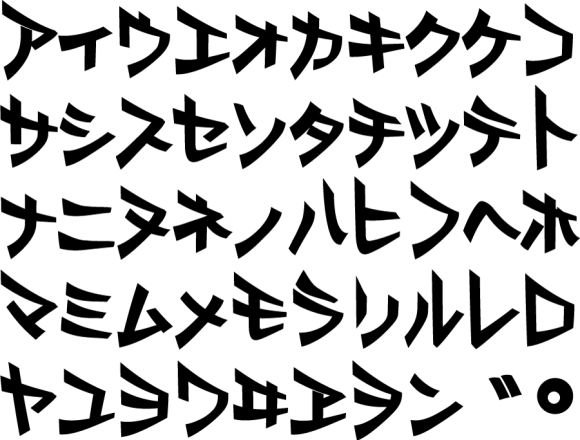
So many students want to rush into learning how to speak Japanese that they often run right past one of the most important parts: learning the Japanese alphabets hiragana and katakana.
It would be bizarre to learn English by writing it in Japanese, and trying to learn Japanese without learning hiragana and katakana sets the student up for a similar disaster. Of course, the desire to skip past the alphabets is understandable; learning two whole new alphabets is pretty intimidating. They want to start speaking right away and feel like they’re making progress, not feel like they’re back in kindergarten.
But starting off learning hiragana and katakana is a good idea for two reasons: (1) It makes it easier to get down Japanese pronunciation, so you don’t have to rely on words spelled out weirdly using English letters. And (2), it only gets harder to learn the longer you wait. Don’t cower in fear from the scary Japanese alphabets, tackle them head-on and show them who’s boss!
And learning them doesn’t even have to be hard. You can get the first couple dozen hiragana right here in a fun (and ridiculous) way.
#2. You need to use native Japanese words instead of borrowed foreign words
「日本国内では通じたけど…」な和製英語 #ユアタイム pic.twitter.com/udIzZQaZUt
— 云々公社 (@sao954) July 7, 2016
As we all know, Japanese has a lot of borrowed words in it that range from perfectly understandable to rage-inducingly absurd.
But like it or not, those borrowed words are part of the Japanese language. Saying you don’t like them is the same as saying you don’t like the English words “admiral” (Arabic), “ketchup” (Chinese), or “jungle” (Hindi).
And yet so many students insist on using the native Japanese equivalents of words when there’s already a perfectly-fine borrowed word ready to use. They say to for “door” (instead of doa), daidai’iro for “orange” (instead of orenji), or taku for “table” (instead of teeburu). They think it sounds more “pure,” but really they just end up sounding silly or outright wrong.
Unless you think saying “Let’s eat seaweed-wrapped-rice-with-raw-fish” sounds better than “Let’s east sushi,” please don’t do this.
And the #1 myth about learning Japanese is…
.
.
.
.
.
.
.
.
.
.
1. Kanji is the hardest part of learning Japanese
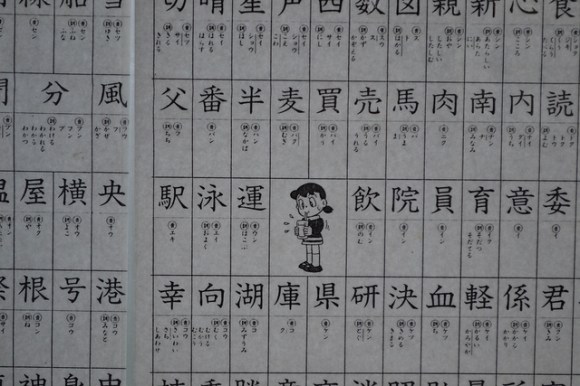
This has to be the most pervasive myth, both among students and people who have never studied Japanese. It sort of makes sense though, since the Japanese written language is so completely different from English, most people assume it has to be the hardest part.
But if you talk to people who have become fluent in Japanese, you’ll usually find a different story. Sure, learning kanji isn’t easy, and it does take time, but here’s the thing: all you have to do is memorize them. Just make some flashcards every day, and within a year or two you can be a kanji master.
Instead, here’s a list of things that – in my opinion – are far harder than kanji, and can usually only be learned through years (potentially decades) of immersion in Japan:
● Learning when to use certain particles like “wa vs. ga” or “ni vs. de.”
● Learning the completely different way of expressing things in Japanese vs. English, such as knowing you’re supposed to reply “No that kind of situation does not exist” when you’re told “You’re good at Japanese!”
● Learning the extremely polite politeness level.
● Learning the extremely casual politeness level.
● Learning when it is appropriate to use each politeness level.
● Learning how to keep up with context so you know what’s being talked about even when it’s never mentioned.
● Knowing when to use “explanatory emphasis” particles like nda or no desu.
● Breaking down verbs that have been conjugated into multiples tenses.
● Mastering the “common sense” Japanese hierarchy of “inside vs. outside.”
● Mastering the nuance in difference between similar words and phrases. For example, in the sentence “Hyaku-en ___ fueta” (“Increased ___ 100 yen), what’s the difference between using ni, nimade, he, heto, made, madeni, and madeto in the blank? They’re all slightly different!
● …and so much more that’s not kanji!
Personally, I find Japanese kanji very similar to English spelling. There are some patterns, but by and large you have to memorize how certain words are spelled. For every easy word like “dog,” there’s a monster like “colonel” or “Wednesday” or “laugh.”
But despite that, even native English speakers know that spelling our language is far from the hardest part of learning it: there’s “a vs. the,” our horrific past tense system, and the mind-boggling expression “I/he/she was like” to talk about when someone said something.
Every language has its crazy parts, but the writing system is usually the least crazy thing about it.
So there you have it, the top five myths about learning Japanese! Are there any Japanese language myths that you think need to be brought out into the light and shown for the frauds they are? Then let us know in the comments, so we can all be enlightened with the sweet, sweet truth!
Featured/top image: Flickr/Yumi Momoi (Edited by RocketNews24)
In the meantime, give me a follow on Twitter and let me know if there’s any topics you’d like to see covered on W.T.F. Japan. See you next week!
 W.T.F. Japan: Top 5 kanji with the longest readings 【Weird Top Five】
 W.T.F. Japan: Top 5 most confusing Japanese compound words【Weird Top Five】
 W.T.F. Japan: Top 5 most ridiculous kanji handwriting shortcuts【Weird Top Five】
 W.T.F. Japan: Top 5 kanji with ironic meanings【Weird Top Five】
 W.T.F. Japan: One year anniversary special! Top 5 W.T.F. Japan articles 【Weird Top Five】
 Fading Tokyo – Searching for signs of the Showa era as local neighborhoods evolve[Photos]
 New cafe in trendy Tokyo neighborhood is staffed by grannies and grandpas with average age of 73
 Tokyo turns its phone booths into free Wi-Fi hotspots, and here’s how to use them
 Three ways going to see cherry blossoms alone is better than seeing them with other people
 Studio Ghibli adds new My Neighbour Totoro 2026 Corn Gift to its anime store for Mother’s Day
 Nintendo’s Animal Crossing crosses over into Japanese convenience store cosmetics line[Photos]
 Totoro Fund line of beautiful artwork and apparel lets you help the real-world Totoro Forest
 Dove ad slams Japanese beauty ideals, backfires with complaints from public instead
 Now that’s what we call a close one! Massive boulder nearly crushes car【Video】
 Real life yandere? Japanese man’s ex-girlfriend sneaks into his home, cooks up something crazy
 Japan now has a special desk for people who work at home with a pet cat[Photos]
 Famous Tokyo cherry blossom spot installs view-blocking screens to fight overcrowding[Video]
 Uniqlo announces new T-shirts for One Piece, Naruto and more for manga publisher’s 100th birthday
 Krispy Kreme releases Super Mario doughnuts in Japan for a limited time
 Totoro and Calcifer become little light-up lanterns for Ghibli-style excursions or at-home decor
 Tokyo’s best museum for foreign travelers finally reopens after being closed for four years
 Pokémon lacquerware series expands for Year of the Horse with new handcrafted design[Video]
 Picturesque Tokyo park plays host to millions of flowers and soap bubbles this spring
 Tokyo subway and almost all Tokyo train lines now accepting credit card tap payments
 Fatal stabbing at Pokémon Center in Tokyo reignites concern over rising stalking cases in Japan
 Starbucks Japan unveils new sakura cherry blossom collection for hanami season 2026
 Train station platform ramen store closes its doors on half a century of history in Tokyo
 Starbucks Japan releases new My Fruit³ Frappuccino at only 34 stores around the country
 Studio Ghibli releases Catbus pullback keychain that runs like the anime character
 Japanese onsen egg maker from 100-yen store Daiso needs to be on your shopping list
 Nine great places to see spring flowers in Japan, as chosen by travelers (with almost no sakura)
 Survey asks foreign tourists what bothered them in Japan, more than half gave same answer
 Japan’s human washing machines will go on sale to general public, demos to be held in Tokyo
 Starbucks Japan releases new drinkware and goods for Valentine’s Day
 We deeply regret going into this tunnel on our walk in the mountains of Japan
 Studio Ghibli releases Kodama forest spirits from Princess Mononoke to light up your home
 Starbucks Japan releases new sakura goods and drinkware for cherry blossom season 2026
 Japan’s newest Shinkansen has no seats…or passengers [Video]
 Major Japanese hotel chain says reservations via overseas booking sites may not be valid
 Put sesame oil in your coffee? Japanese maker says it’s the best way to start your day【Taste test】
 No more using real katana for tourism activities, Japan’s National Police Agency says
 W.T.F. Japan: Top 5 most confusing Japanese counter words【Weird Top Five】
 W.T.F. Japan: Top 5 strangest kanji ever 【Weird Top Five】
 W.T.F. Japan: Top 5 most insane kanji place names in Japan【Weird Top Five】
 W.T.F. Japan: Top 5 Japanese words with cool ancient origin stories【Weird Top Five】
 W.T.F. Japan: Top 5 offensive Japanese insults【Weird Top Five】
 W.T.F. Japan: Top 5 confusing Japanese Internet slang words 【Weird Top Five】
 W.T.F. Japan: Top 5 most perfectly translated Pokémon names【Weird Top Five】
 W.T.F. Japan: Top 5 most difficult kanji ever【Weird Top Five】
 W.T.F. Japan: Top 5 most hilarious Japanese euphemisms 【Weird Top Five】
 W.T.F. Japan: Top 5 most difficult Japanese tongue twisters (with videos!) 【Weird Top Five】
 W.T.F. Japan: Top 5 confusing Japanese hand gestures【Weird Top Five】
 W.T.F. Japan: Top 5 steps to immigrate to Japan 【Weird Top Five】
 W.T.F. Japan: Top 5 nicest sounds in Japan【Weird Top Five】
 W.T.F. Japan: Top 5 hardest Japanese habits to break 【Weird Top Five】
 W.T.F. Japan: Top 5 biggest Japanese food challenges【Weird Top Five】
 W.T.F. Japan: Top 5 hand gestures that Japanese people don’t understand【Weird Top Five】