

No pain relief, umbilical cord keepsakes, modesty curtains and a sushi free-for-all – what’s it really like to have a baby in Japan?
Japanese women aren’t having a whole lot of babies these days, with the country facing population decline as a result of the number of births being consistently below the replacement threshold, with little sign of improving. In fact, the birth rate in 2018 was the lowest since records began. Certain factors contributing to this lack of babies include gender wage-gap issues, long working hours, inflexible work-life balance for mothers, and the high cost of raising a child. But what’s in store for those women who do take the plunge into motherhood?
One of our foreign staff writers from the U.K. recently had their first baby in Japan and had plenty to report regarding the experience – having a bouncing bambino can be a bamboozling experience at the best of times for first-time mothers, and especially so when you’re a Westerner in a foreign country like Japan, giving birth in a hospital that doesn’t cater specifically to expats or provide much English-language support. But it also gives a rare glimpse into a world that is shrouded in secrecy and ancient tradition, where men are largely excluded, and where pain relief in labor is considered an extravagant luxury.
The following is a list of six things that surprised our reporter the most about having a baby in Japan.
1. Pain relief in labor is not a common thing
When our reporter found out she was expecting, one of the first and most shocking revelations about childbirth in Japan was the lack of any kind of pain relief offered in labor. In Japan, which prides itself on its “gaman” (endure/bear it) culture, most women don’t even consider the possibility of pain relief in labor. Which means options like laughing gas (“gas and air”) of the variety that is popular in the U.K., or any IV or epidural anaesthetic aren’t as readily available as they are in the west.
However, in recent years “mutsuu bunben” or “painless delivery”, aka an epidural (a plastic tube inserted into the spine to provide a steady level of anaesthesia to numb the lower half of the body throughout labor and delivery) has started to gain traction, although only a handful of hospitals in the country offer this. Opting for an epidural is considered a luxury and as such, comes with a luxury price tag. While prices vary between hospitals, you can expect to pay around 100,000 yen (US$896) out of pocket. And that’s if your baby is considerate enough to arrive during standard Monday to Friday, nine-to-five hours, since most places won’t offer an epidural if your baby decides to be born out of hours, due to a lack of trained anaesthetists on staff. Japan’s attitude towards epidurals is in stark contrast to countries like France, where, for example, 83.8 per cent percent of women used an epidural in 2016. In the same year in Japan, the rate was 5.2 per cent.
If you’re wondering how our reporter reacted to this, she had this to say:
“I was really worried about having an unmedicated delivery, especially because I was concerned that my level of Japanese ability would fail me and I would be too distracted by the pain to communicate properly with my doctor and midwives. Luckily, the first doctor I saw understood my concerns and recommended a hospital in Saitama Prefecture (I don’t live within easy access of Tokyo) which actually offered 24/7 epidurals – it made me feel better to have that option available, as I would have had in my home country. And since in Japan you’re supposed to confirm your delivery hospital at least five months before birth, it was a relief to be able to make an early decision I felt comfortable with.”
2. The Man Behind the Curtain

With a largely patriarchal society like Japan, it shouldn’t come as a surprise that the majority of OBGYNs in Japan are male. But what did come as a surprise to our reporter was the lengths that are gone to to preserve the dignity of female patients during sensitive exams. As our reporter explains:
“I was baffled when the time came for a pelvic exam and I was shown to a small side room with what looked like a dentist’s chair and a curtain hanging down right in front of it. When I sat on the chair, it lifted, rotated and swiveled so that the lower half of my body was sticking through the curtain. Moments later, the (male) doctor I had been conversing with moments before in the other room addressed me from beyond the curtain before performing the exam. Following that, the chair lowered, rotated and swiveled again, and I returned to the main room to discuss the findings of the exam with the same doctor. This happened for every examination.”
Our reporter wasn’t sure in the end whether or not the curtain was for the benefit of sparing the patient or doctor‘s blushes, but regardless, if you have any kind of gynecological procedure in Japan, including pap smear tests, you can expect to get the full curtain treatment. Curious, we asked our reporter what happened during her delivery experience – surely you don’t have to give birth with your lower half sticking out behind a curtain?
“By the time you get to that point all modesty is off the table and the doctor handles the delivery in full view of both expectant mother and anyone else in the room”.
The more you know.
3. You can eat all the sushi, but you can’t gain too much weight
Western mothers are often given a long list of foods to avoid, including soft cheeses, deli meats, and sushi. But in Japan, no doctor would think of sanctioning sushi, and instead women are encouraged to eat a wide variety of foods to ensure adequate nutrition to the baby. One thing doctors are strict on, however, is weight gain – women are encouraged to keep their weight gain in check, and they will be weighed at each and every checkup (which is monthly until the final month, when it becomes weekly) and are often scolded for gaining too much weight. Concerned, our reporter asked the doctors how much weight gain was allowed.
“They told me, ‘try to keep it within five kilograms’. I checked online to see how much weight gain is recommended in my home country, and it’s anything from 11-16 kilograms. I ended up gaining 15 kilograms altogether and was scolded once by a midwife, which made me feel terrible. However, I lost almost all of the weight right after delivery and had a healthy-weight baby.”
One theory as to why weight gain during pregnancy is an issue in Japan is that having a smaller baby can reduce the risk of needing a caesarean delivery, but the strict weight-watching policy has begun to be re-examined in recent years as the birth weight of Japanese infants has been decreasing year by year.
4. You can’t question the doctor – ever

In Japanese society, no one is more respected than a doctor, or sensei, and questioning one’s doctor is something that is simply not done. While doctors in Japan who cater to Westerners are generally more understanding about patients asking for clarification or explanation, regular Japanese doctors often won’t explain anything to their patients. Making demands is also frowned upon, and expectant mothers in Japan are often happy to simply follow instructions and leave all decisions up to their doctor, such is their trust in the medical profession and doctors in general. Our reporter says:
“A lot of my friends who’ve had babies in my home country were able to make “birth plans” and communicate their desire for things like delayed cord clamping, immediate skin-to-skin for an hour after birth, being able to choose the delivery position, and even filming the birth. But I quickly realised that in Japan the doctor makes the decisions and you do not do anything that would distract them during delivery.”
Indeed, it is only in recent years that “tachiai bunben” or having one’s husband present in the delivery room, has begun to be allowed. Our reporter says:
“I had to specifically request to have my husband present and luckily my doctor was okay with it, although my husband was asked to step outside at multiple points during the delivery when the doctor did not want to be distracted, and was only allowed to stand at the head of the bed behind me. We were also told not to take pictures or video at any point. Also, while I had heard that episiotomies (cutting of the perineum to help the baby’s head emerge) are standard in Japan, I was told that they were only performed at the doctor’s discretion. Ultimately, I did end up having an episiotomy as the doctor felt my baby’s head was too big to come out naturally.”
While placing total trust in one’s doctor may seem antithetical to the Western custom of second opinions, Japan has some of the lowest rates of infant mortality and maternal mortality in the world, so no wonder Japanese moms feel at ease letting the doc call the shots.
5. Traditions abound
Upon registering a pregnancy in Japan, you’ll be given an armload of pamphlets and leaflets containing a plethora of information, some more useful than others. Among these documents, you’ll probably find a chart showing you when the appropriate Inu no Hi, or Day of the Dog, is. See, tradition has it that since dogs have relatively easy births compared to humans, it’s lucky to go to a shrine and pray for a safe birth on the designated Day of the Dog during one’s fifth month of pregnancy. You can also pick up an amulet for safe delivery at the same time! Another tradition that might weird some people out is the keeping of the baby’s umbilical cord, which surprised our reporter:
“I was somewhat taken aback when I was presented with a little wizened and bloody piece of the umbilical cord and a special wooden box to keep it in. The midwife told me that traditionally parents keep the stump that falls off the baby’s belly button later on, but since there was a risk of the stump falling off in a diaper or something or otherwise getting lost, the hospital has a policy of specially cutting a piece off right after birth to give to mothers to keep. Apparently, the cord symbolizes the bond between mother and child and should be cared for carefully. I haven’t quite decided what to do with mine, but now I feel that I really can’t throw it away…”
Moms are also given some other advice which might sound strange to Western ears, including keeping one’s belly warm with a belly band, and keeping one’s ankles and feet covered with socks at all times. One other major pregnancy tradition is satogaeri shussan, or returning to one’s parents’ home for the first month after birth so that mom and baby can bond while someone else takes care of mom and handles household tasks like cooking, laundry and cleaning for her. Also, during that first postpartum month, many mothers refrain from leaving the house either with or without their babies, to prevent either mom or baby from getting sick.
6. It’s really freaking expensive
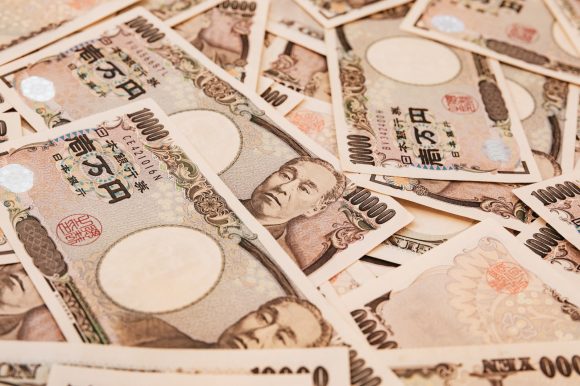
Since pregnancy is a natural state and not considered a medical condition in Japan, it isn’t covered under the national health service. As such, having a baby can be an expensive affair. However, there are so many factors that go into the cost of having a baby, including the specific medical treatment one receives – there are different rates for a natural birth and a caesarian, induction, epidural, episiotomy, vacuum extraction, etc, plus the length of the hospital stay (it could be longer in the case of a caesarean). However, the government is kind enough to provide a nice lump sum payback of 420,000 yen, known as the Childbirth and Childcare Lump Sum Grant. The government also provides jidou te-ate, or child allowance, at 15,000 yen per child per month until the age of three, and then 10,000 per child per month until the third year of junior high. However, our reporter says:
“I was concerned about the high cost of having a baby in Japan, especially as I knew that giving birth in my home country would have been so much cheaper. That wasn’t an option, though, and I would still have had to pay for return flights home. Also, another reason I opted to give birth in a non-English speaking hospital is that several of my friends who are expat moms and did give birth in English-speaking hospitals in Tokyo told me how expensive they were! I ended up paying around 200,000 yen out of pocket for my specific birth and hospital stay, and not only did I end up paying much less than my friends, I also had a wonderful experience as the hospital I chose was really luxurious!”
Wait, what? Hospital? Luxurious?
“I stayed at a maternity hospital which offered all kinds of complimentary services like: massages and beauty treatments; Japanese, Chinese and French full course meals; private rooms with ensuites; and tons of free baby goods!”
So, what was our reporter’s final verdict on having a baby in Japan?
“Overall I had a really positive experience – the medical professionals I saw were all kind and helpful, and I never felt TOO overwhelmed or out of my depth despite having to struggle along in Japanese – my Japanese-native husband was a huge help of course. Ultimately, there will always be things I wish could have gone differently, but I consider myself very lucky overall.”
Keep checking SoraNews24 to read about our reporter’s experience in a luxury maternity hospital, coming up soon!
Featured image: Pakutaso
● Want to hear about SoraNews24’s latest articles as soon as they’re published? Follow us on Facebook and Twitter!
References:
Number of babies born in Japan in 2018: Japan Times
Number of epidurals in France in 2016: NCBI
Number of epidurals in Japan in 2016: Mainichi Shimbun
Birth weight of Japanese infants: NCBI
Rates of infant mortality by country: IndexMundi
Rates of maternal mortality by country: IndexMundi
 This luxurious maternity hospital makes us want to have all the babies in Japan
 Japanese government wants to give people an extra 80,000 yen to have babies, but will it work?
 Tokyo’s crazy-luxurious obstetrics clinic delivers babies with service fit for a queen 【Pics】
 Japanese woman, unaware she was pregnant, delivers baby into cesspool
 Woman delivers baby on passenger train just outside of Tokyo
 A secluded British mansion in Chiba is a hidden holy land for afternoon tea lovers
 Studio Ghibli releases the My Neighbour Totoro tea caddy, with a magical self-closing lid
 Create a tiny Ghibli anime world on your bookshelf with new miniature papercraft art kits
 Starbucks Japan releases new My Fruit³ Frappuccino at only 34 stores around the country
 7-Eleven Japan releases a crazy new viral sandwich: Chocolate Sprinkles and Whipped Cream
 Japan now has a “for foreign tourists only” Mt. Fuji sightseeing train[Video]
 Nissin Donbei to sell Classic line of instant udon and soba noodles for its 50th anniversary
 Japan’s budget chain restaurant Saizeriya might just be the perfect first date location
 Japanese vending machine sells just one thing at this station
 Public restrooms in Osaka to get in-stall video screens with ads
 Japanese onsen egg maker from 100-yen store Daiso needs to be on your shopping list
 Cherry blossoms begin blooming in Japan with record-early starts for sakura season
 Tokyo government organizes food truck event to clear out delinquent/homeless teen gathering area
 Nine amazing off-the-beaten-path cherry blossom spots in Japan for yaezakura and shidarezakura
 Stunning central Japan wisteria festival is like a purple fantasy straight out of a Ghibli movie
 When will the cherry blossoms reach full bloom in Japan this year?[Forecast]
 Studio Ghibli unveils new Rollbahn notebook in honour of Howl’s Moving Castle
 Studio Ghibli adds new anime tumblers to its cool streetwear brand in Japan
 Universal Studios’ Sailor Moon theme park attraction is finally coming to America
 Starbucks Japan unveils new sakura cherry blossom collection for hanami season 2026
 Train station platform ramen store closes its doors on half a century of history in Tokyo
 Studio Ghibli releases Catbus pullback keychain that runs like the anime character
 Nine great places to see spring flowers in Japan, as chosen by travelers (with almost no sakura)
 Starbucks Japan releases first-ever Hinamatsuri Girls’ Day Frappuccino
 Studio Ghibli adds new Mother’s Day gift sets to its anime collection in Japan
 Virtual idol Hatsune Miku redesigned with look that adds new elements and brings back old ones
 Survey asks foreign tourists what bothered them in Japan, more than half gave same answer
 Japan’s human washing machines will go on sale to general public, demos to be held in Tokyo
 Starbucks Japan releases new drinkware and goods for Valentine’s Day
 We deeply regret going into this tunnel on our walk in the mountains of Japan
 Studio Ghibli releases Kodama forest spirits from Princess Mononoke to light up your home
 Starbucks Japan releases new sakura goods and drinkware for cherry blossom season 2026
 Japan’s newest Shinkansen has no seats…or passengers [Video]
 Major Japanese hotel chain says reservations via overseas booking sites may not be valid
 Put sesame oil in your coffee? Japanese maker says it’s the best way to start your day【Taste test】
 No more using real katana for tourism activities, Japan’s National Police Agency says
 Tokyo’s latest plan to boost birth rate: Pay people 100,000 yen per baby they give birth to
 Tokyo government ordered to search for biological parents of 67-year-old-man switched at birth
 Woman in Tokyo gives birth onboard one of Japan’s busiest train lines
 Doctors puzzled by Indonesian woman who claims to have given birth to a gecko
 If Japanese men “have their act together,” Japanese women will reward them with babies, politician says
 Japanese mother shares her baby bed wisdom: you can use storage boxes!
 Children’s anime PreCure features magical girl actually giving birth to a child in series finale
 5 powerful reasons to be a woman in Japan 【Women in Japan Series】
 Teeny tiny giant panda baby born in Japan【Photos】
 Real life Baby Driver! Taxi driver speeds Japanese Twitter user’s pregnant wife to hospital
 W.T.F. Japan: Top 5 craziest things about the Japanese medical system【Weird Top Five】
 Japanese politician’s birthrate plan: Have parents nag their kids to have “at least three babies”
 What’s it like to be a working mother in China? We asked a Chinese mom
 Japanese people share 11 amusing tales relating to pregnancy and childbirth
 Omiyamairi: How Japan welcomes babies into the world