
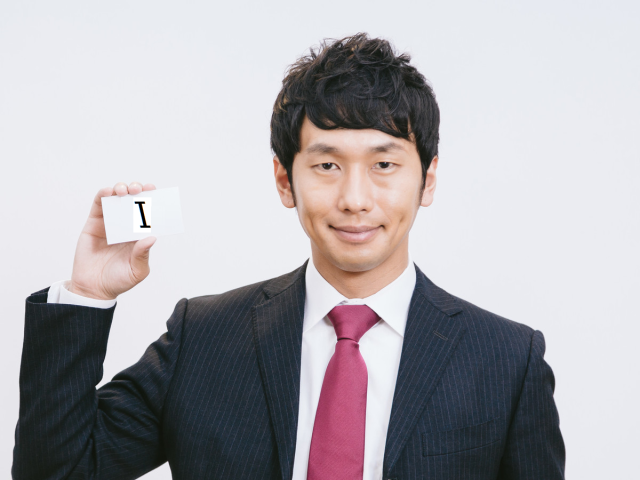
Women have some strong opinions on which of the many Japanese words for “I” a guy should use when talking about himself.
Japan often gets called a conformist society, and while that label is unfairly harsh, it is true that people in Japan are more likely, compared to many other nations, to choose fitting in over standing out. So it’s kind of ironic that when you want to say “I” in Japanese, it becomes a wide-open, highly personalized choice.
The Japanese language has more than a dozen words for “I,” and while some of them have fallen out of fashion over time, you’ve still got several to pick from in modern conversation, each with its own atmosphere and aura. Women’s interest Internet portal Joshi Spa recently conducted a survey among its users, gathering 100 responses from women between the ages of 30-39, asking which word they like for men to use when speaking about themselves, and got the following answers.
6 (tie). wai (1 percent of responses)
6 (tie). oira (1 percent)

Bumping into each other at the bottom of the list are wai and oira. Wai is associated with sleepy rural parts of central Japan, particularly in coastal parts of Hyogo Prefecture and the Seto Inland Sea, and while there’s some debate over whether east Japan’s oira makes you sound like a country bumpkin or a bratty Tokyo kid from two generations back, there’s a pretty general consensus tat it does make you sound old-fashioned an unsophisticated.
5. uchi (2 percent)
While uchi is technically a unisex first-person pronoun, it’s become particularly associated with outgoingly assertive women in the Kansai region (central Japan, especially the areas around Osaka), which might explain why the survey’s respondents don’t think of it as the most attractive choice for a guy.
4. jibun (3 percent)

Continuing the slow uptick in popularity brings us to jibun. A bit on the formal side, using jibun carries a tone something like saying “as for myself,” in English. It’s an OK choice for written correspondence, but overusing it in face-to-face intersexual conversation can make a guy sound a little stuffy or nerdy, which apparently isn’t what the women in the survey are looking for in a guy.
3. watashi (12 percent)
Sliding in to the top three is watashi, pretty much the first version of “I” that any Japanese textbook or phrasebook will teach you. You can get a lot of mileage out of watashi, but similar to jibun, it has sort of a cold-fish feeling to it when it’s a guy’s go-to pronoun for personal conversation with a girl.
2. boku (30 percent)

A big jump in votes takes us to boku, which is the second first-person pronoun taught in most Japanese language courses. Boku loosens the collar of watashi with a casual, informal feel. However, it’s worth noting that boku is far more popular in Tokyo and east Japan than it is in the western part of the country. Once you get to Osaka, boku is sometimes seen as the linguistic equivalent of a high school kid with a pencil-thin mustache and chin stubble, a mark of a guy who’s eager to show you he’s not a kid anymore, but in doing so also showing you he’s not quite a full-grown man just yet.
1. ore (50 percent)

Coming in first, and with a commanding margin, is ore. Unlike some of the other words in the list, ore is exclusively masculine in tone, and doesn’t have any of the adolescent-boy-who’s-trying-too-hard stigma that boku can convey.
However, ore’s strong showing doesn’t mean that you can simply forget all the other words on this list and expect to run into no communication hiccups. As mentioned earlier, the survey asked women what pronoun they liked when men were talking about themselves, and the implication is that they’re talking about social situations, not professional ones. While ore works fine on a date or when talking to a platonic female friend, it’d be a little coarse for talking with a just-met female coworker, and definitely not something you’d use in talking to a female boss unless you’re working in an office with a very casual atmosphere. And though you’re unlikely to ever find yourself in a situation where you have to use wai, oira, or uchi, if you’re planning for a full range of linguistic interactions in Japanese, you’ll want to get used to using jibun and watashi for more polite conversations.
Oh, and if you’ve already mastered all the words here and are looking for even more ways to say “I” in Japanese, we’ve got another list for you here.
Source: Niconico News via Hachima Kiko
Top image: Pakutaso (edited by SoraNews24)
Insert images: Pakutaso (1, 2, 3, 4) (edited by SoraNews24)
● Want to hear about SoraNews24’s latest articles as soon as they’re published? Follow us on Facebook and Twitter!
Follow Casey on Twitter, where the huge variety of Japanese pronouns was one of the first reasons he thought “Yep, I wanna learn this language.”
 Japanese man says “I’m a Vietnamese” while pointing knife at convenience store worker to rob her
 Giri? Tomo? Gyaku? A guide to Japan’s many different kinds of Valentine’s Day chocolate
 How to respond to Japanese people saying “I don’t speak English” when you’re speaking Japanese?
 How often do Japanese people rip silent farts? Survey investigates
 Seven mistakes foreigners make when speaking Japanese—and how to fix them
 Starbucks Japan releases new drinkware and goods for Valentine’s Day
 Hokkaido has an Ice Festival that’s less famous than the Snow one, but beautiful in its own way
 Man with face covered in tattoos admits to repeatedly headbutting Tokyo store clerk【Video】
 Almost exactly half of the new adults in Tokyo’s Shinjuku Ward are foreigners
 Japan’s Poképark Kanto Pokémon theme park area shows first attraction photos
 Fewer ramen restaurants declare bankruptcy in Japan for first time in several years
 New KitKat pizzas are coming to Pizza Hut Japan
 Ramen restaurant’s English menu prices are nearly double its Japanese ones, denies discriminating
 Survey finds more than 70 percent of Japanese children have an online friend
 Which Japanese convenience store has the best steamed curry buns?【Taste test】
 10 times to avoid traveling in Japan in 2026
 Our 52-year-old pole dancing reporter shares his tips for achieving your New Year’s exercise goal
 Starbucks Japan releases new Frappuccino and latte for Valentine’s Day
 Princess Mononoke magnets return just in time to treat yourself to awesome anime decorations
 Umamusume anime girl plushie recalled for having parts she absolutely should not have【Pics】
 Giant hotel rooms in Osaka reflect the new non-niche face of travel in Japan.
 Japanese women showing rebounding interest in giving Valentine’s Day chocolate【Survey】
 We ate sushi made from Japan’s most expensive tuna ever【Taste test】
 Starbucks Japan ready to get Year of the Horse started with adorable drinkware and plushies【Pics】
 7-Eleven Japan starts new temporary luggage storage service in over 300 branches
 Disillusionment at Tsukiji’s tourist-target prices led us to a great ramen restaurant in Tokyo
 Starbucks teams up with 166-year-old Kyoto doll maker for Year of the Horse decorations【Photos】
 Tokyo’s Tsukiji sushi neighborhood asks tour groups to stay away for the rest of the month
 Survey asks foreign tourists what bothered them in Japan, more than half gave same answer
 Japan’s human washing machines will go on sale to general public, demos to be held in Tokyo
 We deeply regret going into this tunnel on our walk in the mountains of Japan
 Studio Ghibli releases Kodama forest spirits from Princess Mononoke to light up your home
 Major Japanese hotel chain says reservations via overseas booking sites may not be valid
 Put sesame oil in your coffee? Japanese maker says it’s the best way to start your day【Taste test】
 No more using real katana for tourism activities, Japan’s National Police Agency says
 Starbucks Japan reveals new sakura drinkware collection, inspired by evening cherry blossoms
 Updated cherry blossom forecast shows extra-long sakura season for Japan this year
 Human washing machine pods coming to Japanese hotels【Photos】
 Survey asks Japanese women for the details of their “showdown lingerie”
 Survey finds more than half of Japanese women’s nieces don’t call them “aunt”
 Sega’s Like a Dragon yakuza teaches “useless” English, let’s use it to learn some useful Japanese
 Survey about Japanese teens’ first sexual experience tries to draw line between “love” and “love”
 Why is the Japanese kanji for “four” so frustratingly weird?
 How should you respond when a Japanese person gives you a compliment?
 Why does Japanese writing need three different sets of characters? (Part 2)
 Nearly half of young Japanese women say they “hate” the company they work for in survey
 Hachiji juppun mae – A Japanese phrase that even Japanese people can’t agree on the meaning of
 How to enjoy Japanese idol music if you hate its sweetness: Pretend they’re not singing about YOU
 Why do Chinese characters in anime say -arimasu/-aru ALL the time?
 Japanese women show continuing decline in how much they expect a husband to earn in survey
 Japanese professor says women should NOT marry a guy who promises to help with the housework
 How much do Japanese men and women pay on dates? Survey finds large gap
 Why does Japanese writing need three different sets of characters? (Part 1)
 Japanese women showing rebounding interest in giving Valentine’s Day chocolate【Survey】
 Japanese women reveal how far they’ve gone in “stalking” a guy they like in survey
Leave a Reply