
Japan gets average marks in one category, abysmal ones in two others.
Japan has been welcoming record numbers of overseas visitors in recent years, and the country’s foreign resident population is larger than ever, even as the country’s number of ethnically Japanese residents is shrinking. However, while plenty of foreigners want to travel and live in Japan, a survey from British financial group HSBC Holdings argues that it’s not such an attractive place for them to work.
For the 2019 iteration of its annual Expat Explorer Survey, HSBC collected responses from expats living in 33 countries, asking them to rank their satisfaction in regards to Living (daily quality of life), Aspiring (economic and career issues), and Little Expats (childrearing topics). Out of the 33 countries examined, Japan’s overall ranking was 32, beating out only Brazil.
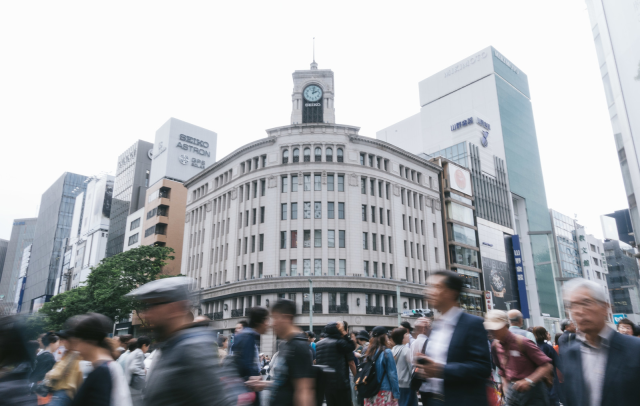
Survey responses fit with a “Japan is a nice place to visit/live, but bad place to work” scenario. In the Living category, Japan placed a moderately respectable 15th, with its specific traits rated as:
● Quality of life 13th
● Physical and mental well-being 20th
● Fulfillment 18th
● Cultural, opening and welcoming communities 26th
● Political stability 6th
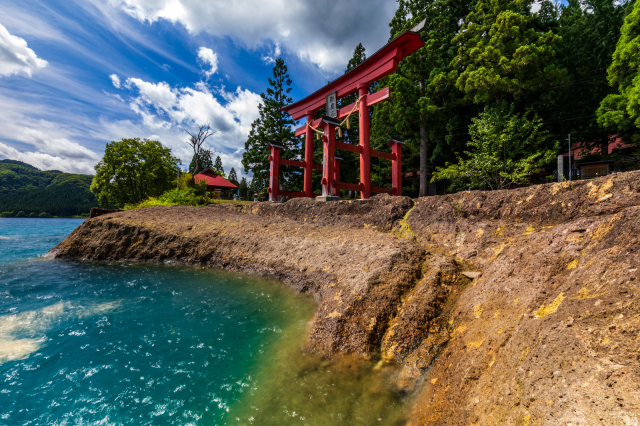
However, Japan’s ratings were far lower for Aspiring, where it ended up in 30th place overall.
● Overall 30th
● Income 33rd
● Disposable income 19th
● Economic stability 13th
● Career progression 19th
● Reaching potential 16th
● Work/life balance 33rd
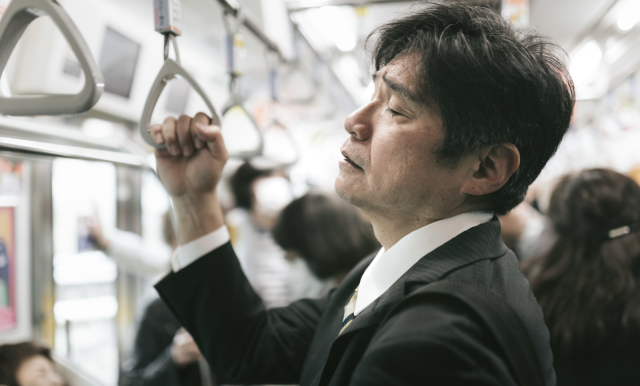
The harshest evaluations, though, came in the Little Expats category, where Japan was a dead-last 33rd.
● Overall 33rd
● Making friends 32nd
● Learning 33rd
● Schooling 24th
So that settles it: Japan is a terrible country to work in, right? Well, not necessarily. While some people would say that the numbers don’t lie, they don’t really tell the entire story either.
It’s important to remember that Japan is not just a unique culture, but a unique society as well. For expat jobs, there’s often a sliding scale of cultural familiarity versus economic opportunity. Many times, going farther afield bundles cultural barriers and challenges with a critical job in an emerging market, and thus a high salary in a part of the world where prices are relatively low. Moving to Japan for work, however, doesn’t offer an easy cultural transition or easy money.

Take a look at Japan’s 33rd-place ranking for expat income, for example. Most Japanese companies prefer to promote from within, and are thus comparatively less likely to hire candidates currently living abroad, and thus outside of the company, for their highest echelon of executive positions. Aside from a few high-profile exceptions, Japanese companies generally aren’t interested in inserting outside applicants for department head-level jobs, and there’s also the fact that even Japanese executives generally have lower incomes than their European or American counterparts. Japan’s promote-from-within workplace culture was also likely a contributing factor to it finishing 19th for career advancement, as jumping up a few rungs on the corporate ladder by jumping ship to another company is a less likely scenario than in other countries.
Shifting focus, Japan’s 19th-place rank for disposable income comes in a comparison with countries such as Malaysia, Thailand, India, and the Philippines, all countries where white-collar expat workers likely enjoy far lower prices for goods and services than in their home countries.
Relative prices are also no doubt part of Japan’s low scores for children’s learning and education. As a country with a highly developed indigenous education system, and good jobs attainable by children who grew up in it, international schools are, by all metrics, a luxury in Japan, but unless an expat’s accompanying children are already proficient in Japanese (both written and verbal) by the time they arrive in Japan, enrolling them in local schools, despite their relatively high quality of education, may not be a viable option.

Speaking of language barriers, those are also almost certainly a big reason for Japan ranking 26th in cultural, opening and welcoming communities. In the many years I’ve spent living in Japan, I haven’t noticed my Japanese neighbors being any less friendly or welcoming than the neighbors I had when I lived in the U.S….as long as we could communicate with each other. If you’ve come to Japan on an expat job, odds are you’ll be located in or around a major city such as Tokyo or Osaka. Those cities have enough foreigners that you won’t be such a novelty that your neighbors are going to bend over backwards trying to communicate with you. On the other hand, foreigners are still rare enough that you’re not likely to be living in an expat enclave where virtually everyone in the neighborhood can at least speak conversational-level English. The result is that you won’t be shunned, but your neighbor is far less likely to say “How are you today?” when you pass by each other in the apartment hallway if you’re not going to understand his question, and he’s not going to understand your response.

With all this in mind, looking at HSBC’s overall rankings for the most attractive countries show that almost all of them offer few language hassles and cultural adjustments, low prices, high-salary potential in an emerging market, or some combination of those qualities. Switzerland ranked 1st overall, followed by English-speaking Singapore in 2nd and Canada in 3rd. Spain, in 4th place, is the highest-ranked non-English country, and it’s not until the UAE (9th) and Vietnam (10th) that the list leaves both Europe/North America and the English language behind, and then only for two countries where white-collar expats are unlikely to be moving without generous compensation packages that allow them to live amongst other highly internationalized neighbors.
So in a lot of ways, the question of whether or not Japan is an unattractive country for expats to work in is a lot like the question of whether it’s an expensive country to live in. If you’ve got your heart set on the same levels of luxury and convenience that you could get for similar expat work in other countries, then Japan might not be the place for you (and to give the survey its proper due, a poor work/life balance is a serious issue in Japan, even for non-expat workers). However, if you’re willing to adopt a mentality more like Japanese nationals have, where working in Japan is part of living in Japan, and thus making a proactive effort to adapt linguistically and culturally, it’s not such a bad place after all.
Source: HSBC via Yahoo! Japan News/The Page via Jin
Top image: Pakutaso
Insert images: Pakutaso (1, 2, 3, 4, 5)
● Want to hear about SoraNews24’s latest articles as soon as they’re published? Follow us on Facebook and Twitter!
Follow Casey on Twitter, where the little old lady who lives in his apartment building always tells him to have a nice day when they pass each other in the hall.