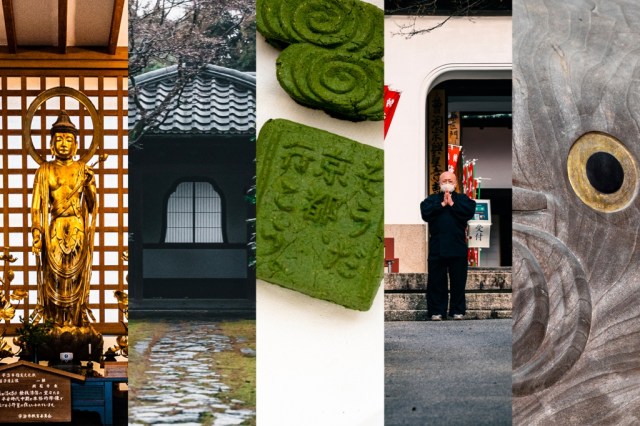
The most zen part of our self-guided Kyoto tour.
After a few luxurious hot spring soaks on part one of his Kyoto tour, our reporter Egawa Tasuku was ready to take on one of the main attractions in the city of Kyoto: its abundance of historical shrines and temples.
For part two of our Kyoto Ready: Zen and Hot Springs tour through Kyoto, sponsored by Japan Rail, Egawa visited Taikou-in Temple, a temple that’s not normally open to the public except during this time period. He also had had a zazen meditation experience at Manpuku-ji Temple, and a lesson on how to make matcha incense at Koushou-ji Temple.
So let’s join Egawa on his first stop, Taikou-in Temple.
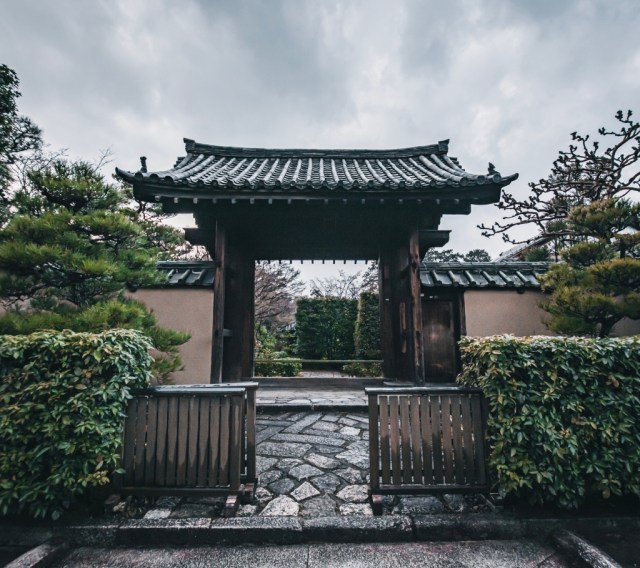
▼ The gate doesn’t offer a glimpse of how it looks inside, making it all the more exclusive.
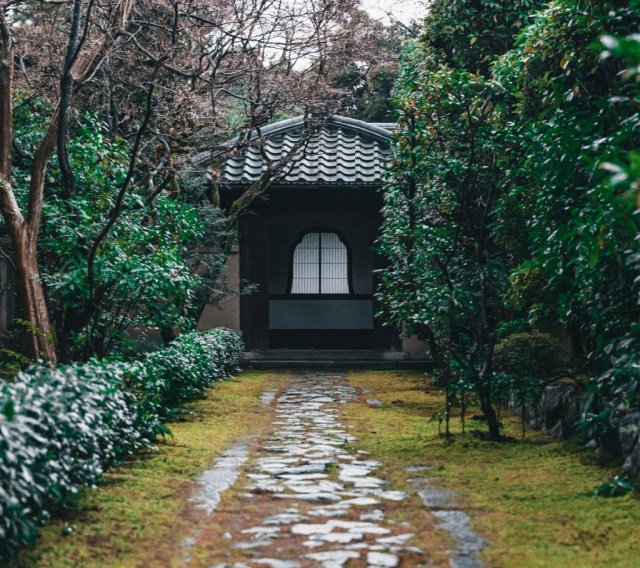
Entering the gate, Egawa was met by a moss-lined path. Coupled with the architecture, it looked so traditionally Japanese that it made him a little nervous.
▼ It felt like a portal to the past.
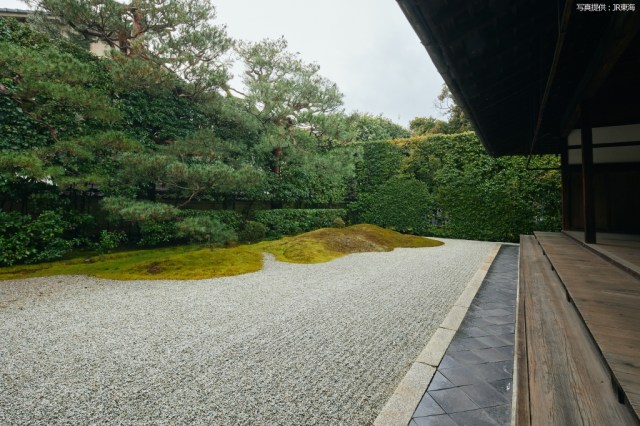
▼ At the end of the path was an immaculate Zen garden.
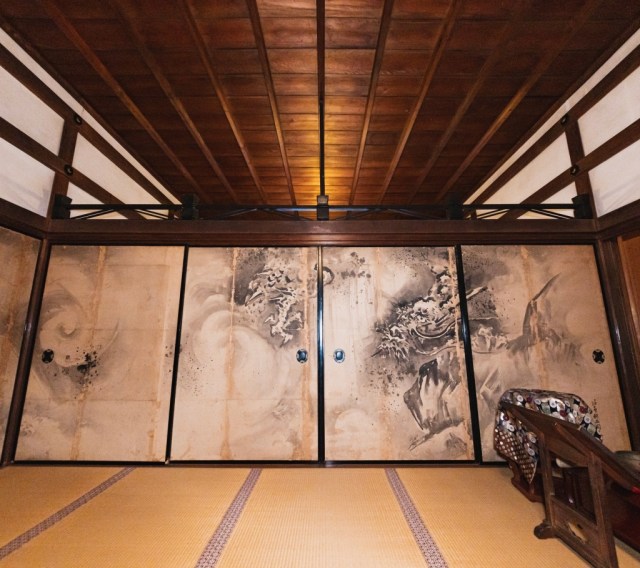
Upon entering the main building of Taikou-in, Egawa was met with a sliding screen door mural by the famous Japanese Edo-period painter, Kanou Tan’yuu. His work can also be found in other parts of Kyoto, like Ninomaru Palace in the Nijo Castle grounds.
▼ This screen is to the right of the entrance, and the left side has a mural as well.
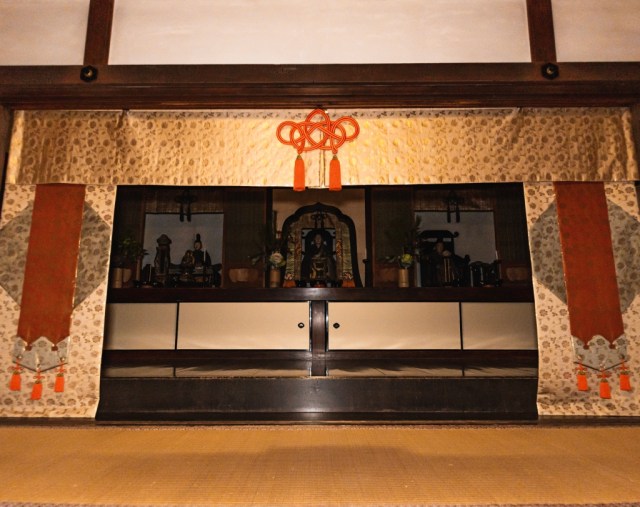
▼ And in front of him was the main altar.
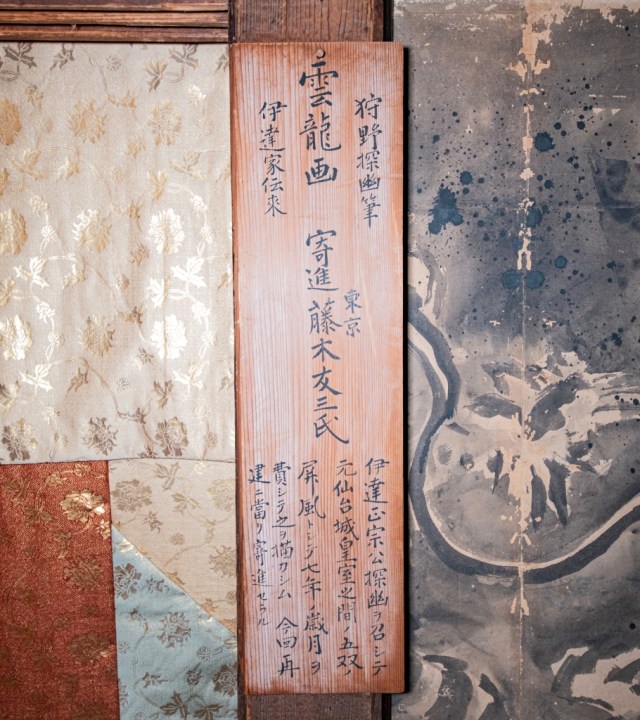
▼ This plaque explains the details of the screen paintings, relics of the Date samurai clan.
The tour also included a visit to the tea room of Taikou-in. We were given special permission to take photos, but if you take part in this tour be warned that the general public won’t be able to take video or even see the room at all in some cases.
▼ Teapots were placed in the middle of the room, in a small indent in the floor.
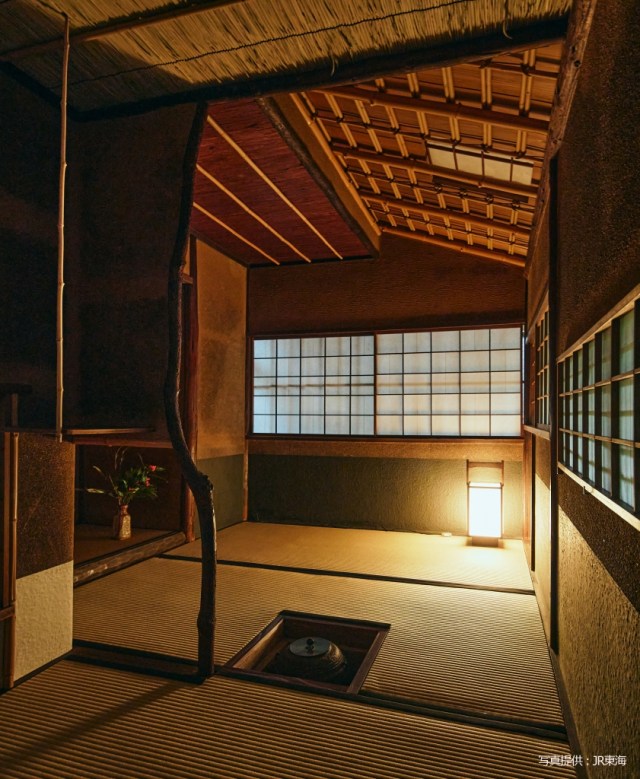
▼ Further in, the tea room looks like this.
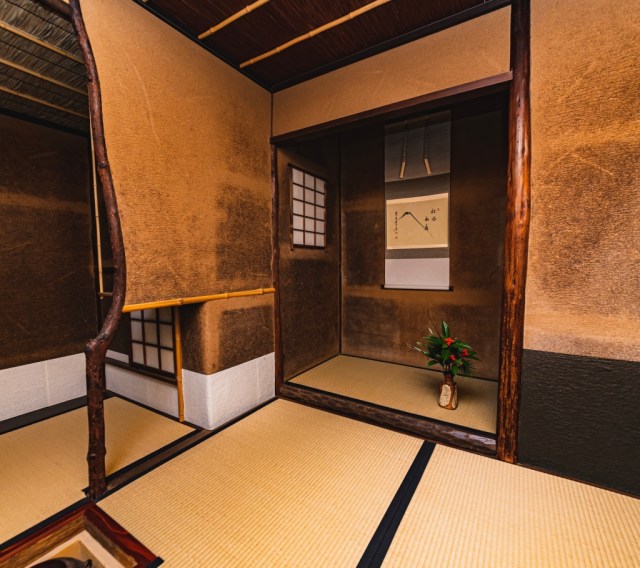
On the tour, Egawa learned that this tea room had seen the likes of the Japanese daimyo lords Kuroda Nagamasa, Kato Kiyomasu, and Fukushima Masanori, each of the late Sengoku to early Edo periods.
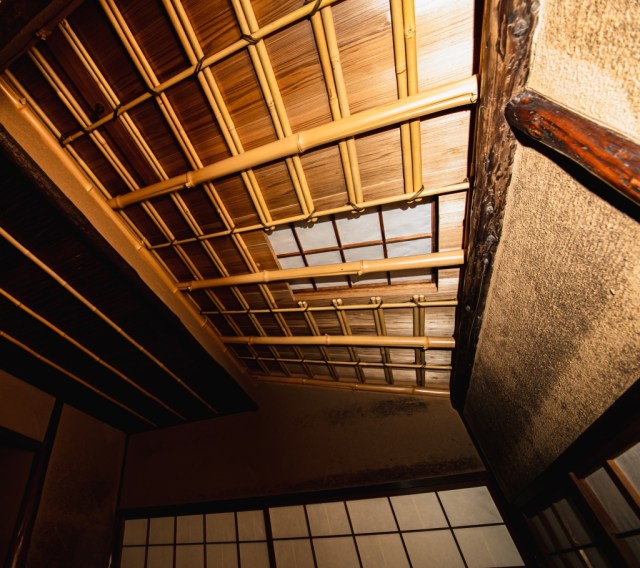
▼ Egawa found it interesting that a window was built into the ceiling.
Perhaps for protection, or just for letting more sunlight in.
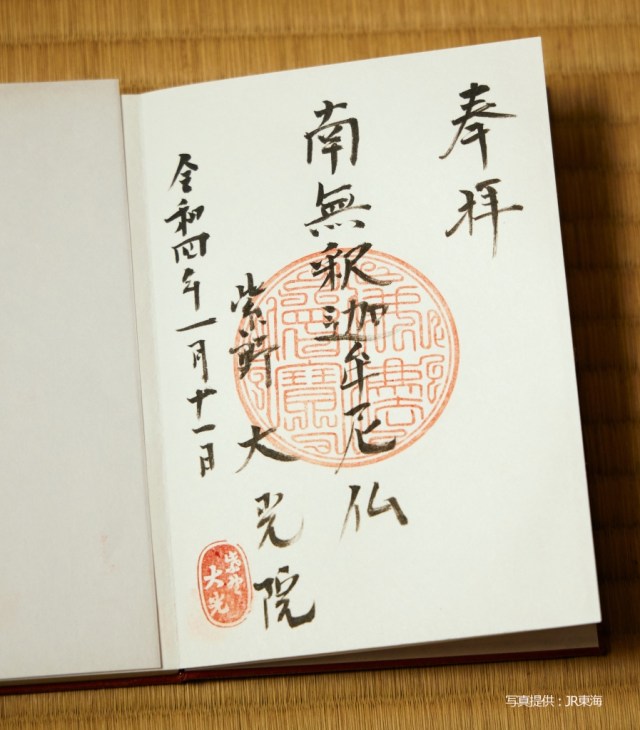
▼ And of course, Egawa had to get the official goshiun stamp from the temple. Many people collect these in stamp books.
Egawa was pumped and excited when he entered the temple, but the more time he spent there, the keener and calmer his senses became. Everything was so perfectly landscaped and built that he felt like anyone could become more focused and serious by visiting here.
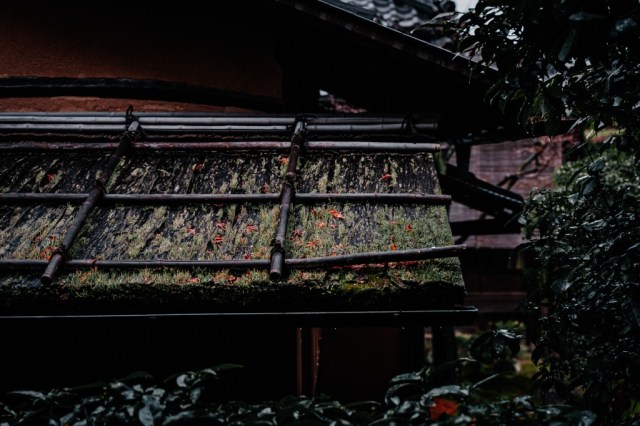
▼ Even the roof looked moody.
And with that, it was time to move onto the second part of his Kyoto Ready: Zen and Hot Springs tour — a zazen meditation experience at Manpuku-ji Temple.
▼ The architectural style of this temple was far different from the other, and for a reason.
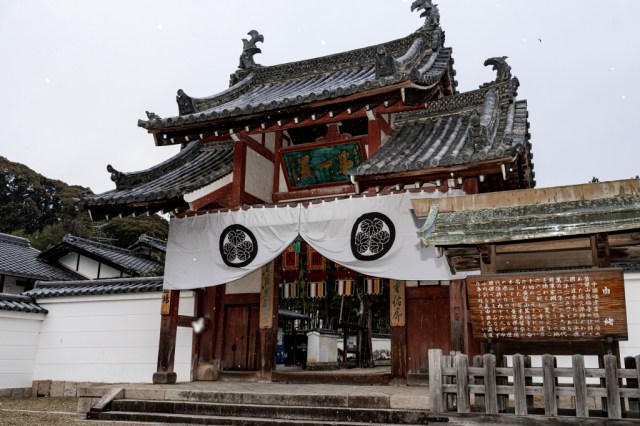
Manpuku-ji is known in the world of Buddhism as the head temple of the Oubaku-shu school of Buddhism. This school originated in China, and so that is reflected in the extravagant and spacious architecture.
▼ Outside, you may see the monks walking around.
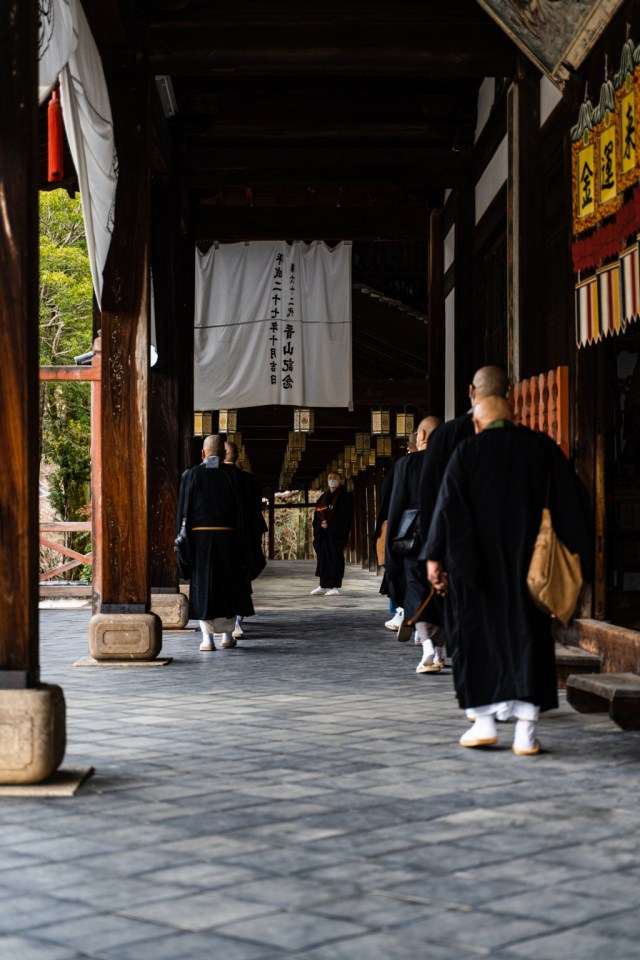
▼ The inside is just as decoratively dazzling.
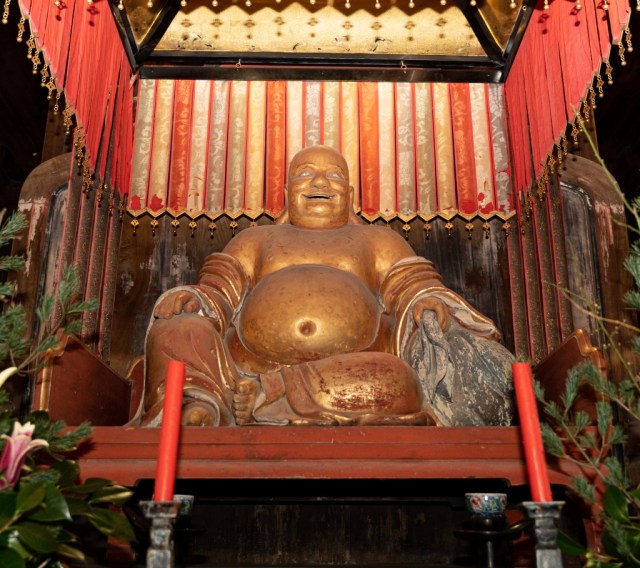
Inside, Egawa was given a background on all things zazen-related, such as why zazen temples are decorated a certain way, the molding of the arhat statue (of one who has achieved nirvana), and more.
There was so much that visually interested Egawa that it would be impossible to condense them all into one article, so here are some of the main things that caught his eye.
▼ First up, the giant fish.
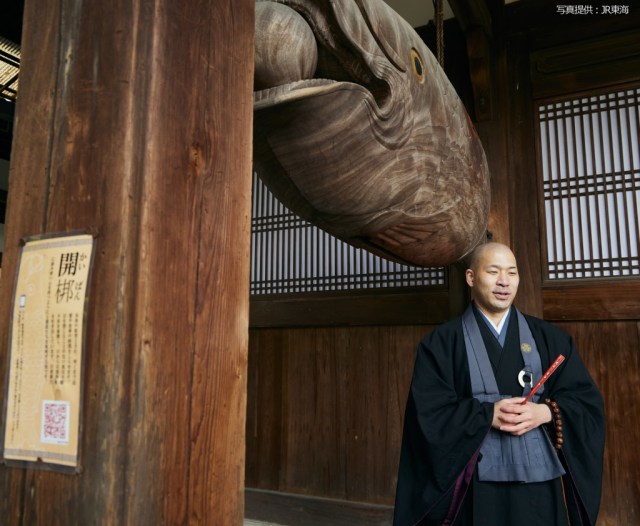
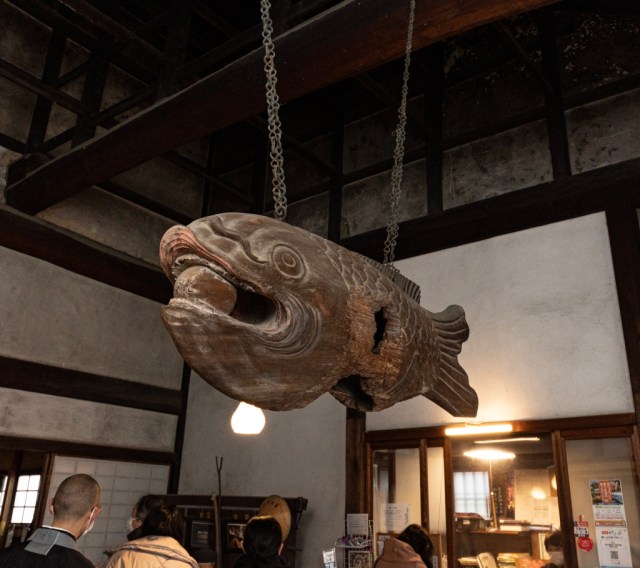
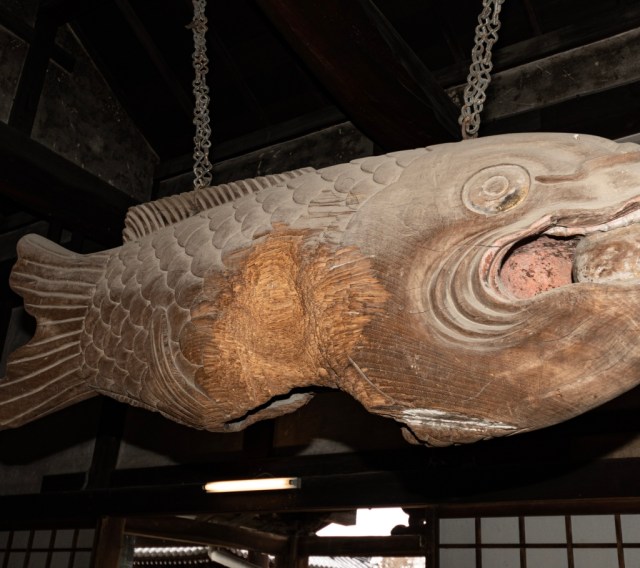
These are called kaipan, and they ring when struck. This occurs in the monks’ daily routines and rituals. Since they’re struck in the same place every time, the middle of the fish is often a different color than the rest of its body. The ball in its mouth represents the expulsion of Kleshas — “poisonous” mental states that cloud judgment — when it is struck.
Next, it was time to experience a real, guided zazen meditation. Egawa was shuffled to another area of the temple. He’d seen it on TV before, but this was his first time actually trying it.
▼ This area of the temple was lined with cushioned benches.
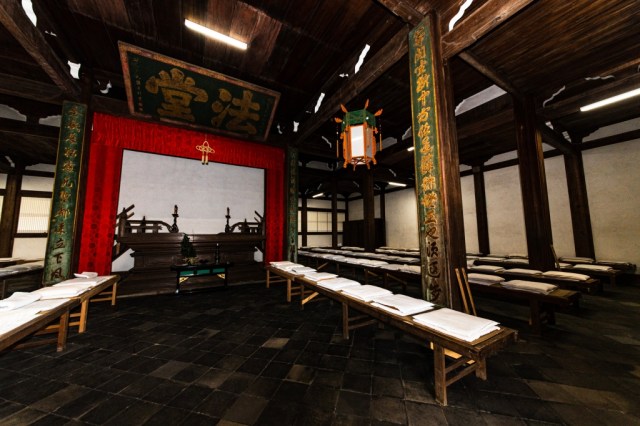
Each seating spot had two cushions, and Egawa was first instructed to fold the top cushion in half and then sit on it. He thought it was done on a flat seating position, so he was a little surprised.
▼ He was then taught the proper way to sit for a zazen meditation, which was to cross his legs with both soles facing upwards.
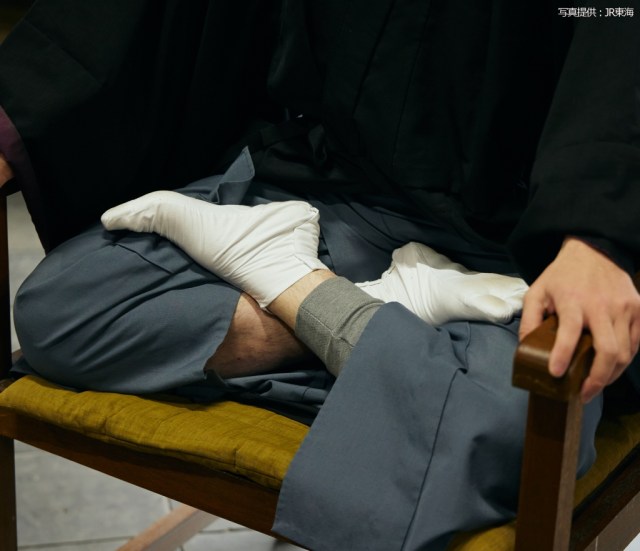
This wasn’t the usual criss-cross apple sauce way that Egawa thought he had to sit. However, his instructor did let him sit in the usual cross-legged position for this lesson since the proper way was too difficult for him.
▼ Meditation isn’t all fun and games, though.
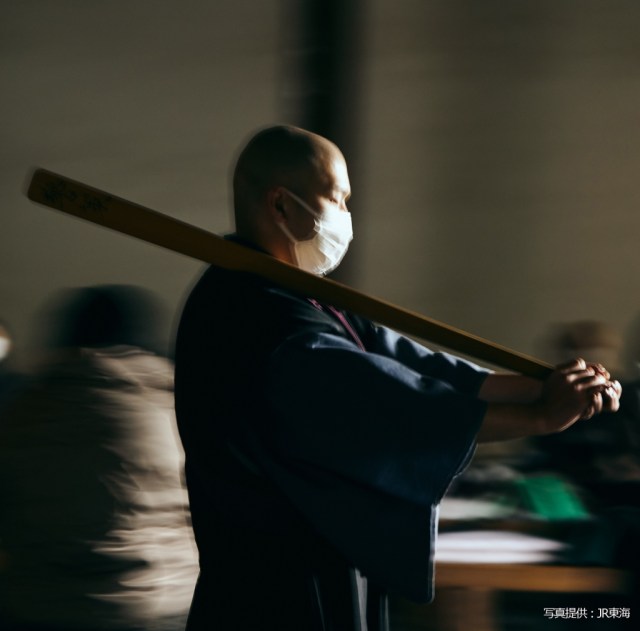
During the explanation of zazen meditation, Egawa was told that it was all right to move during meditation, albeit with a catch. You can’t just move normally or you’ll get a warning thwack from the monks. However, if you move your hands in a certain way followed by a bow, you’re technically allowed to move.
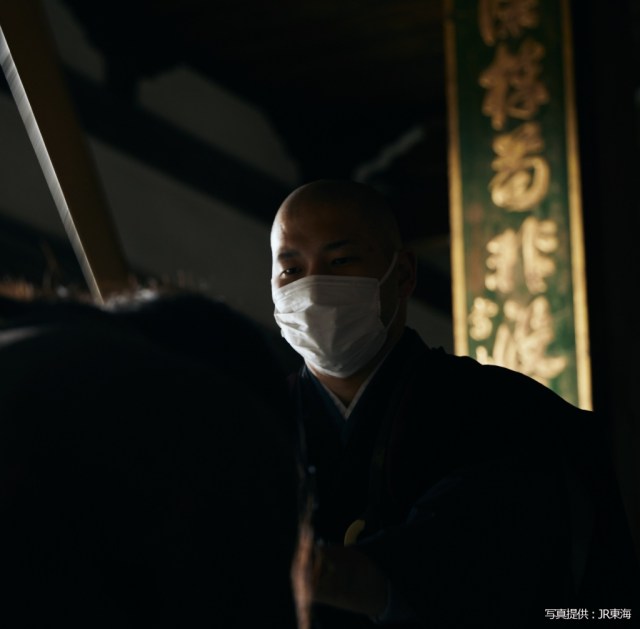
Fortunately (or unfortunately, according to Egawa), our fellow reporter did not get a chance to use this specific hand gesture to see if he’d be caught by the monk police. Since it was a short experience class, it was over before he knew it.
For those that want to partake in the full experience though, there is an alternate tour plan that offers a full-on zazen experience at Manpuku-ji Temple followed by some Buddhist temple cuisine and a goshuin stamp at the end.
And then he was off to the final stop of the tour: Koushou-ji Temple. Egawa was ready to make some matcha incense. First, he had to climb up a hill called Kotozaka to get there.
▼ This path goes uphill for 200 meters (650 feet) to the main temple’s entrance.
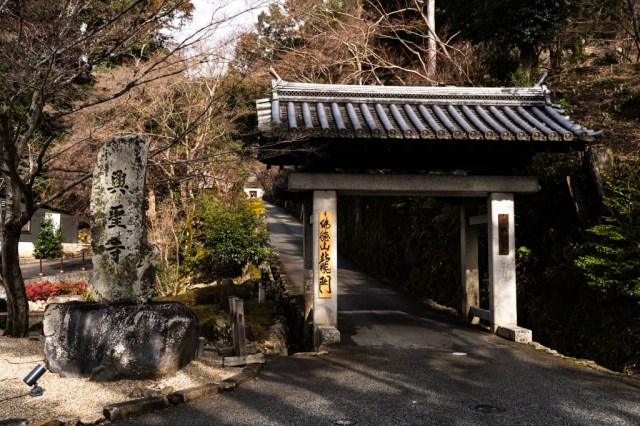
▼ In autumn, the path leading up to the main temple is famous for its foliage.
▼ This temple also had a giant fish that was so beaten down, it had a hole in the middle. Yikes.
▼ It’s not long before the other side wears out, too.
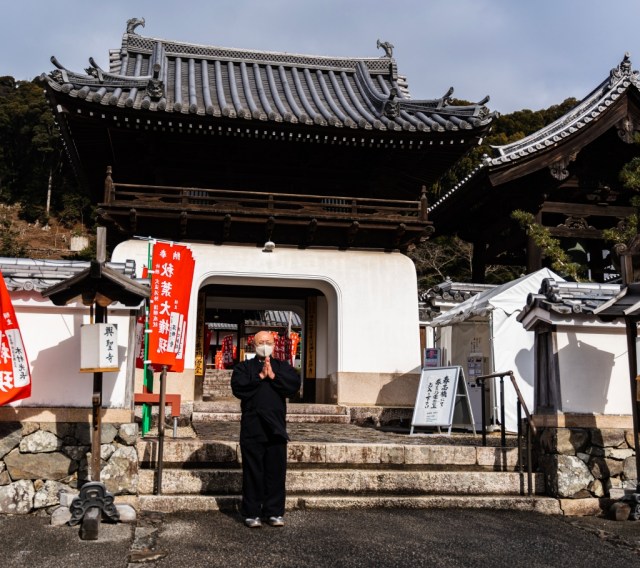
One thing Egawa liked about this temple was that you could get a glimpse into the everyday lives of the monks that you couldn’t normally get at other temples.
▼ For example, their kitchen is in full view!

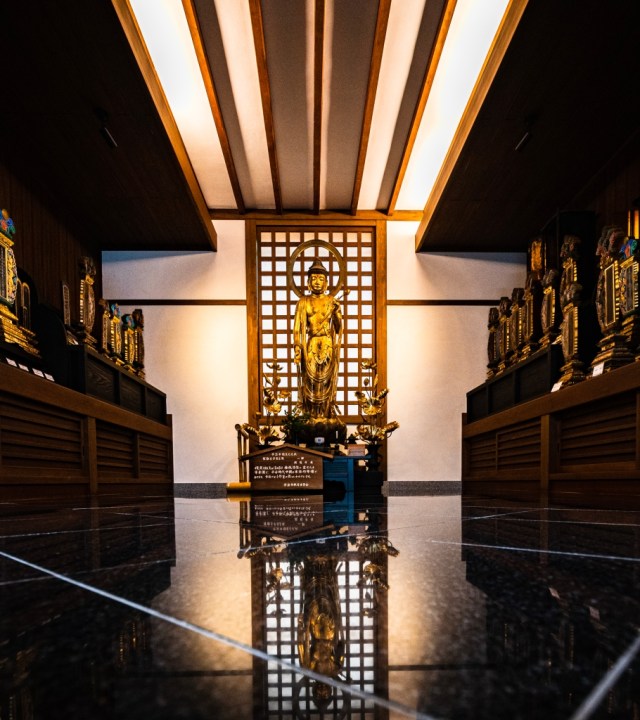
And if you’ve ever read the famous Japanese literary work, The Tale of Genji, you might enjoy this fun fact: this Tenarai Kannon statue was supposedly brought in from the Tenarai-no-mori Forest mentioned in the story.
▼ A piece of real and literary history on display to the public? Pretty cool, we must say.
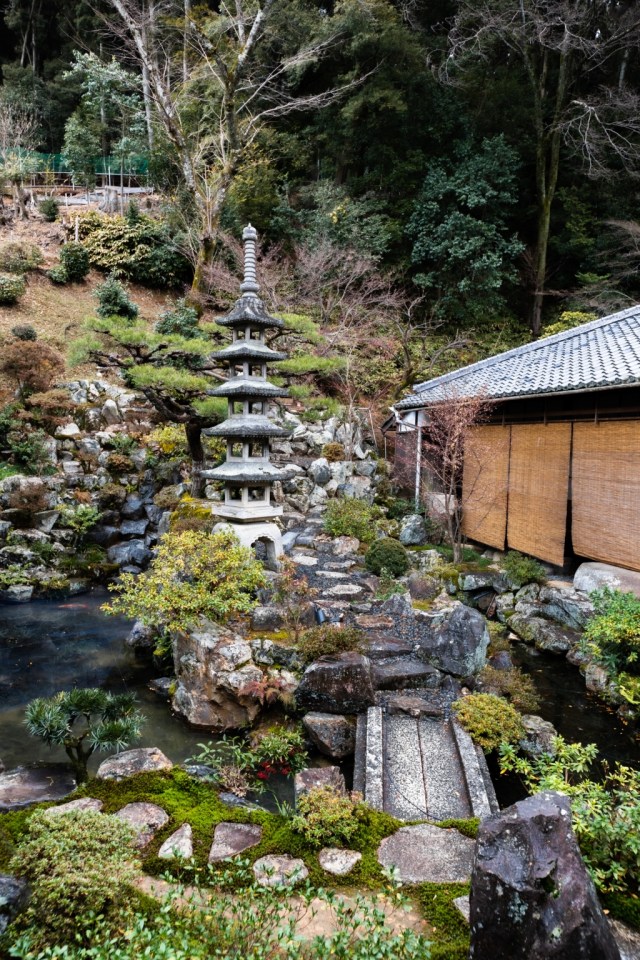
▼ The gardens outside are also impeccable.
After hearing about the many interesting things on display the temple, Egawa was invited into a room to start the incense-making process. He had no idea what to expect. As in introduction to the lesson, the instructor told them about the different ways a piece of incense can be scented.
▼ Some give off their scent when lit, some when simply warmed, and some are scented at room temperature.
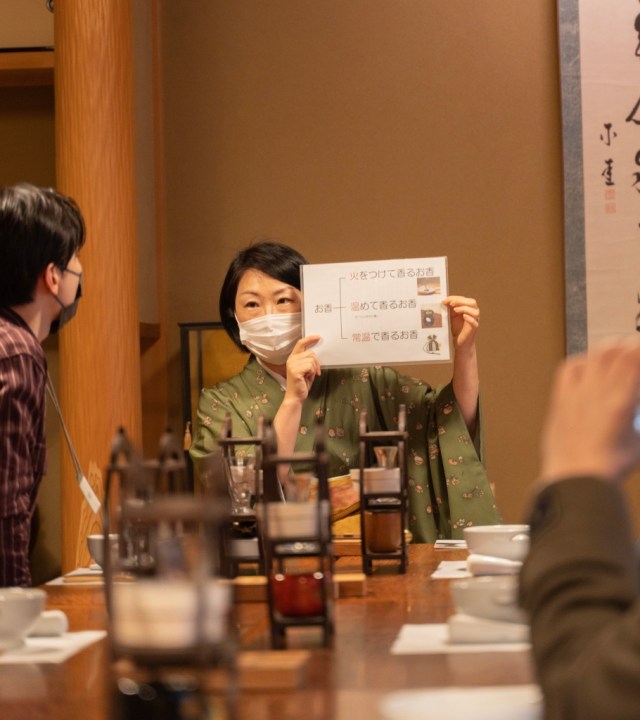
Egawa only knew about the type of incense that give off their scent when lit, so he was excited to find out they would be making a new type for him — one that just requires warming up.
The materials for making it were far simpler than he imagined: matcha powder, ground-up tree powder, and water. That’s it!
▼ A possible DIY project at home?
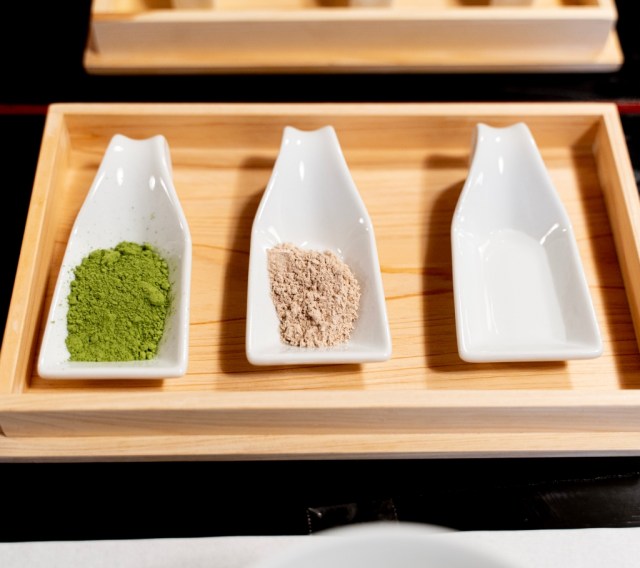
The tree powder is ground-up from the Japanese bay tree, a tabunoki. This type of tree lines the streets in the area, so it makes sense that they’d source what’s closest to them. Egawa was amazed that all you had to do was shave a bit off the tree and you’d have a vital component for making incense.
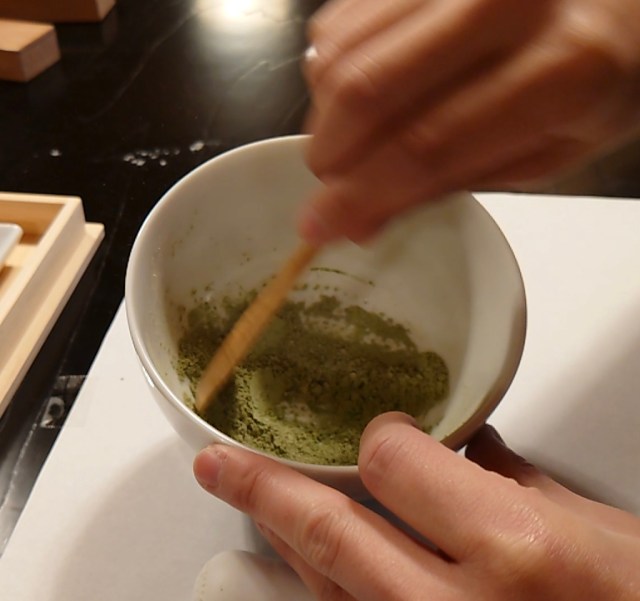
With all of his ingredients figured out, Egawa set to work. He started by mixing the matcha and tree powder thoroughly together.
▼ Make sure you don’t mistake this for your morning cup.
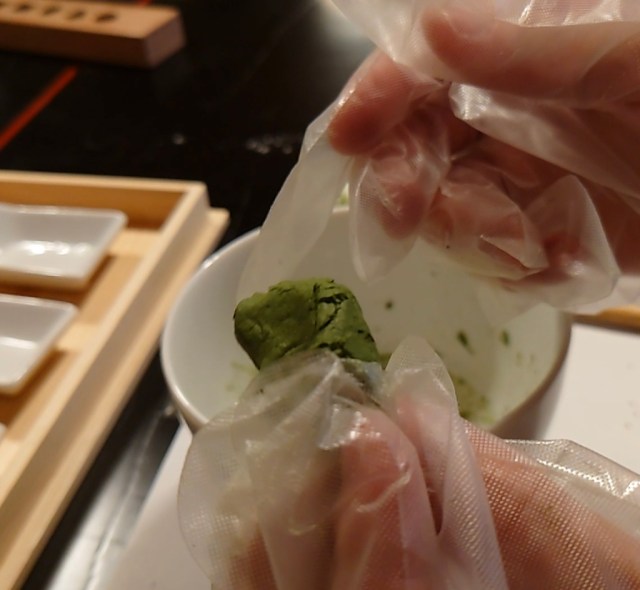
▼ Then he added the water and kneaded it to make a sort of incense clay.
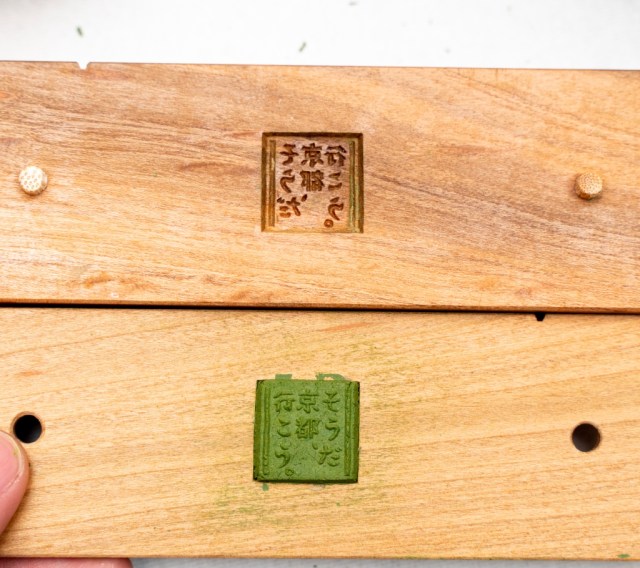
The last step was to place it in a wooden mold that had a cute phrase on it: Sou da, Kyoto ni ikou, or “Yes, let’s go to Kyoto”.
▼ Let’s gloss over the fact that he was already in Kyoto.
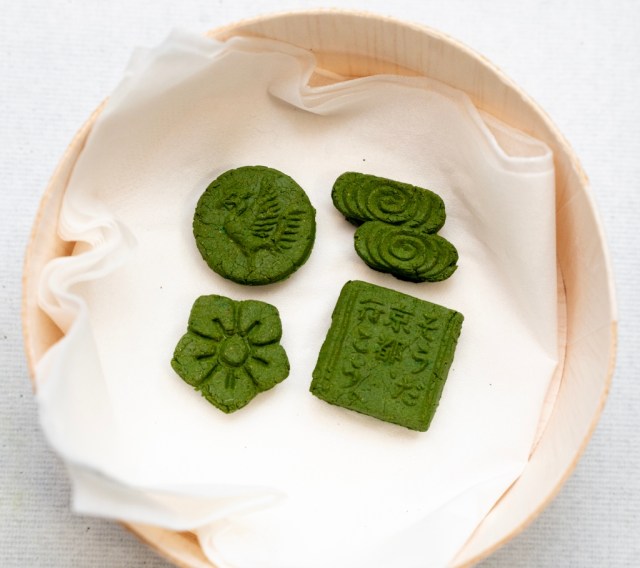
They had a ton of other molds besides that, so Egawa picked out a few that he liked and ended up with five little pieces of matcha incense.
▼ Which one is your favorite?
The main thing to keep in mind during this class is to start with the shape you really want to make, then work your way down. You may not have enough clay to make everything you want, so choose wisely!
▼ Or you might end up with extra, like Egawa.
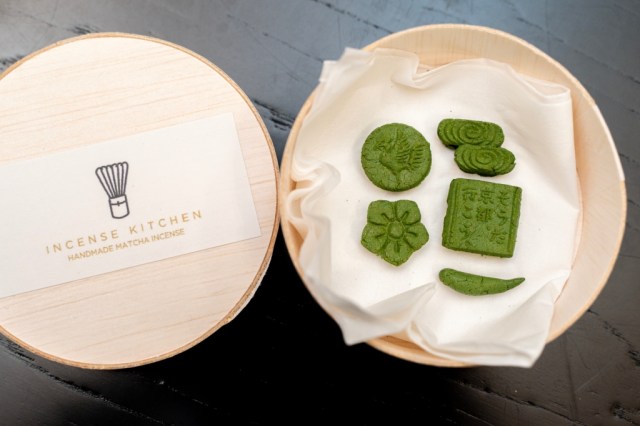
Out of all the activities that day, the incense workshop cleared Egawa’s mind the most. The 30-minute experience went by in a flash. You’ll enjoy it especially if you enjoy working with clay!
▼ You can also buy an incense warmer at the classroom shop.
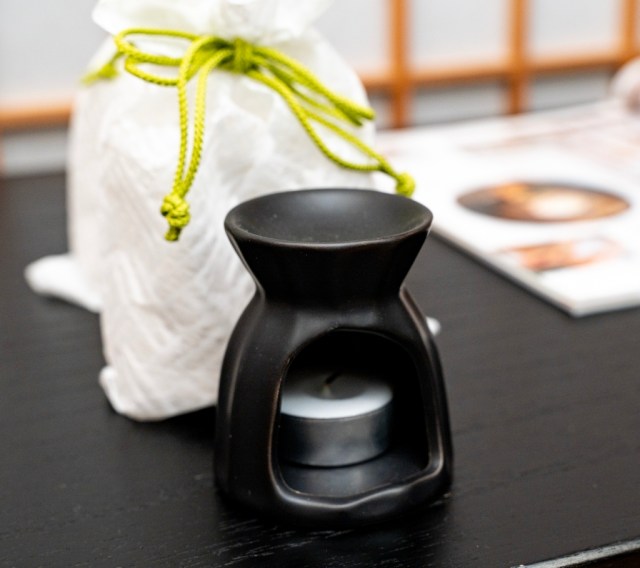
And so ended Egawa’s Kyoto Ready: Zen and Hot Springs tour sponsored by Japan Rail. From the hot springs to the temples, he enjoyed every minute of it.
But to be honest, the thing that left the most lasting impression on him was the moment he exited Koushou-ji Temple. When he turned around…
▼ …a monk was right there, sending him off!
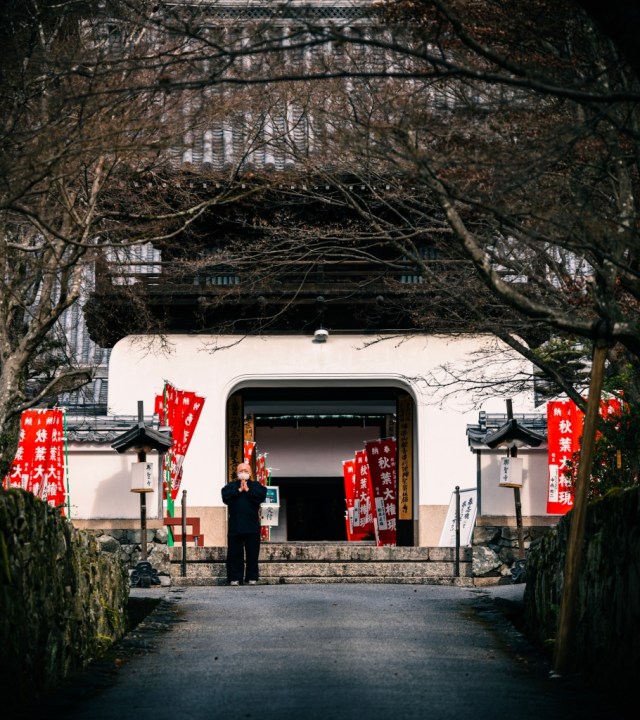
Egawa was the only one there at the time, and though there was no guarantee that he would turn around to acknowledge the monk, there he was. This is an example of what Egawa would say is omotenashi, or providing a welcoming spirit.
▼ It made him feel special that someone came out just for him.
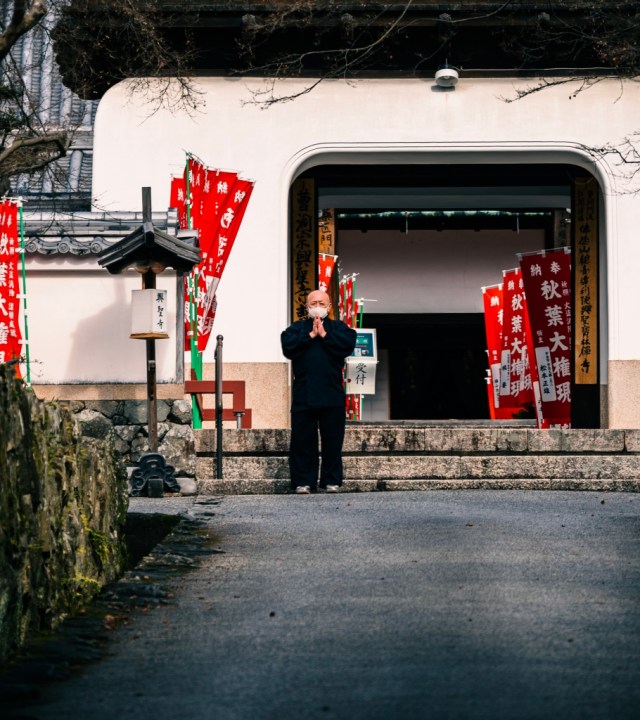
▼ “I’ll miss you, Mister Monk!”
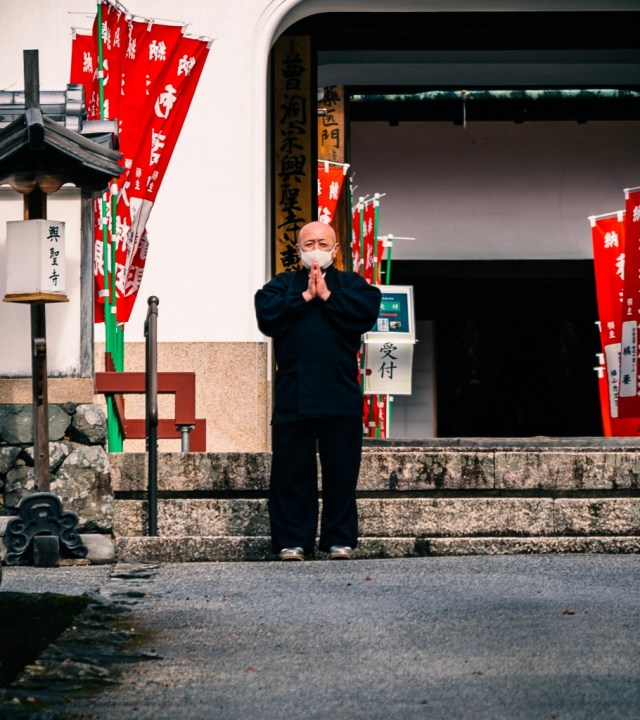
This kind of thing normally happens at service industries like restaurants, hair salons, and more, but he didn’t expect it to happen to just himself at a famous Buddhist temple. How touching! That was what sealed the deal for Egawa: he was absolutely smitten by Kyoto, to the point where he considered extending his trip.
▼ And in the winter, you can even see some beautiful temple snow.
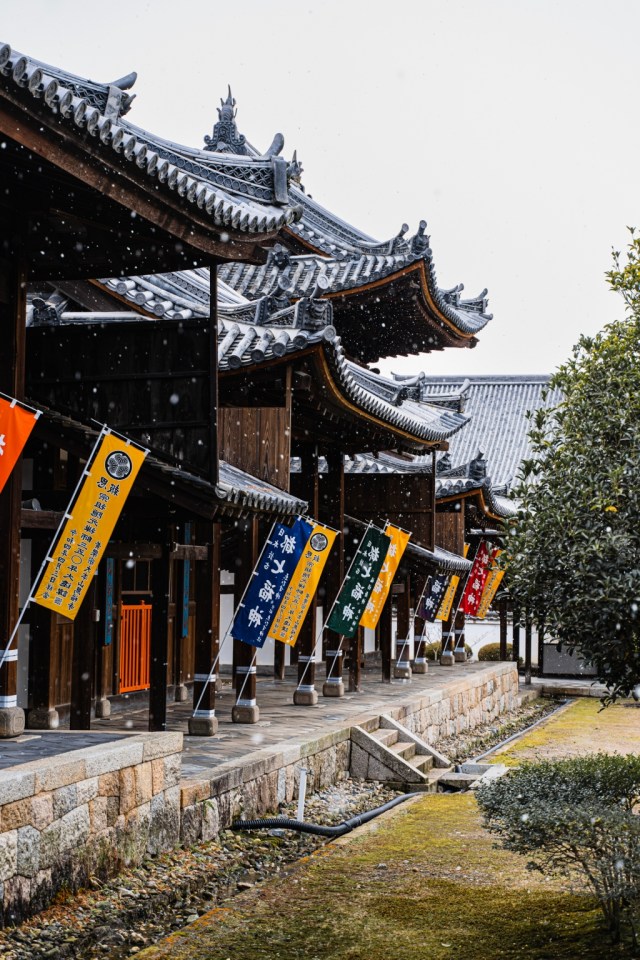
Needless to say, Egawa would recommend this trip to anyone that wants to visit Kyoto. Now may not be the best timing in terms of the rising cases of the coronavirus, but when things settle down, this should be the first place you visit!
Related: Totonou Campaign Site
Photos: ©SoraNews24
● Want to hear about SoraNews24’s latest articles as soon as they’re published? Follow us on Facebook and Twitter!
[ Read in Japanese ]
 JR Central and Kyoto temple team up for the coolest temple tourism experiences you’ll ever see
 Kyoto sightseeing tour: The most amazing old bathhouses in the city
 Kyoto’s Tofukuji temple opens secret area above Sanmon Gate to the public
 Kyoto temple becomes Pokémon Go gym in Japan, provides special phone chargers for players
 Kennin-ji Temple Masters Project: craftsmen make ornate watch inspired by Kyoto temple
 Mt. Fuji decorated with a 500,000-flower pink carpet is Japan’s ultimate spring view
 Howl’s Moving Castle’s scene-stealing dog is here to clean your home as a plushie mop
 30 Pikachus want to share a Tokyo hotel room with you that has separate Grass, Water, Fire spaces
 Can a downtown Tokyo super sento bathhouse beat a hotel for a one-night stay?
 Suntory explains the simple science behind how it makes its amazing clear tea beverages【Video】
 Tour alleged yakuza hideouts on Google Maps
 Fried sandwiches arrive in Tokyo, become hot topic on social media
 Viral Japanese cheesecake from Osaka has a lesser known rival called Aunt Wanda
 University of Tokyo announces new department with all classes taught in English
 We check out Films Wako, a “social apartment” building with a movie theater inside
 Japan reportedly adding Japanese language skill requirement to most common foreigner work visa
 Pokémon and Ikea Japan cross over into each other’s worlds with collaboration events
 Starbucks Japan closing only Shinkansen platform branch for popularity-triggered renovations
 You can assemble a well-balanced team of Pokémon, them eat them, thanks to Japanese cake chain
 Two food hacks take Japan’s convenience store fried chicken to amazing new sandwich heights
 7-Eleven Japan’s new baked-in-store sweet treat is only available in three parts of the country
 Man bites woman at cherry blossom park in Japan, dies shortly after
 Peanuts and Coke becomes a viral hit in Japan, but is it a trend worth joining?
 Japan now has a special desk for people who work at home with a pet cat[Photos]
 Famous Tokyo cherry blossom spot installs view-blocking screens to fight overcrowding[Video]
 Uniqlo announces new T-shirts for One Piece, Naruto and more for manga publisher’s 100th birthday
 Train station platform ramen store closes its doors on half a century of history in Tokyo
 Starbucks Japan releases new My Fruit³ Frappuccino at only 34 stores around the country
 Krispy Kreme releases Super Mario doughnuts in Japan for a limited time
 Japanese onsen egg maker from 100-yen store Daiso needs to be on your shopping list
 Studio Ghibli releases Catbus pullback keychain that runs like the anime character
 Survey asks foreign tourists what bothered them in Japan, more than half gave same answer
 Japan’s human washing machines will go on sale to general public, demos to be held in Tokyo
 Starbucks Japan releases new drinkware and goods for Valentine’s Day
 We deeply regret going into this tunnel on our walk in the mountains of Japan
 Starbucks Japan releases new sakura goods and drinkware for cherry blossom season 2026
 Studio Ghibli releases Kodama forest spirits from Princess Mononoke to light up your home
 Japan’s newest Shinkansen has no seats…or passengers [Video]
 Major Japanese hotel chain says reservations via overseas booking sites may not be valid
 Put sesame oil in your coffee? Japanese maker says it’s the best way to start your day【Taste test】
 No more using real katana for tourism activities, Japan’s National Police Agency says
 1,032 statues, and one thing too many people miss, at this Kyoto temple
 Getting off the beaten Kyoto temple path and onto a mossy one with the Kyoto Moss Tour Passport
 Escape the Kyoto crowds at these lesser-known spots in Arashiyama
 Kyoto in summer: A special trip to Kifune shrine recharges the soul