
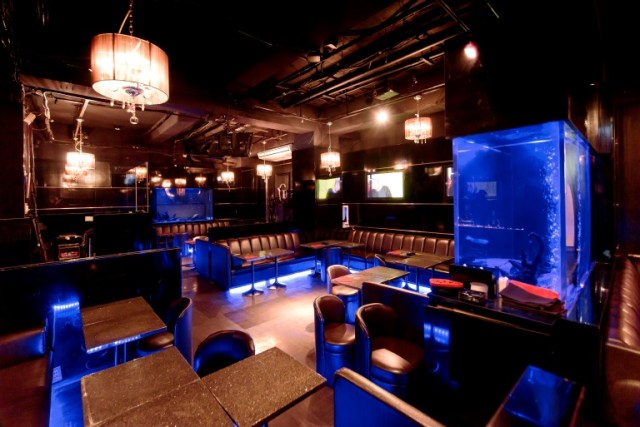
Interviews reveal backstories behind the genjina.
“What’s in a name?” some people ask, but the answer is “Quite a lot” when you’re talking about the men who work in Japan’s host clubs. A good host name has to be steeped in stylishness but also feel approachable, paving a smooth path to popularity with repeat and new customers alike.
Most hosts don’t work under their real names, but instead use a genjina, or “professional name.” So how do they come up with one? To find out, our ace reporter Mr. Sato spoke with five hosts currently working in Tokyo’s Kabukicho bar district, all staff members at clubs managed by Smappa Group, to hear their stories.
● Host #1: Reiwa
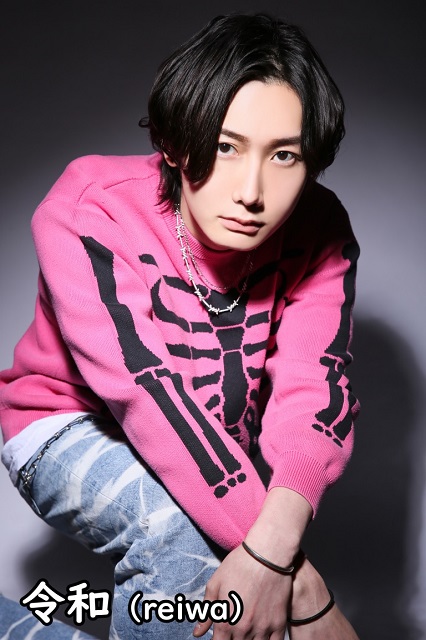
Mr. Sato: So, I’m guessing you changed your name when the Reiwa period started, right? Did you decide to do that yourself?
Reiwa: Yeah, it was when the Reiwa period started, but I didn’t come up with the idea on my own. Our company also runs a cake shop, and a TV crew was coming to do a story about it. My boss said “How about if you appear with your name as Reiwa?” Basically if I changed my name, I could be on TV. It took me a while, but I decided to do it, and my boss started calling me “Reiwa” too after that.
Mr. Sato: That’s pretty forceful.
Reiwa: But that meant I got to be on TV, and there were people who saw me and remembered my name and still come to the club as customers even now, so I’m glad I changed it. Actually when the Reiwa period started, there were a lot of hosts who changed their names to Reiwa, but I think I’m the only one who’s still using it.
Mr. Sato: You’re a survivor. Do you ever think about changing it again?
Reiwa: When hosts get promoted to executive host positions, they start going by their family name. So when that happens to me, I’m planning to use “Reiwa” as my family name, and my old host name as my given name…There are still some customers who call me by my old name, so I’d like to do that for them.”
● Host #2: Takumi Saito
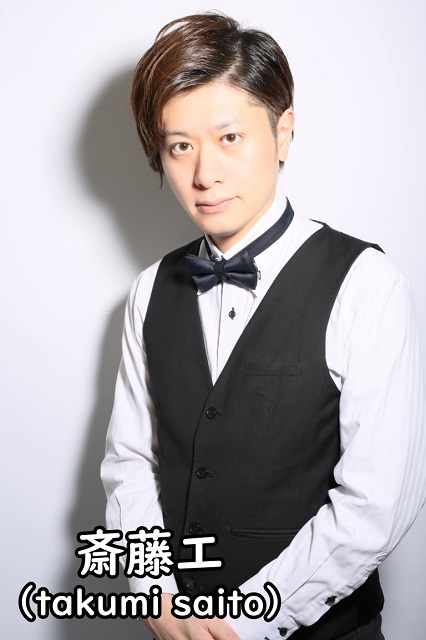
Mr. Sato: Wait, is your name supposed to make people think of Takumi Saito, the famous TV drama actor?
Takumi: No. I’ve been in this business for over 20 years, and I’ve been using this name since I started. The manager of the club I used to work at was a big fan of the manga Initial D. Its main character is named Takumi, so he gave me the same name. As for Saito, in those days people said I looked like the twin actors Shota and Keita Saito, and putting those together made me Takumi Saito.
After that, I had a fortune teller look at my name, and they told me that the number of strokes it took to write it was unlucky, so I changed my kanji for Takumi, from 拓海 to 工. But once the actor Takumi Saito started getting popular, I had people got upset at me for not looking like him, telling me I was a low-quality imitation.
Mr. Sato: Wow, that’s rough. But have you felt like there are upsides to having the same name too?
Takumi: It does make it easier for customers to remember it…Come to think of it, there used to be a lot of hosts named Takumi, usually guys with kind of a bad-boy image, but these days there aren’t so many anymore…Recently, there are a lot of hosts with 夜, the kanji for “night” [pronounced “yo” or “ya”] in their names, or guys with sparkly, cute-sounding names.
● Host #3: Musashi
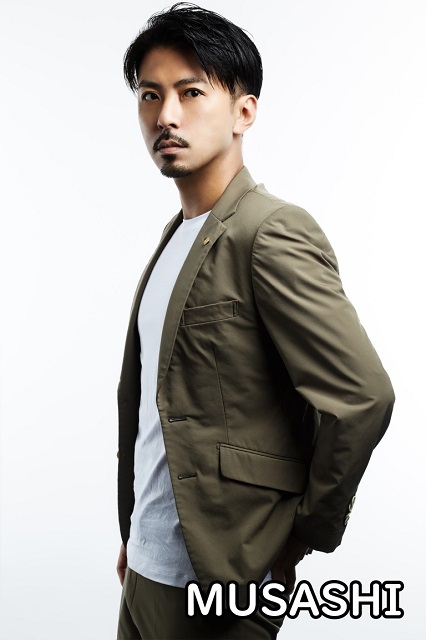
Mr. Sato: “Musashi” doesn’t seem like such a flashy name.
Musashi: It actually used to be “Miyamoto Musashi.”
Mr. Sato: Whoa, like the famous swordsman? Did you pick the name out for yourself?
Musashi: I took it from the manga about Miyamoto Musashi called Vagabond. It’s easy to remember, and it sounds tough.
Mr. Sato: And why do you always write it using the alphabet, instead of Japanese text?
Musashi: It makes it easier for people to find me when doing Internet searches…It’s kind of like the boy band Exile does.
Mr. Sato: Do you ever think about changing it?
Musashi: Nope. I’ve spent over half my life as Musashi, the host, so it’s become my identity, and I’m not going to change it.
Mr. Sato: Is part of that because you look up to Miyamoto Musashi?
Musashi: I guess it is. The name alone already sounds strong and masculine, and I want to be the same way.
● Host #4: Reman Aoyama

Mr. Sato: Reman is a unique name. How did you get it?
Reman: When I first started out as a host, I was planning on using my real name. Then one of my seniors told me that having a host name would be better. When you’re working as a host, you’re being a different person than you usually are, so you have a different name for each persona.
But I couldn’t think of a name that really clicked for me, so I asked our club’s producer for advice, and he said, “You’re an oshare (fashionable) guy, so how about Oshare Man? So I was Oshare Man for a while, but it was kind of an awkward name to use.
Mr. Sato: Yeah, I can imagine.
Reman: Like, it’s weird to meet a new customer and be all “Nice to meet you! I’m Oshare Man!” So I changed it to “Reman” for two years, and then when I got promoted to executive host, I became Reman Aoyama. For Reman, I chose the kanji 礼満, as a short version of Rei wo tsukushite manzoku shite itadaku (礼を尽くして満足して頂く, “be courteous to satisfy others”).
Mr. Sato: I see. “Reman” isn’t a collection of sounds you hear very often in Japanese.
Reman: That’s true. People sometimes call me “Roman” or “Lemon,” but I don’t get bent out of shape over it. I don’t plan on changing it either. It’s a name no one else has, so it’s easy to find me with online searches.
● Host #5: Haru Ninomae
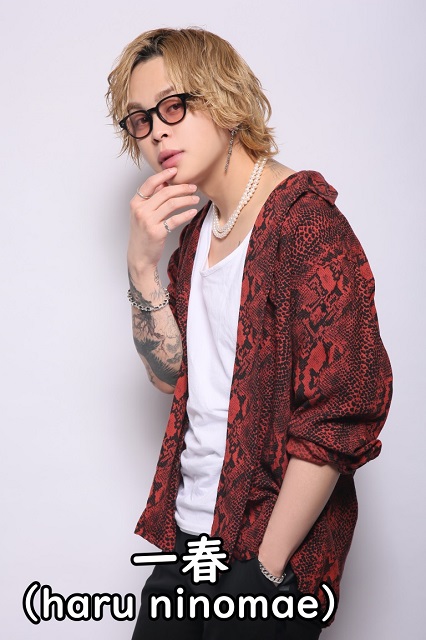
Mr. Sato: Did you pick your name out by yourself?
Haru: Yeah, the Haru part anyway. In the Takuya Kimura TV drama Pride, his character is named Haru Satonaka, and I liked his cool attitude, so I took he Haru part from there. Also I was born in spring [haru in Japanese], and my club manager, who’s now the president of our company recommended it, so there were a lot of overlapping reasons.
Ninomae was the family name one of my host seniors who I really looked up to used, so after he retired from the industry I took it over.
Mr. Sato: Oh, wow, like kabuki actors do! I didn’t know hosts did that sort of thing too.
Haru: I’m actually not sure if other hosts do that or not, but that’s what I did. I’ve heard of other hosts taking one kanji from their senior’s name though and using it to make one for themselves.
Mr. Sato: Did you feel any extra pressure when you started using your senior’s name?
Haru: I did, but in a good way. It became a source of motivation, motivation to not sully the name. Moreso than pressure, you could call it an increased consciousness, in a positive sense…It’s a name I have a lot of pride in.
Though Haru was the only one to explicitly say so, Mr. Sato came away with the sense that everyone he spoke to has a lot of pride on their host name, and that every day they’re working hard to live up to the expectations of their customers and themselves.
Related: Smappa Group
Photos: SoraNews24
● Want to hear about SoraNews24’s latest articles as soon as they’re published? Follow us on Facebook and Twitter!
[ Read in Japanese ]
 How to get a date in Japan, according to hosts in Kabukicho
 A Tokyo host club can be a great place for a GUY to drink
 Tokyo’s host club photo studio will have you looking like the coolest Kabukicho club king
 Introducing Roland, King of the Hosts: Top earner and most successful host club host in Tokyo
 Japanese boy celebrates 8th birthday dressed as a host at a club in Tokyo’s Kabukicho
 7-Eleven Japan releases a crazy new viral sandwich: Chocolate Sprinkles and Whipped Cream
 Japan now has a “for foreign tourists only” Mt. Fuji sightseeing train[Video]
 Ramen restaurant in top Tokyo tourist neighborhood skips price gouging, but how does it taste?
 Can you make butter by running with a pouch filled with cream? Let’s find out[Taste test]
 Create a tiny Ghibli anime world on your bookshelf with new miniature papercraft art kits
 Public restrooms in Osaka to get in-stall video screens with ads
 An overnight trip on the Sunrise Izumo, Japan’s awesome Tokyo-Shimane sleeper train【Photos】
 Peko-chan Milky Time Cafe opens in Chiba and we go to check out all of the pastries and merch
 Train station platform ramen store closes its doors on half a century of history in Tokyo
 Tokyo Station staff share their top 10 favorite ekiben
 Starbucks Japan releases new My Fruit³ Frappuccino at only 34 stores around the country
 Japanese onsen egg maker from 100-yen store Daiso needs to be on your shopping list
 Cherry blossoms begin blooming in Japan with record-early starts for sakura season
 Tokyo government organizes food truck event to clear out delinquent/homeless teen gathering area
 Nine amazing off-the-beaten-path cherry blossom spots in Japan for yaezakura and shidarezakura
 Stunning central Japan wisteria festival is like a purple fantasy straight out of a Ghibli movie
 When will the cherry blossoms reach full bloom in Japan this year?[Forecast]
 Studio Ghibli unveils new Rollbahn notebook in honour of Howl’s Moving Castle
 Studio Ghibli adds new anime tumblers to its cool streetwear brand in Japan
 Universal Studios’ Sailor Moon theme park attraction is finally coming to America
 Starbucks Japan unveils new sakura cherry blossom collection for hanami season 2026
 Studio Ghibli releases Catbus pullback keychain that runs like the anime character
 Nine great places to see spring flowers in Japan, as chosen by travelers (with almost no sakura)
 Starbucks Japan releases first-ever Hinamatsuri Girls’ Day Frappuccino
 Studio Ghibli adds new Mother’s Day gift sets to its anime collection in Japan
 Virtual idol Hatsune Miku redesigned with look that adds new elements and brings back old ones
 Survey asks foreign tourists what bothered them in Japan, more than half gave same answer
 Japan’s human washing machines will go on sale to general public, demos to be held in Tokyo
 Starbucks Japan releases new drinkware and goods for Valentine’s Day
 We deeply regret going into this tunnel on our walk in the mountains of Japan
 Studio Ghibli releases Kodama forest spirits from Princess Mononoke to light up your home
 Starbucks Japan releases new sakura goods and drinkware for cherry blossom season 2026
 Japan’s newest Shinkansen has no seats…or passengers [Video]
 Major Japanese hotel chain says reservations via overseas booking sites may not be valid
 Put sesame oil in your coffee? Japanese maker says it’s the best way to start your day【Taste test】
 No more using real katana for tourism activities, Japan’s National Police Agency says
 Is real Tokyo as dangerous as the Yakuza video games? Chapter 3: Crazy Town
 Why don’t hosts in Kabukicho approach our female reporter any more?
 Is real Tokyo as dangerous as the Yakuza video games? Chapter 2: Towards the Gray Darkness
 Is real Tokyo as dangerous as the Yakuza video games? Chapter 4: Not Like a Dragon
 “Earn your own money, you jackasses!” host billboard appears above lottery ticket shop in Tokyo
 Why is there a wrestling ring in the Underground Arena fighting bar in Kabukicho?
 Is Tokyo’s real-world Kamurocho as dangerous as the Yakuza games’ setting? Mr. Sato investigates
 Creator of Japan’s first pole dancing manga talks with our pole-dancing reporter【Interview】
 Learn how to crush walnuts with your butt from Japan’s Guinness World Record holder【Video】
 Tokyo store that only sells black shirts sheds light on why it’s opening mid-pandemic
 Things get heated, violent as we add bath salt to senbero drinking session【Japan’s Best Home Senbero】
 How hard is it to get a hug if you’re feeling cold at the SoraNews24 office?【Experiment】