
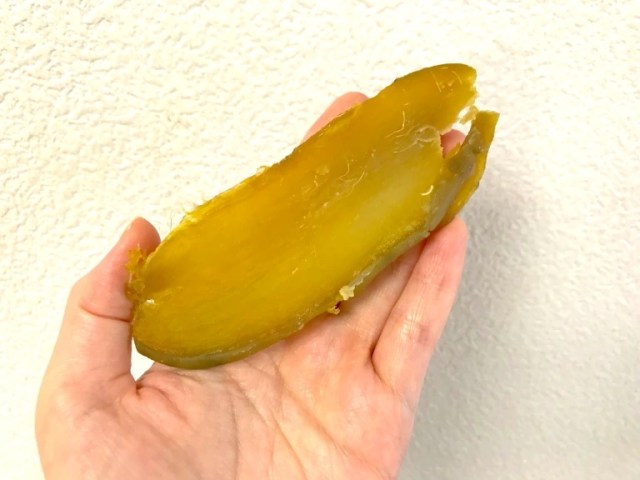
Making one of Japan’s favorite snacks is a slow and easy process.
Japan loves sweet potatoes, especially in the fall when they’re in season. The most popular way to enjoy them is as roasted sweet potatoes, or yaki-imo as they’re called in Japanese, but Japan also has an alternative sweet spud snack named hoshi-imo, or dried sweet potato.
As unabashed lovers of both sweet stuff and traditional Japanese cuisine, hoshi-imo show up on our shopping list pretty frequently. As much as we love hoshi-imo, though, we’re often surprised at how expensive they are. On our last grocery store visit, for example, the shop had the packs below on offer, with hoshi-imo made with extra-sweet bani harkua sweet potatoes costing almost 1,000 yen (US$7.20), and even more ordinay varieties costing about 400 per pack.
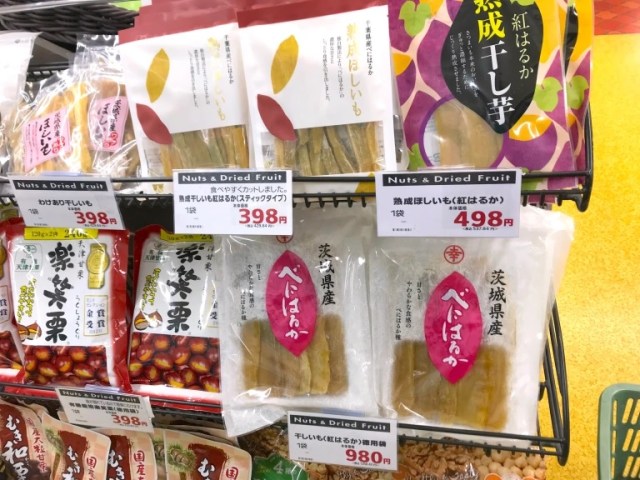
Meanwhile, you can get a whole beni haruka sweet potato for about 300 yen. So we started wondering if we could just make our own hoshi-imo, and it turns out it’s a really simple process! Aside from the sweet potatoes, all you need is a steamer, a pair of cloth work gloves or hand towel, and a hanging drying net, of the sort you can get at Daiso or other 100 yen shops.
Once you’ve got all that, though, the next thing you need to do is to check the weather report. In order to transform your sweet potato into hoshi-imo, you’re going to need to let it dry for three days, and maybe even as much as a week. Obviously, the more sunshine there is the quicker the process will go, so we started making our hoshi-imo when the forecast predicated three days of sunny weather ahead.
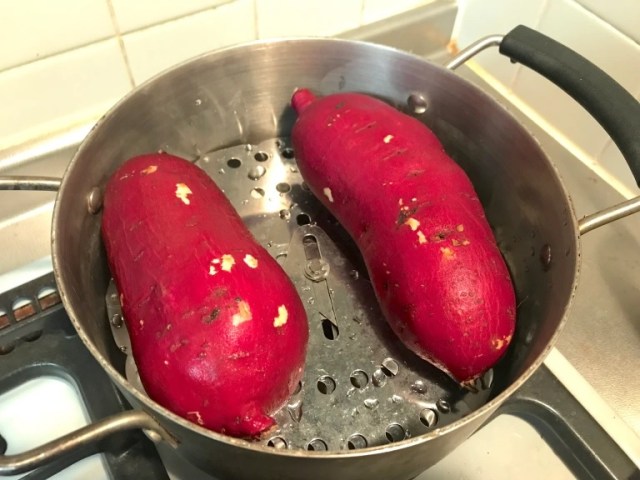
The first step in the kitchen is to steam the sweet potatoes, with their skins still on, on low heat for one to two hours. You’ll know they’re ready when you can stick a toothpick or skewer through the potato smoothly and easily.
Then it’s time to remove the skin. You’ll want to do this right away, since once the potatoes cool down again the skin becomes harder to remove. Of course, the fact that you just spent an hour or two steaming them means the sweet potatoes are going to be piping hot, which is why you’ll want to use gloves or a towel. The skin will basically peel right off, but you do not want to make the mistake we did of using a plastic bag as a kitchen substitute and scalding our palms.
▼ Searing hand pain = blurry photos
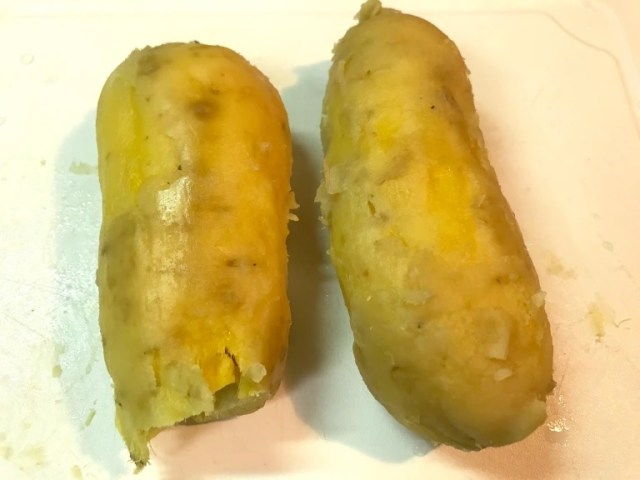
Next you’ll need to slice the sweet potatoes into strips about 1 centimeter (0.4 inches) thick. Thankfully, it’s better to wait until the potatoes have cooled down before you start cutting, which took about 30 minutes.
By the way, if you’re wondering if you can just peel the raw sweet potatoes so you don’t have to worry about their heat, that’s not recommended. Steaming the potatoes in a skinless state makes them take in too much water vaper and turns them soggy.
Even with leaving the skins on for steaming, though, the sweet potatoes get very soft in texture. Japanese sweet potatoes have an especially high natural sugar content, so they sort of caramelize when heated.
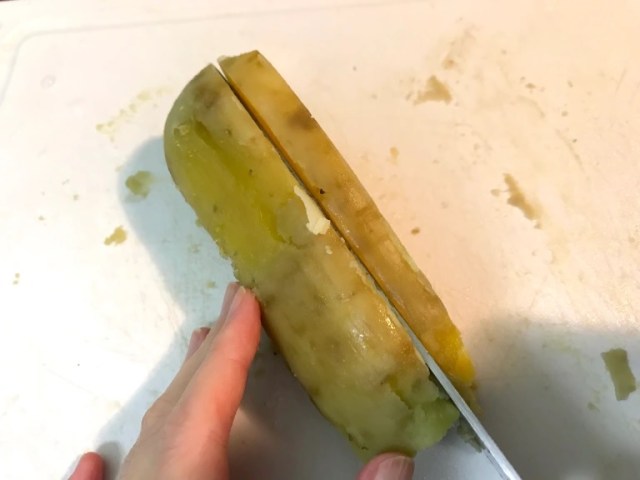
But with some careful knife work, we managed to get everything sliced into strips, and then it was time to place them in the drying net and play the waiting game.

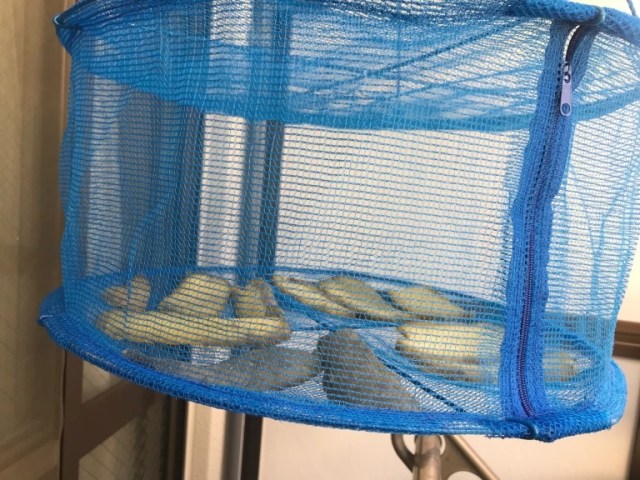
Like we mentioned above, it can take anywhere from three to seven days for the sweet potato to dry.
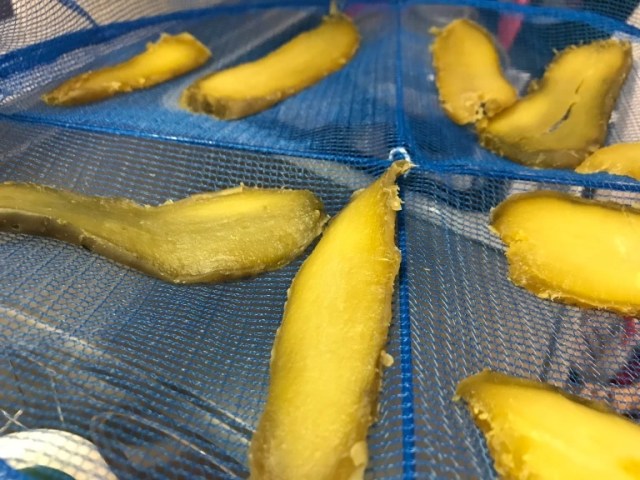
The way you can test to see if they’re ready is to take a piece and bend it lengthwise.
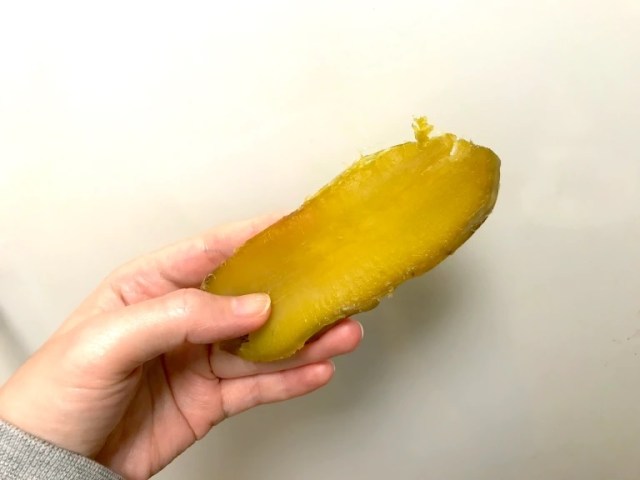
If it can fold in half like this without crumbling or tearing…
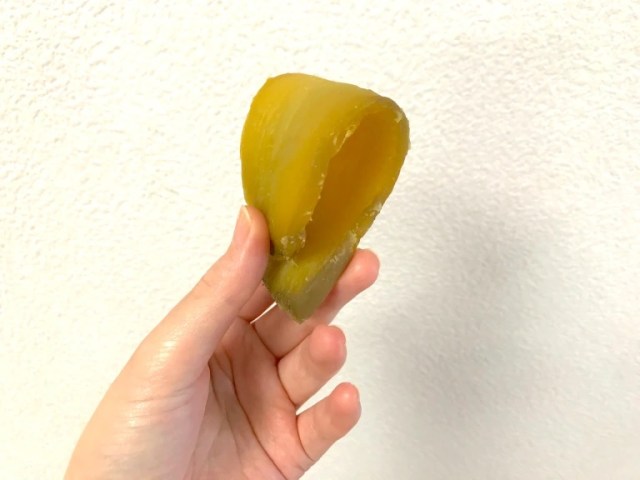
…then it’s ready to eat!
So how did our batch taste? Good. After three full days of drying, we had a pile of proper hoshi-imo, and at a fraction of what it would have cost us to buy that much pre-made at the store.
However, we have to admit that our hoshi-imo weren’t quite as sweet as professionally made store-bought varieties. We’re not sure if that’s because they use higher quality potatoes than what we could get our hands on at the supermarket, have a more sophisticated drying setup, or some other factors are at play.
The biggest difference here, though, is how much of a time savings store-bought hoshi-imo are. Making your own dried sweet potatoes doesn’t involve a lot of active prep time – setting up the steamer only takes a few seconds, and the peeling and slicing are both pretty quick processes as well. From start to finish, though, you’re looking at about three hours from when you start steaming until you have the sweet potato slices in the net, and at least three days after that until they’re ready to eat.
On the other hand, there’s a certain satisfaction then comes from making your own all-natural snacks, along with the unique slow-life appeal of the eventual reward for your patience. Plus, if you happen to live in a part of the world where you’ve got access to sweet potatoes but your local shops don’t have hoshi-imo, waiting three days for them to dry is probably still quicker than waiting until you next trip to Japan. Oh, and if you’ve got your heart set on making roasted sweet potatoes instead, we’ve got a new way to do that too.
Reference: Tebunuma
Photos ©SoraNews24
● Want to hear about SoraNews24’s latest articles as soon as they’re published? Follow us on Facebook and Twitter!
 Sweet potato donuts arriving at Mister Donut to let yaki imo fans get off to an early start
 Hiyashi yaki-imo vending machine changes the whole way we think about roasted sweet potatoes
 Japanese whisky sweet potatoes: A super-easy, super-delicious snack you can make in seconds
 Enjoy the taste of fire-roasted sweet potatoes in a bottle with new “You Yaki-imo” liquor
 Class is in session with Starbucks’ new college sweet potato Frappuccino【Taste test】
 Japanese rice cooker recipe gives us a tasty new way to enjoy vegetables and wieners
 New Tokyo sweets shop offers 648 different mochi ice cream dumpling combinations
 Even at twice regular Daiso price, this handy item is still great for summer travel in Japan
 Body of missing American college student found in Kyoto mountains
 Colour Hunting: The hot new street photography trend changing how we see Japan
 Ghibli’s No Face continues to demonstrate his generous character growth by dispensing soy sauce
 Japan’s cheap beef bowl chain Matsuya opens gourmet Premium Matsuya with Kobe beef…inside Matsuya
 Fukushima City on edge as resourceful and violent bear still not found
 Japanese convenience store shows us how to dress for the rainy season
 What’s it like to join Tokyo’s walking-and-talking-with-strangers club for a day?
 Uniqlo reveals third round of massive 100-year-anniversary manga T-shirts for Jump’s Shueisha
 Kyoto public junior high school becomes first in Japan with a hoodie school uniform
 New official Ghibli anime food cookbook will teach you how to make Ponyo’s ramen and more
 Starbucks Japan unveils new Frappuccino showcasing “mottainai” culture
 Osaka is hosting a “hentai” event, but it’s probably not what you think
 Tokyo’s Pokémon Cafe reopens this month with brand-new sweets and Pikachu show
 Tourists brave Typhoon Jangmi to queue at two famous sites in Tokyo
 Tokyo’s life-size Gundam anime mecha statue will be removed this summer
 Ichiraku Ramen-inspired ramen sets from Naruto anime pay homage to Naruto, Sasuke, and Sakura
 Kanji ice cream becomes a sell-out hit in Japan
 Japanese convenience store Lawson launches new “mini supermarket” chain, L Minimart
 Japan’s real-world Pokémon hot spring’s first photos are here![Photos]
 Japan’s human washing machines will go on sale to general public, demos to be held in Tokyo
 Starbucks Japan releases new drinkware and goods for Valentine’s Day
 We deeply regret going into this tunnel on our walk in the mountains of Japan
 Starbucks Japan releases new sakura goods and drinkware for cherry blossom season 2026
 Japan’s newest Shinkansen has no seats…or passengers [Video]
 Major Japanese hotel chain says reservations via overseas booking sites may not be valid
 Put sesame oil in your coffee? Japanese maker says it’s the best way to start your day【Taste test】
 Japan reportedly adding Japanese language skill requirement to most common foreigner work visa
 Japan’s 5.3 million beautiful Hitachi Nemophila flowers are now in full bloom[Photos]
 Pokémon and Ikea Japan cross over into each other’s worlds with collaboration events
 You’re not seeing things, that’s a cat selling roasted sweet potatoes
 Japan has a special foil for roasting sweet potatoes at home, and it’s like having a time machine
 How to make your own Pringles-flavor instant noodles【SoraKitchen】
 Weird Japanese vending machine find: Roasted potatoes in both hot and cold varieties
 Sign of autumn – Japanese sweet potatoes Frappuccino appears at Starbucks Japan【Taste test】
 We make Dom Dom Burger’s Sweet and Salty Chicken Burger from scratch【SoraKitchen】
 How to make tuna sashimi HAM with less than a minute of work【SoraKitchen】
 Honey and butter-flavored purple sweet potato snacks sound too good to be true, but they’re here!
 Falling into the sweet life with Japanese convenience stores’ new sweet potato sweets【Taste test】
 Can our writers tell which grilled sweet potato is 12 times more expensive?
 How to make a delicious tempura nothing bowl without any actual cooking【SoraKitchen】
 We try roasted sweet potatoes from a Japanese vending machine
 How to make no-rice “fried rice”【SoraKitchen】
 How to make okonomiyaki at home【SoraKitchen】
 New Frappuccino from Starbucks Japan comes filled with sweet potato fries 【Taste Test】
 How to make a spicy chicken katsudon in just three minutes【SoraKitchen】