
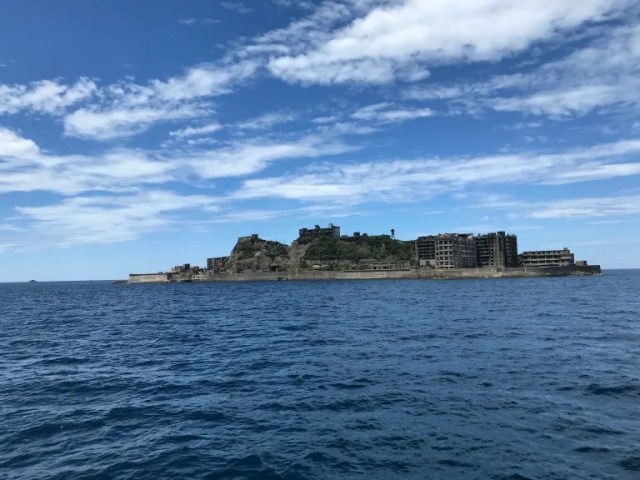
Our Nagasaki native gets her first up-close look at the whole-island ghost town.
In recent years, Nagasaki Prefecture’s Hashima Island, better known as Gunkanjima, or “Battleship Island,” has become one of the most internationally famous sites in Japan. A coal mining center for roughly 85 years, in its heyday Gunkanjima was one of the most densely populated places on the planet, with nearly every inch of buildable land space used for housing, schools, recreation, and administration buildings for the miners digging for coal beneath the surface and accompanying families.
Eventually, though, demand for coal was replaced by that for other energy sources, and when the mine was closed in 1974, Gunkanjima’s entire population left the island in a matter of months. That speedy departure turned the island into a ghost town, one that’s been preserved remarkably well thanks to the sturdy concrete construction of its high-rise condos and other structures, which were built to withstand the typhoons that often pass through that part of Japan.
But despite being born and raised in Nagasaki, our Japanese-language reporter Mariko Ohanabatake had never seen Gunkanjima up close. The island was off-limits to tourists until 2009, and so it didn’t get much attention from the general public when she was a kid. Fast forward to today, though, when Gunkanjima is a designated UNESCO World Heritage Site, and Mario found herself thinking it was time she took a cruise for a closer look at the landmark.
There are a couple of different tour groups that offer cruises to or around Gunkanjima, and Mariko was pleased to discover that they’re not as expensive as she’d expected. Somewhere around 3,500 yen (US$25) for adult is what they all charge for a standard two-and-a-half-hour tour, and Mariko opted for a morning departure on a ship operated by Seaman Company, which leaves from Nagasaki Port’s Tokiwa No. 2 Pier in Nagasaki City.
▼ Banners for Seaman (シーマン) and Gunkanjima (軍艦島) let her know she was in the right place to board the boat.
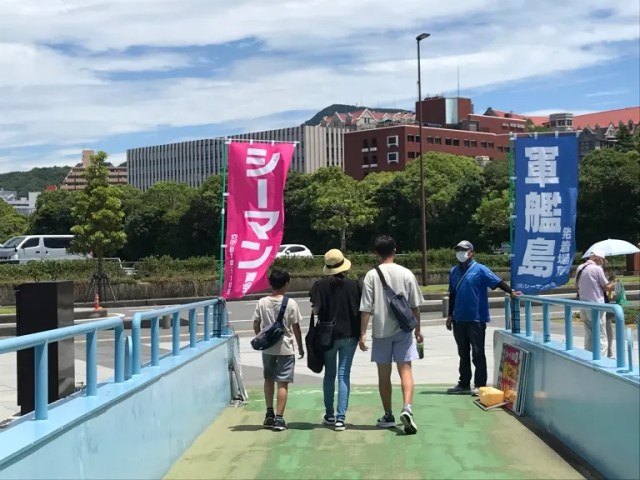

Mariko’s ship was scheduled to set sail at 10;30 a.m., but passengers were required to be aboard by 10:10. The pricing system is actually kind of complicated. The regular price for a tour which includes setting foot on Gunkanjima is 3,600 yen. You can knock 300 yen off of that by using a coupon, which you can find on Seaman’s website here. There’s also a 3,300-yen course that doesn’t include getting off at Gunkanjima. However, since boats being able to dock at Gunkanjima and let passengers go ashore there is dependent on projected weather conditions, it’s possible that even if you’ve booked a go-ashore-at-Gunkanjima cruise, when you show up you’ll be informed that the course has been changed to one that doesn’t stop at the island, which is what happened to Mariko (since you pay in cash at the dock, there’s no refund process; you simply pay for the lower-priced ticket).

The boat has shaded seats below and an open-air deck on top. Seating is unassigned, so after claiming an open one, Mariko settled in, and the boat got underway.
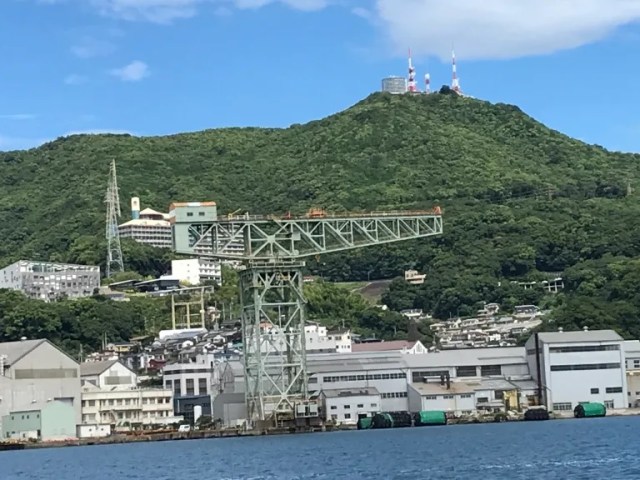
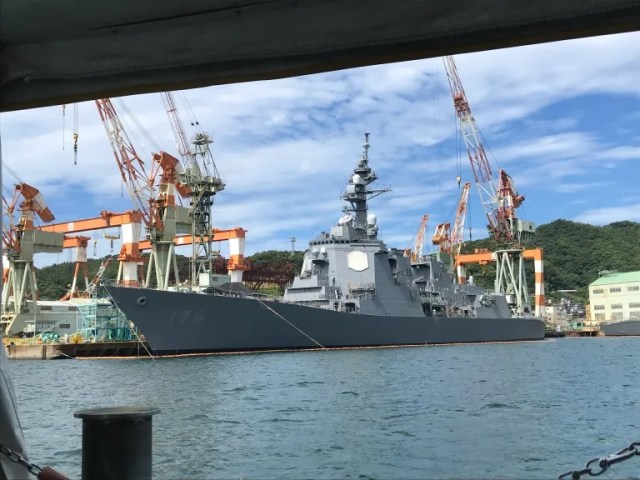
On the way out, you’ll pass by a number of interesting sights, starting with the Mitsubishi shipyard.
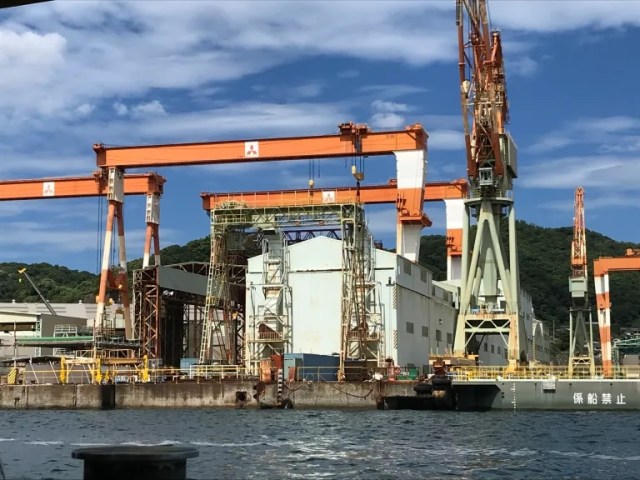
They used to build passenger cruise ships here, but in recent years the facility’s focus has turned to producing vessels for the Japan Maritime Self-Defense Forces.

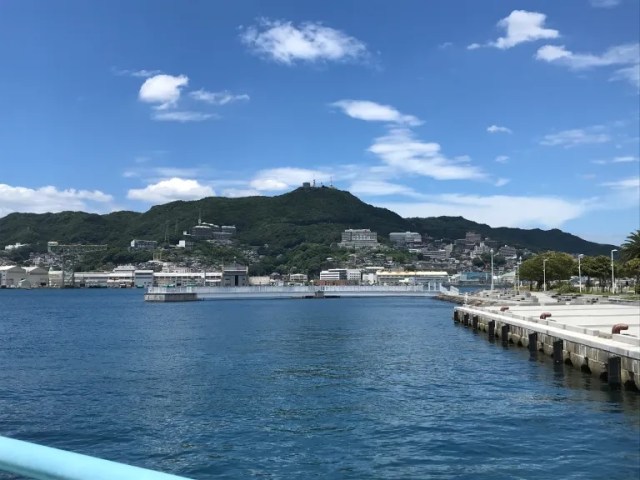
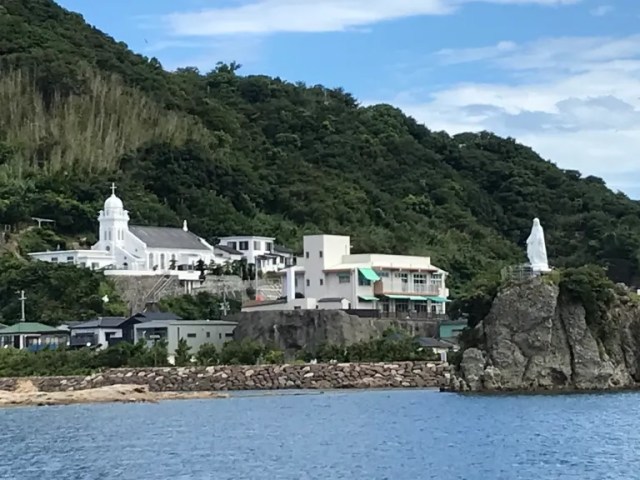
As the boat continues making its ay southwest towards Gunkanjima, it passes by the neighborhood called Kaminoshima. Kaminoshima could translate to “Island of the Gods,” and from the ship you can see a towering statue of the Virgin Mary, Nagasaki being one of the first places in Japan with a Christian community. Kaminoshima also has a set of Shichifukujin (Seven Lucky Gods) shrines, giving it divinity of a multi-faceted nature
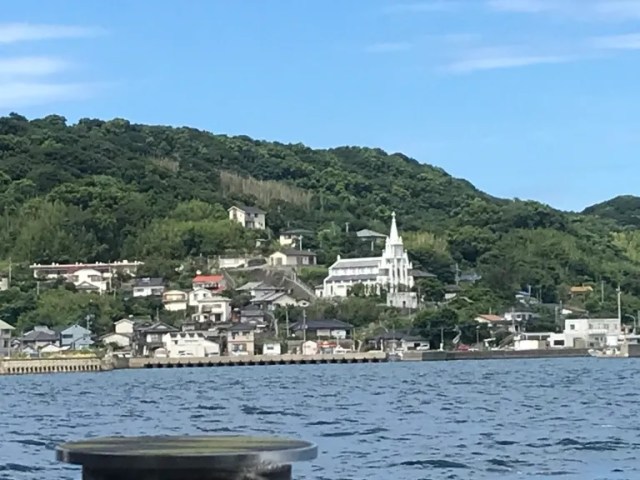
Also along the way is the uninhabited but picturesque Nezumishima.
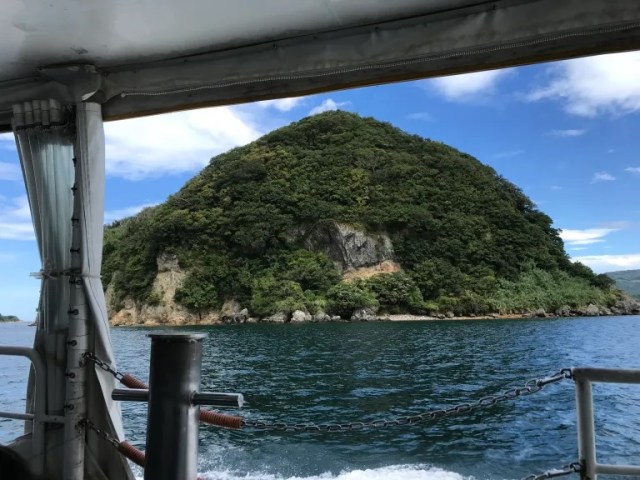
Nagasaki is famous for its large number of islands and inlets, but eventually the ship made it out into open water, and soon enough, Mariko could see Gunkanjima.
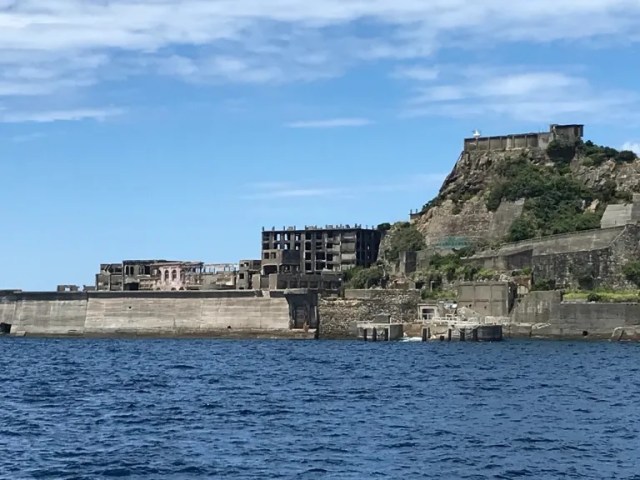
It was a surreal but compelling sight to see with her own eyes. With not a soul living there anymore, it’s got a palpable haikyo (urban ruins) mystique to it.
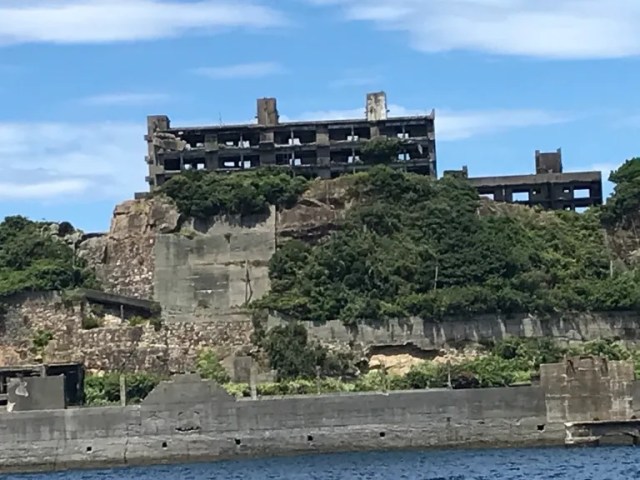
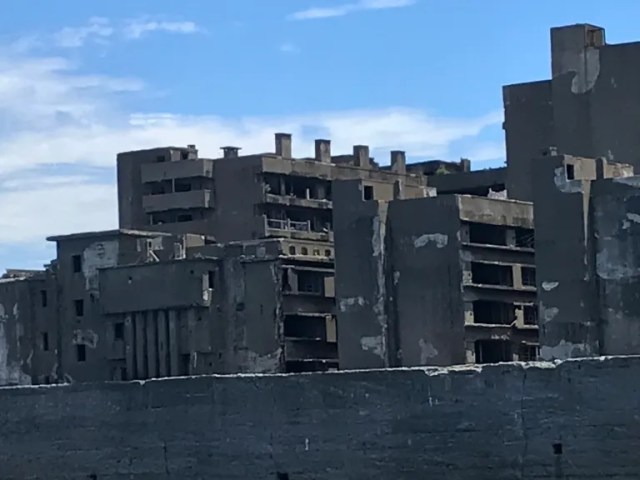
Making it all the more mysterious-feeling is that despite its remote location, Gunkanjima was far from a dystopia for employees to live in. In order to attract employees, starting wages were very high, equivalent to somewhere between 500,000 and 600,000 yen a month (roughly US$3,500 to US$4,225) in today’s money, more than double what most entry-level jobs in Japan pay.
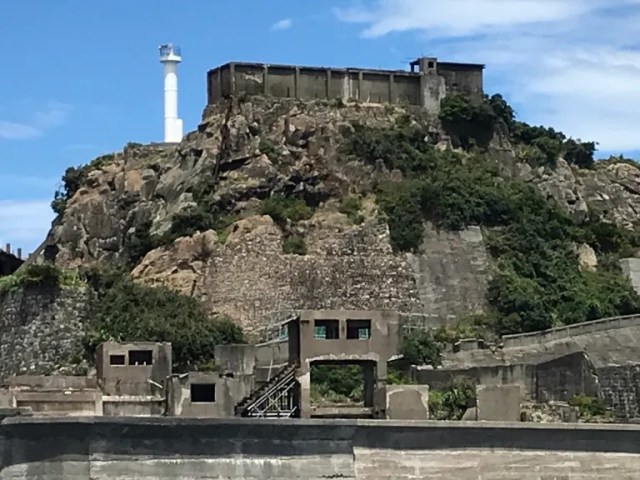
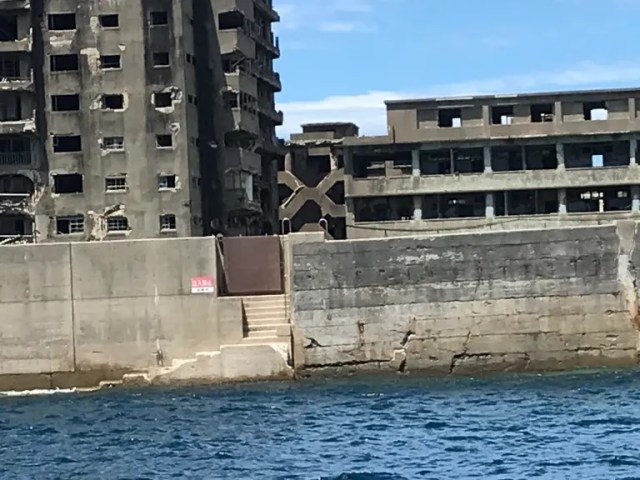
Gunkanjima’s residential areas had a department store and movie theater, schools, a preschool with a rooftop garden for kids to play in, and a pachinko hall open 24 hours a day (something you won’t find even in big Japanese cities today). At a time when television sets were still such a new technological marvel that only around 8 percent of the homes in Japan had one, Gunkanjima’s employee families were prosperous enough to reportedly all be able to afford one for themselves.
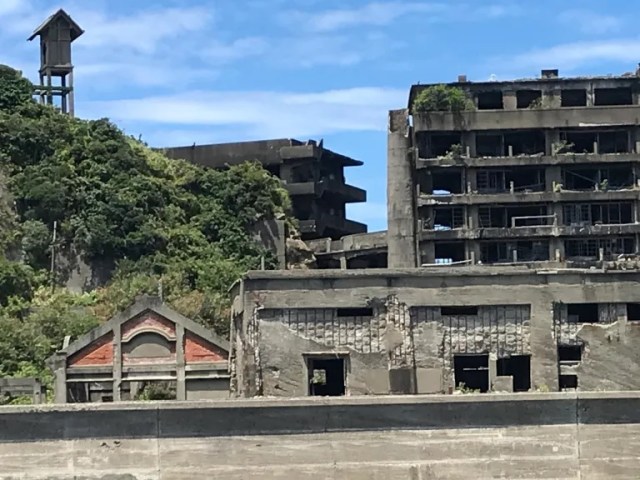
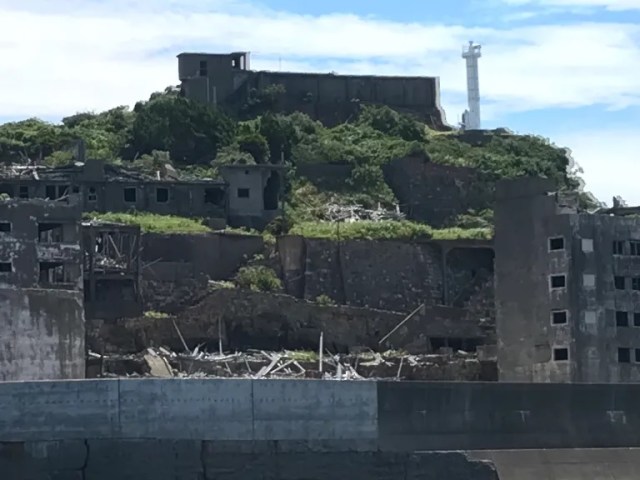
The island’s infrastructure had some impressive claims to fame too. The reinforced concrete apartment buildings were the first of their kind to be built in Japan, and the mine’s coal elevator stretched down roughly 600 meters (1,969 feet), making it almost as deep as the Tokyo Skytree is tall.
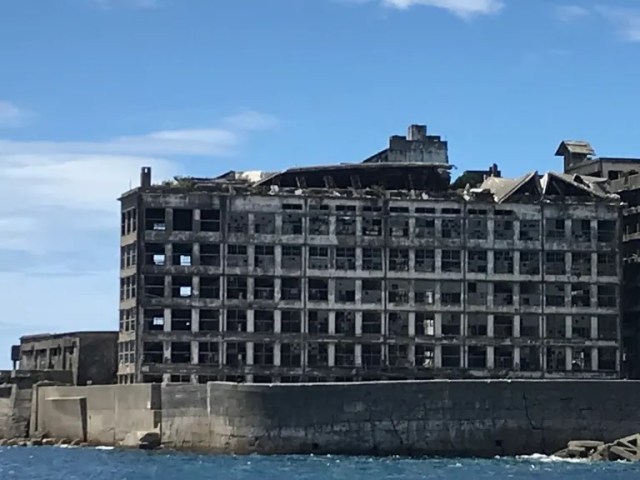
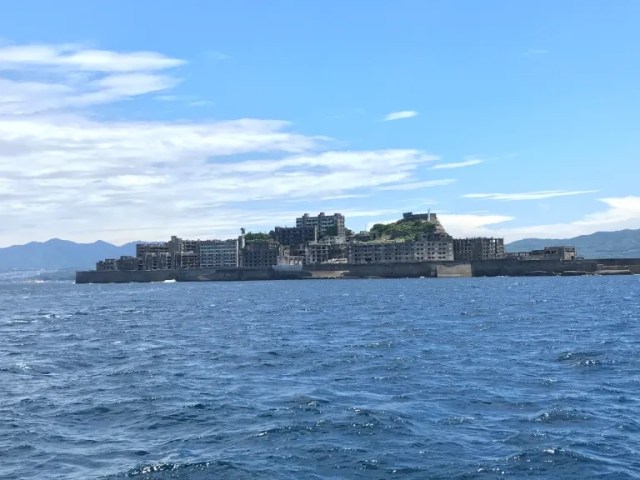
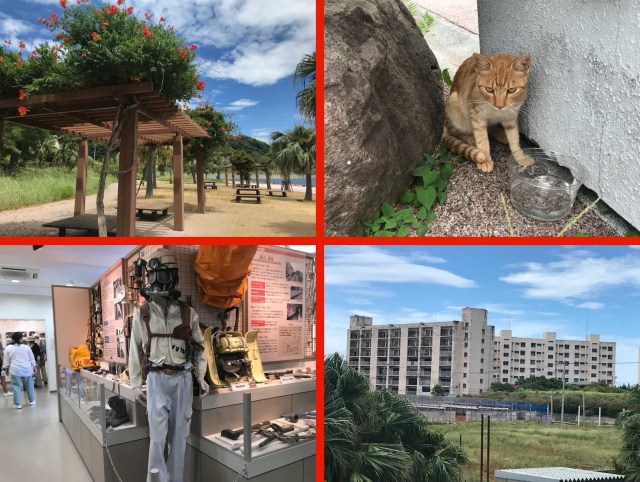
As we mentioned above, conditions on this day unfortunately didn’t allow Mariko and her fellow passengers to go ashore at Gunkanjima. However, on the way out the boat did make an alternative 30-minute stop at the island of Takashima. Takashima also has a coal mine, one that’s still in operation today, and there’s also a museum where visitors can learn about how the mine operates. Mariko’s favorite part of the island, though, was getting to meet some of the 400 or so cats who live there. making their population bigger than that of Takashima’s 300 human inhabitants.
A few last bits of advice from Mariko: Because of Gunkanjima’s popularity, weekend tours tend to fill up quickly, especially during the summer, so you’ll want to book ahead if Saturday and Sunday are the only days that work for you. If you can swing a weekday trip, though, it’s a lot easier to get a seat on a ship. Also, while the boat isn’t a tiny dinghy, it’s not huge either, so you should be prepared for some jostling from the waves and might want to take a seasickness pill if you’re worried about your stomach being up to the challenge.
Even though Mariko didn’t get to set foot on Gunkanjima, seeing it up close was still a great experience. Sometimes, when you grow up so close to a place, it can be hard to see what makes it so special, but now that she’s seen it with her own eyes, she can see why it captures so many people’s imagination.
Related: Seaman Company Gunkanjima Tour website
Photos © SoraNews24
● Want to hear about SoraNews24’s latest articles as soon as they’re published? Follow us on Facebook and Twitter!
[ Read in Japanese ]
 50-year-old video of Japan’s Battleship Island shows life in the deserted isle’s glory days 【Video】
 You can build Japan’s hauntingly beautiful Gunkanjima as a papercraft kit【Photos】
 Gunkanjima and 22 sites of Japan Meiji Industrial Revolution up for World Heritage award
 Battleship Island: Five Reasons Why More Movie Villains Should Live Here
 A heavenly trip to Japan’s Demon Island in the Seto Inland Sea【Photos】
 Starbucks Japan closing only Shinkansen platform branch for popularity-triggered renovations
 Can a downtown Tokyo super sento bathhouse beat a hotel for a one-night stay?
 Japan’s full-facemask Ninja Parka still lets you eat ice cream[Photos]
 Two food hacks take Japan’s convenience store fried chicken to amazing new sandwich heights
 Pokémon and Ikea Japan cross over into each other’s worlds with collaboration events
 Animal Crossing plushie pouch towels and cozy socks show up at Family Mart convenience stores
 Young Japanese adults show lowest dating experience level yet in annual survey
 Studio Ghibli diorama boxes are much more beautiful than your elementary school art project【Pics】
 Manga artist raises question online about false perspective in Ghibli film My Neighbor Totoro
 Peko-chan Milky Time Cafe opens in Chiba and we go to check out all of the pastries and merch
 Tokyo’s best museum for foreign travelers finally reopens after being closed for four years
 Pokémon lacquerware series expands for Year of the Horse with new handcrafted design[Video]
 Famous Tokyo cherry blossom spot installs view-blocking screens to fight overcrowding[Video]
 Tokyo subway and almost all Tokyo train lines now accepting credit card tap payments
 Fading Tokyo – Searching for signs of the Showa era as local neighborhoods evolve[Photos]
 Totoro Fund line of beautiful artwork and apparel lets you help the real-world Totoro Forest
 Tokyo turns its phone booths into free Wi-Fi hotspots, and here’s how to use them
 Studio Ghibli adds new My Neighbour Totoro 2026 Corn Gift to its anime store for Mother’s Day
 Japan now has a special desk for people who work at home with a pet cat[Photos]
 Uniqlo announces new T-shirts for One Piece, Naruto and more for manga publisher’s 100th birthday
 Train station platform ramen store closes its doors on half a century of history in Tokyo
 Starbucks Japan releases new My Fruit³ Frappuccino at only 34 stores around the country
 Studio Ghibli releases Catbus pullback keychain that runs like the anime character
 Krispy Kreme releases Super Mario doughnuts in Japan for a limited time
 Japanese onsen egg maker from 100-yen store Daiso needs to be on your shopping list
 Nine great places to see spring flowers in Japan, as chosen by travelers (with almost no sakura)
 Survey asks foreign tourists what bothered them in Japan, more than half gave same answer
 Japan’s human washing machines will go on sale to general public, demos to be held in Tokyo
 Starbucks Japan releases new drinkware and goods for Valentine’s Day
 We deeply regret going into this tunnel on our walk in the mountains of Japan
 Studio Ghibli releases Kodama forest spirits from Princess Mononoke to light up your home
 Starbucks Japan releases new sakura goods and drinkware for cherry blossom season 2026
 Japan’s newest Shinkansen has no seats…or passengers [Video]
 Major Japanese hotel chain says reservations via overseas booking sites may not be valid
 Put sesame oil in your coffee? Japanese maker says it’s the best way to start your day【Taste test】
 No more using real katana for tourism activities, Japan’s National Police Agency says