City council chairperson’s reverse of course on relaxed dress code sparks resolution of no confidence.
On September 7, the city council of Kanonji, a town of about 55,000 people in Kagawa Prefecture, was scheduled to convene its first session of the month. However, at the start time of 10 a.m. approached, only nine of the 17 members were present in the meeting chamber, one fewer than the quorum of 10 required to legally start the meeting. One member was in the waiting room, but refused to enter the meeting chamber, while the remaining 7 didn’t even show up to city hall.
The boycott of the day’s proceedings followed the issuing of a resolution of no confidence in city council chairwoman Kazuyo Shinohara, which passed by a vote of 8 to 6 on August 31. “We cannot entrust the council to a chairperson such as [Shinohara],” said council member Takatoshi Okubo, one of those absent, in regards to his voting to pass the no-confidence resolution.
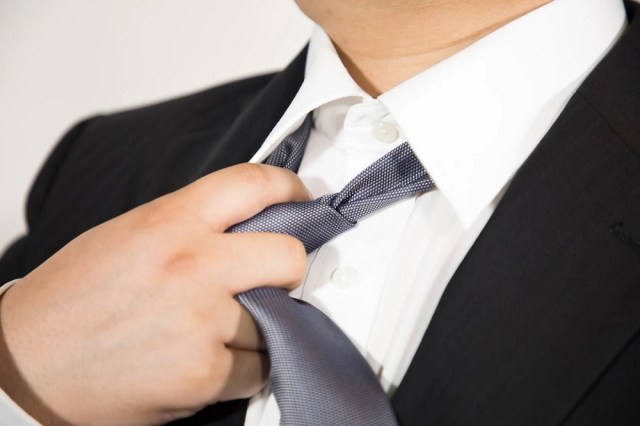
So what’s causing the political schism? Misappropriation of government funds? Rigged election results? Nope, apparently it all stems from Shinohara telling members of the council they didn’t need to wear neckties at meeting during the summer, only to then tell three of them that they should when they showed up tie-less.
▼ Shinohara, tie-less herself, shows up at the 12-second mark of this video from the scheduled September 7 meeting.
Shinohara has been serving as chairwoman since December, and in April told the council that they would be switching to a relaxed dress code for the summer, waiving the normal requirement for men to wear a suit jacket and necktie. This has become an increasingly common policy for offices and government buildings in Japan over the last decade, with the logic that such “cool biz” initiatives are not only more comfortable for those who can go without the stifling formalwear during the hottest, most humid part of the year, but that the no-tie dress code is also good for the environment, as it allows the buildings to run their air conditioners at less powerful and energy-consuming settings.
The Kanonji council’s cool biz dress code was supposed to be in effect from May to October. However, in June, typically the most humid month of the Japanese summer, Shonohara told three members of the council that they should, in fact, wear neckties. “Wouldn’t it be better if you wore a tie?” Okubo recalls Shinohara saying to him, which he says was equivalent to “being coerced to wear [a tie].” “She broke her promise, which is an unforgivable act for the city council chairperson,” says Okubo, who reportedly initially expressed support for Shinohara when she first assumed the position. “The chairperson was pandering to the opinions of certain people outside the council by wanting us to wear neckties.” The resolution asserts that Shinohara has “violated [the council members’] personal freedoms and is not suitable to be chairperson.”
The incident upset Okubo so deeply that he resigned from his position as vice chair of the council. “It was a difficult decision to issue the resolution of no confidence. If the chairperson will not resign, I am prepared to boycott the council sessions, even if I am criticized for the decision.”
Shinohara, though, contests that her necktie-related statements to Okubo and the others were not coercive. “I only suggested that ‘Since the mayor is wearing a necktie and all, wouldn’t it be better for [the council members] to wear one too?’” She described the boycotting members’ actions as “a clear case of power harassment [against me].”
With an insufficient number of members to convene the council meeting on September 7, the morning proceedings were suspended while Shinohara hand-delivered formal request of attendance documents to the council member in the waiting room and to the remaining boycotting members at their homes. According to the council’s bylaws, doing so would allow the afternoon session to be held even if the boycotting members chose not to attend, and so the councilperson who had been in the waiting room joined those in the meeting chamber for the afternoon proceedings.
This month’s council sessions are scheduled to run through September 21. Shinohara apologized to Kanonji’s residents for the disruption to their government’s functions, saying “I sincerely accept that I am a cause of commotion, and feel painfully aware of my responsibility,” adding that she does not believe the boycotting council members will be satisfied with anything less than her resignation, though that is not legally required by the resolution of no confidence and Shinohara has not yet decided to step down.
Meanwhile, when local media conducted sidewalk interviews with local residents, one woman in her 60s said “It’s really a low-level thing [for our politicians to be arguing over], so I’d like them to amicably settle the matter and move on with their work.”
Source: KSB, Yomiuri Shimbun, Asahi Shimbun
Top image: Pakutaso
● Want to hear about SoraNews24’s latest articles as soon as they’re published? Follow us on Facebook and Twitter!