
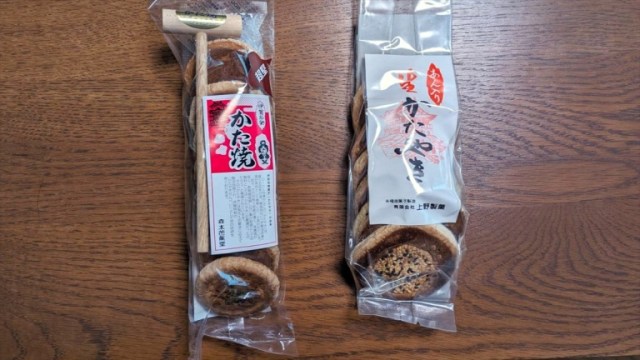
Taste-testing the “soft cooked hardness” of Iga.
You generally don’t use chopsticks, or any other kind of utensils, when eating senbei (Japanese rice crackers). They’re meant to be finger food, a quick little snack that you bite a piece off of, or maybe even just pop into your mouth whole if you’ve got the jaw-opening capacity to accommodate it.
So you might be a little shocked the first time you purchase the type of senbei called katayaki and the clerk gives you a hammer.
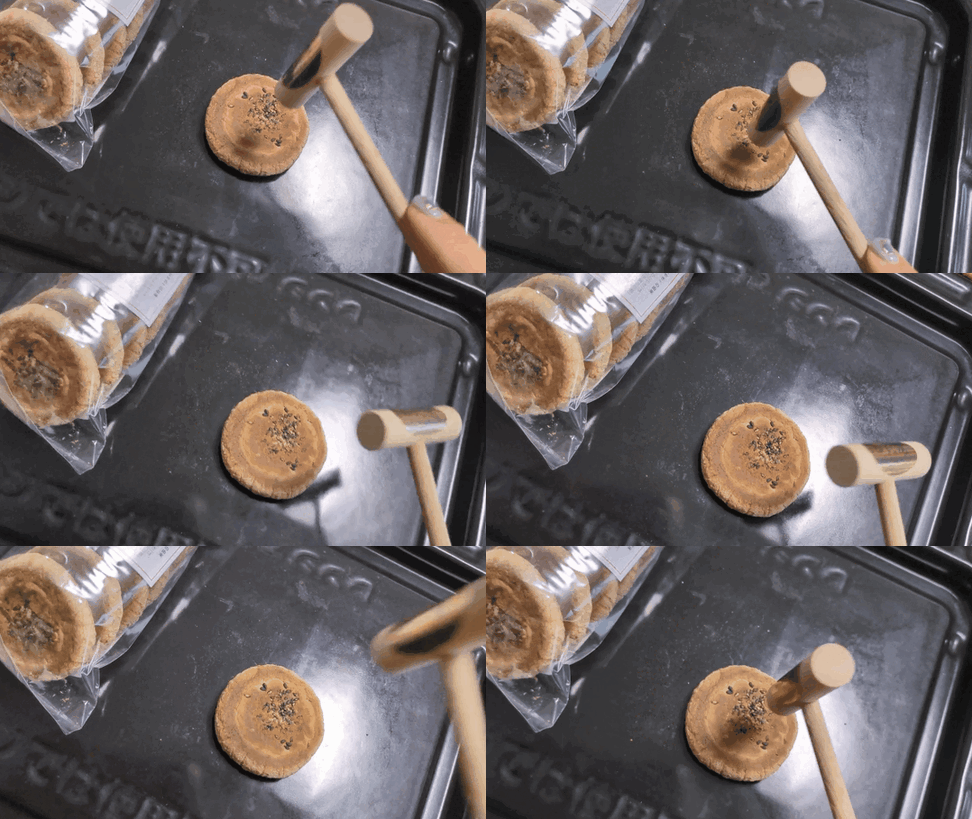
▼ Stop! Hammer…senbei time…?
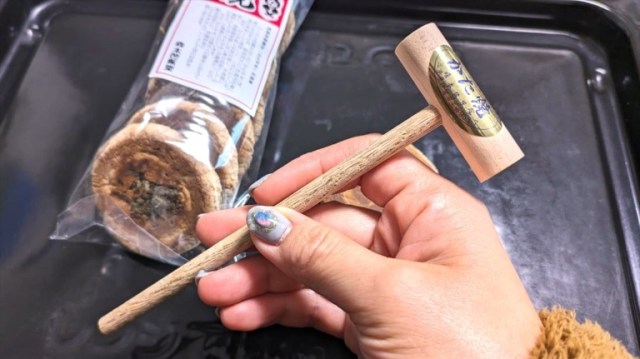
But you might have expected something like this if you know that that the kata part of katayaki means “hard,” and yaki is a suffix showing that something has been baked, grilled, or fried. Basically, katayaki’s name would translate to “cooked hardness,” and that’s very much a case of truth in advertising.
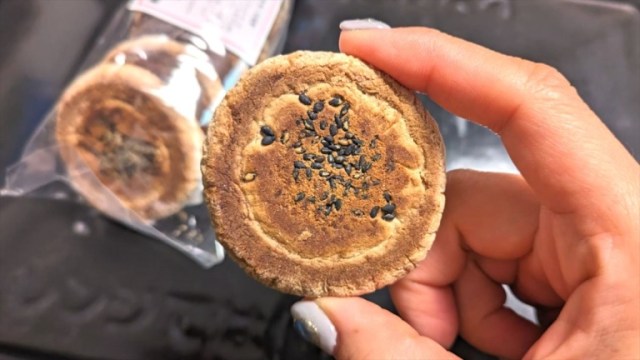
But why are they so hard? Because of ninja. Katayaki are a unique type of senbei found in Iga, a district of present-day Mie Prefeture that in times past was the stronghold of the Iga ninja clan.
When in the field for missions of espionage or infiltration, ninja needed a portable source of energy and nutrition. Senbei fit the bill, and to ensure that there was as much food as possible in a compact cracker, and that it would keep for a long time while out in the field, katayaki are extremely dense, with very little moisture or air inside.
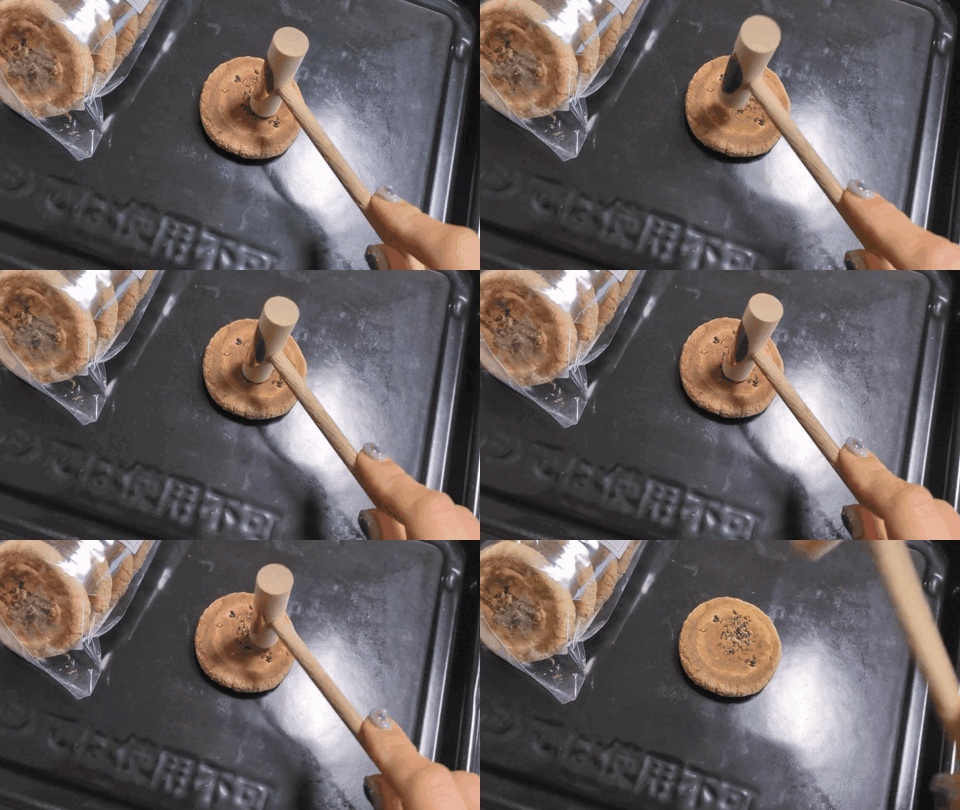
▼ Finally breaking one in half made us feel like we’d pulled off a ninja finishing strike technique.
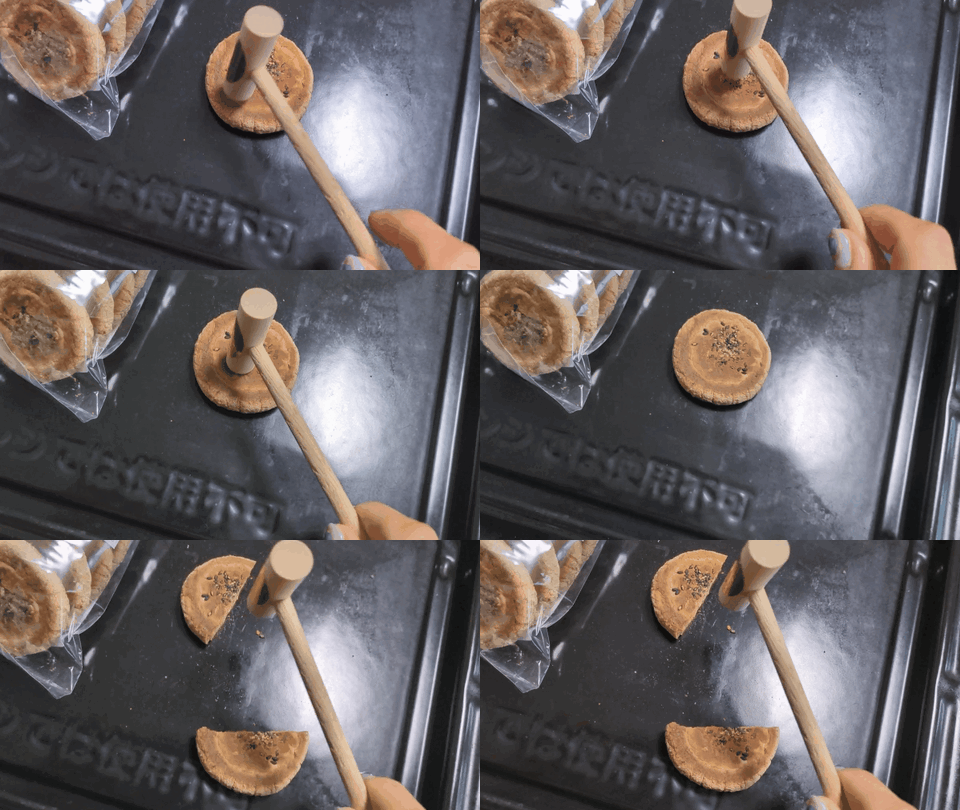
Katayaki are so hard that not only is it pretty much impossible to bite through one using only your teeth, once you’ve got a piece in your mouth, the next recommended step is to let it sit there for a while so that your saliva can soften it up a little, as opposed to trying to pass the jagged shards down your throat as quickly as possible.
“Hard and painful” isn’t usually a winning combination in snack food design, but their denseness make katayaki an especially substantial and flavorful kind of senbei, and their ninja novelty has contributed to their becoming one of Iga’s most popular souvenirs. So when we pulled into Iga Drive-in, a roadside rest stop in Iga City, we weren’t surprised to see a whole shelf of katayaki. We were surprised, though, to see that they were also offering nama katayaki.
▼ 生かたやき = nama katayaki
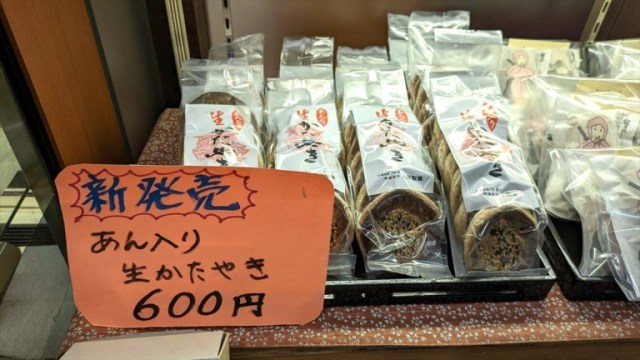
Linguistically, having nama, which literally means “raw,” in the same name as yaki could be considered a contradiction. However, nama is also sometimes used to denote a soft texture when talking about snack foods. Of course, “soft cooked hardness” is also a contradiction, and since we here at SoraNews24 have never made any pretext of attempting to suppress our loves of snacks and linguistics, we picked up a box of nama katayaki for 600 yen (US$4.15).
▼ Nama katayaki
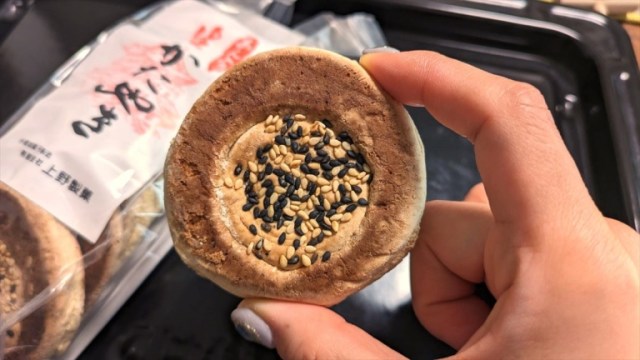
Placing the soft katayaki next to a regular/hard one, we saw that the soft version was considerably bigger, about twice as large in diameter. That size was reflected by a considerable amount of heft when we held the nama katayaki in our hand.
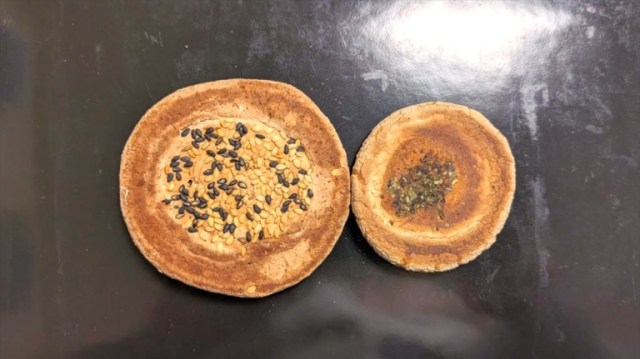
At this point, we should mention that while we were intrigued by the idea of soft katayaki, we were also a little worried. The whole thing with katayaki is that they’re hard, right? Take that away from them, and won’t their identity, and really their whole reason for existing, shatter into pieces like a mallet-cracked rice cracker?

But it turned out that this wasn’t the case, for two reasons. First, as we learned by giving the nama katayaki a gentle test squeeze, we’re not anyone who would think of this as “soft” unless they were directly comparing it to a regular katayaki. The nama katayaki is about as pliable as a swimming kickboard, so it’s not so much a “soft” katayaki as a “softer than normal katayaki but still very hard” katayaki.
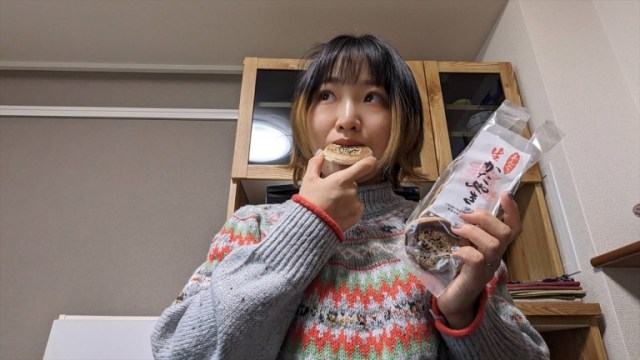
However, that distinction is still significant enough that nama katayaki can be eaten without a hammer or snapping the rice cracked in two with your hands. Our reporter Haruka Takagi, who drew taste-test duties/privileges for this investigation, actually was able to bite into the nama katayaki with her teeth and tear off a piece.
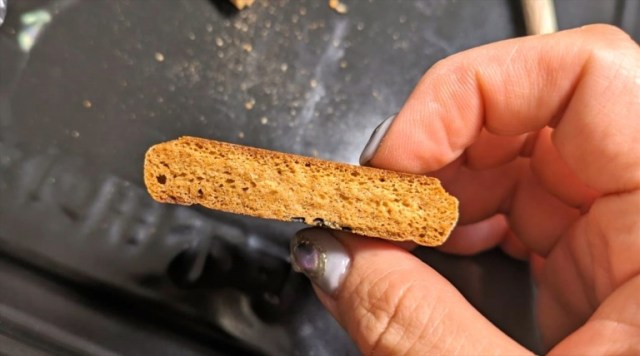
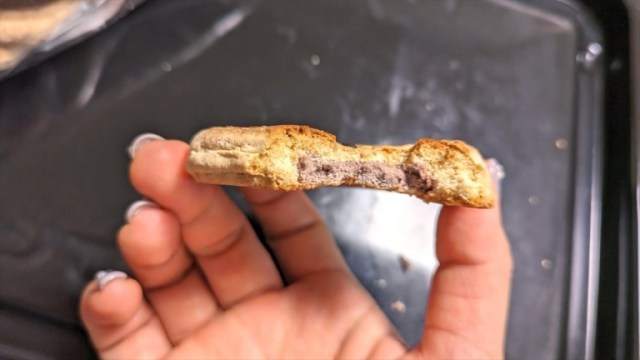
Taking a look at the cross section, you’ll notice there’s slightly more air inside the nama katayaki, and also a core of dried anko, or sweet red bean paste! The presence of the anko, something that’s not normally present in senbei, makes the nama katayaki feel a little like a thin, flat manju (sweet bean cake), and the mix of sweet and floury flavors is a delicious combination.
So in the end, it turns out that there’s room in this world, and our stomachs, for both the regular hard katayaki and the nominally soft nama katayaki. Really, the only question left unanswered is what the Iga ninja would think, but considering that nama katayaki can be eaten with less potentially enemy-alerting snaps and cracking sounds, we think they’d approve of this modern evolution of their shinobi snacks.
Location information
Iga Drive-in / 伊賀ドライブイン
Address: Mie-ken, Iga-shi, Tsugemachi 5704-1
三重県伊賀市柘植町5704-1
Website
Photos ©SoraNews24
● Want to hear about SoraNews24’s latest articles as soon as they’re published? Follow us on Facebook and Twitter!
[ Read in Japanese ]
 We smash up some rock-hard rice crackers with a hammer to find out which one is the toughest
 Mr. Sato presents the salad rice cracker showdown (no salads involved)【Taste test】
 Wet rice crackers? Trying nure-senbei for the first time【Taste test】
 Oh… yummy! New snack to hit Japan: giant isopod senbei rice crackers!
 Bugs for dessert? Taste-testing Japan’s wasp dumplings and locust rice crackers【Taste test】
 Mt. Fuji decorated with a 500,000-flower pink carpet is Japan’s ultimate spring view
 30 Pikachus want to share a Tokyo hotel room with you that has separate Grass, Water, Fire spaces
 New Travelling Bento pouches turn your luggage into a Japanese lunch box
 Howl’s Moving Castle’s scene-stealing dog is here to clean your home as a plushie mop
 Drink vending machines disappearing in Japan as number drops to lowest in 30 years
 Which Japanese conveyor belt sushi chain has the best salmon sushi?【Taste test】
 Japan super budget dining – What’s the best way to spend 1,000 yen at McDonald’s?
 The town with Japan’s best castle also has one of Japan’s best breakfasts. Here’s where to eat it
 New Japanese KitKats come in sakura flavour, with poetic symbolism for success
 Home workout fun: Get in shape with Creamy Mami magical girl anime exercise videos
 Japan reportedly adding Japanese language skill requirement to most common foreigner work visa
 Pokémon and Ikea Japan cross over into each other’s worlds with collaboration events
 Starbucks Japan closing only Shinkansen platform branch for popularity-triggered renovations
 You can assemble a well-balanced team of Pokémon, them eat them, thanks to Japanese cake chain
 Two food hacks take Japan’s convenience store fried chicken to amazing new sandwich heights
 7-Eleven Japan’s new baked-in-store sweet treat is only available in three parts of the country
 Man bites woman at cherry blossom park in Japan, dies shortly after
 Peanuts and Coke becomes a viral hit in Japan, but is it a trend worth joining?
 Can a downtown Tokyo super sento bathhouse beat a hotel for a one-night stay?
 Japan now has a special desk for people who work at home with a pet cat[Photos]
 Famous Tokyo cherry blossom spot installs view-blocking screens to fight overcrowding[Video]
 Uniqlo announces new T-shirts for One Piece, Naruto and more for manga publisher’s 100th birthday
 Train station platform ramen store closes its doors on half a century of history in Tokyo
 Starbucks Japan releases new My Fruit³ Frappuccino at only 34 stores around the country
 Krispy Kreme releases Super Mario doughnuts in Japan for a limited time
 Studio Ghibli releases Catbus pullback keychain that runs like the anime character
 Japanese onsen egg maker from 100-yen store Daiso needs to be on your shopping list
 Survey asks foreign tourists what bothered them in Japan, more than half gave same answer
 Japan’s human washing machines will go on sale to general public, demos to be held in Tokyo
 Starbucks Japan releases new drinkware and goods for Valentine’s Day
 We deeply regret going into this tunnel on our walk in the mountains of Japan
 Starbucks Japan releases new sakura goods and drinkware for cherry blossom season 2026
 Studio Ghibli releases Kodama forest spirits from Princess Mononoke to light up your home
 Japan’s newest Shinkansen has no seats…or passengers [Video]
 Major Japanese hotel chain says reservations via overseas booking sites may not be valid
 Put sesame oil in your coffee? Japanese maker says it’s the best way to start your day【Taste test】
 No more using real katana for tourism activities, Japan’s National Police Agency says
 Hats off to this rice ball specialty restaurant for their ridiculously delicious, unusual taiyaki
 Japan’s new “painful sadness” snacks are a deliciously mysterious linguistics lesson【Taste test】