
Law changes next month, but the way people get around Japan’s biggest cities might not.
Starting next month, there’s going to be a new potential way to get around Tokyo. It’s not a new train or subway line, though, but the official legalization of ridesharing services within the capital, something that’s also happening in a handful of other major Japanese cities, including Kyoto.
Until now, ridesharing, in which private car owners pick up passengers and drive them to their destination for a fee, has only been allowed in Japan in a handful of rural, depopulating communities. This week, though, the Ministry of Land, Infrastructure, Transport and Tourism has designated four highly populated areas in which ridesharing will be allowed starting in April: Tokyo, and the prefectures of Kyoto, Kanagawa, and Aichi.
The ministry isn’t completely throwing open the doors/streets to rideshare services, as ridesharing will only be allowed in selected parts of those areas, although they are some of the most populous, including Tokyo’s 23 central wards and Muashino and Mitaka, Kyoto’s Kyoto City and Uji, Kanagawa’s Yokohama and Kawasaki, and Aichi’s Nagoya and Seto.

But while this easing of regulations makes ridesharing a possibility for millions of people in Japan, the revision may or may not make much of a difference in how they get around, for a number of reasons. First off, ridesharing services will only be allowed to operate on specified days and in designated time blocks during which the number of regular taxis in the area is determined to be insufficient to meet demand. However, most of the rideshare-permitted areas the ministry has named already have a large number of taxis, as well as excellent public transportation networks, which makes it unusual for the demand for taxis to outstrip their supply.
▼ If taxis were that hard to find in Japan, we wouldn’t have a whole article series where we hop in one and ask them for local restaurant recommendations.
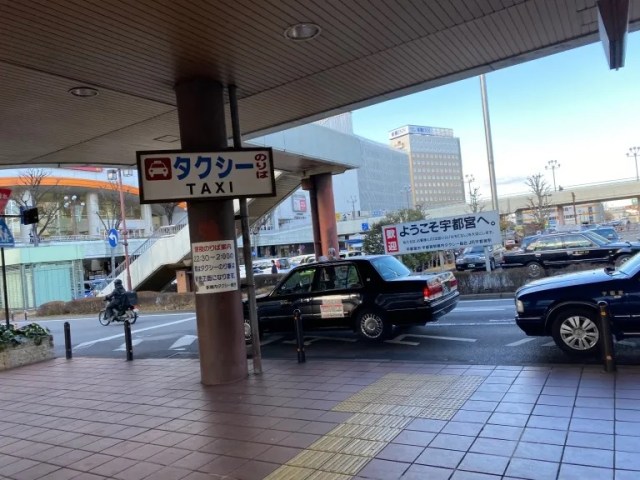
Japanese taxi companies have also long been willing to come pick up passengers at the place of their choosing, and many allow you to make such requests through their apps, so ridesharing doesn’t present any advantage in that regard. Ridesharing might be beneficial, though, in Kyoto, which has a less dense web of train/subway lines and regularly receives huge numbers of foreign tourists, who are generally more likely to use taxis than domestic Japanese tourists.
However, the biggest reason ridesharing might not really change the transportation landscape is because private car ownership is more or less a luxury in the areas designated by the ministry. For day-to-day life in Tokyo and most other major Japanese cities, it’s more convenient and less expensive to get around by train. Universities and downtown offices don’t have student/employee parking lots, so commuting by car isn’t an option, and shops, restaurants, and other facilities tend to be clustered around rail stations, which, again, usually don’t have parking lots.
In other words, urban-area car owners in Japan tend to be more affluent, splurging on something they want rather than need, and might only be driving on their days off from their day job. Basically, owning your own car in the areas designated by the ministry means you’ve probably already got a job and doing well enough financially that you don’t need a rideshare driver gig. That’s a stark contrast to countries where ridesharing has really taken off, like the U.S., in which a car is a daily necessity for many people who’d still be enticed by the prospect of making a little extra cash by driving strangers around.
On the other hand, ridesharing could be a great match for Japan’s rural communities. Out in the countryside public transportation is often infrequent at best, meaning that locals generally do all have their own cars, including those who’d be interested in part-time work. As populations shrink, though, it becomes less viable for full-time taxi companies to operate in those areas, but there still might be sporadic demand for ridesharing services from visiting travelers or elderly residents who’re no longer able to drive themselves.
For now, though, it’s just Tokyo, Kyoto, Kanagawa, and Aichi that are getting the ridesharing OK, thought the ministry says it may expand its allowance to other areas in the future if judged necessary.
Source: NHK News Web
Top image: Pakutaso
Insert images: Pakutaso, SoraNews24
● Want to hear about SoraNews24’s latest articles as soon as they’re published? Follow us on Facebook and Twitter!
Follow Casey on Twitter, where he could really go for a drive on GMR right about now.