

Law changes next month, but the way people get around Japan’s biggest cities might not.
Starting next month, there’s going to be a new potential way to get around Tokyo. It’s not a new train or subway line, though, but the official legalization of ridesharing services within the capital, something that’s also happening in a handful of other major Japanese cities, including Kyoto.
Until now, ridesharing, in which private car owners pick up passengers and drive them to their destination for a fee, has only been allowed in Japan in a handful of rural, depopulating communities. This week, though, the Ministry of Land, Infrastructure, Transport and Tourism has designated four highly populated areas in which ridesharing will be allowed starting in April: Tokyo, and the prefectures of Kyoto, Kanagawa, and Aichi.
The ministry isn’t completely throwing open the doors/streets to rideshare services, as ridesharing will only be allowed in selected parts of those areas, although they are some of the most populous, including Tokyo’s 23 central wards and Muashino and Mitaka, Kyoto’s Kyoto City and Uji, Kanagawa’s Yokohama and Kawasaki, and Aichi’s Nagoya and Seto.

But while this easing of regulations makes ridesharing a possibility for millions of people in Japan, the revision may or may not make much of a difference in how they get around, for a number of reasons. First off, ridesharing services will only be allowed to operate on specified days and in designated time blocks during which the number of regular taxis in the area is determined to be insufficient to meet demand. However, most of the rideshare-permitted areas the ministry has named already have a large number of taxis, as well as excellent public transportation networks, which makes it unusual for the demand for taxis to outstrip their supply.
▼ If taxis were that hard to find in Japan, we wouldn’t have a whole article series where we hop in one and ask them for local restaurant recommendations.
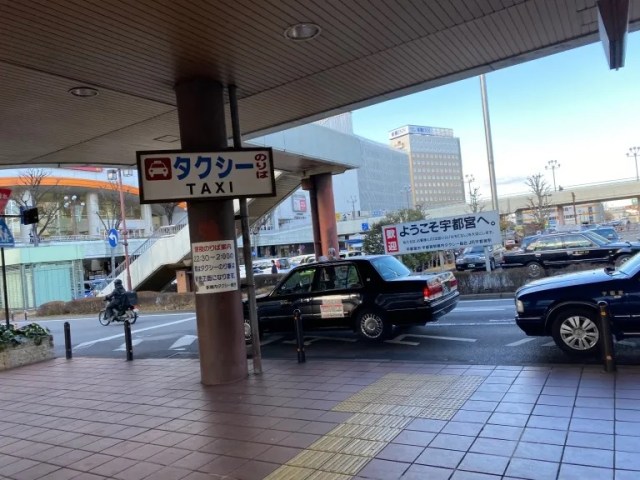
Japanese taxi companies have also long been willing to come pick up passengers at the place of their choosing, and many allow you to make such requests through their apps, so ridesharing doesn’t present any advantage in that regard. Ridesharing might be beneficial, though, in Kyoto, which has a less dense web of train/subway lines and regularly receives huge numbers of foreign tourists, who are generally more likely to use taxis than domestic Japanese tourists.
However, the biggest reason ridesharing might not really change the transportation landscape is because private car ownership is more or less a luxury in the areas designated by the ministry. For day-to-day life in Tokyo and most other major Japanese cities, it’s more convenient and less expensive to get around by train. Universities and downtown offices don’t have student/employee parking lots, so commuting by car isn’t an option, and shops, restaurants, and other facilities tend to be clustered around rail stations, which, again, usually don’t have parking lots.
In other words, urban-area car owners in Japan tend to be more affluent, splurging on something they want rather than need, and might only be driving on their days off from their day job. Basically, owning your own car in the areas designated by the ministry means you’ve probably already got a job and doing well enough financially that you don’t need a rideshare driver gig. That’s a stark contrast to countries where ridesharing has really taken off, like the U.S., in which a car is a daily necessity for many people who’d still be enticed by the prospect of making a little extra cash by driving strangers around.
On the other hand, ridesharing could be a great match for Japan’s rural communities. Out in the countryside public transportation is often infrequent at best, meaning that locals generally do all have their own cars, including those who’d be interested in part-time work. As populations shrink, though, it becomes less viable for full-time taxi companies to operate in those areas, but there still might be sporadic demand for ridesharing services from visiting travelers or elderly residents who’re no longer able to drive themselves.
For now, though, it’s just Tokyo, Kyoto, Kanagawa, and Aichi that are getting the ridesharing OK, thought the ministry says it may expand its allowance to other areas in the future if judged necessary.
Source: NHK News Web
Top image: Pakutaso
Insert images: Pakutaso, SoraNews24
● Want to hear about SoraNews24’s latest articles as soon as they’re published? Follow us on Facebook and Twitter!
Follow Casey on Twitter, where he could really go for a drive on GMR right about now.
 Kyoto taxi operator starts “Silence Taxi” service, prohibits drivers from instigating small talk
 GM, Cruise, and Honda aim to start self-driving taxi service in Tokyo by 2026
 Japan’s ultracompact kei car taxis are now ready for travelers to ride, if you know where to find them
 Can robot taxis help rural Japanese towns facing depopulation? This touching commercial says yes!
 No mask, no ride – Japanese government allows taxis to refuse to pick up maskless passengers
 Japan’s final Penguin Suica train cards have already shipped, and when they’re gone, they’re gone
 Farewell Final Ceremony announced for Tokyo’s life-size Gundam statue, will stream live
 Japan approves foreign resident visa renewal fee increases of up to 967 percent, starts soon
 Hobonichi unveils new 2027 planners, diaries and stationery with One Piece, Suica Penguin, Hello Kitty and a must-buy Mini Techo
 Nonstop flights from U.S. to Okinawa return after 54 years, making travel faster than before
 Anime and Hollywood movies cross over in new Universal Studios Japan merch collection
 Pizza Hut Japan creates moon-viewing sukiyaki chrysanthemum pizza for tsukimi season
 Starbucks Japan adds a gooey sweet potato Frappuccino to its menu this autumn
 Starting this fall, you’ll be able to take a Pokémon Jet flight to Japan
 McDonald’s Japan reveals exclusive new Tsukimi moon viewing collection for 2026
 Japan tripled its departure tax to fund tourism but is using the money on cherry blossoms and bears
 Sushi Bus: Japan’s first conveyor-belt bus lets you eat sushi while sightseeing around Tokyo
 Nike x One Piece collection brings Devil Fruits to sneakers and streetwear in Japan
 We recommend not buying one pack of Japan’s new convenience store corn soup-flavor fried chicken
 Police in Japan looking for who’s responsible for dumping 80 loaves of bread on side of road [Video]
 7-year-old boy left behind on Mt. Fuji by his own dad
 Anime fans can now wear a Seiko watch inspired by Japan’s One Piece Shinkansen
 12-year-old British girl who went missing in Tokyo found safe after visiting anime sites around Yokohama
 Air-conditioned dress shirts arrive in Japan to save working professionals from sweltering heat
 Pokémon Center Online designates first Pokémon items that will require Japanese ID card to buy
 Japanese toilet aims to attract foreign tourists but not everybody is happy about it
 Tokyo’s newest viral dessert is like a Japanese parfait inside a bread bun [Taste test]
 New Japanese vending machine at Shinkansen station sells cups of ice on platform
 Study finds hundreds of people in Indonesia legally named after Naruto, Inuyasha, other anime stars
 Japan announces sudden 400-percent increase in visa fees for foreigners entering the country
 Japan’s human washing machines will go on sale to general public, demos to be held in Tokyo
 Studio Ghibli has a new anime out, and there’s only one place in the world where you can see it
 Starbucks Japan releases new drinkware and goods for Valentine’s Day
 Starbucks Japan releases new sakura goods and drinkware for cherry blossom season 2026
 Japan’s newest Shinkansen has no seats…or passengers [Video]
 Tokyo subway installing new ticket gates that don’t accept payment through Suica or other IC cards
 Japanese ninja certification exam attracts 131 candidates from Japan and abroad
 Salomon releases Japan-exclusive Mt. Fuji hiking gear that doubles as an amazing souvenir
 Put sesame oil in your coffee? Japanese maker says it’s the best way to start your day【Taste test】
 Tokyo’s new pre-fixed taxi fare smartphone service reduces the guess work of travelling by cab
 Tokyo making big changes to taxi service and fares, looking for a few “testy” drivers
 Not in the mood for small talk? Japanese taxis add Silent Mode service, activated with finger tap
 Foreign tourists injured in Nissan GT-R crash near Tokyo’s Shibuya Scramble Crossing
 All cars in Japan to have systems preventing accidents from gas/brake pedal mistakes by 2028
 The Kyoto way: Sidewalk sign with a window is actually a manners warning
 Now you can request a Tesla when you Uber in Japan with their new Premium EV option
 Tokyo’s new historical taxi service is an experience fit for a noble
 Japan’s vaunted taxi service to be offered to dogs and cats with new Pet Taxis
 MariCar Mario Kart driver mounts pavement, causes serious damage in Tokyo accident
 Moving to Japan as a foreigner to work as a taxi, bus or truck driver may be getting easier soon
 Kyoto wants to add extra charges for tourists to use city buses
 City in Nagano offers super cheap taxi fares to seniors who give up licenses and disabled people
 Kyoto experiencing problems with foreign tourists not paying for bus fares, but not on purpose
 En garde! Fencer Taxi begins in Tokyo, Saitama, and Kanagawa
 Cherry blossom taxi tours are a great way to save steps and see sakura in Tokyo and its neighbors
 17 new designs unveiled in round two of regional Japanese license plates