
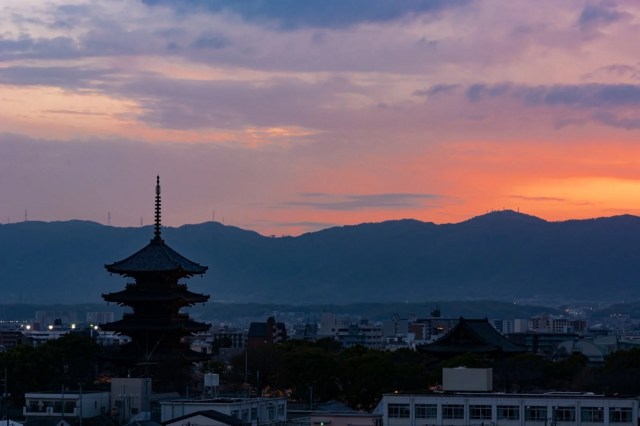
Kyoto City Tourism Association wants the town to clean up its translation act.
Kyoto has always been among Japan’s top tourism destinations, and with Japan receiving more foreign travelers than it ever has before, the same goes for its former capital. But with record-breaking numbers of overseas visitors coming into Kyoto, there’s an increased need for multilingual guidance signage and guidance, and a recent study has found less-then-stellar quality to the translations being provided to Kyoto’s guests from abroad.
Between December and February, the Kyoto City Tourism Association investigated non-Japanese signs, written notices, and audio announcements at 50 locations within the city, including train stations, hotels, restaurants, museums, temples, and shrines. Out of roughly 3,600 items examined, 499 were found to be incorrectly or inaccurately translated.
A greater than 10-percent chance of foreign travelers not being able to understand the intended messages is too high for the association’s liking. “Coming as inbound international travelers are returning to Kyoto,” said association spokesperson Yuya Iwasaki, “[these mistranslations] could potentially damage the Kyoto brand.”
In response, the association has enacted a number of initiatives, including seminars for tourism and tourism-adjacent businesses on how to more effectively communicate necessary information and rules to visitors who can’t read or speak Japanese. Last month the organization also released a 49-page Foreign Language Signage Guideline packet, available for free download through the Kyoto City Tourism Association website here. Right off the bat, the guidelines caution against an over-reliance on machine/A.I. translation, giving the following example.

As a direct translation of the Japanese text, “The current time is unavailable” is all right, but it’s still not something that makes much sense in English. In Japanese, it’s common to omit the subject and object of a sentence of clause if it can be understood from context, and the Japanese text is really saying “[You] cannot use [this space/thing] at the current time,” so the Kyoto City Tourism Association guideline packet recommends this translation instead.

The all-caps CLOSED might look a little harsh, but the guidelines do later go on to stress the importance of making sure not to strip away the polite tone of in-Japanese text when translating it, recommending the consistent use of words such as “please” and “thank you.”
▼ The association recommends the version on the right

The guidelines also include visual design pointers, such as recommending complementing text with pictograms…
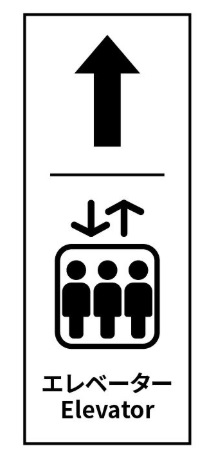
…making sure foreign-language text is adequately sized to be noticeable, and grouping each language’s text together in their own sections of signage.
▼ Recommended versions on right side

It’s worth keeping in mind that though the study that discovered the translation errors was carried out by the Kyoto City Tourism Association, the locations where the errors were found are not necessarily administered by the municipal government. In the post-pandemic travel boom more than a few restaurants, temples, and other places that previously had only limited levels of interest from overseas travelers have suddenly found themselves becoming major tourist draws, and some inaccurate signage was likely put in place with the attitude of “We really need to put up something right away, and we don’t have a translator on staff, so just Google translate it and we’ll sort the details out later.” The study was also not limited to English translations, and the more languages involved, the greater the chance for a translation slip-up.
There is, as always, the argument to be made that it is travelers’ responsibility to study up and acquaint themselves on norms of public behavior and basic phrases in the language of a foreign country that they plan to visit. At the same time, with Japan’s inbound travel boom not likely to cool off anytime soon, and breaches of etiquette by foreign tourists drawing increasing attention and annoyance from the local population, clearer communication itself can only be a good thing, so hopefully the Kyoto City Tourism Association’s efforts will prove effective.
Related: Kyoto City Tourism Association
Source: Yomiuri Shimbun via Livedoor News via Jin, Kyoto City Tourism Association
Top image: Pakutaso
Insert images: Kyoto City Tourism Association
● Want to hear about SoraNews24’s latest articles as soon as they’re published? Follow us on Facebook and Twitter!
 Japanese travelers are avoiding Kyoto as the city’s number of foreign visitors continues to grow
 Foreign tourists outnumber Japanese ones at Kyoto hotels for first time ever
 New book teaches Japanese people English to help out foreign travelers
 Japanese prefectural governor wants foreign tourists to pay special extra fee
 Japan Airlines debuts airport translation panels, translation error quickly results
 Uniqlo announces new T-shirts for One Piece, Naruto and more for manga publisher’s 100th birthday
 Krispy Kreme releases Super Mario doughnuts in Japan for a limited time
 Ramen restaurant in top Tokyo tourist neighborhood skips price gouging, but how does it taste?
 How many doughnuts can you pack in a Mister Donut all-you-can-pack deal?
 Japan’s ministry of economy reminds us to “use sound judgment” before buying toilet paper
 7-Eleven Japan releases a crazy new viral sandwich: Chocolate Sprinkles and Whipped Cream
 Can you make butter by running with a pouch filled with cream? Let’s find out[Taste test]
 Yakuzen ramen restaurant in Tokyo is very different to a yakuza ramen restaurant
 3 reasons why all Starbucks fans should visit a Starbucks Tea & Cafe in Japan
 Anime cooking in real life – How to make Food Wars’ unagi matelote【SoraKitchen】
 Starbucks Japan releases new My Fruit³ Frappuccino at only 34 stores around the country
 Tokyo government organizes food truck event to clear out delinquent/homeless teen gathering area
 Nine amazing off-the-beaten-path cherry blossom spots in Japan for yaezakura and shidarezakura
 Japan now has a “for foreign tourists only” Mt. Fuji sightseeing train[Video]
 Stunning central Japan wisteria festival is like a purple fantasy straight out of a Ghibli movie
 Studio Ghibli releases the My Neighbour Totoro tea caddy, with a magical self-closing lid
 Japanese onsen egg maker from 100-yen store Daiso needs to be on your shopping list
 Create a tiny Ghibli anime world on your bookshelf with new miniature papercraft art kits
 Starbucks Japan unveils new sakura cherry blossom collection for hanami season 2026
 Train station platform ramen store closes its doors on half a century of history in Tokyo
 Studio Ghibli releases Catbus pullback keychain that runs like the anime character
 Nine great places to see spring flowers in Japan, as chosen by travelers (with almost no sakura)
 Starbucks Japan releases first-ever Hinamatsuri Girls’ Day Frappuccino
 Cherry blossoms begin blooming in Japan with record-early starts for sakura season
 Studio Ghibli adds new Mother’s Day gift sets to its anime collection in Japan
 Virtual idol Hatsune Miku redesigned with look that adds new elements and brings back old ones
 Survey asks foreign tourists what bothered them in Japan, more than half gave same answer
 Japan’s human washing machines will go on sale to general public, demos to be held in Tokyo
 Starbucks Japan releases new drinkware and goods for Valentine’s Day
 We deeply regret going into this tunnel on our walk in the mountains of Japan
 Studio Ghibli releases Kodama forest spirits from Princess Mononoke to light up your home
 Starbucks Japan releases new sakura goods and drinkware for cherry blossom season 2026
 Japan’s newest Shinkansen has no seats…or passengers [Video]
 Major Japanese hotel chain says reservations via overseas booking sites may not be valid
 Put sesame oil in your coffee? Japanese maker says it’s the best way to start your day【Taste test】
 No more using real katana for tourism activities, Japan’s National Police Agency says
 Survey asks foreign tourists what bothered them in Japan, more than half gave same answer
 As more foreign visitors visit Kyoto’s top sights, Japanese travelers increasingly staying away
 Foreign tourists spending at Japanese department stores dropping rapidly, study says
 Foreign tourists in Japan break inbound fall tourism record, are spending their money differently
 Kyoto experiencing problems with foreign tourists not paying for bus fares, but not on purpose
 Kyoto village dealing with poo on floor as Japanese-style toilets confuse foreign travelers
 Japanese avoiding domestic travel as foreign tourists increase, possibly creating vicious cycle
 Japanese government wants to build luxury resorts in all national parks for foreign tourists
 Foreign travelers’ lukewarm reactions to traditional Japanese inn food causing changes in Kyoto
 More foreign tourists than ever before in history visited Japan last month
 Japanese travelers losing interest in Kyoto, top sightseeing spots slip behind Nara at peak season
 Number of foreigners studying Japanese in Japan hits record high, but are there enough teachers?
 Japanese government wants to encourage wealthy foreigners to travel deeper into Japan, NHK says
 Taipei introduces taxi tours and 24-hour toll-free interpretation services for foreign tourists
 Japanese man complains about foreign languages on Tokyo train, Twitter drowns him in kindness
 Kyoto sightseeing live stream for Chinese viewers becomes controversial, sparks ire in locals