
Ex-martial artist owner claims higher prices on non-Japanese menu are for safety reasons.
A complicated aspect of Japan’s inbound foreign tourism boom is, ironically, that some of the most simple pleasures in Japan are proving extremely popular with tourists. So while there isn’t much grumbling or hand-wringing over increased demand from tourists flush with cash driving up demand, and in turn prices, for things like top-grade wagyu steaks, when price-creep pressures start occurring for things like a bowl of ramen, the situation gets more complex. Do restaurant owners, especially those in areas with a lot of tourist traffic, keep their prices at their usual low levels, forgoing the higher profits they could be pulling from foreign tourists? Or do they raise their prices to take advantage of tourist demand, but in the process price out local Japan-resident diners whose incomes are in yen and aren’t leveraging a beneficial exchange rate?
Two-tiered pricing, charging tourists more than locals, is an idea that’s been floating around in the public consciousness, but while it’s not unheard of in some other countries, there’s not much precedent for it in Japan. One ramen restaurant in Osaka, called Gadoya, though, has begun a system in which foreigners are likely to pay roughly twice as much as Japanese customers, even if it isn’t, strictly speaking, a two-tiered pricing arrangement.
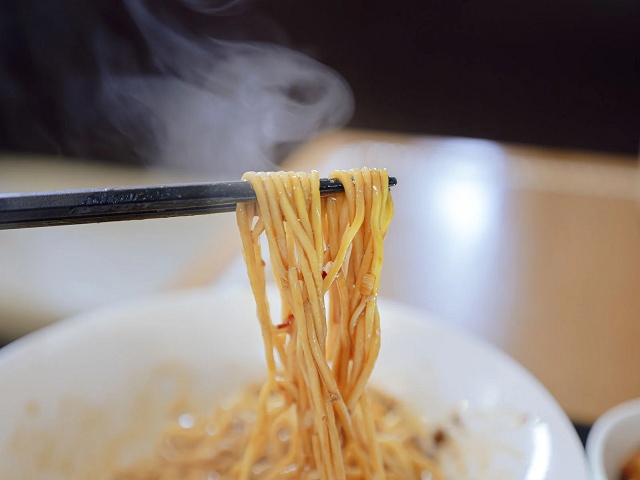
Like at a lot of ramen restaurants, customers at Gadoya purchase a meal ticket from a vending machine near the entrance, then hand it to the staff when they’re seated. Gadoya’s machine has a video touchscreen for its interface, and its prices are pretty close to the average for restaurant ramen these days, starting at 864 yen (US$5.65) for a medium-sized bowl of the most basic ramen and larger sizes or more abundant toppings costing a few hundred yen more. At least, that’s what the prices are for the Japanese-language version of the menu. If you’re instead ordering using the touch panel’s English-language screen, the types of ramen with the same names are about double the price, as shown in the tweet here.
● Ramen
Japanese price: 864 yen
English price: 1,500 yen
● Green Onion Ramen
Japanese price: 1,064 yen
English price: 1,800 yen
● Braised Pork Ramen
Japanese price: 1,028 yen
English price: 1,900 yen
● Classic Ramen
Japanese price: 1,110 yen
English price: 2,050 yen
● Premium Braised Pork Ramen
Japanese price: 1,137 yen
English price: 2,000 yen
● Green Onion Braised Pork Ramen
Japanese price: 1,228 yen
English price: 2,200 yen
It’s worth noting that Gadoya’s Japanese-language menu specifies that its prices are prior to the addition of the applicable eight-percent sales tax, while the English menu doesn’t say whether its prices are pre or post-tax. Either way, though, those are some big price gaps, especially for more expensive or larger-size menu items. An extra-large Green Onion Braised Pork Ramen, for example, costs 1,455 yen in Japanese, but 2,700 yen in English, a difference big enough to pay for an entire additional medium-size regular ramen with the Japanese price, and with plenty of change left over.

However, the restaurant claims that not only are the prices different for the items of the same names on the Japanese and English menus, but that their contents differ too. “Our ramen is not a ramen that everyone will like as-is, so you can customize it,” says the restaurant’s owner, Yusuke Arai, in a video posted to Gadoya’s YouTube channel. “We judged that explaining this to people who can’t understand Japanese, in English, European, and Chinese, would be impossible…Based on that, the items on the English menu are totally different, and on the English menu we offer only special premium ramens that absolutely will not disappoint. They are ramens that anyone will definitely like, items that people who cannot understand Japanese will like.”
Unfortunately, as shown in the tweet mentioned above, the Japanese menu has written descriptions of what each type of ramen includes but no photos, while the English menu has pictures but no descriptions beyond the ramen-type names. However, the written descriptions on the Japanese menu, such as three slices of nori seaweed, one slice of chashu pork, and greens for the standard ramen, or three slices of nori, three slices of chashu, greens, and green onions for the Green Onion Braised Pork Ramen, are exact matches to what’s shown in the photos for the “special premium” ramens on the English menu. It’s not uncommon for ramen restaurants to also allow customizations such as the firmness a customer wants their noodles cooked too or how much oil they want added to the broth, but these are generally free-of-charge changes, and definitely not the sort of thing that customers get charged double for.
Gadoya’s, let’s call it “creative,” approach to pricing has, predictably, resulted in at least one case of friction with customers. On January 4, the Gadoya Osaka Main Branch’s official Twitter account posted that “We have just had some trouble with a Chinese person/Chinese people [the Japanese language doesn’t normally distinguish between singular and plural nouns] in the restaurant, and are calling the police.” The restaurant claims that the customer/customers ordered and ate the non-Japanese menu’s for-tourists special ramen, then, after finishing the meal, complained what they’d been served was different from what they’d ordered and asked for a refund. When the restaurant refused, the discussion escalated into an argument, with the customer suddenly becoming apologetic when the staff said they would call the police, the restaurant says.
In the above-mentioned video, which was posted after the incident, Arai insists “We’re not differentiating [prices] based on nationality, but by whether or not customers can understand Japanese. It’s not like we’re setting a price for foreigners.” This is technically true, as anyone who can navigate the Japanese-language menu can, ostensibly, order the lower-priced ramen. In practice, though, since it’s only going to be non-Japanese people who’re unable to navigate the Japanese-language menu, it still shakes out to foreign tourists being the only ones stuck paying the higher prices, even if they’re supposed to be getting some nebulous “special premium” upgrades in the process. Additionally, the claim that Gadoya doesn’t treat people differently based on nationality is a little less convincing, in light of the restaurant’s statement, in the same tweet where it mentioned the altercation with the Chinese customer, that “90 percent of the problems we have with foreign people at the restaurant are with Chinese people, and so we are thinking of barring Chinese people from the restaurant.”
Again, though, Gadoya is adamant that they’re not being discriminatory, nor that they’re trying to fleece foreign customers. In a tweet from his personal account, Arai said “We do not charge a different price to tourists because we want to make more money. This is not discrimination, but a distinction we chose to make based on our experiences. We made this decision to protect the safety of our friends and restaurant. By the way, of course we never have any trouble with our Japanese customers. The Gadoya restaurant group is for the idea of ‘Japanese people first.’”
For those keeping score, that’s at least three swift contradictions to the previous claim that Gadoya is only treating customers differently based on language ability, not nationality. Arai’s concern about charging higher prices to foreigners — sorry, “people who can’t understand Japanese” — being a necessary safety precaution also feels like a pretty timid move from a guy who, in his profile, boasts of being a retired mixed martial artist who finished in third place in one of promoter Fighting Network Rings’ The Outsider tournaments, but maybe you need championship-level fighting skills to feel free of anxiety when working in the apparently dangerous ramen restaurant industry.
Source: Teleasa News, Twitter/@Iekei_osaka, Twitter/@japanloveryman, Twitter/@arayu4120, YouTube/我道家公式チャンネル -天上天下唯我独尊-
Top image: Pakutaso
Insert image: Pakutaso
● Want to hear about SoraNews24’s latest articles as soon as they’re published? Follow us on Facebook and Twitter!
 Disillusionment at Tsukiji’s tourist-target prices led us to a great ramen restaurant in Tokyo
 Ramen restaurant in top Tokyo tourist neighborhood skips price gouging, but how does it taste?
 Tokyo ramen restaurant’s brilliant idea: takeout cups of just ramen broth!【Photos】
 Japanese government planning higher ticket prices for foreign tourists at Tokyo National Museum
 Akihabara ramen restaurant becomes a hit with foreign tourists
 Can a downtown Tokyo super sento bathhouse beat a hotel for a one-night stay?
 Pokémon and Ikea Japan cross over into each other’s worlds with collaboration events
 Two food hacks take Japan’s convenience store fried chicken to amazing new sandwich heights
 Beautiful Ghibli earrings allow you to finally reunite two of the studio’s star-crossed lovers
 Pokémon Centers across Japan cancel April events after stabbing in Tokyo
 Kiki’s Deliver Service heroine gets new design from Spy x Family artist for 40th anniversary
 How to make epic pancakes with your Japanese rice cooker
 Tokyo street sweets: The must-snack treats of Nakano’s Refutei
 Studio Ghibli’s Porco Rosso: Behind-the-scenes trivia and secret Easter eggs revealed
 Fading Tokyo – Searching for signs of the Showa era as local neighborhoods evolve[Photos]
 Tokyo’s best museum for foreign travelers finally reopens after being closed for four years
 Pokémon lacquerware series expands for Year of the Horse with new handcrafted design[Video]
 Famous Tokyo cherry blossom spot installs view-blocking screens to fight overcrowding[Video]
 Tokyo subway and almost all Tokyo train lines now accepting credit card tap payments
 Totoro Fund line of beautiful artwork and apparel lets you help the real-world Totoro Forest
 Tokyo turns its phone booths into free Wi-Fi hotspots, and here’s how to use them
 Studio Ghibli adds new My Neighbour Totoro 2026 Corn Gift to its anime store for Mother’s Day
 Japan now has a special desk for people who work at home with a pet cat[Photos]
 Uniqlo announces new T-shirts for One Piece, Naruto and more for manga publisher’s 100th birthday
 Train station platform ramen store closes its doors on half a century of history in Tokyo
 Starbucks Japan releases new My Fruit³ Frappuccino at only 34 stores around the country
 Studio Ghibli releases Catbus pullback keychain that runs like the anime character
 Krispy Kreme releases Super Mario doughnuts in Japan for a limited time
 Japanese onsen egg maker from 100-yen store Daiso needs to be on your shopping list
 Nine great places to see spring flowers in Japan, as chosen by travelers (with almost no sakura)
 Survey asks foreign tourists what bothered them in Japan, more than half gave same answer
 Japan’s human washing machines will go on sale to general public, demos to be held in Tokyo
 Starbucks Japan releases new drinkware and goods for Valentine’s Day
 We deeply regret going into this tunnel on our walk in the mountains of Japan
 Studio Ghibli releases Kodama forest spirits from Princess Mononoke to light up your home
 Starbucks Japan releases new sakura goods and drinkware for cherry blossom season 2026
 Japan’s newest Shinkansen has no seats…or passengers [Video]
 Major Japanese hotel chain says reservations via overseas booking sites may not be valid
 Put sesame oil in your coffee? Japanese maker says it’s the best way to start your day【Taste test】
 No more using real katana for tourism activities, Japan’s National Police Agency says
 New Tokyo restaurant charges higher prices to foreign tourists than Japanese locals
 Chinese restaurant has the most epic English menu of all time
 Brand-new theme park in Japan charges foreign tourists 25 percent more than locals for tickets
 Tokyo ramen restaurant’s made-to-order noodles are only the beginning of its awesomeness
 Has China’s don’t-go-to-Japan warning shortened queues at this Ichiran ramen restaurant in Tokyo?
 Dutch restaurant’s odd ramen with soybeans has one ingredient we didn’t expect, lacks one we did
 Is ramen pizza just crazy enough to work? Japanese restaurant’s unusual menu lets us find out
 Tsukemen ramen restaurant becomes a hit with foreign tourists in Tokyo
 Fewer ramen restaurants declare bankruptcy in Japan for first time in several years
 Ichiran ramen restaurant in Shinjuku has a unique system that’s captured hearts on Reddit
 Ramen restaurant etiquette reminder follows altercation with angry couple: One person, one bowl
 This London ramen restaurant’s super-strange ramen shocks our Japanese taste-tester
 Are you game enough to eat Fire Ramen at this Japanese restaurant in Kyoto?
 Foreign tourists to be charged four times more to enter Himeji Castle if local mayor gets his way
 Michelin-listed ramen restaurant will turn you into a tiger with a single bite