A few beers a day keeps the doctor away, because you forgot your appointment.
Japan has long been a country that has embraced alcohol consumption. After-work drinking was considered mandatory at almost every company not too long ago, and you can still find vending machines in some parts distributing beers and alcopops with the utmost convenience.
Also, up until only a few months ago, you could go to the website of Japan’s National Tax Agency (NTA) and read “alcohol is the best medicine” in their Information on Alcohol section. In fairness, they were quoting an old adage rather than trying to make their own original point, but looking at it in context, the NTA clearly weren’t disagreeing with it either.
“As the saying goes, ‘alcohol is the best medicine,’ and it has long been widely known that moderate drinking has positive effects on both the mind and body. Drinking is thought to have certain health benefits, including stress relief, the promotion of blood circulation, and an increased appetite.”
The above passage was taken off the website last April, despite many years of studies declaring that the only amount of alcohol that could be considered good for you on a net level is zero. The NTA also received an official request from the Cabinet Office’s Food Safety Commission to change their information, suggesting that the NTA wasn’t overly willing to do so without being pressured.
It might seem a little strange that the country’s tax agency is touting the purported health benefits of alcohol in the first place. The reason for this dates back to the Meiji Restoration in 1868, when Japan changed from the rule of samurai lords to a parliamentary government, despite Tom Cruise’s best efforts to stop them.
This complete overhaul of the country was a costly endeavor, and money was needed to accomplish it. Most tax revenue came from agriculture at that time, and it was very vulnerable to poor weather and crop diseases. Sake, however, was a more stable product that could be stored and transported more safely and easily, so the government latched onto that and taxed it more heavily.
By the turn of the 20th century, about one-third of Japan’s tax revenue came from sake alone. Since it was such a crucial source of money, the government was heavily invested in its success, and in 1904, the Ministry of Finance created the National Research Institute of Brewing (NRIB) to improve quality standards and prevent spoiled batches that could hurt the national bottom line.
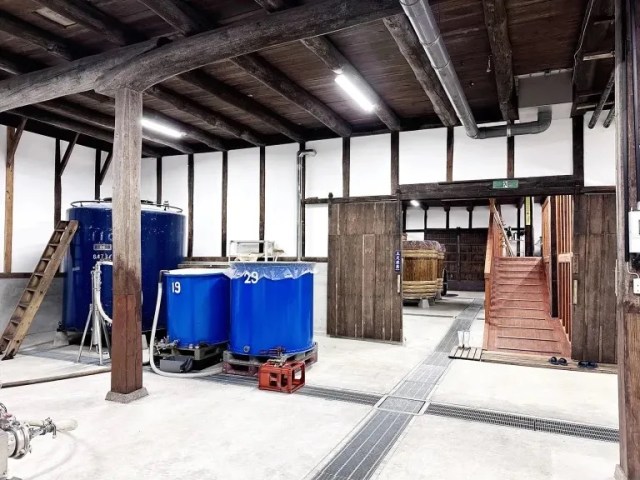
▼ A lot of the techniques and equipment originally created by the NRIB are still in use today.
After World War II, the Japanese government was reorganized, and the National Tax Agency was spun off from the Ministry of Finance. The NTA also inherited the NRIB and the traditional mandate of looking after sake breweries. Even as tax revenue from alcohol dwindled to one percent of the nation’s total, the NTA maintained a vested interest in supporting and promoting Japanese sake breweries, as well as producers of other drinks like whisky and shochu.
There still are practical reasons for this. Sake has a lot of potential in the international market, and since a lot of breweries are in rural areas, it’s a way to curb population decline in those areas. The reason this all falls to the government’s tax bureau is simply because that’s the way it’s always been. It’s a setup that’s probably unique only to Japan and would be like the IRS in the USA holding Oktoberfest events as a part of their official duties.
It’s hard to argue that so much hands-on backing of the alcohol industry in Japan from the government didn’t have an impact on cultural attitudes about drinking. Nevertheless, times are changing, and more research is showing that even moderate drinking will have a negative effect on human health, so people are gradually starting to move on to other things.
We can even see in online comments that the very notion of alcohol being the best medicine is considered laughable by today’s standards.
“The NTA sounds like an alcoholic.”
“There is absolutely no truth to a little alcohol being good for you.”
“Anyone who calls alcohol medicine sounds like a meth addict.”
“It certainly seems like it would directly affect your organs. I don’t drink, and I feel great.”
“Alcoholics are causing problems for all of us for their own pleasure.”
“I quit smoking but can’t stop drinking. I think it’s more addictive.”
“I only have a little, and it relieves my stress. So, I’ll keep drinking.”
“It doesn’t even taste good. It’s good for cleaning with, though.”
“There’s no way something that’s addictive and poisons your body is good for you.”
“Medicine probably really sucked when that phrase was coined.”
The phrase “alcohol is the best medicine” can be traced back to ancient China and appears in the Book of Han, written between 200 BC and around 100 AD. I can’t really speak of the medicine back then, since I wasn’t around, but they probably had a very different and much less scientific understanding of the stuff 2,000 years ago.
It will be interesting to see if people in Japan continue this gravitation away from alcohol or if this is just a temporary trend. Either way, there is no denying that it played a major part in making Japan what it is today.
Source: Wedge Online, Chiba Sake, My Game News Flash, Craft Sake World
Photos ©SoraNews24
● Want to hear about SoraNews24’s latest articles as soon as they’re published? Follow us on Facebook and Twitter!