Some like it hot, but can’t find it easily.
One of the great things about nihonshu, more commonly known as “sake” in English, is its ability to be enjoyed at a wide range of temperatures, from chilled to piping hot. As such, anyone who takes a trip to most convenience stores in Japan will have no problem getting cold and room temperature bottles, cans, or even drinking boxes of sake.
▼ Perfect for those boozy ice cream cravings
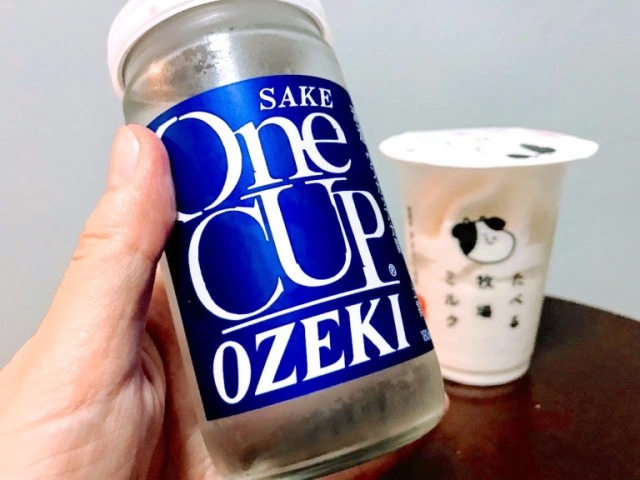 Photo ©SoraNews24
Hot sake, often served at a temperature of around 50 degrees Celsius (122 degrees Fahrenheit), however, is a far rarer thing in stores. In order to enjoy it, people would usually need to heat it themselves either at home or using a convenience store’s microwave or hot water, which is less than ideal since they’d need to drink it right away. This situation is not for a lack of demand, but has more to do with the inherent properties of this unique beverage.
Sake often prides itself on being a very natural product, produced solely from water, rice, and bacteria such as yeast. Anything else added to it is considered impure in more ways than just a matter of pride. If more than even the slightest amount of additives are included, the government will refuse to classify it as “nihonshu,” labeling it as an ordinary “liqueur” instead under the national liquor tax laws.
▼ On the other hand, adding sake to things, such as instant ramen, is permitted
 Photo ©SoraNews24
Pasteurization — the act of heating to kill off bacteria — is the most common way to prolong its life without adding any preservatives, but even then the remaining active contents of sake are still highly susceptible to both heat and light.
In the case of heat, an effect called the Maillard reaction occurs in sake. This is a very common chemical reaction of amino acids and sugars when heat is applied to many foods, causing them to turn brown. It’s an effect than can be seen in baking bread or frying up potatoes, and anyone who has smelled either can probably agree that the Maillard reaction kicks ass.
Even in sake, the Maillard reaction can produce pleasant results, and some aged sake producers make use of it in their more complex flavor profiles. Most standard sake brands, however, put a lot of stock in their own distinctly fine-tuned flavors, and the Maillard reaction would only serve to corrupt it. A crystal clear appearance is also considered a mark of quality in most types of sake, so browning would be frowned upon.
▼ Sake cups often have blue circles in the bottom as a way to more easily inspect the sake’s clarity
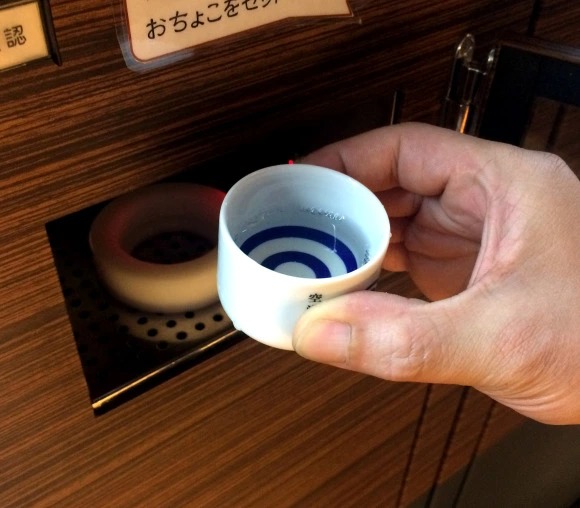 Photo ©SoraNews24
To make matters worse, when exposed to prolonged high temperatures, sake also begins to emit a certain odor that the industry refers to as hineka or “old smell” that can probably be best described in English as “stale” (as the word is used with aromas). All sake develops this smell given enough time, but heat accelerates its production.
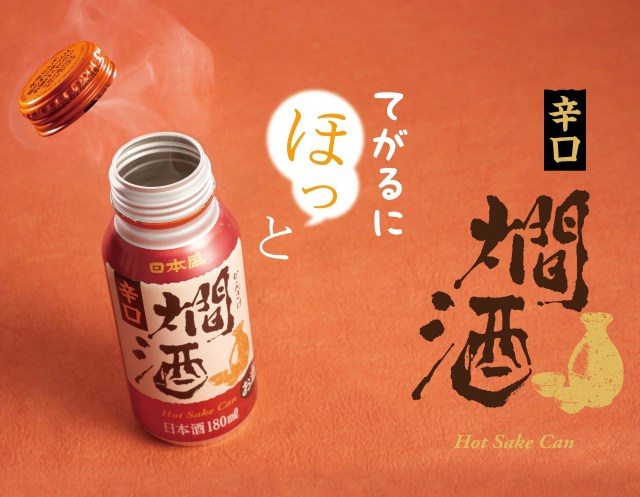
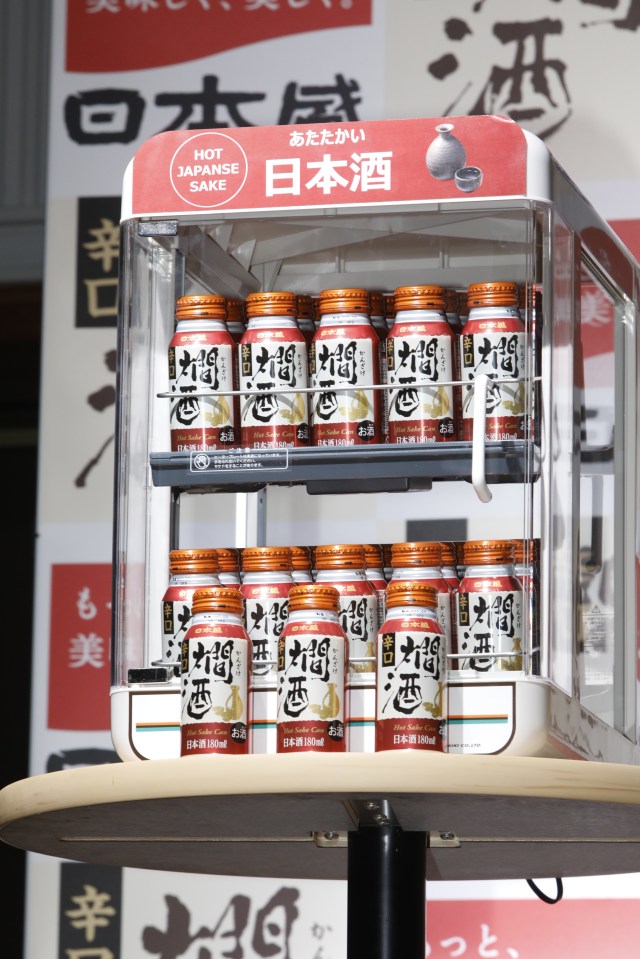
So if a sake brewery wanted to sell hot sake in vending machines or convenience stores it would have to replenish its stock on a near daily-basis before it tuned into a brown, stale-smelling brew. The impracticality of this led Nihonsakari, a brewery in Hyogo Prefecture’s famous Nada region of sake producers, to research an alternative and as a result came up with Kanzake Bottle. This slightly dry sake is sold in 180-milliliter (six-ounce) heat-insulating cans that can now be stored for weeks in high-temperature conditions.
▼ Kanzake Bottle
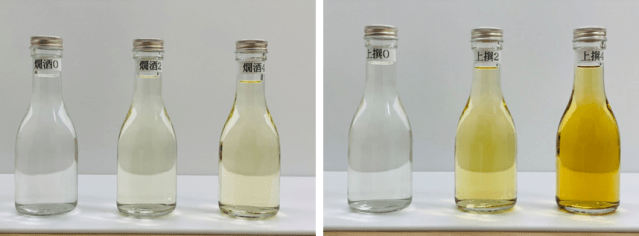
When kept under a constant temperature of over 60 degrees Celsius (140 degrees Fahrenheit) for about a month, Kanzake Bottle showed considerably less browning than a regular sake had after only two weeks.
▼ Left: Kanzake Bottle – new, after two weeks, after four weeks / Right: regular sake – new, after two weeks, after four weeks
This level of preservation was very difficult to accomplish while keeping Kanzake Bottle a true “sake” without any additives. Using trial and error, Nihonsakari had to find the right balance of amino acid and sugar content to both inhibit the Maillard and preserve the taste. They also needed to curb the hineka smell by finding a yeast, among 20,000 varieties, that was least likely to produce it.
▼ The blue line shows the increase of hineka (y-axis) over weeks (x-axis) in 60-degree temperature. The red line shows the lack of increase in Kanzake Bottle

In addition to making hot sake retail a lot more convenient in Japan, this new method of brewing sake can even help make it more accessible to people living in hotter climates. Unlike other sake, Kanzake Bottle can be safely exported to and stored in scorching summer conditions without a need for refrigeration, thus spreading the joy of sake to all corners of the world. However, first it must be approved by drinkers in Japan as enjoyable after undergoing these tricky alterations, and sell well.
If it does it’ll be fantastic news for both fans of hot sake and hot fans of sake.
Source: PR Times
Images: PR Times (unless otherwise noted)
● Want to hear about SoraNews24’s latest articles as soon as they’re published? Follow us on Facebook and Twitter!