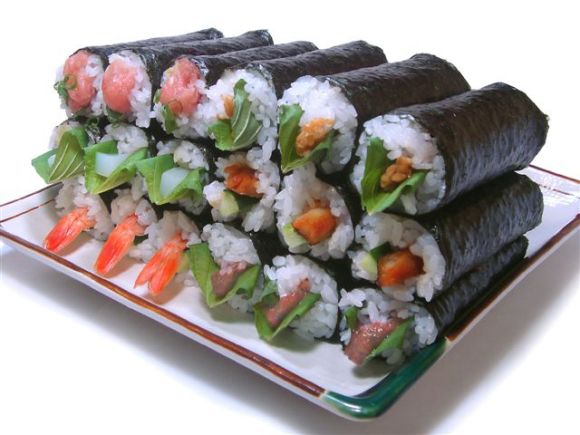
Ask a Westerner what their favorite Japanese food is and there’s a high chance that the answer will be sushi. The widespread popularity of the delicately crafted delicacy has made it almost synonymous with the word “Japan”, even though there now exist dozens of different varieties made by people from all over the world.
Many of you reading this will have had sushi, some of you might even love it more than your mom’s cooking, but even so, that doesn’t guarantee that you have the guts for sushi. We’re not talking about the courage needed to put raw fish in your mouth, but rather, the genes required to properly digest seaweed.
Confused? Here’s the science behind it.
Three years ago, Mirjam Czjzek, a chemist at the Station Biologique de Roscoff in France, discovered that Japanese people have a type of bacterium known as Bacteroides plebeius in their guts, which contains an enzyme that helps them break down the carbohydrates in seaweed. Testing a group of 13 Japanese and 18 North Americans showed positive results in five of the Japanese subjects, but none of the North Americans appeared to have the seaweed-munching enzyme in them. The Westerners are not the odd ones here, however, as the enzyme is commonly found only in marine bacteria.
Before you start thinking Japanese people are secretly mutants, let’s make it clear that they didn’t genetically modify themselves in some crazy science experiment. It is speculated that their intestinal bacteria might have gotten friendly with the seaweed-digesting enzymes found in bacteria that live on seaweed itself. The Japanese have a long history of handling the marine algae raw, as an ancient form of currency as well as part of their daily diet up till today. Such day-to-day contact with seaweed apparently gives the human gut bacteria a chance to merge with genetic material from the seaweed-chomping bacteria.
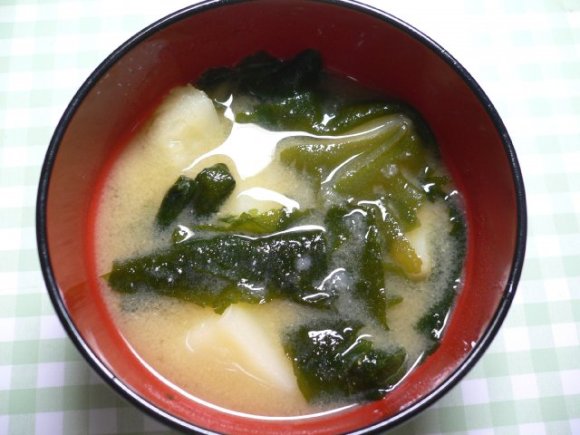
▼ Wakame, a type of green seaweed, is often served in miso soup.
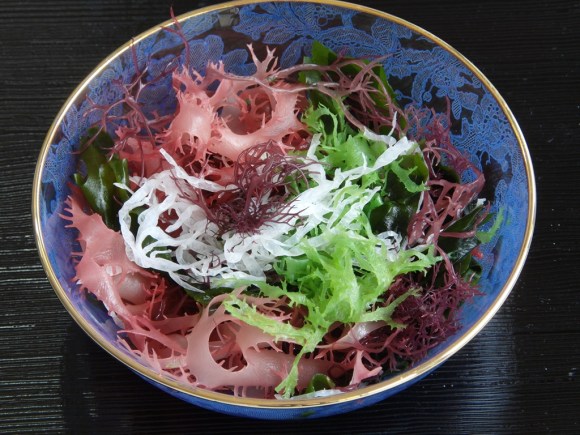
▼ Seaweed salad containing assorted varieties of edible seaweed.
But not to worry, you’re not going to get a case of tummy ache from ingesting seaweed even if your body doesn’t posses some of that algae-digesting bacterium. Neither are the Japanese people who have yet to gain such super powers. What the enzyme does is “help Japanese who dine on seaweed get more nutrition from their meal than do North Americans”, Czjzek explains. So it’s offers a helping hand rather than being an essential addition to our bodies.
Oh well, so our non-Japanese bodies may absorb fewer nutrients from seaweed, but at least we don’t have to give up on eating sushi just because our guts aren’t tailored for digesting marine algae!
Well, that’s the long story cut short. If you’re interested the scientific details behind the research, be sure to check out the full article!
Source: Science AAAS
Images: Shinjuku Takashimaya Blog, Inoue Isamu Shouten, Recipe Box


How to have a great meal at conveyer belt sushi chain Kura Sushi even if you hate raw fish
Seven reasons to eat sushi (other than because it tastes great)
Towering piles of sushi are waiting for you at this awesome Tokyo restaurant 【Photos】
Do you really know how to eat sushi? Probably not!
Tokyo has a BLUE sushi restaurant with all-you-can-eat BLUE sushi for just 400 yen (US$3.50)
Even at twice regular Daiso price, this handy item is still great for summer travel in Japan
Starbucks Japan unveils new Frappuccino showcasing “mottainai” culture
Tokyo’s Pokémon Cafe reopens this month with brand-new sweets and Pikachu show
Japanese convenience store shows us how to dress for the rainy season
Japanese high school closes its cafeteria, replaces it with a 7-Eleven convenience store
Osaka is hosting a “hentai” event, but it’s probably not what you think
Lawson opens a new mini supermarket, and the lucky bags can essentially stock your kitchen
Kyoto public junior high school becomes first in Japan with a hoodie school uniform
American college student missing in Kyoto, last seen by family one week ago
Studio Ghibli adds new range of neckties to its anime merchandise store in Japan
Uniqlo reveals third round of massive 100-year-anniversary manga T-shirts for Jump’s Shueisha
New official Ghibli anime food cookbook will teach you how to make Ponyo’s ramen and more
What’s up with the Ghibli Park photo and video ban?
What’s it like to join Tokyo’s walking-and-talking-with-strangers club for a day?
Krispy Kreme releases a new Doughwich… at only one store in Japan
Tokyo’s life-size Gundam anime mecha statue will be removed this summer
Ichiraku Ramen-inspired ramen sets from Naruto anime pay homage to Naruto, Sasuke, and Sakura
Kanji ice cream becomes a sell-out hit in Japan
Japan now has gyoza doughnuts, and they taste like no other doughnut we’ve tried before
Japanese convenience store Lawson launches new “mini supermarket” chain, L Minimart
Japan’s real-world Pokémon hot spring’s first photos are here![Photos]
Japan’s human washing machines will go on sale to general public, demos to be held in Tokyo
Starbucks Japan releases new drinkware and goods for Valentine’s Day
We deeply regret going into this tunnel on our walk in the mountains of Japan
Starbucks Japan releases new sakura goods and drinkware for cherry blossom season 2026
Japan’s newest Shinkansen has no seats…or passengers [Video]
Major Japanese hotel chain says reservations via overseas booking sites may not be valid
Put sesame oil in your coffee? Japanese maker says it’s the best way to start your day【Taste test】
Japan reportedly adding Japanese language skill requirement to most common foreigner work visa
Japan’s 5.3 million beautiful Hitachi Nemophila flowers are now in full bloom[Photos]
Pokémon and Ikea Japan cross over into each other’s worlds with collaboration events
You can now get fugu, Japan’s poisonous blowfish, for under a buck at revolving sushi restaurants
Why settle for a sushi bowl, when this restaurant will give you a sushi mountain?
Who’s got the best, cheapest one-person sushi delivery in downtown Tokyo? Mr. Sato investigates!