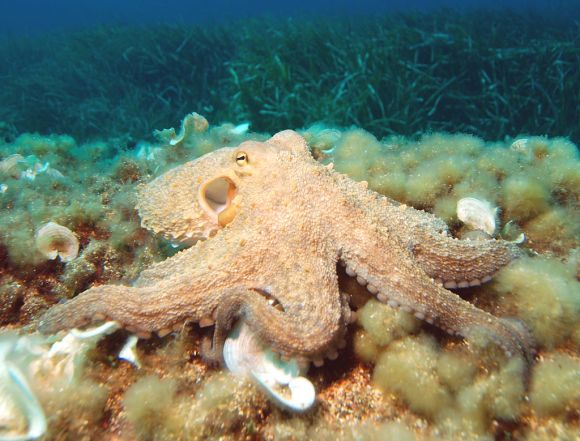
The Octopus is a mysterious creature. So mysterious he has even been suspected of murder. But in Japan, the octopus is usually first met on the plate. Whether as an ingredient in salad or Sexual Harassment sushi the octopus is considered the most efficient seafood because there is no waste–every part of the octopus is eaten–even the head.
Today, we invite you along on a virtual octopus hunt. Join our cephalopod-hunting reporter as she shows you not only how to catch an octopus, but how to turn its head inside out. As an added bonus, by the end of the article, you’ll have a full understanding as to why the mollusk’s scientific name is “octopus vulgaris.”
Octopus have the most complex brain of all invertebrates and in Japan, they grow to 60-90 cm long. In this country they are served raw, boiled or grilled. Fried octopus balls (no, not what you’re thinking–shame on you!) are a favorite snack at festivals.
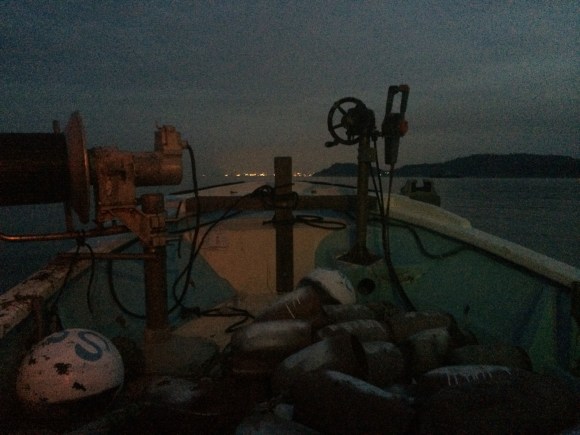
Approximately 45,000 tons of octopus are caught every year in Japan, and the most common method for catching them in the Seto Inland Sea is with octopus pots, called takotsubo.
▼Hiro’s boat is full of takotsubo. More will be added to the collection today.
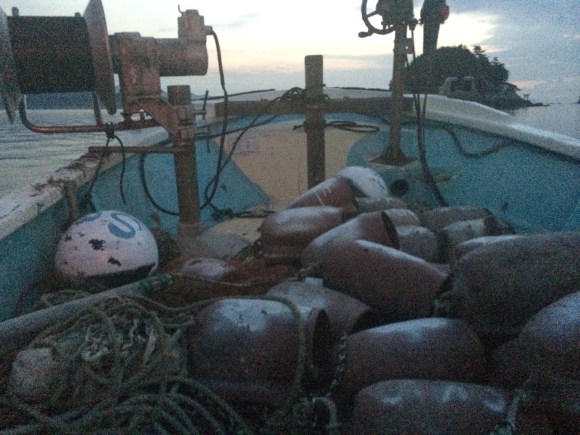
These pots are like octopus real estate, and are attached to a long rope that is dropped into the water, where they eventually settle on the sea bottom. The unsuspecting octopus, who lives on the sea floor, comes along and says “Wow, a free house!” and, feeling like he has just won the lottery, sidles into his new abode.
Perhaps you’ve seen these pots before on land near fishing ports. Stacked up neatly, they look like octopus condominium complexes, albeit abandoned by their residents.
▼Location, location, location! Waterfront real estate, very private. Must see to appreciate. Once you’ve crawled into one of these, you’ll never leave your home again!
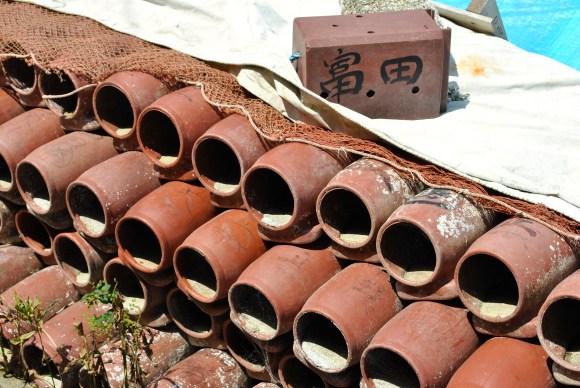
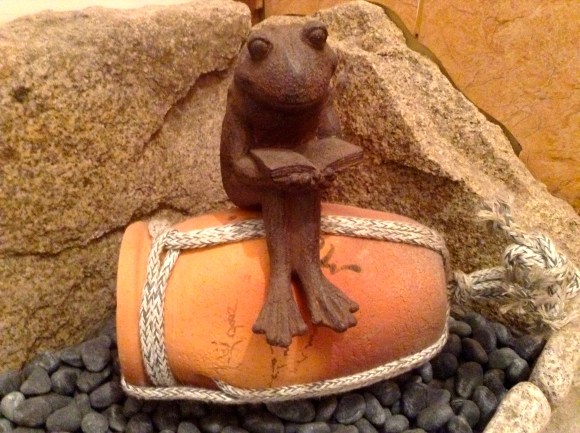
Octopus pots used to be made from terracotta. But nowadays, they’re made out of durable plastic that is much lighter and doesn’t break as easily.
▼These days, the old, terracotta octopus pots are used by frogs to sit on top of and read.
▼These modern pots have pretty designs.
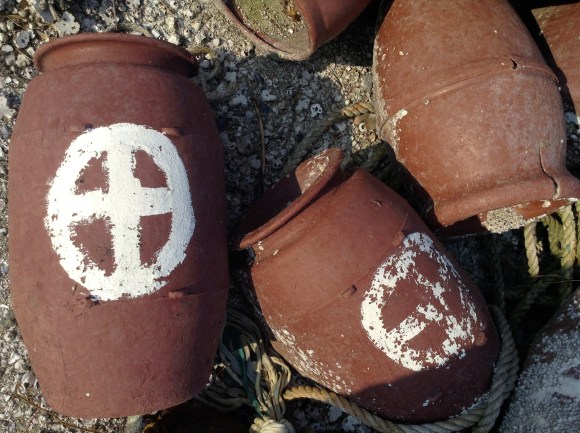
▼Some housing appears more permanent than others.
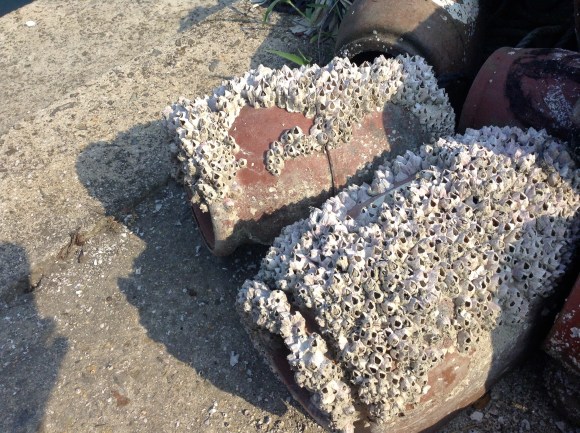
When an octopus finds such a home, he is probably very happy. I imagine that once inside, he has the best sleep ever in his protected cave.
▼Looking inside the pot. Like a capsule hotel for octopods, it’s a bit basic, but has its charms.
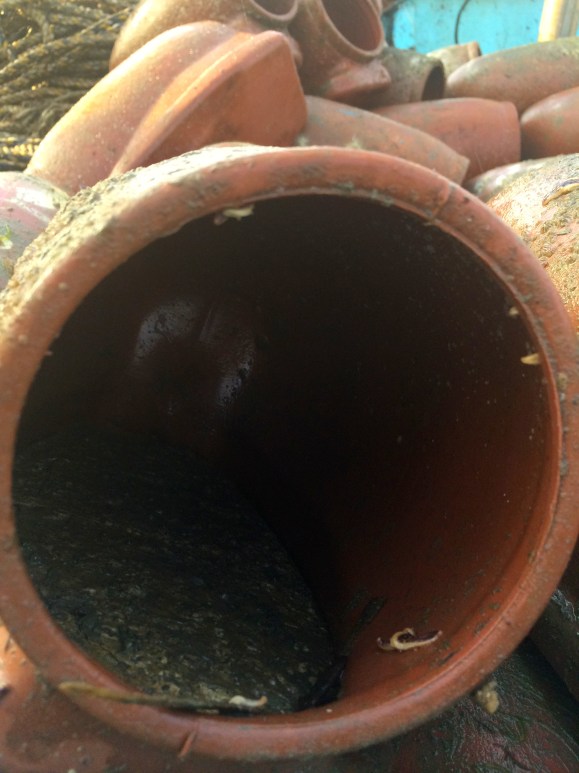
If the octopus oversleeps, however, the consequences are dire. At 5:00 a.m. his alarm clock will be a rude one–Hiro looking in!
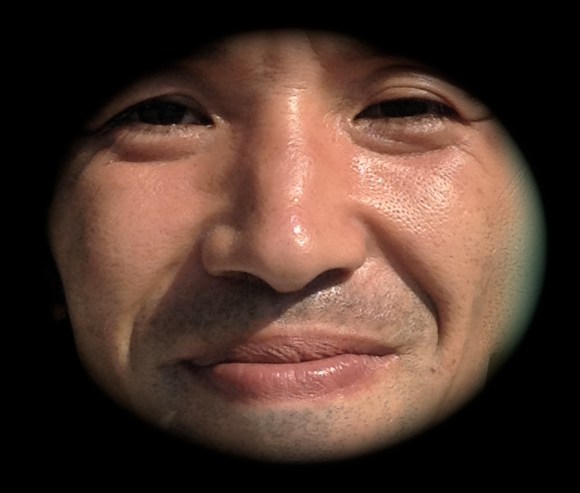
By the time we arrived at the octopus hunting grounds, it was getting light out.
▼Not a breath of wind, the sea like glass.
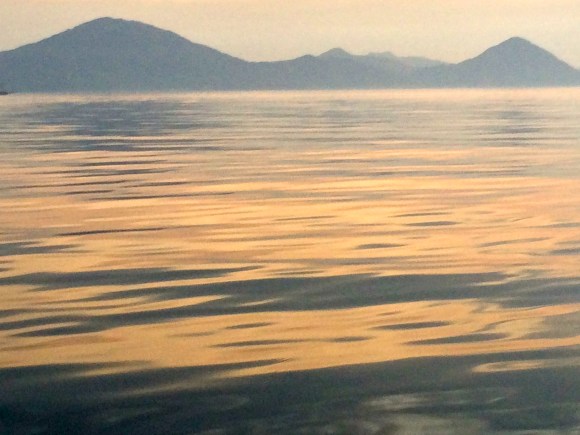
No other boats were out, but we were not alone. Nature was all around us.
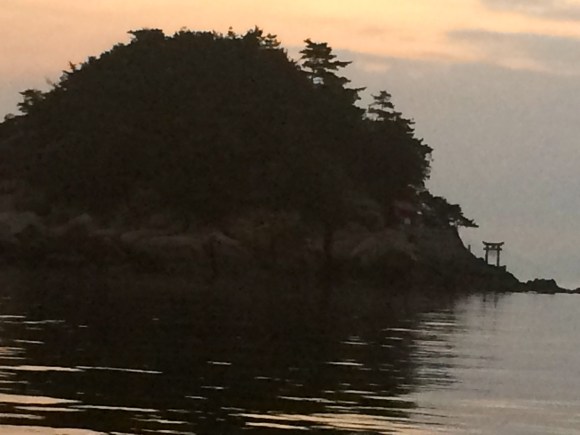
▼The torii gate on Benten Island, home of Benzaiten, the goddess of the sea.
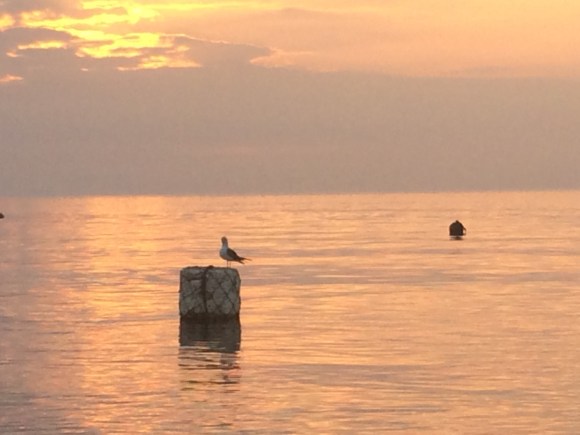
▼A seagull performs his morning meditation.
▼A starfish joins us on the gully of the boat.

Now at the octopus hunting grounds, it’s time to wake up the mollusk residents.
Everything is ready: The net,
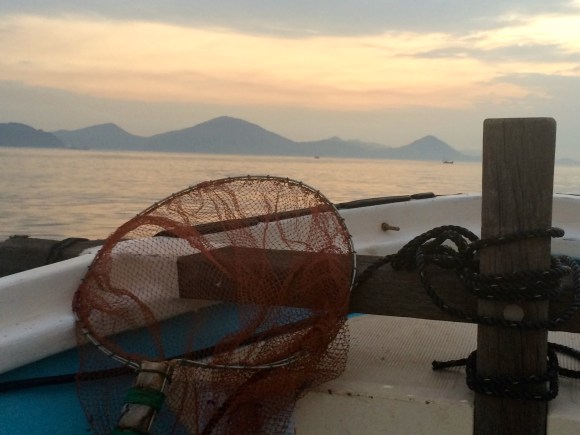
the reel,
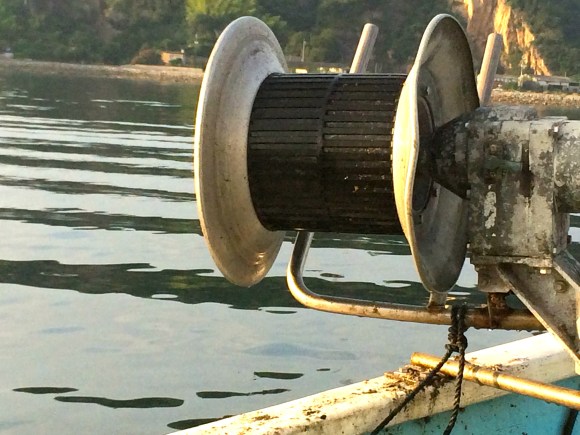
and our fearless octopus hunting leader, Hiro!
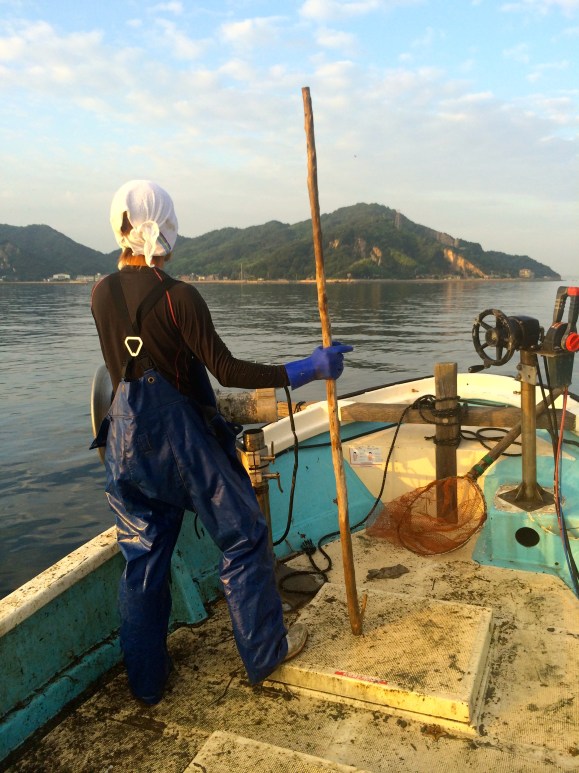
The boat approaches a buoy indicating where the octopus pots have been previously laid.
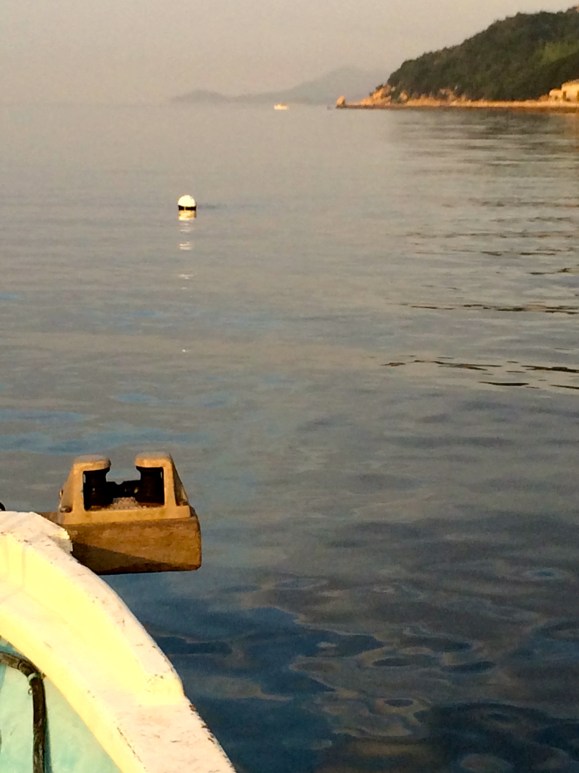
Hiro pulls the buoy out of the water with the stick. He also pulls up a rock which has been attached to the line of pots to keep them anchored on the sea floor.
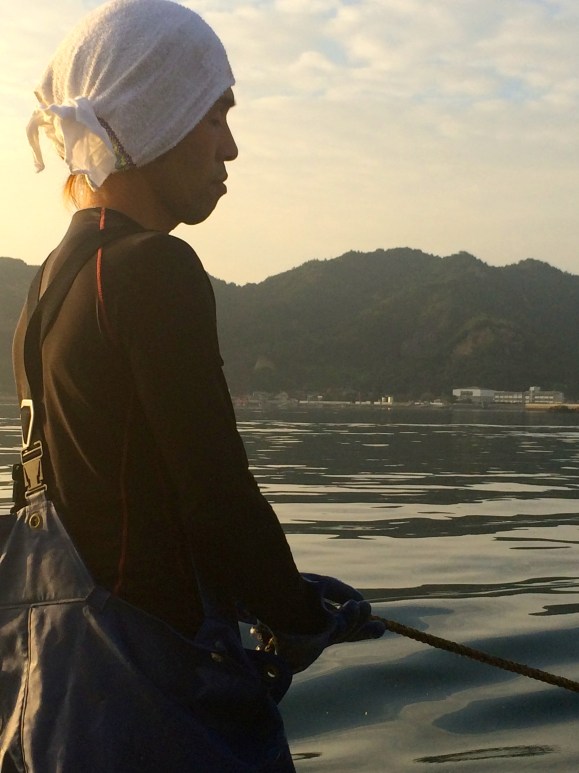
After the rock come the octopus pots, attached to the rope every six meters or so. Hiro places the rope over the reel to help pull the pots up out of the sea and onto the boat.
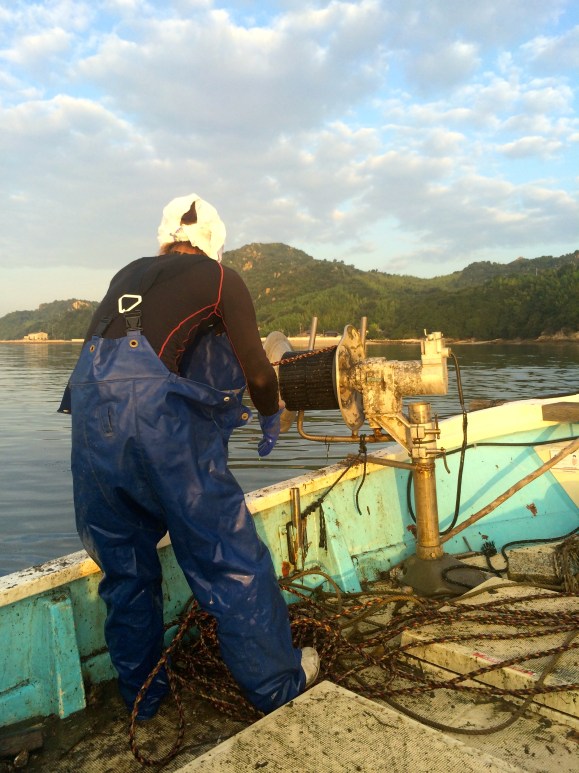
As he brings in each pot, he looks inside it. If there is a squatter inside, he taps on the pot with a piece of wood until the cephalopod falls out into the holding tank of the boat.
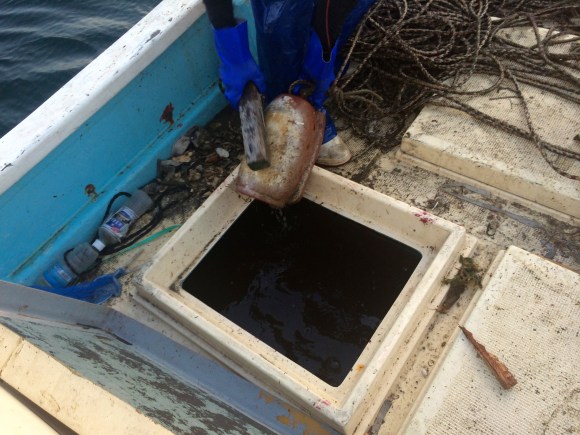
After all the pots are pulled up and the holding tank is full of 8-legged creatures, Hiro starts bagging them.
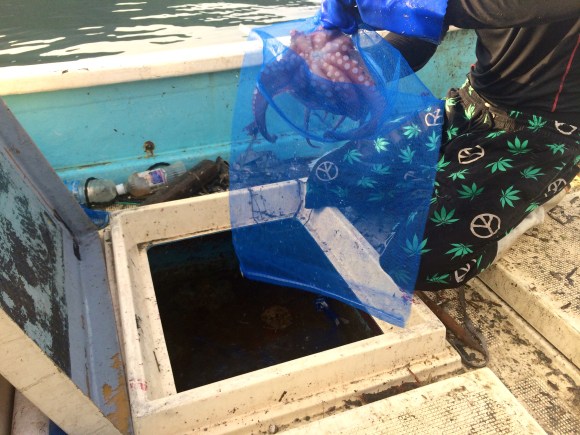
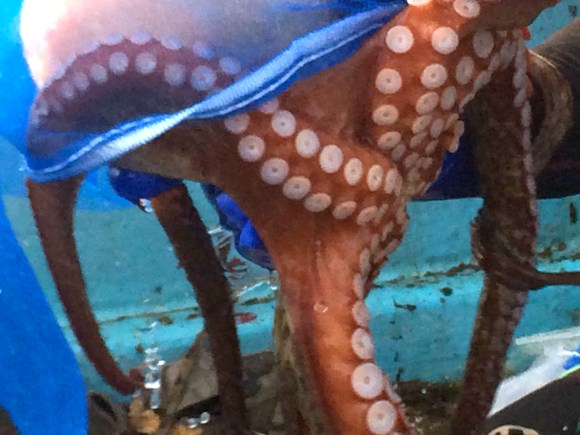
Notice how red the octopus is. Just like your face turns red when you’re really, really angry, the octopus’s entire body shows his rage at being caught.
Today was an especially good catch. With over a dozen mollusks in the holds, we head back to Shiraishi Island.

Once the boat is parked in the port, Hiro sets up a net.
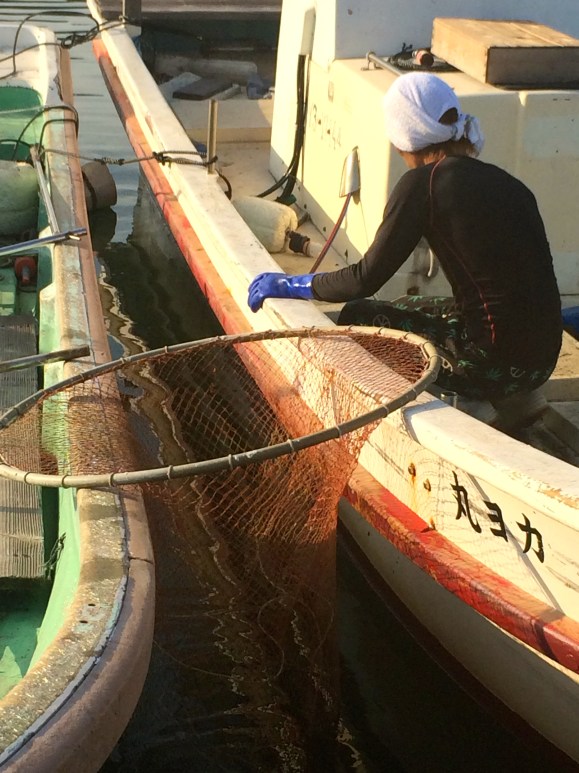
And transfers the bagged octopus from the hold into the net. Today, he will sell them to restaurants and minshuku accommodations on the island. Some individuals will also buy one to serve to relatives visiting from the cities.
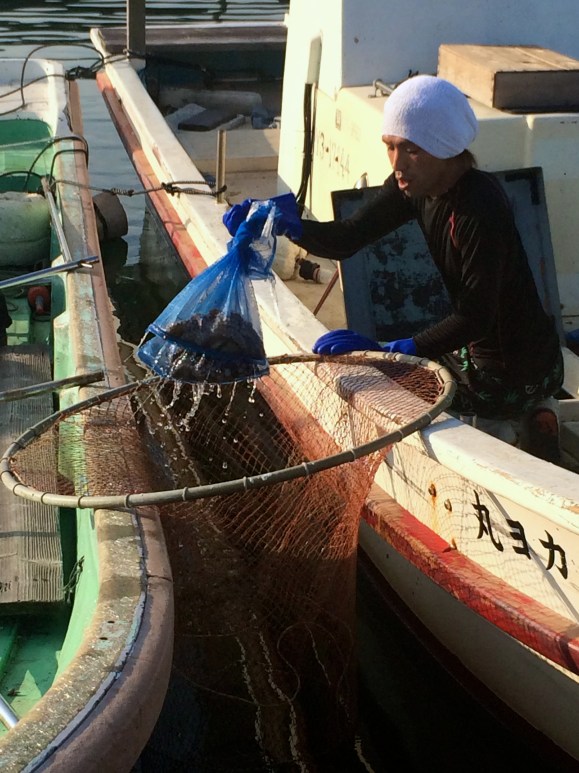
Much to my surprise (and horror), one of Hiro’s techniques to make the creatures more docile is to turn their heads inside-out. As you can see in the video, this process does make the octopi more docile, and probably gives them migraine headaches:
As mentioned before, octopus is prized in Japan because it is all-consumable — there is no part of the octopus that is wasted. Not only does it come with those bonus legs, but you can eat the head too. If you can distinguish the head from the torso, that is.
▼Um, looks like chicken to me!
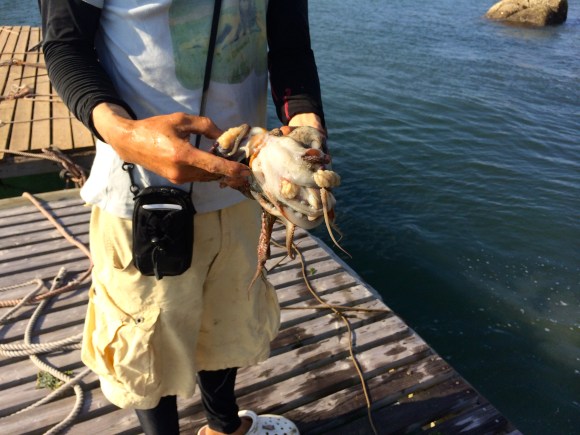
Although I have eaten octopus many times myself, it is not one of my favorite foods. It may be a comfort food for city-folk returning to the island for a visit, but for me octopus is a discomfort food. I think it comes from that time I ate live octopus.
This was several years ago when I sailed to Manabe Island with some Japanese friends of mine. They wanted to go to Ryouka, a restaurant on the island that serves fresh fish. And I mean, really fresh.
▼Ryouka, on Manabe island serves food so fresh, it’s still alive
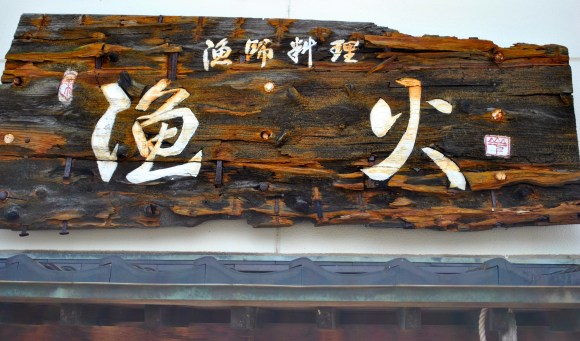
This is where I experienced my first, and last, fling with live octopus gastronomy. Just so you can really take in the gravity of the situation, I offer before and after photos, first of the sacrificial mollusk, then of me.
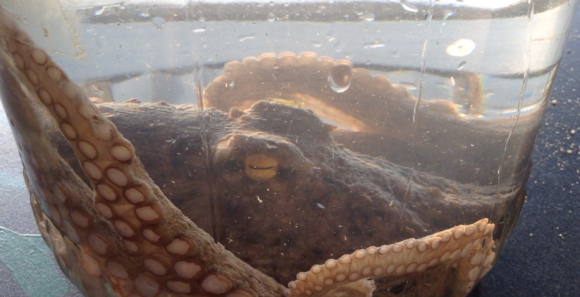
Before: The octopus, complete with tentacles.
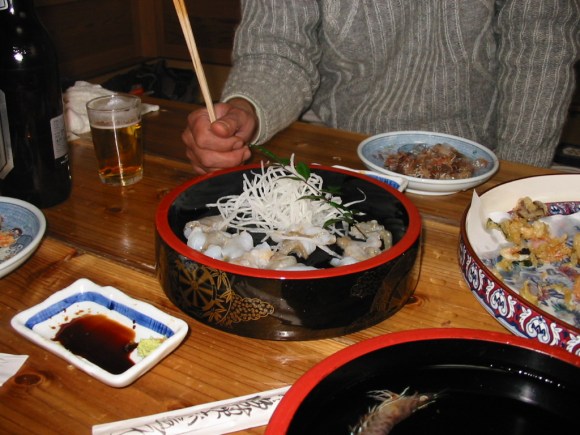
After: The tentacles are writhing in the lacquer bowl in the middle. My friend Tanaka-san is poised and ready in the background.
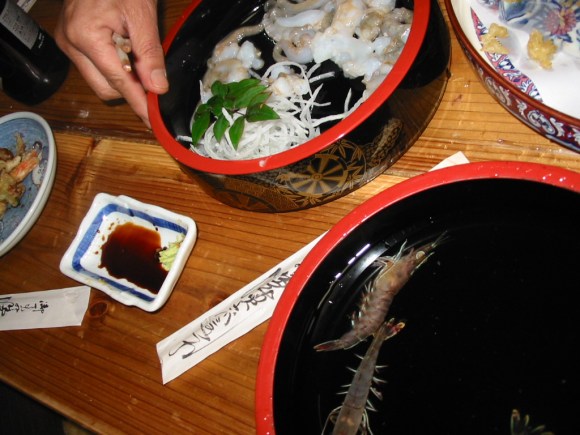
Tanka-san and the other guys have done pretty well polishing off the tentacles, while I’ve done my best to avoid eating the live shrimp. They are jumping and doing acrobatics in the bowl. Sometimes they jump out of it and we have to chase them down to put them back in.
▼I have successfully avoided eating the jumping shrimp, only two of which are left now.
As my friend Maru-chan presented me with an octopus tentacle, there was no way I could avoid it. They were still writhing…
Before: Okay, I am brave!
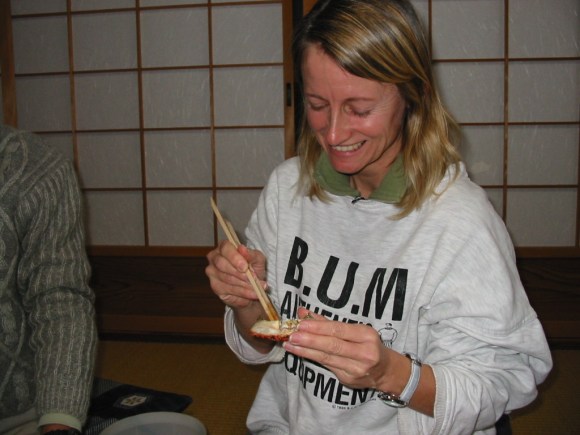
But oh, no! Something unexpected happens. This is really, really strange!
After: My face turns red like an octopus, veins on the side of my head bulge.
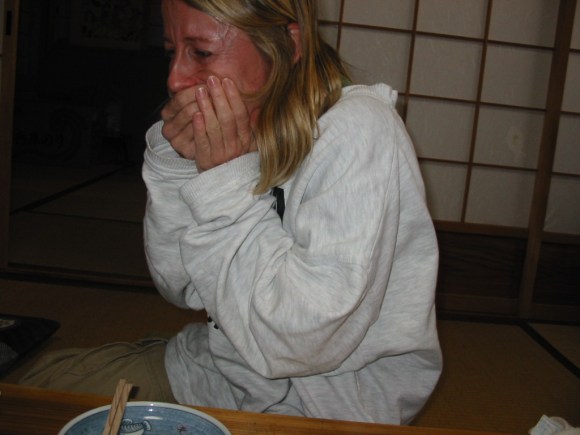
The suckers on the tentacles have attached themselves to the inside of my cheek! Quick–get me some beer! I hadn’t guzzled a beer like that since I was in college. And ever since that day, octopus has been a discomfort food for me. Octopus vulgaris, indeed!
Join me on my morning’s Octopus hunt by video, and see the entire process!
Insert Image: Wikipedia
All other Images: Amy Chavez/RocketNews24