
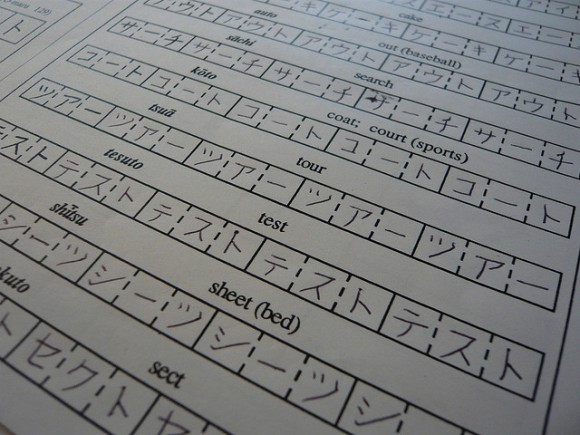
With the 26 letters of the alphabet, we can make pretty much any sound present in the majority of languages. But Japanese just doesn’t contain certain sounds present in English, like “th” or “v”, and their “r” is somewhere right between our “r” and “l”, making them sound almost exactly the same to Japanese ears.
Since most Japanese people grow up only speaking Japanese, it means that when they start learning English at school, they either have to learn entirely new sounds (difficult) or else try to render English in Japanese sounds (which isn’t accurate). As a result, many Japanese English learners feel a lot of anxiety over the accuracy of their pronunciation. But should that really be holding them back?
Japanese syllables generally consist of the vowels a, i, u, e, o, and consonant-vowel compounds such as ka, shi, tsu, etc. Therefore, rendering English into Japanese pronunciation results in extraneous sounds. Take, for example, the anime buzzword “waifu“, from the English word “wife”. In Japanese, this can only be rendered into three syllables: WA, I, and FU. The extra “u” sound at the end sounds odd to native English-speaking ears, but is perfectly natural in Japanese. In fact, our cut-off consonants probably sound pretty weird to them, like we’re only pronouncing half of the letter.
Rather than learning English the way a native-speaking child would, through memorising phonics, many Japanese students rely on pronunciation guides which provide that word in a Japanese pronunciation. Known as “Katakana English”, rendering English into Japanese script actually impedes learning, and is an almost impossible habit to break. Sometimes, however, it’s just too difficult for an ear untrained to English to discern a word without the “crutch” of a Japanese pronunciation. Just the other day, I was talking to a Japanese friend about RocketNews24, and I lazily pronounced it “Rocket News”. After a puzzled silence, I tried “Roketto Nyuusu” and was finally met with a smile of recognition.
As we’ve previously lamented, much of the English education in Japanese schools revolves around standardised test-taking and memorising written grammar over learning pronunciation. So it’s probably not much of a surprise that Japanese people who learn English as a second language tend to have a Japanese accent to some degree. But is this really a Japan-specific thing? Personally, I’ve known many people from a variety of countries who speak excellent English as their second language, yet still retain a distinctive accent. It doesn’t mean that their English is any less accurate.
So why is it that Japanese people are so paranoid about their accent?
▼ Recently, English education in Japan is increasingly leaning towards emphasising spoken English.

Paradoxically, Japanese English learners can sometimes feel more comfortable speaking English with other English speakers rather than in front of their fellow Japanese. The other day I went to a nail salon in Tokyo, and was assigned a nail technician who had recently returned from a working holiday in the US. She was so nervous about the prospect of speaking English to me in front of her Japanese colleagues she was practically trembling, but once the novelty wore off and the others stopped paying attention, she relaxed. “I don’t mind speaking English with English-speaking people,” she explained, “But I can’t do it in front of other Japanese people.”
Recently, a TV interview in English with New York Yankees’ pitcher Masahiro Tanaka caught the attention of Japanese netizens because they didn’t feel his English was accurate enough. “He said ‘My name is’;” complained one Japanese commenter, “nobody actually says that in English, it sounds old-fashioned!” Others, thankfully, were quick to respond with comments along the lines of “Who cares? It’s still English!” and another commenter stated: “Now I know why Japanese people are so scared to be seen speaking English in front of other Japanese people. It seems native English speakers are more understanding! What’s that about?”
▼ Masahiro Tanaka. Skilled pitcher, budding bilingual.

It may be too late now for many Japanese English speakers to go back and undo years of standardised tests and “Katakana English” lessons, but it seems that the more immediate issue is overcoming that pronunciation anxiety and just relaxing into it. Of course, there’s nothing wrong with being a perfectionist, but it’s important not to sweat the small stuff. And as far as problems rank, having a bit of an accent when you speak really isn’t such a big deal after all, is it?
Source: Togetter, Japan Times, Naver Matome
Main Image: Flickr © Jessica Spengler
Inset Images: Flickr © Official US Navy, Flickr © Arturo Pardavila III
 The reason why Japanese students don’t pronounce English properly
 Things Japanese people believe about British vs. American English
 The science behind why English speakers can’t pronounce the Japanese “fu”
 NTT showcases technology which can “correct” Japanese people’s English pronunciation
 Japanese elementary school student teaches us all how to pronounce English like a native speaker
 Japan’s best conveyor belt sushi restaurant of seven years ago has now, finally, come to Tokyo
 Japanese trains in Sapporo might be better than those in Tokyo, thanks to one special feature
 Lawson convenience store at popular tourist site is one of the most unusual in Japan
 Pringles Chocolate, but with a Japanese twist, is the snack hack you should be trying right now
 Drink vending machines disappearing in Japan as number drops to lowest in 30 years
 Krispy Kreme Japan giving free donuts with morning drink purchases at all branches, maybe forever
 Starbucks Japan releases FIVE new Frappuccinos in a day, and we try them all in 90 minutes
 This lucky bag of anime models is also a decades-long history lesson for our mecha newbie
 Two Sailor Moon musicals will stream online for overseas fans this winter
 Japanese idol creates kawaii Gunpla, the world’s cutest Gundam models【Photos】
 Japan reportedly adding Japanese language skill requirement to most common foreigner work visa
 Mt. Fuji decorated with a 500,000-flower pink carpet is Japan’s ultimate spring view
 Pokémon and Ikea Japan cross over into each other’s worlds with collaboration events
 Starbucks Japan closing only Shinkansen platform branch for popularity-triggered renovations
 You can assemble a well-balanced team of Pokémon, them eat them, thanks to Japanese cake chain
 30 Pikachus want to share a Tokyo hotel room with you that has separate Grass, Water, Fire spaces
 Man bites woman at cherry blossom park in Japan, dies shortly after
 7-Eleven Japan’s new baked-in-store sweet treat is only available in three parts of the country
 Peanuts and Coke becomes a viral hit in Japan, but is it a trend worth joining?
 Japan now has a special desk for people who work at home with a pet cat[Photos]
 Famous Tokyo cherry blossom spot installs view-blocking screens to fight overcrowding[Video]
 Uniqlo announces new T-shirts for One Piece, Naruto and more for manga publisher’s 100th birthday
 Train station platform ramen store closes its doors on half a century of history in Tokyo
 Starbucks Japan releases new My Fruit³ Frappuccino at only 34 stores around the country
 Krispy Kreme releases Super Mario doughnuts in Japan for a limited time
 Japanese onsen egg maker from 100-yen store Daiso needs to be on your shopping list
 Survey asks foreign tourists what bothered them in Japan, more than half gave same answer
 Japan’s human washing machines will go on sale to general public, demos to be held in Tokyo
 Starbucks Japan releases new drinkware and goods for Valentine’s Day
 We deeply regret going into this tunnel on our walk in the mountains of Japan
 Starbucks Japan releases new sakura goods and drinkware for cherry blossom season 2026
 Studio Ghibli releases Kodama forest spirits from Princess Mononoke to light up your home
 Japan’s newest Shinkansen has no seats…or passengers [Video]
 Major Japanese hotel chain says reservations via overseas booking sites may not be valid
 Put sesame oil in your coffee? Japanese maker says it’s the best way to start your day【Taste test】
 No more using real katana for tourism activities, Japan’s National Police Agency says
 Testing English “loan words” on people who don’t speak Japanese (Spoiler: they don’t make sense)
 English-speaking-only bar opens in Osaka and Tokyo, yellow cards for those who don’t follow rules
 “Don’t touch my moustache!” Japanese that sounds like English but isn’t, and vice versa!
 How to respond to Japanese people saying “I don’t speak English” when you’re speaking Japanese?
 Counting sheep to get to sleep may work after all, unless you speak Japanese
 10 cringeworthy habits of English-speaking Japanese
 “Don’t worry, he is a docile pervert” and other useful phrases in Japanese and English
 Japanese student teased for American pronunciation gets sweet revenge on classmates
 Keisuke Honda apologises for English mistake at press conference 【Video】
 90-year-old Japanese granny is learning English from her grandchild, and it’s extremely precious
 Ridiculous Japanese TV program says English pronunciation is to blame for coronavirus spread【Vid】
 English conversation school in Japan has clever reminder that students don’t have to be perfect
 Nihon-no: Is an entirely English-speaking village coming to Tokyo?
 Clever font sneaks pronunciation guide for English speakers into Japanese katakana characters
 The top 10 hardest Japanese words to pronounce – which ones trip you up?【Video】
 Seven mistakes foreigners make when speaking Japanese—and how to fix them