

Lead researcher says pumping iron gives salarymen a joy “that they can’t get from work.”
The stereotypical life of a middle-aged salaryman is supposed to go something like this: Wake up and go to work. After work, go drinking with your boss and coworkers at an izakaya pub, then go for a second session of drinks at some hole-in-the-wall bar, grab a bowl of late-night ramen somewhere, head home, go to sleep, and do it all again the next day.
Dai-Ichi Life Insurance’s Economics Research Institute, though, says there’s another activity that’s becoming increasingly common on salarymen’s schedules: weightlifting. According to a report authored by the institute’s chief economist, Toshihiro Nagahama, a growing number of Japanese businessmen in their late 30s, 40s, and 50s are following up a day of pushing paper and clacking keyboards by pumping iron.
Nagahama himself is a midlife convert to weightlifting, following a scathing physical roughly five years back which showed him to have hyperlipidaemia (excessive fat in the blood), something he’s largely alleviated through improved fitness and diet. As to what’s triggering the trend, Nagahama says that weightlifting, or “kintore” as it’s called in Japanese (from kinniku toreningu/”muscle training”), is a good fit for mature white-collar workers in Japan. Recent workplace reforms have led to less overtime in conscientiously managed companies, giving salarymen more time to use for other activities, such as taking care of their health.
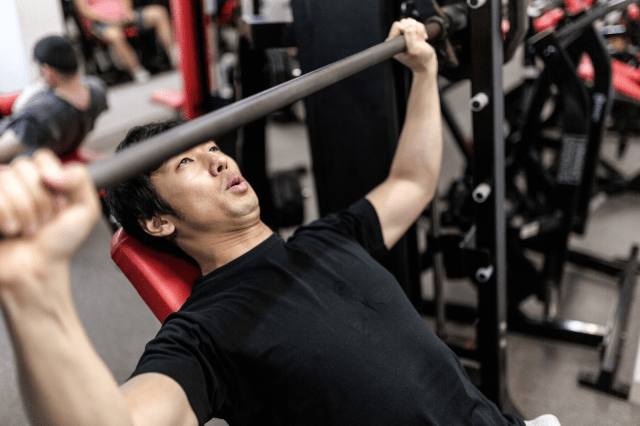
However, Japan’s baseline work culture being what it is, it’s not like these weightlifting salarymen are clocking out of the office at 3 in the afternoon. They still have busy lives, and Nagahama explains that weightlifting is a more time-effective way of getting/staying in shape than other exercises like jogging.
“For jogging, you have to run every day [to see results],” Nagahama says. “But with weightlifting, you need to give the muscles you use time to heal, so it’s actually counterproductive to lift every day. Even if you only lift once or twice a week, if you couple that with a moderately healthy diet, you’ll easily notice positive results.”
Nagahama stresses the visible rewards of weightlifting as a major motivator: “If you do a proper one-hour workout once or twice a week, and keep at it diligently, your muscles will become visibly bigger, and your physique will noticeably change.” The economist also asserts that unlike high-impact activities, like jogging, or sports that require other participants, like tennis, weight-lifting is something that’s easier to start in middle age, and that the metabolism-boosting effects of bigger muscles is another attractive point for salarymen, since it helps to mitigate the effects of those mugs of beer and bowls of ramen even on days they’re not actively exercising.

Finally, Nagahama thinks there’s also a psychological factor at play. Many Japanese companies promote employees based on experience and seniority, but the higher you get in the corporate pyramid, the fewer spots there are above for you to rise into. Once they hit their mid 40s, some salarymen start to be able to see the endpoint of their career trajectory, and for someone whose primary reward-for-effort in his adult life has been moving one more rung up the ladder, that slowing of momentum can leave them feeling a little empty.
Weightlifting, though, with its easily trackable performance statistics (weight lifted, number of reps in a set, number of sets in a workout), plus the visible body changes mentioned above, gives these salarymen something to strive for. “One of the great joys of weightlifting is how it gives you a sense of personal development that you can’t get from work,” Nagahama says.
An additional bump in attention for weightlifting came with the fall TV season’s anime adaptation of fitness manga How Heavy Are the Dumbbells You Lift?, though that’s something that’s been occurring primarily among younger demographics than Nagahama’s report is focused on. Still, the combined effects have been enough to make “Kinniku ha uragiranai,” “Muscles won’t betray you,” a new rallying cry for amateur weightlifters in Japan. Nagahama even references the saying in his report, and it sounds like the weight rooms at Japanese gyms are going to be at least a little more crowded than they used to be.
Source: J-Cast Kaisha Watch via Livedoor News via Hachima Kiko
Top image: Pakutaso
Insert images: Pakutaso (1, 2)
● Want to hear about SoraNews24’s latest articles as soon as they’re published? Follow us on Facebook and Twitter!
Follow Casey on Twitter, where he misses being able to lift weights outdoors in Los Angeles.
 Weightlifting anime’s theme song video blows past 115 million views with help from muscle idol
 Japan’s unbelievably buff muscle idol shares workout videos, performs wicked clothesline【Videos】
 Injuries on stairs in Tokyo highlight an overlooked design flaw
 Japan’s popular bead bonsai kit is as beautiful as it is gruelling to make
 Japan has new rules for bicycle riders, and these 14 things could get you a fine or a court date
 Wisteria season starts early with blooming of Japan’s Great Wisteria in its beautiful garden
 Better know a train nerd: 36 different classifications for Japan’s “densha otaku”
 Final version of Sanrio: Beginning of Kawaii exhibition opens in Tokyo[Photos]
 Japanese trains in Sapporo might be better than those in Tokyo, thanks to one special feature
 The results are in! One Piece World Top 100 characters chosen in global poll
 The 6 best frozen foods at a Japanese grocery store
 Manga/anime creator Kenya Suzuki arrested for importing child pornography from Europe
 Japan’s best conveyor belt sushi restaurant of seven years ago has now, finally, come to Tokyo
 Mt. Fuji decorated with a 500,000-flower pink carpet is Japan’s ultimate spring view
 Lawson convenience store at popular tourist site is one of the most unusual in Japan
 30 Pikachus want to share a Tokyo hotel room with you that has separate Grass, Water, Fire spaces
 Japanese government wants overseas anime market to roughly triple in 10 years, but are they crazy?
 Japan reportedly adding Japanese language skill requirement to most common foreigner work visa
 Japanese bento shop sells croquettes for 13 cents, but are they any good?
 Starbucks Japan releases FIVE new Frappuccinos in a day, and we try them all in 90 minutes
 Pokémon and Ikea Japan cross over into each other’s worlds with collaboration events
 Japan now has a special desk for people who work at home with a pet cat[Photos]
 Famous Tokyo cherry blossom spot installs view-blocking screens to fight overcrowding[Video]
 Uniqlo announces new T-shirts for One Piece, Naruto and more for manga publisher’s 100th birthday
 Starbucks Japan releases new My Fruit³ Frappuccino at only 34 stores around the country
 Krispy Kreme releases Super Mario doughnuts in Japan for a limited time
 Japanese onsen egg maker from 100-yen store Daiso needs to be on your shopping list
 Survey asks foreign tourists what bothered them in Japan, more than half gave same answer
 Japan’s human washing machines will go on sale to general public, demos to be held in Tokyo
 Starbucks Japan releases new drinkware and goods for Valentine’s Day
 We deeply regret going into this tunnel on our walk in the mountains of Japan
 Starbucks Japan releases new sakura goods and drinkware for cherry blossom season 2026
 Studio Ghibli releases Kodama forest spirits from Princess Mononoke to light up your home
 Japan’s newest Shinkansen has no seats…or passengers [Video]
 Major Japanese hotel chain says reservations via overseas booking sites may not be valid
 Put sesame oil in your coffee? Japanese maker says it’s the best way to start your day【Taste test】
 No more using real katana for tourism activities, Japan’s National Police Agency says