

Questions explore the ongoing impact of the pandemic on family traditions and what people plan to spend the most money on for celebrations.
Out of all Japanese public holidays throughout the year, New Year’s is arguably the one when the whole country comes closest to a complete standstill. Workers are typically granted December 29 through January 3 off, marking a comparatively long stretch of time for them to travel home, take some dedicated time to hibernate, and engage in traditional activities such as eating extravagant and expensive meals of osechi (New Year’s foods with auspicious names) or sending New Year’s Day greeting postcards known as nengajo.
As 2023 will be the third New Year’s holiday celebrated since the widespread onset of COVID-19, however, many families still haven’t completely returned to their pre-pandemic traditions. In an effort to learn more about how the pandemic is still affecting families’ New Year’s plans, Japanese company Shokubunka, which researches business related to the Internet sales of specialty foods, surveyed 1,004 men and women in their 20s through 60s across Japan earlier this month about how they plan to ring in 2023.
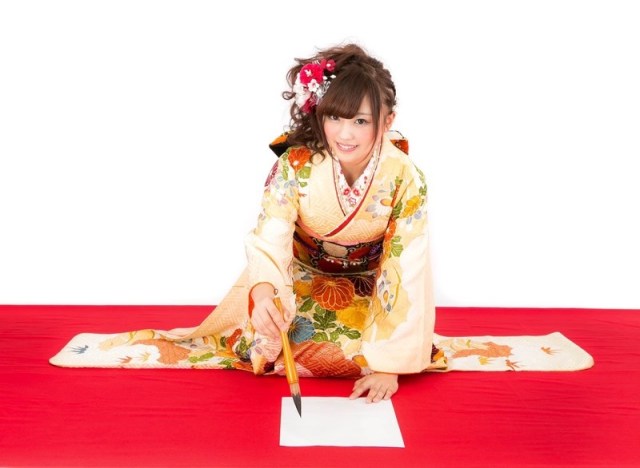
▼ One traditional New Year’s custom: kakizome, or the first calligraphy written in the new year
Let’s now dive into the seven survey questions and most common answers!
Q1: What are your plans for New Year’s this year? (Multiple responses are allowed)
- Not much–relaxing at home (42.9 percent)
- Visiting a Shinto shrine or Buddhist temple for the first time in the New Year (39.5 percent)
- Greeting local relatives and friends (17.4 percent)
- Shopping first-day-of-the-year sales (12.9 percent)
- Watching the first sunrise of the new year (7.7 percent)
- Going on a trip (4.4 percent)
The largest portion of survey takers, about 40 percent, responded that they plan to spend the holiday lounging at home without doing much at all. That actually sounds like a pretty sweet deal to us–we’ve still got plenty of 2022 anime series to catch up on, after all. Shall we dub it “the first lounging of the year”?
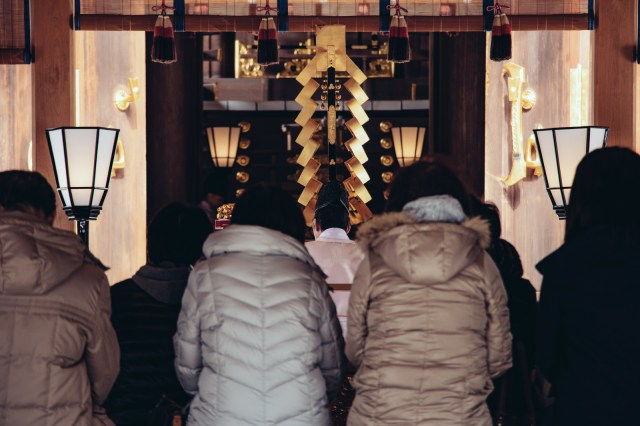
▼ The second most popular response: hatsumode, the first visit to a shrine or temple to pray for happiness in the new year
Q2: Depending on the COVID-19 situation, is there a chance that your plans to go out or do other things might change?
- No (36.1 percent)
- Yes (32.7 percent)
- I’m not sure (31.2 percent)
With Japan experiencing an eighth wave of COVID-19 infections, the importance of taking precautions still can’t be understated, even if it means needing to change long-awaited plans on a dime. Since a large chunk of survey takers aren’t planning to go out in the first place, hopefully that will make sudden changes a bit easier to swallow.
Q3: How has the way that you spend New Year’s changed since the onset of the pandemic? (Multiple responses are allowed)
- I rest at home without going out (55.6 percent)
- I don’t do the same customs that I usually do every year (26.3 percent)
- The amount of money that I spend on food has gone up (21.7 percent)
- The amount of times that I order out for food has gone up (8.1 percent)
- I visit a shrine or temple and see relatives virtually (4.1 percent)
- Other (12.1 percent)
Interestingly, 21.7 percent of survey takers reported that their holiday food expenses have gone up in addition to the 8.1 percent that reported ordering more food from outside. These trends are likely a result of families spending more time at home without social gatherings that involve lots of cooking. Other specific responses regarding how plans have changed include: “I don’t visit my grandparents anymore,” “I don’t gather with relatives,” and “I order more things online.”
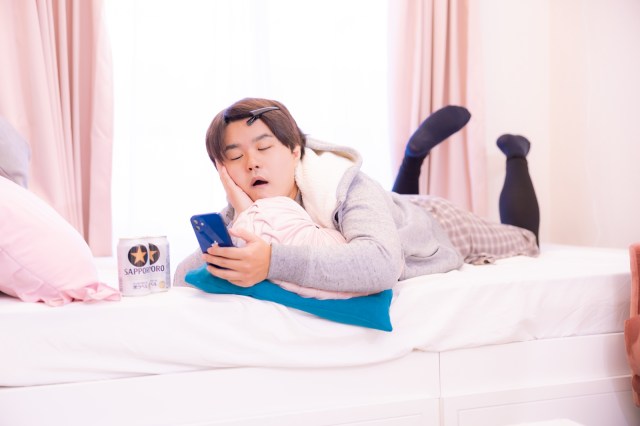
▼ A modern depiction of the traditional Japanese New Year’s activity known as “gorogoro,” or lazying about at home with TV, books, and plenty of snacks (pajamas are encouraged; cooking is most definitely not)
Q4: What do you think you’ll spend the most money on this New Year’s?
- Food (59.4 percent)
- Shopping (16.2 percent)
- Travel (7.8 percent)
- Leisure (4.1 percent)
- Otoshidama (New Year’s money for children) (3.5 percent)
- Other (9.0 percent)
Speaking of money…in a landslide (foodslide?), 60 percent of survey takers responded that they plan to spend the most money on food over the holiday (rightfully so!). Specific responses to the question included “eating out with family,” “splurging on osechi and other foods I wouldn’t normally eat,” and “relaxing at hot springs.” Perhaps it’s worth noting as well that the boxed feasts known as osechi seem to be fading in popularity these days, especially among the younger generations, so it will be interesting to see to what extent it continues to make an appearance in this kind of survey for years to come.
▼ A typical osechi New Year’s meal. Some restaurants have recently begun offering one-person osechi meals.

Q5: How do you prepare food for the holiday? (Multiple responses are allowed)
- My family and relatives make it (44.9 percent)
- I make it myself (40.1 percent)
- I buy it in the neighborhood (31.6 percent)
- I eat out (18.0 percent)
- I order it online (14.1 percent)
- Other (2.4 percent)
In total, about 85 percent of survey takers will still be able to indulge in some homecooked meals over the holiday, whether made by family or themselves.
Q6: What “luxury” food do you crave at New Year’s (excluding osechi and toshikoshi soba [“crossing-the-year soba”])? (Multiple responses are allowed)
- Sushi (46.1 percent)
- Crab (37.8 percent)
- Sukiyaki (29.9 percent)
- Yakiniku (19.8 percent)
- Nothing special (15.5 percent)
- Shabushabu (12.3 percent)
Extravagant seafood proves to be the most popular as the top two picks were sushi, often eaten on celebratory occasions in Japan, and crab. Beef-based sukiyaki and yakiniku followed as they’re both warming, hearty dishes for the middle of winter.
▼ Premium crab such as the one pictured below can often cost…many an arm and a leg.

Q7: Have you ever thought that you failed when purchasing food for New Year’s?
- No (76.1 percent)
- Yes (23.9 percent)
Sadly, nearly 25 percent of survey takers responded to the final question that they’ve had a bad experience when buying special food for New Year’s. Typical reasons included: “the portion size was way too small for the price,” “I purchased osechi from a reputable shop but it was underwhelming,” and “the osechi I received looked completely different from its photo.” Hopefully each of these survey takers was able to bounce back with a pleasant experience the following year.
Now that Japan is on the cusp of the extended New Year’s break, perhaps it’s time for all of us, no matter where we are in the world, to procure some snacks, hunker down under the kotatsu, and start browsing the websites of our favorite stores for any cute New Year’s-themed goods. We’ll see you again whenever we’ve fully mastered the art of gorogoro.
Source: PR Times via Otakomu
Featured image: PR Times
Top image: PR Times
Insert images: PR Times, Pakutaso (1, 2, 3)
● Want to hear about SoraNews24’s latest articles as soon as they’re published? Follow us on Facebook and Twitter!
 More people travelling in Japan for the New Year’s holiday than last year, survey says
 Survey says osechi New Year’s food differs according to each region in Japan
 How most Japanese people spend their New Year’s: eating nonstop at home 【Poll】
 Celebrate New Years in Pokémon style — with a monster ball filled with traditional osechi food!
 KFC Japan reveals New Year’s box for 2017, seeks total domination over festive period
 Fatal stabbing at Pokémon Center in Tokyo reignites concern over rising stalking cases in Japan
 Japan’s Bear Paw Cafe: A safe space for staff with mental health challenges
 Uniqlo announces new T-shirts for One Piece, Naruto and more for manga publisher’s 100th birthday
 Japan’s ministry of economy reminds us to “use sound judgment” before buying toilet paper
 Krispy Kreme releases Super Mario doughnuts in Japan for a limited time
 Japanese kindness restores our faith in humanity after a highway bus accident in Tokyo
 Japan now has a special desk for people who work at home with a pet cat[Photos]
 Japan now has a “for foreign tourists only” Mt. Fuji sightseeing train[Video]
 “Get off the bus.” Driver teaches prankster kid an important lesson
 7-Eleven Japan releases a crazy new viral sandwich: Chocolate Sprinkles and Whipped Cream
 Starbucks Japan releases new My Fruit³ Frappuccino at only 34 stores around the country
 Tokyo government organizes food truck event to clear out delinquent/homeless teen gathering area
 Nine amazing off-the-beaten-path cherry blossom spots in Japan for yaezakura and shidarezakura
 Stunning central Japan wisteria festival is like a purple fantasy straight out of a Ghibli movie
 Studio Ghibli releases the My Neighbour Totoro tea caddy, with a magical self-closing lid
 Japanese onsen egg maker from 100-yen store Daiso needs to be on your shopping list
 Create a tiny Ghibli anime world on your bookshelf with new miniature papercraft art kits
 Starbucks Japan unveils new sakura cherry blossom collection for hanami season 2026
 Train station platform ramen store closes its doors on half a century of history in Tokyo
 Studio Ghibli releases Catbus pullback keychain that runs like the anime character
 Nine great places to see spring flowers in Japan, as chosen by travelers (with almost no sakura)
 Starbucks Japan releases first-ever Hinamatsuri Girls’ Day Frappuccino
 Cherry blossoms begin blooming in Japan with record-early starts for sakura season
 Studio Ghibli adds new Mother’s Day gift sets to its anime collection in Japan
 Virtual idol Hatsune Miku redesigned with look that adds new elements and brings back old ones
 Survey asks foreign tourists what bothered them in Japan, more than half gave same answer
 Japan’s human washing machines will go on sale to general public, demos to be held in Tokyo
 Starbucks Japan releases new drinkware and goods for Valentine’s Day
 We deeply regret going into this tunnel on our walk in the mountains of Japan
 Studio Ghibli releases Kodama forest spirits from Princess Mononoke to light up your home
 Starbucks Japan releases new sakura goods and drinkware for cherry blossom season 2026
 Japan’s newest Shinkansen has no seats…or passengers [Video]
 Major Japanese hotel chain says reservations via overseas booking sites may not be valid
 Put sesame oil in your coffee? Japanese maker says it’s the best way to start your day【Taste test】
 No more using real katana for tourism activities, Japan’s National Police Agency says
 Spending New Year’s alone? Japanese restaurant has special one-person kosechi New Year’s meals
 Celebrate the New Year with a special and limited edition Barbie bento box of New Year foods
 Six non-traditional osechi New Year’s meals in Japan
 You can enjoy traditional Japanese New Year’s osechi eats on a budget with Lawson Store 100
 Traditional Japanese cuisine meets Star Wars for New Year’s osechi celebration meals
 How much money should you give children for New Year’s otoshidama? Adults weigh in
 Survey reveals 70 percent of Japanese adults believe corporal punishment is necessary
 The meaning of the mandarin and 6 other Japanese New Year traditions explained
 Mochi continues to be Japan’s deadliest New Year’s food, causes two deaths in Tokyo on January 1
 Government plan has everyone talking about a 17-day-long New Year holiday
 Get a taste of the Mushroom Kingdom this New Year with a Super Mario Bros. themed bento box
 Deadly New Year mochi strikes again, hospitalizing 19 and resulting in 4 deaths
 Here’s what our bachelor writers ate over the New Year’s holiday in Japan
 Survey shows how Japanese couples feel about spending so much time together sheltering in place
 Awesome Pokémon osechi New Year’s meals elegantly blend Japan’s traditional and pop culture