
Which came first, the frequent soaks or the day-to-day happiness?
Bathclin, a Japanese maker of household bathroom cleaning and air freshener products, recently conducted a study in collaboration with researchers from Tokyo City University’s Department of Human Sciences. For the survey, 300 men and women between the ages of 20 and 69 were asked a series of questions about their bathing (as in taking a bath, not simply showering) and state of mental and physical health.
Participants were divided into two groups: high-frequency bathers, defined as people who take a bath four or more times a week, and low-frequency bathers, who take baths three or fewer times per week. When the data was sifted, the researchers say that the high-frequency bathers reported a significantly higher average level of happiness in their daily lives. The frequent bathers were also more satisfied with the quality of their sleep, awakening feeling more rested than the low-frequency bathers, and also reported higher levels of self-assessed subjective feelings of healthiness, which was backed up by lower average levels of doctor-diagnosed health issues during their regular medical examinations.
So that’s it then, taking more baths clearly makes people happier, so hopping in the tub more often is a simple and surefire way to create a happier life for yourself, right? Actually, it might not be so simple. Though the survey suggests that more baths and more happiness are connected, that doesn’t necessarily mean that the former is the cause of the latter.
First, let’s look at why someone might not take a bath. The most obvious reason is that taking a bath takes more time than taking a shower. This is particularly true in Japan, where you’re supposed to completely wash and rinse your body in the shower before dipping so much as a toe into the bathtub. This practice originated with Japan’s communal bathing culture and families who take turns soaking in the same tub of hot water, in order to keep the bathwater clean. However, it’s such an engrained part of Japanese bathing customs that even people who live alone will wash and shower off completely before getting in the tub. The idea of washing yourself in the tub, then soaking in the grimy bathwater, is considered pretty gross, even if it’s your own grime.
In other words, by the time you get into a Japanese bath, you’re actually already clean, making the bath a completely discretionary use of your time. The less free time and energy you have, whether because you’re busy with work, child-rearing, or other responsibilities, the less likely you are to take a post-shower soak, and conversely, having that extra free time and energy, perhaps because you didn’t have to run yourself ragged doing all your daily duties, the more often you’re going to take a bath.
▼ If you’re too tired to stay awake on your train ride home from work, going to bed is going to sound more tempting than going in the tub.

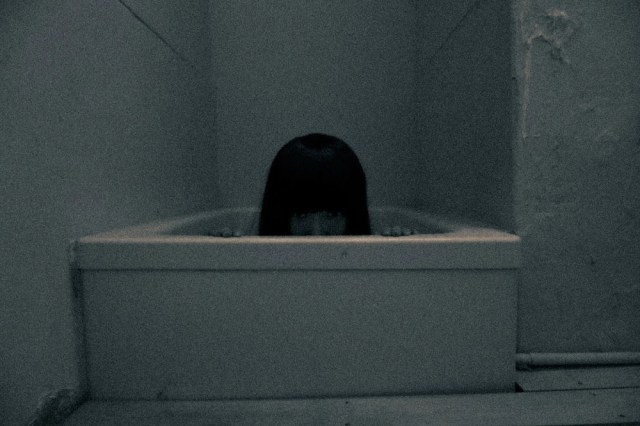
Along with time, money is another always-desirable resource that can influence bath frequency. It’s true that just about every home or apartment in Japan has a bathtub, as shower-only residences are incredibly rare. However, the quality and spaciousness of those bathtubs can vary greatly depending on how luxurious the home is. On the lower end of the economic prosperity scale, cheaper housing will often have only a small, comparatively cramped tub, sometimes in a square shape that only allows you to squat in it, lacking sufficient space to stretch out your legs and really relax.
▼ Oh, yeah, my life is great…

▼ I’ve lived in multiple apartments in Japan with bathtubs just like this one (minus the terrifying ghost girl).
Less expensive apartments also may have the tub and toilet in the same room (as opposed to a separate chamber just for the toilet), and the soothing ambiance of the bath can be somewhat diminished when your head is in arm’s reach of where you poop, making at-home baths less appealing and thus less frequent.
So while the study found a connection between bath frequency and happiness, you could also say that there are connections between bath frequency and both free time and disposable income, both of which are obviously, all else equal, going to contribute to a greater sense of happiness and well-being, as well as lower levels of stress and, by extension, higher quality of sleep. It might not be that frequent baths make people happy, but rather that people who are leading a pretty happy life are the same people who actually can take frequent baths.
Ultimately, “people who take more baths are happier” is probably similar to other studies that have found that people who kiss their spouse goodbye in the morning before going to work make more money. It could be that a smooch gives them extra energy to power through the challenges of the day, or it could be that couples who are regularly both awake and have time for a confirmation of their romantic devotion before work are already making a good enough living that they’re not exhausted and in a mad dash to get to their exhausting job they have to slave away at to make ends meet.
All that said, it’s understandable that Bathclin, as a maker of bath cleaning products, would want to trumpet a connection between bathing and happiness, in order to convince people to clean their bathtubs frequently, which is honestly good advice anyway, just like telling your spouse you love them when you get the chance.
Source: Maido News via Livedoor News
Top image: Pakutaso
Insert images: Pakutaso (1, 2, 3)
● Want to hear about SoraNews24’s latest articles as soon as they’re published? Follow us on Facebook and Twitter!
Follow Casey on Twitter, where he could go for a nice long soak right now.