
Ryokan workers share the little things they appreciate travelers doing before check-out, and the things they’d rather you skip.
When traveling in Japan, a big part of the appeal of staying in a ryokan, or traditional inn, is that spending the night in one gives you a taste of classical Japanese culture. With an elegant minimalism to their interior design and sumptuous multi-course dining, ryokan allow you to experience old-school Japanese hospitality and the tranquil relaxation it aims to provide.
With Japan’s cultural emphasis on mutual consideration, and the underlying atmosphere at many ryokan being that you’re a guest, not just a “customer,” before checking out many travelers feel like they should do something to make things easier for the inn’s workers to get the room ready for the next group that’s coming in. However, it can sometimes be tricky to figure out what sort of guest behaviors are and aren’t appreciated by the staff. So to help clear up some of those quandaries, Japanese broadcaster TV Asahi spoke with a number of ryokan managers and cleaning staff in which four common pre-checkout guest gestures came up, and they found out whether you really should or shouldn’t do them.
1. Should you put all your yukata robes in one spot?
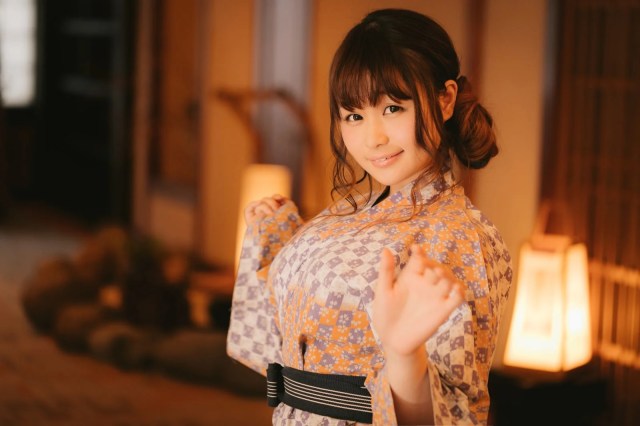
When you check into a ryokan, you’ll always find yukata (lightweight cotton kimono) in your room. Less cumbersome and more comfortable than a formal kimono, and with a simple-to-tie sash, the yukata are provided for you to wear while lounging in your room, and also when using ryokan facilities elsewhere in the building.
So if everyone was wearing a yukata during their stay, should you gather the robes and sashes and set them all in one spot in your room when checking out? Yes, say ryokan operators. If they were used, they’re all going to need to be washed, so assembling them all in the same spot makes it easy for the cleaning staff to bundle them all up and drop them in the laundry cart.
2. Should you fold up your futon?
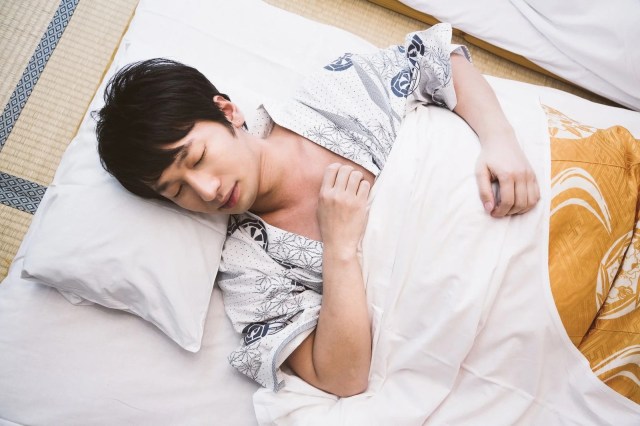
Ryokan have traditional Japanese interiors. That means tatami reed flooring instead of carpet, and futon sleeping mats instead of beds. When you check in, though, the futons will still be folded up and stored in the closet. At some point in the evening, the ryokan staff will come in and lay out a futon for each member of your party.
When morning comes and it’s time to leave, many guests then fold their futon back up. They don’t put them all the way back in the closet, but they’ll fold them in half, and usually push them over to the edge of the room against the wall. This creates more floor space, and there’s probably a sort of unconscious urge to do this since, in traditional Japanese homes where people still use futons on a daily basis, it’s considered sloppy to leave your futon unfurled all day long.
However, when you’re staying in a ryokan, the cleaning staff would greatly appreciate it if you do not fold up your futon. The mat is covered by a top sheet, and there’s also a blanket cover and pillowcase, and all of those linens are going to need to be washed. That means the cleaning staff is going to need to strip the sheets, and they can’t do that if the futons are still folded up, so it’s better to just leave them unfolded when you leave the room to save the staff the hassle of opening them all back up.
3. Should you put the table back where it originally was?
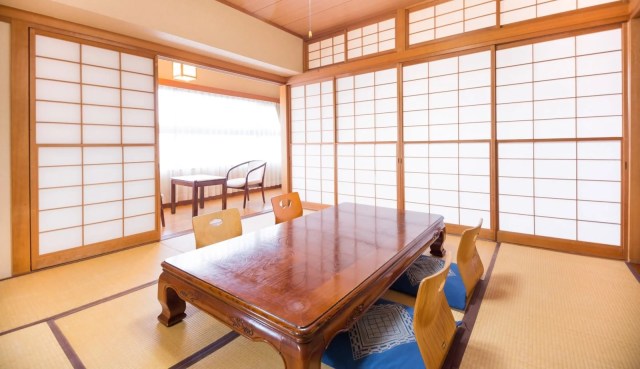
As alluded to above, the layout of a ryokan room is going to change over the course of your stay. When you first arrive, and the futons are all still in the closet, you can expect there to be a table in the center of the room, but it’s not going to stay there the whole time, since eventually you’re going to need that floor space for sleeping. Unlike the bedsheets, the table doesn’t need to be taken to another room for cleaning, so should you put it back in its original position to help tidy up the room before you go home?
The answer is no. Well, technically the answer is that putting the table back doesn’t help, so there’s no need to do it, but effectively that means that you’re probably best off leaving it alone. That’s because regardless of where the table is, the room’s floor needs to be cleaned after you check out, and doing so is going to require moving the table at least once, so that the staff can clean the section of the floor underneath it. So if you put the table back where it originally was, the staff is actually going to have to move it twice (once to clean underneath it, and once more to put it back in its designated starting spot). In addition, since the table was likely moved out of the way to make floorspace for the futons, putting the table back where it started will probably require you to fold up the futons, which, as we discussed above, is something the staff would rather you not do.
4. Should you leave your room’s door unlocked?
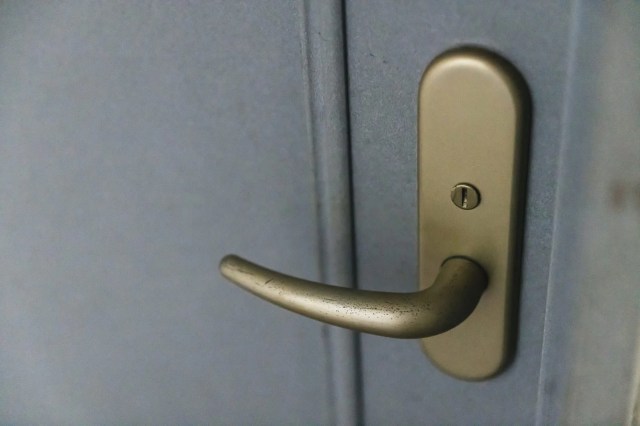
And finally, we come to the very last room-related decision you’ll have to make: Should you lock the door as you head to the front desk to check out, or not?
The ryokan that TV Asahi spoke to say they’d be happiest if their guests left the door unlocked. Since you won’t be coming back to the room before heading home, it’s safe to assume that you’ve already removed all your personal belongings, and while you could supposedly say that locking the room helps protect the hotel’s property, with crime rates being as low as they are in Japan, someone sneaking in to steal the TV or bathroom soaps while the door is unlocked isn’t much of a concern. On the other hand, leaving the door unlocked allows cleaning staff to waltz right in and get to work. This is an especially welcome time-saver in older ryokan that still have physical keys, as opposed to pass cards, since it saves workers a trip to the front desk to pick up the key so that they can get into the room and get to cleaning.
Now, with those four points covered, there’s one other thing to remember. With Japanese culture, and particularly with its more traditional elements, there’s often a preconception that social interactions are rife with opportunities to offend and have your behavior silently judged as shamefully unseemly. In the case of these ryokan pre-checkout scenarios, though, none of them are going to have the staff grinding their teeth and hoping you never come back again, and the fact that even a lot of Japanese people aren’t sure what the best course of action is shows that these aren’t ironclad etiquette rules. They’re simply the ideal, from the ryokan’s point of view, so if you enjoyed your stay they’re a nice, subtle way to indirectly say thank-you to the staff.
Source: TV Asahi via Yahoo! Japan News via Jin
Top image: Pakutaso
Insert images: Pakutaso (1, 2, 3, 4)
● Want to hear about SoraNews24’s latest articles as soon as they’re published? Follow us on Facebook and Twitter!
 Japanese etiquette lesson: Should you fold up your own futon when leaving a ryokan inn?
 Ryokan etiquette: What not to do when staying at a traditional Japanese inn
 Survey reveals the most popular time to slip into a yukata at a traditional Japanese inn
 How should you use the small hiroen in a Japanese ryokan hotel room?
 Hilton Japan apologizes for “disrespectful” ad disparaging traditional Japanese inns
 Starbucks Japan releases new My Fruit³ Frappuccino at only 34 stores around the country
 Ramen restaurant in top Tokyo tourist neighborhood skips price gouging, but how does it taste?
 Public restrooms in Osaka to get in-stall video screens with ads
 Japan’s most popular domestic burger chain adds 100-percent vegan burgers to menu
 Krispy Kreme releases Super Mario doughnuts in Japan for a limited time
 11 never-ending hypnotic GIFs that just made a portion of our weekend disappear mysteriously
 Japan’s ministry of economy reminds us to “use sound judgment” before buying toilet paper
 Virtual idol Hatsune Miku redesigned with look that adds new elements and brings back old ones
 2,000 figures ready for their close-ups at toy exhibition in Ikebukuro – and oh, admission is free!
 A faster, easier way to make cake: Use a rice cooker【SoraKitchen】
 Japanese onsen egg maker from 100-yen store Daiso needs to be on your shopping list
 Tokyo government organizes food truck event to clear out delinquent/homeless teen gathering area
 Cherry blossoms begin blooming in Japan with record-early starts for sakura season
 Nine amazing off-the-beaten-path cherry blossom spots in Japan for yaezakura and shidarezakura
 Stunning central Japan wisteria festival is like a purple fantasy straight out of a Ghibli movie
 Create a tiny Ghibli anime world on your bookshelf with new miniature papercraft art kits
 Studio Ghibli releases the My Neighbour Totoro tea caddy, with a magical self-closing lid
 Japan now has a “for foreign tourists only” Mt. Fuji sightseeing train[Video]
 When will the cherry blossoms reach full bloom in Japan this year?[Forecast]
 Starbucks Japan unveils new sakura cherry blossom collection for hanami season 2026
 Train station platform ramen store closes its doors on half a century of history in Tokyo
 Studio Ghibli releases Catbus pullback keychain that runs like the anime character
 Nine great places to see spring flowers in Japan, as chosen by travelers (with almost no sakura)
 Starbucks Japan releases first-ever Hinamatsuri Girls’ Day Frappuccino
 Studio Ghibli adds new Mother’s Day gift sets to its anime collection in Japan
 Survey asks foreign tourists what bothered them in Japan, more than half gave same answer
 Japan’s human washing machines will go on sale to general public, demos to be held in Tokyo
 Starbucks Japan releases new drinkware and goods for Valentine’s Day
 We deeply regret going into this tunnel on our walk in the mountains of Japan
 Studio Ghibli releases Kodama forest spirits from Princess Mononoke to light up your home
 Starbucks Japan releases new sakura goods and drinkware for cherry blossom season 2026
 Japan’s newest Shinkansen has no seats…or passengers [Video]
 Major Japanese hotel chain says reservations via overseas booking sites may not be valid
 Put sesame oil in your coffee? Japanese maker says it’s the best way to start your day【Taste test】
 No more using real katana for tourism activities, Japan’s National Police Agency says
 Foreign travelers’ lukewarm reactions to traditional Japanese inn food causing changes in Kyoto
 Doll otaku’s plastic bedmate gets loving hospitality from beautiful Japanese hot spring inn
 Learn all about enjoying a traditional Japanese-style ryokan inn from this nine-minute video!
 Japanese travellers give their answers to the Hotel vs. Ryokan Japanese inn debate
 Japanese inn’s first foreign guests disappear without paying – “We feel so betrayed”
 Five things you can do to make hotel staff happy in Japan
 This super cheap, super Japanese-looking Tokyo hotel is a hit with foreign travelers
 Staying at this Tokyo budget hotel feels like visiting your Japanese grandma’s house
 Cheap Japanese ryokan at Kusatsu Onsen is hidden at the back of a traditional store
 Cool traditional Japanese inn lets customers tidy up their room with a click of a button【Video】
 Stay in an eerie Japanese ryokan inn near Tokyo Tower for US$40 a night
 Japanese pot sticker restaurant chain also runs flat-rate hot spring inn, but is it worth staying at?
 Travel back in time to this timeless Japanese hot spring inn from the Taisho period【Photos】
 The pros and cons of working from a Japanese hot spring inn
 Japanese ryokan custom ignites debate after visitors label it sexist
 Super budget-friendly retro Tokyo hotel feels like having your own 1960s Asakusa apartment