

It’s a hairy situation to say the least.
Summer in Japan seems to be getting hotter and longer each year, to the point where I’m wondering how much longer some places will even be habitable for humans. Only a few years back, Japan introduced the Cool Biz initiative, where office employees could go without neckties or jackets to beat the heat. Now, some workplaces here are going all out and breaking with longstanding tradition to allow shorts, because doing otherwise could jeopardize the well-being of employees.
But with these relaxed dress codes comes a new issue, with some people questioning whether men coming to the office with shaggy leg hair could constitute harassment.
▼ It’s hard to view all workplaces equally. Some feel leg hair is inappropriate, while others wouldn’t bat an eye at a topless coworker with an egg taped to his armpit.
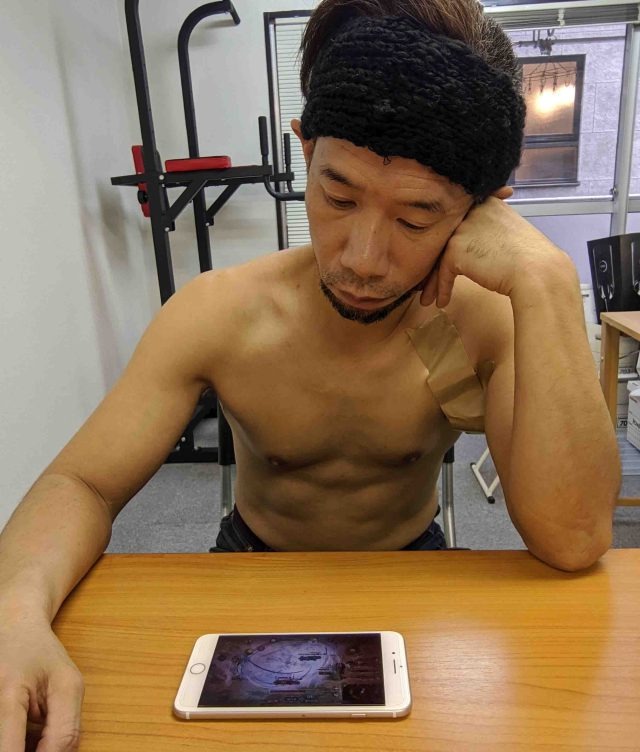
While lawyers commenting on the issue have said it likely isn’t harassment, mainly because feelings of discomfort caused by such hair are due to the personal preferences of the offended party, rather than something that would be universally deemed offensive behavior, it does bring up an interesting question of what is or isn’t harassment in the workplace. As we’ve seen before, Japan has a uniquely large collection of harassment terms, such as power harassment, maternity harassment, and customer harassment. Some of them are casual terms for annoying behavior by coworkers that most people endure, such as “Ohtani harassment” (talking too much about Shohei Ohtani), while others are serious actions that have profound effects on people’s mental and physical well-being.
When legal action is considered in these wildly differing forms of harassment, it is important to know where that line between everyday annoyances and abuse falls. Since it comes in many forms, most people would struggle to make a clear-cut definition of real “harassment” and consider it one of those things where you just kind of know it if you see it.
Even Japanese law tends to steer clear of the H-word. “Sexual harassment” was mentioned in the law books back in the ’70s, but was never specifically defined. In 2019, the Act on Comprehensively Advancing Labor Measures, and Stabilizing the Employment of Workers, and Enriching Workers’ Vocational Lives was updated, making it informally known as the “Power Harassment Prevention Act.” However, this act never even uses the word “harassment,” let alone “power harassment.”
That being said, it does lay out actionable behavior that would generally be considered the definition of power harassment in a court of law:
“In order for an employer to preclude any behavior that is based on behavior that constitutes bullying in the workplace which exceeds the scope necessary and reasonable in the course of business from damaging the work environment of the employer’s workers, the employer must provide consultation to those workers and take measures necessary in terms of employment management, such as developing a necessary system for appropriately handling such behavior.”
That legalese might be hard to parse, but it’s basically saying that it’s the employer’s responsibility to ensure that superior-subordinate relationships do not exceed that needed to conduct business and that no behavior that harms employees or their working environment occurs.
By this definition and its very crucial use of the word “and,” you could argue that a man with intense leg hair could be accused of power harassment on the condition he was a superior to the person who was offended because he was disrupting the work environment and could not be rebuked because of his status. On the other hand, if the hairy-legged man was an equal or subordinate, there is no law that covers his abundance of sub-waist follicles and their effect on those around him.
Interestingly, that section of the Power Harassment Prevention Act could also potentially support the employer in demanding that the man shave his legs in the spirit of protecting the work environment, provided he was a superior to other employees who felt offended by them. But such a demand would probably also be seen as violating the man’s constitutional rights, as has happened in numerous cases of overly strict policies in Japan regarding personal appearance, like train operators being forbidden to grow beards.
▼ Especially since most affordable leg-hair removal methods are quite painful

So, to answer the titular question of whether highly visible leg hair is a form of harassment… Possibly?
As we’ve just seen, there are no rules or definitions regarding what generally actionable harassment is exactly in Japan, so it’s really anyone’s guess and dependent on individual circumstances. Nevertheless, society here has been very actively exploring the topic of harassment both seriously and playfully in recent years, and as a result, may develop a keener sense of the concept down the road by continuing to ask questions and talking more about it openly.
Source: Bengoshi.com, Act on Comprehensively Advancing Labor Measures, and Stabilizing the Employment of Workers, and Enriching Workers’ Vocational Lives, Act on Equal Opportunity and Treatment between Men and Women in Employment
Images: © SoraNews24
● Want to hear about SoraNews24’s latest articles as soon as they’re published? Follow us on Facebook and Twitter!
 Inside the mind of a Japanese manager accused of “power harassment”
 Survey by Japanese ministry reveals high rates of “maternity harassment” in workplace
 Labor ministry employee power harassed by his own power harassment counselor
 ‘Power harrassment’ in Japan’s police force blamed for officer’s suicide
 Why you should be worried if someone calls you “Uehara-san” in the Japanese workplace
 Is Daiso’s microwave Japanese rolled omelet maker worth your time and money? [Taste test]
 Starbucks Japan opens new cafe and art gallery in top Tokyo tourist neighbourhood
 Real-life Professor Oak? Pokémon Company recruiting PhD holders in science and agriculture
 Thai anti-drinking PSA is surprisingly compelling 【Video】
 Kagoshima conveyor belt sushi chain Mekkemon rises above the rest with its special secret weapon
 Better living through gambling at Japan’s “Day Service Las Vegas”
 Studio Ghibli releases Catbus pullback keychain that runs like the anime character
 Locust and wormwood soft serve ice cream now available in Japan!
 Häagen-Dazs Japan releases new ASMR ice cream called “Rocky Crunchy!”
 Want to try this super popular ramen shop, but can’t get a reservation? We’ve got tips for you
 Starbucks Japan unveils new sakura cherry blossom collection for hanami season 2026
 Nine great places to see spring flowers in Japan, as chosen by travelers (with almost no sakura)
 Japan’s cherry blossom season predicted to start earlier than we’d thought, especially in Tokyo
 Japanese government planning higher ticket prices for foreign tourists at Tokyo National Museum
 Starbucks Japan releases a new Cream Puff Frappuccino for a limited time
 Silicone testicle covers banned from Japanese sauna following cups being left behind and on shelves
 Studio Ghibli now sells Ursula’s backpack from Kiki’s Delivery Service at its anime shop in Japan
 Is Japan’s Crab-shaped Cup Ramen Timer worth the hype?
 One Piece creator has hidden secret of anime treasure’s identity in chest at bottom of real-world ocean
 Is Tokyo Station’s startlingly expensive wagyu bento boxed lunch worth its high price?[Taste test]
 Japan’s newest Shinkansen has no seats…or passengers [Video]
 Starbucks Japan releases new sakura goods and drinkware for cherry blossom season 2026
 Foreigners accounting for over 80 percent of off-course skiers needing rescue in Japan’s Hokkaido
 Super-salty pizza sends six kids to the hospital in Japan, linguistics blamed
 Starbucks Japan unveils new sakura Frappuccino for cherry blossom season 2026
 Foreign tourists in Japan will get free Shinkansen tickets to promote regional tourism
 The 10 most annoying things foreign tourists do on Japanese trains, according to locals
 Naruto and Converse team up for new line of shinobi sneakers[Photos]
 Take a trip to Japan’s Dododo Land, the most irritating place on Earth
 Survey asks foreign tourists what bothered them in Japan, more than half gave same answer
 Japan’s human washing machines will go on sale to general public, demos to be held in Tokyo
 Starbucks Japan releases new drinkware and goods for Valentine’s Day
 We deeply regret going into this tunnel on our walk in the mountains of Japan
 Studio Ghibli releases Kodama forest spirits from Princess Mononoke to light up your home
 Major Japanese hotel chain says reservations via overseas booking sites may not be valid
 Put sesame oil in your coffee? Japanese maker says it’s the best way to start your day【Taste test】
 No more using real katana for tourism activities, Japan’s National Police Agency says
 Could Pen-Pineapple-Apple-Pen be the start of a new form of workplace harassment in Japan?
 Giri obligation chocolates seen as power harassment, more Japanese companies ban practice
 20 signs that a woman should think about quitting the Japanese company she works for
 Osaka city employee suspended and demoted for verbally abusing boss
 One in four surveyed Japanese workers admits to wanting to kill boss, Osaka quake helps show why
 Japanese company that will quit your job for you sees rush of clients to start 2020
 Japanese worker orders bento lunch, gets punished with televised apology and docked pay
 New employee late to work in Japan shocks older coworkers by blaming the screw-up on “Mama”
 Top 11 tweets to make you feel glad you don’t work in Japan
 Japanese job-quitting service contacted by other job-quitting service because employee wants to quit
 Meetings and more meetings: Foreigners list the pros and cons of working at a Japanese company
 British man arrested for biting Japanese police officer during shokumu shitsumon questioning