
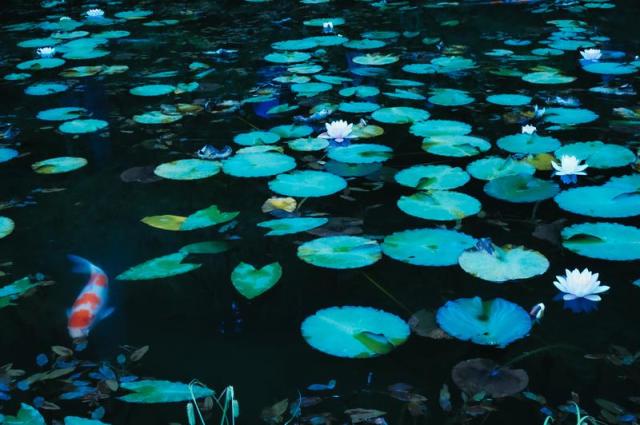
Koi and coins don’t mix.
Oshino Hakkai is an idyllic spot nestled in the Fuji Five Lakes region of Yamanashi Prefecture. Traditional thatched-roof buildings are scattered among eight pristine spring-fed ponds. Combined with a spectacular view of Mt. Fuji, it’s a popular tourist spot that attracts people from all over Japan and the world.
And for years, they’ve been dealing with a problem, and it only gets worse as foreign tourism increases. That problem is that people from other countries insist on throwing coins into the ponds, presumably to make a wish, as is done in many countries around the world.
▼ A video from back in 2018 shows how they have to regularly send divers in to fetch the coins. They rely on the help of volunteers to keep the ponds coin-free.
First, from a cultural standpoint, throwing coins into random bodies of water is not a thing in Japan. Outside of certain religious sites, such as some shrines that honour Benzaiten, the goddess of water, throwing coins into water is frowned upon as it’s more akin to littering, especially when it’s in such pristine ponds that are fed by water from Mt. Fuji, a sacred mountain.
▼ A more recent news clip interviewing Japanese visitors at Oshino Hakkai. Although it’s in Japanese, the disappointment on their faces is clear.
Aside from cultural taboos, there are lots of practical reasons for not throwing coins into the ponds. Namely, it’s poisoning the fish.
As these ponds are filled with water from the melted snow of Mt. Fuji that has filtered through the ground for about a decade, this highly pristine water has given birth to ecosystems filled with various kinds of bacteria, plant life, and fish.
As a result, it has a higher pH level than fountain water, and when combined with the bacteria living in it, the breaking down of metal in the coins speeds up considerably. As such, elements such as copper and zinc are steadily released into the small volume of water in the pond, making it increasingly toxic to the koi that live there. It also gets absorbed by the sludge at the bottom of the pond, which is eaten by creatures like shrimp and absorbed by plants, infiltrating the entire food chain of the pond.
In other words, each coin is essentially a steady-release tablet of harmful chemicals. In 2024, some 4,400 of these poison pills were tossed into Oshino Hakkai’s ponds, and last year that number skyrocketed to 18,000. Volunteers are working hard to constantly retrieve the thousands of coins, but at this rate, they might not be able to manage it.
Luckily, for those who simply must throw a coin to make a wish, Japan has long had the perfect alternative known as a saisenbako. These wooden boxes with bars across the top are usually found in Shinto shrines, and have the sole purpose of being something to throw coins into. The coins are offerings to the enshrined gods, and the noise they make is said to awaken them so you may make a wish.
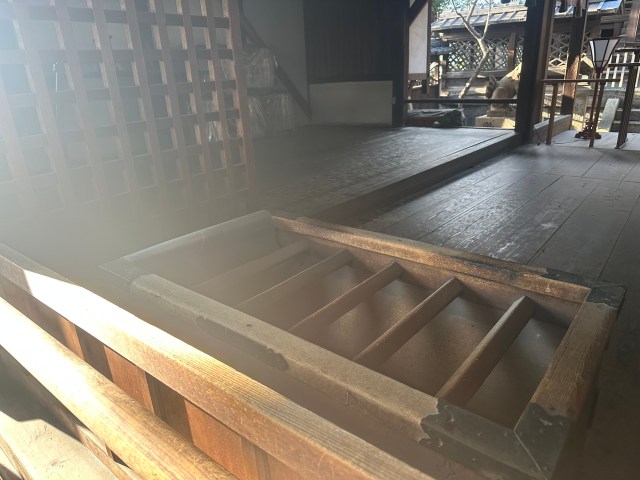
Oshino Hakkai actually set up saisenbako near the ponds in the hopes people would put their coins there instead of the water, but I wouldn’t be surprised if it’s been overlooked or misunderstood by most foreign tourists. So, let’s all do our part and spread the word that these boxes are basically Japan’s version of wishing wells.
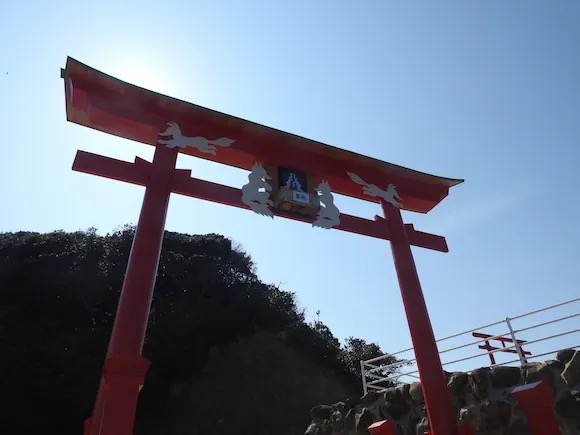
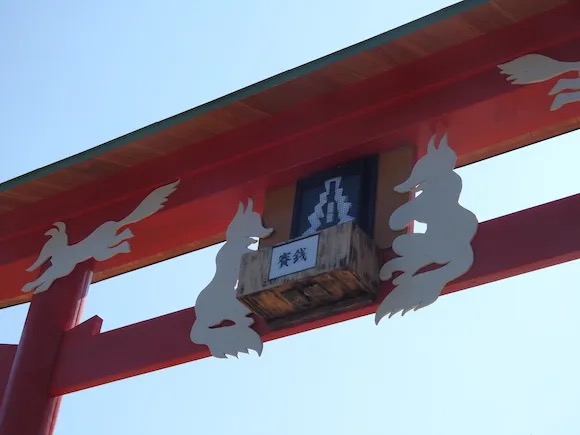
▼ Most of the time, the boxes are placed right in the middle of the shrine for easy access, but some places make a sport of it, like Motonosumi Shrine in Yamaguchi Prefecture. There, the saisenbako is mounted on a tori gate a few meters in the air.
This problem isn’t unique to Oshino Hakkai, and as a general rule, you shouldn’t throw coins into any body of water in Japan. There may be exceptions to the rule here and there, but unless you see or hear something explicitly saying to do it, don’t. Even if you see coins at the bottom, there’s a very good chance those were from other people who didn’t know what they were doing.
▼ A news report shows similar trends in a fountain outside Kanazawa Station and at a shrine in Saitama Prefecture that solved the problem by encouraging visitors to place coins on a statue instead of throwing them in the water.
Another fun alternative to slowly killing fish is Zeniarai Benzaiten Ugafuku Shrine in Kanagawa Prefecture. The first part of its name literally means “money washing,” and that’s exactly what you can do there. At sites like these, visitors are encouraged to cleanse their money with water as it is believed that it will attract more money.
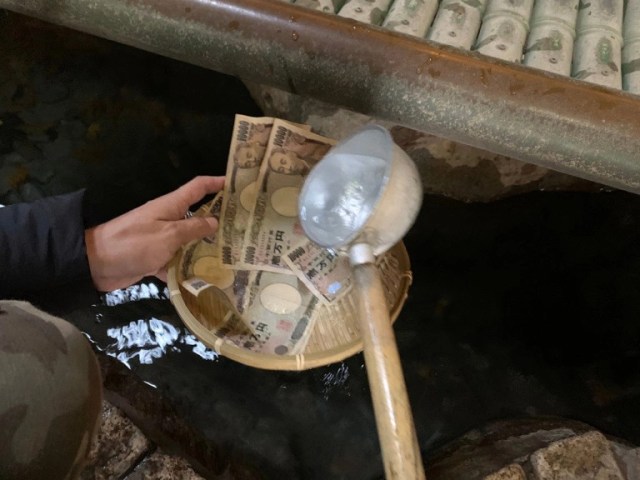
There are lots of fun other ways to make wishes and get good luck in Japan to discover. Hopefully, you can have fun experiencing some when you visit. All Japan asks is that you remember to toss your coins into boxes rather than water to make a wish and give the poor volunteers of Oshino Hakkai a break.
Source: FNN Prime Online
Top image: Pakutaso
Insert images: ©SoraNews24
● Want to hear about SoraNews24’s latest articles as soon as they’re published? Follow us on Facebook and Twitter!
 Japan reportedly adding Japanese language skill requirement to most common foreigner work visa
 7-Eleven Japan’s new baked-in-store sweet treat is only available in three parts of the country
 You can assemble a well-balanced team of Pokémon, them eat them, thanks to Japanese cake chain
 Famous koi ponds overwhelmed with tourists throwing thousands of coins in them
 Japan’s prime minister exchanges Dragon Ball kamehamehas with president of France[Video]
 Japan reportedly adding Japanese language skill requirement to most common foreigner work visa
 7-Eleven Japan’s new baked-in-store sweet treat is only available in three parts of the country
 You can assemble a well-balanced team of Pokémon, them eat them, thanks to Japanese cake chain
 Famous koi ponds overwhelmed with tourists throwing thousands of coins in them
 Japan’s prime minister exchanges Dragon Ball kamehamehas with president of France[Video]
 New Japanese KitKats come in sakura flavour, with poetic symbolism for success
 Pokémon and Ikea Japan cross over into each other’s worlds with collaboration events
 Peanuts and Coke becomes a viral hit in Japan, but is it a trend worth joining?
 Japan’s full-facemask Ninja Parka still lets you eat ice cream[Photos]
 Why is Yoshinoya called Yoshinoya?
 Pokémon lacquerware series expands for Year of the Horse with new handcrafted design[Video]
 Starbucks Japan closing only Shinkansen platform branch for popularity-triggered renovations
 Two food hacks take Japan’s convenience store fried chicken to amazing new sandwich heights
 Tokyo’s best museum for foreign travelers finally reopens after being closed for four years
 Totoro Fund line of beautiful artwork and apparel lets you help the real-world Totoro Forest
 Fading Tokyo – Searching for signs of the Showa era as local neighborhoods evolve[Photos]
 Tokyo turns its phone booths into free Wi-Fi hotspots, and here’s how to use them
 Japan now has a special desk for people who work at home with a pet cat[Photos]
 Famous Tokyo cherry blossom spot installs view-blocking screens to fight overcrowding[Video]
 Uniqlo announces new T-shirts for One Piece, Naruto and more for manga publisher’s 100th birthday
 Train station platform ramen store closes its doors on half a century of history in Tokyo
 Starbucks Japan releases new My Fruit³ Frappuccino at only 34 stores around the country
 Studio Ghibli releases Catbus pullback keychain that runs like the anime character
 Krispy Kreme releases Super Mario doughnuts in Japan for a limited time
 Japanese onsen egg maker from 100-yen store Daiso needs to be on your shopping list
 Nine great places to see spring flowers in Japan, as chosen by travelers (with almost no sakura)
 Survey asks foreign tourists what bothered them in Japan, more than half gave same answer
 Japan’s human washing machines will go on sale to general public, demos to be held in Tokyo
 Starbucks Japan releases new drinkware and goods for Valentine’s Day
 We deeply regret going into this tunnel on our walk in the mountains of Japan
 Studio Ghibli releases Kodama forest spirits from Princess Mononoke to light up your home
 Starbucks Japan releases new sakura goods and drinkware for cherry blossom season 2026
 Japan’s newest Shinkansen has no seats…or passengers [Video]
 Major Japanese hotel chain says reservations via overseas booking sites may not be valid
 Put sesame oil in your coffee? Japanese maker says it’s the best way to start your day【Taste test】
 No more using real katana for tourism activities, Japan’s National Police Agency says
 New Japanese KitKats come in sakura flavour, with poetic symbolism for success
 Pokémon and Ikea Japan cross over into each other’s worlds with collaboration events
 Peanuts and Coke becomes a viral hit in Japan, but is it a trend worth joining?
 Japan’s full-facemask Ninja Parka still lets you eat ice cream[Photos]
 Why is Yoshinoya called Yoshinoya?
 Amazing photography from the 1860s shows us some of Japan’s very last samurai
 Japan now has stricter requirements for foreigners applying for citizenship
 The etiquette rules for visiting Shinto shrines in Japan
 You can now visit a recreation of Evangelion’s Tokyo-3 and live there in miniature form in【Pics】
 Fukuoka support group using metaverse to reach out to hikkikomori
 Tokyo’s best museum for foreign travelers finally reopens after being closed for four years