

In college, I had a classmate who, almost every day, would talk about the list of tuning mods he had planned for his car. Sometimes, he’d talk about his plans to order some sweet JDM parts from Honda’s in-house aftermarket division, Mugen, and you can’t imagine how much it drove me up the walls.
I didn’t begrudge the guy his daydream, but what I couldn’t take was the way he pronounced it “Myu-gen” instead of “Moo-gen,” adding in a phantom Y sound that has no place in the Japanese word for “without limits.”
But hey, a lot of people in the U.S. mispronounce it that way, and can you blame them? Pronouncing foreign words can be tricky, which is why there’s now a video which will teach you the correct way to pronounce the names of all of Japan’s major car makers. And, once you’ve mastered them all, we’ll even explain what they mean.
Before we get to the video itself, here’s a quick and simple guide to how to pronounce vowel sounds in Japanese:
A as in “father”
E as in “every”
I as in the last vowel sound in “macaroni”
O as in “only”
U as in the middle part of “soon”, but a bit shorter
So, let’s see that in action with a native speaker in this video from Mighty Car Mods.

But now that we know how to say them, what do they mean?
Nissan / 日産
Nissan’s name is pretty straightforward. The kanji 日 means “sun,” but is also the first character in what the Japanese people call their county, Nihon/日本. Combine that with san, meaning “production,” and Nissan’s name essentially works out to “Japanese-made.”
Subaru / スバル
Like a lot of Japanese car manufacturers, Subaru chooses to write its name in phonetic katakana instead of kanji, giving it a modern, technological feel. If you were to render Subaru in kanji, it’d come out as 昴, the Pleiades, the group of stars also known as the Seven Sisters, all of which appear as part of the Subaru logo.
Mitsubishi / 三菱
Linguistically, you could debate whether the bishi portion should be translated as “caltrop” or “diamond.” Mitsubishi itself prefers the latter, which would make its name literally “three diamonds,” which are exactly what make up the company’s emblem.
Suzuki / スズキ
Suzuki also opts for all katakana, and bears the same name as company founder Michio Suzuki, who began his business by building automated weaving looms. One of the most common names in Japan, Suzuki literally means “Bell Tree,” giving it a vague but refined ring.
Toyota / トヨタ
Similar to Suzuki, Toyota started out in looms, and has a name that’s almost the same as that of founder Kiichiro Toyoda, whose surname means “fertile farm field.”
The automotive division eventually decided to switch to a katakana name, and changing the last syllable from a “da” to a “ta” knocked two trailing brush strokes off when writing the name, giving it better visual balance and an auspicious eight-stroke count.
Honda / 本田 / ホンダ
Honda seems to go back and forth as to whether it wants to write its name in katakana or kanji. Either way, though, the origin is founder and motorsports enthusiast Soichiro Honda, and means “original field” or “main field.”
Lexus / レクサス
So how did a Japanese company end up with an L in its name, when the Japanese language doesn’t even have that sound? The answer is that Lexus didn’t start in Japan, or even exist there until 2005. Parent company Toyota established the marque with the aim of taking on high-end rivals such as Mercedes-Benz and BMW, with a specific eye on succeeding in the American market. Competing theories say the moniker is either a blend of “luxury” and “elegance,” or code for “luxury exports to the U.S.”
Daihatsu / ダイハツ
In contrast to the English background to Lexus’, Daihatsu’s name is as Japanese as can be. The company was originally known as Osaka Hatsudouki, written in kanji as 大阪発動機 and meaning “Osaka Motors,” as a tip of the hat to the city where the compact automaker is headquartered. Cherry-picking the 大 from Osaka, which can also be pronounced “dai,” and the 発 from Hatsudouki gave the company the much shorter name Daihatsu.
Mazda / マツダ
Finally, Mazda has just about the most complicated name on this list, so much so that there’s even room for debate on whether or not the company’s in-house pronunciation itself is accurate.
The company was founded by Jujiro Matsuda, who has a fairly ordinary Japanese family name meaning “field of pines.” However, when rendering the automaker’s name in English, the decision was made to change Matsuda to Mazda, inspired by the Zoroastrian god of light and wisdom, Ahura Mazda.
But while the company’s English spelling was changed, its pronunciation, at least in Japan, never was. So while “Mazda” is written on the side of the corporate headquarters in Hiroshima, everyone in Japan still calls the company “Matsuda” in conversation, with a hard T and noticeable U.
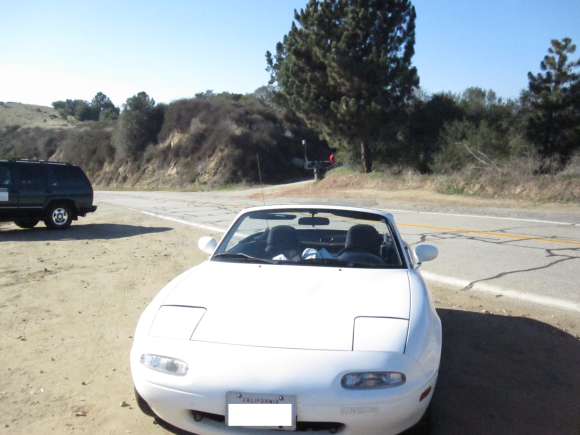
So which is it, field of pines or god of light? We’re going to dodge the judgment and say it’s both. After all, a connection to sunshine and scenery seems like a pretty good fit for the company behind the world’s most popular convertible.
Video source: Autoblog
Top image: YouTube
Insert images: YouTube, RocketNews24
 10 car names Japanese bloggers think are funny to foreigners (and 8 that actually are!)
 Tokyo Motor Show 2013: Cars! Crowds! Comely models! 【Photos】
 Exhibit of globally popular ’80s and ’90s Japanese cars comes to Toyota Automobile Museum
 Beautiful models and cool cars from the Japan Mobility Show【Photos】
 “Wait…what?” That’s not Japanese! Clever American car commercial tricks viewers 【Video】
 Starbucks Japan closing only Shinkansen platform branch for popularity-triggered renovations
 Pokémon and Ikea Japan cross over into each other’s worlds with collaboration events
 Can a downtown Tokyo super sento bathhouse beat a hotel for a one-night stay?
 Beautiful Ghibli earrings allow you to finally reunite two of the studio’s star-crossed lovers
 Tokyo turns its phone booths into free Wi-Fi hotspots, and here’s how to use them
 A Kyoto factory vending machine sells gourmet mystery meals at bargain prices
 Starbucks Japan unveils epic Frappuccino hunt with five to find in new Star birthday campaign
 Japanese masturbatory aid and insect repellent companies collab on a new product
 Two food hacks take Japan’s convenience store fried chicken to amazing new sandwich heights
 Nintendo’s Animal Crossing crosses over into Japanese convenience store cosmetics line[Photos]
 Tokyo’s best museum for foreign travelers finally reopens after being closed for four years
 Pokémon lacquerware series expands for Year of the Horse with new handcrafted design[Video]
 Famous Tokyo cherry blossom spot installs view-blocking screens to fight overcrowding[Video]
 Tokyo subway and almost all Tokyo train lines now accepting credit card tap payments
 Fading Tokyo – Searching for signs of the Showa era as local neighborhoods evolve[Photos]
 Totoro Fund line of beautiful artwork and apparel lets you help the real-world Totoro Forest
 Studio Ghibli adds new My Neighbour Totoro 2026 Corn Gift to its anime store for Mother’s Day
 Japan now has a special desk for people who work at home with a pet cat[Photos]
 Uniqlo announces new T-shirts for One Piece, Naruto and more for manga publisher’s 100th birthday
 Train station platform ramen store closes its doors on half a century of history in Tokyo
 Starbucks Japan releases new My Fruit³ Frappuccino at only 34 stores around the country
 Studio Ghibli releases Catbus pullback keychain that runs like the anime character
 Krispy Kreme releases Super Mario doughnuts in Japan for a limited time
 Japanese onsen egg maker from 100-yen store Daiso needs to be on your shopping list
 Nine great places to see spring flowers in Japan, as chosen by travelers (with almost no sakura)
 Survey asks foreign tourists what bothered them in Japan, more than half gave same answer
 Japan’s human washing machines will go on sale to general public, demos to be held in Tokyo
 Starbucks Japan releases new drinkware and goods for Valentine’s Day
 We deeply regret going into this tunnel on our walk in the mountains of Japan
 Studio Ghibli releases Kodama forest spirits from Princess Mononoke to light up your home
 Starbucks Japan releases new sakura goods and drinkware for cherry blossom season 2026
 Japan’s newest Shinkansen has no seats…or passengers [Video]
 Major Japanese hotel chain says reservations via overseas booking sites may not be valid
 Put sesame oil in your coffee? Japanese maker says it’s the best way to start your day【Taste test】
 No more using real katana for tourism activities, Japan’s National Police Agency says
 New smartphone game turns car models into anime girls with model-worthy looks
 Suzuki CEO tells reporters that only poor people buy his company’s cars
 Every weekend is an itasha car show at Akihabara’s UDX parking garage
 Subaru made a car called the Subaru FU*KS, and here’s how the name could have been even dirtier
 Twitter users say Japanese Prime Minister’s name is hiding in the kanji for Japan’s new era name
 Japanese elementary school student teaches us all how to pronounce English like a native speaker
 12 strange Japanese names for Western sports, from “fighting ball” to “reject ball”
 How to tell Japanese’s two most confusing, nearly identical characters apart from each other
 Clever font sneaks pronunciation guide for English speakers into Japanese katakana characters
 Japanese netizens give their thoughts on how English has changed the meaning of “senpai”
 What does a kanji with 12 “kuchi” radicals mean? A look at weird, forgotten Japanese characters
 Japanese government will check and judge new baby name pronunciations, presents guidelines
 Princesses, fruits, and blacksmiths: Study reveals the 30 most unusual family names in Japan
 How do you pronounce “Among Us” in Japanese? Simple question has linguistically deep answer