Summer is almost upon us, and that means it’s time to get out your yukata and head to the local festival or fireworks display. Of course, with everyone else wearing a yukata, it can be hard to find something that really pops and stands out. Thankfully, Tsukikageya, a Tokyo-based specialty yukata shop, has just what you need to look as baller as you feel.
We stopped by the store one cloudy afternoon to take a look around and talk with Natsuki, owner and designer, about her unique yukata designs and inspiration. Check out our chat and photos below!
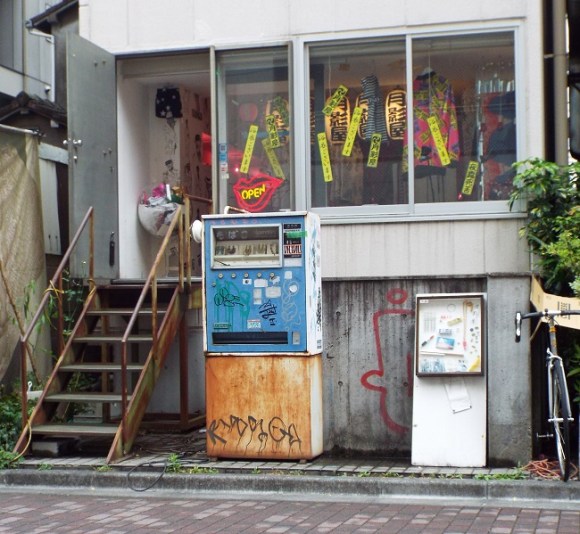
Tsukikageya, pictured above, is located in Shibuya Ward just a few blocks from Yoyogi Park in a building that looks old and slightly run down. While that might seem like a somewhat odd location for one of Japan’s most talked-about yukata designers, the juxtaposition of old and new is possibly the perfect embodiment of the spirit with which Natsuki Shigeta runs her store. A graduate of Nihon University, Natsuki studied architecture in university — a far cry from her current career designing and selling yukata!
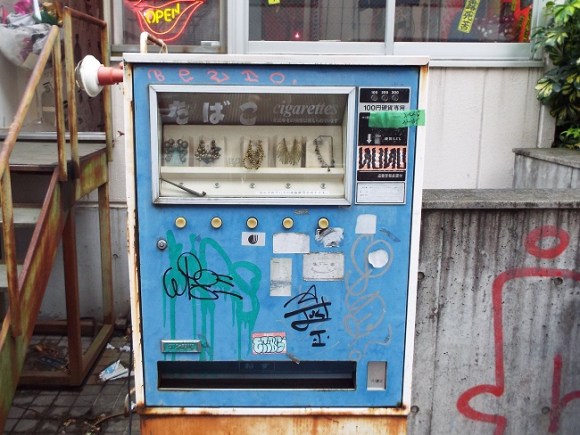
You may be wondering how she decided to switch tracks and what inspired her to take up this profession. Many have asked her, but you might be disappointed with the answer.
“That’s the most difficult question!” she laughs. “Everyone asks me, but there really wasn’t anything. One day, I just decided to make yukata.”
“You never had a long-burning passion to make yukata?” we asked. “Nope! My family never even had anything at all to with kimono or anything like that.”
▼ Just a few of Natsuki’s designs, ranging from the ultra-new to the traditional.
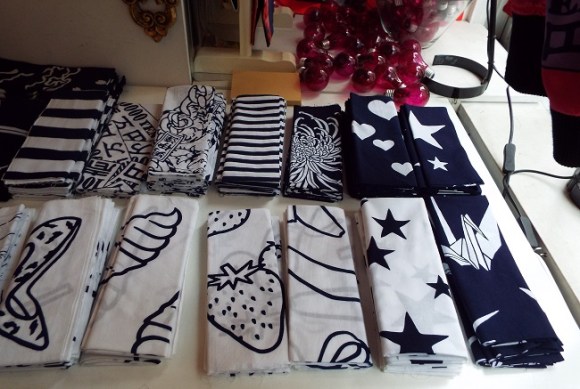
Obviously, Natsuki’s designs tend to have a contemporary, rock ‘n’ roll feel to them. I couldn’t help thinking of ’70s punk fashion, and wondered if she just didn’t like traditional yukata designs.
“No! I do like traditional designs too. Look;” she points to a white flower design on dark blue, “this is a very traditional design.” She explains that each year she sits down to draw four or five designs, inspired pretty much only by whatever comes to mind — there’s nothing set about how she comes up with her designs. In fact, she tells me, she thinks her traditional designs might be better than the designs of other more traditional yukata designers.
▼ The only rule is…there are no rules?
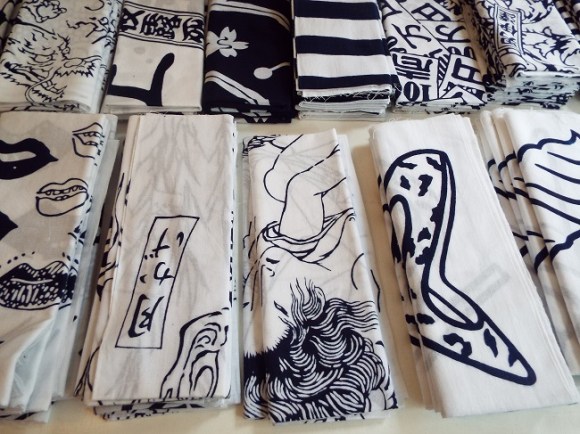
So, where does Natsuki’s inspiration come from? She explains that while she enjoys traditional Japanese culture like kabuki, she doesn’t have any direct inspiration. “I don’t know either! It just comes to me sometimes. Sometimes an idea will just hit me when I’m out drinking with friends.”
But surely, I suggest, she must have been inspired by rock music.
While writers will often say she likes rock music in articles about her designs, she’s adamant, “I’ve never said anything like that. It’s fine if people think that based on the results, but that’s not how I approach it.”
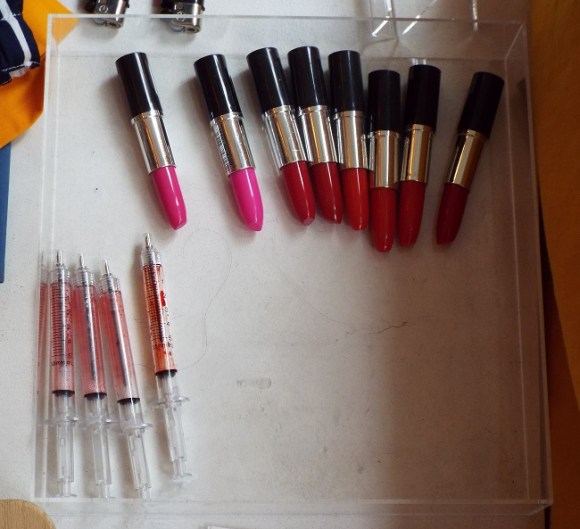
I’m a bit surprised. “So, what about the design with the pills and syringes? It seems very rock ‘n’ roll to me.”
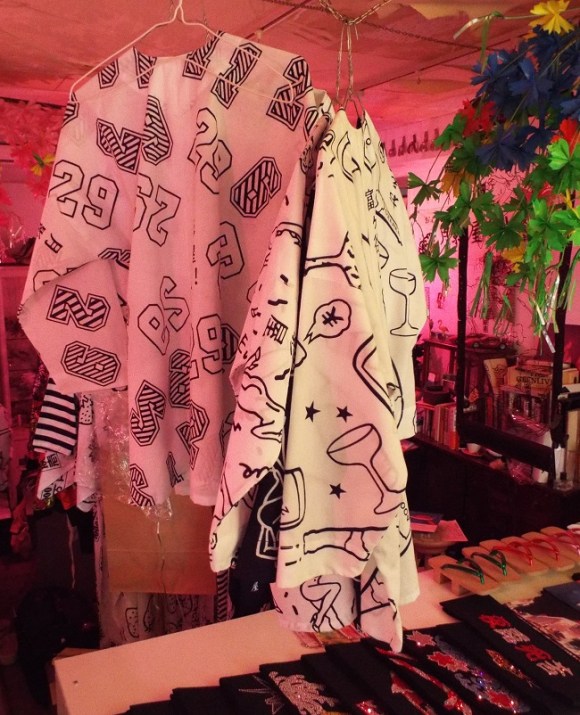
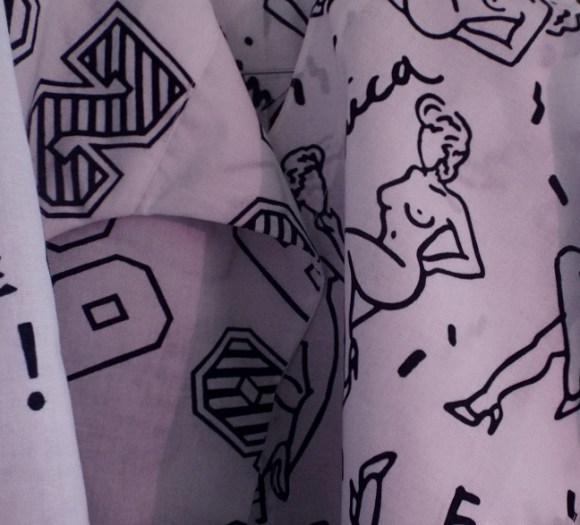
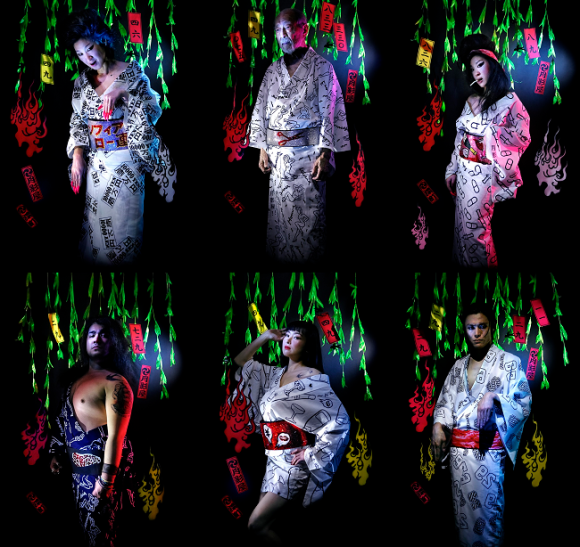
“Actually, I was thinking about ghosts this year,” Natsuki explains. She adds that a friend noted a certain similarity between herself and Amy Winehouse, who died recently. “So, I got to thinking, wouldn’t it be cool to have a photo of myself as a ghost, kind of looking like Amy?”
“If there is one thing that I get inspiration from,” she continues, “it’s the final visuals.” She points to the model photos lining the wall. “I don’t think of one design at a time. Instead, I think of the final visual!” Each year, Natsuki and produces a photo shoot of models, all of whom are friends and appear year after year, wearing the designs. Her designs are based more around the image she has for the final visual theme.
In some ways, Natsuki is more like an “image creator” than a yukata designer. She explains that after getting an idea for the final theme, she creates something to match the personality of each of her models. The process could be compared to establishing a one-scene play.
▼ The model in the photos below is the father of one of her best friends.

Natsuki’s designs range from the traditional to the unconventional, but all of them are certainly eye-catching. This might lead you to think that most of her customers are youngsters, but you’d be wrong. “It seems like I should have a lot of young customers, but actually…” she pauses, looking around the room, “my yukata are kind of expensive, right? So I don’t see a lot of young people. There are a few who save up money for a few years, but generally not.”
To my surprise, Natsuki explains that most of her clients range from “their late twenties to their mid-forties”. The designer emphasizes, though, that it’s mostly people who have a real love of fashion that patronize her shop.
That makes sense, but, when you consider some of the more extravagant designs she produces, you have to wonder where people are wearing them.
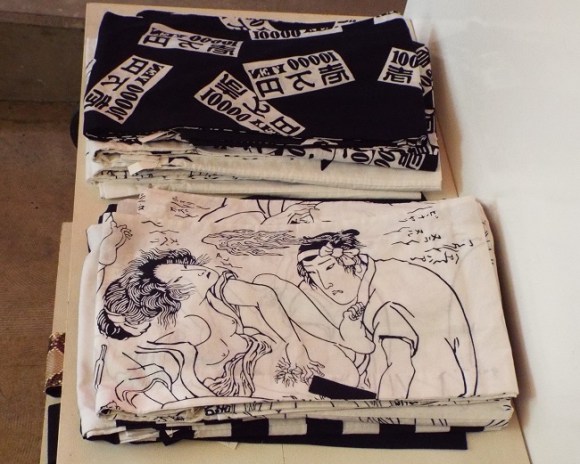
Natsuki explains that people actually wear them to a wide variety events from fireworks displays to festivals. However, people also wear them to the club or even go out specifically with the intention of showing off their unique purchases. Smiling, I remark that it must surely be embarrassing to wear designs like the one pictured above to a festive, but I’m quickly corrected.
“Actually, they’re quite convenient!” It’s impossible not to notice a Tsukikageya design even in a crowd, so her patrons might actually find them useful, with people stepping back to gawk. “And it makes it easier for your friends to find you!”
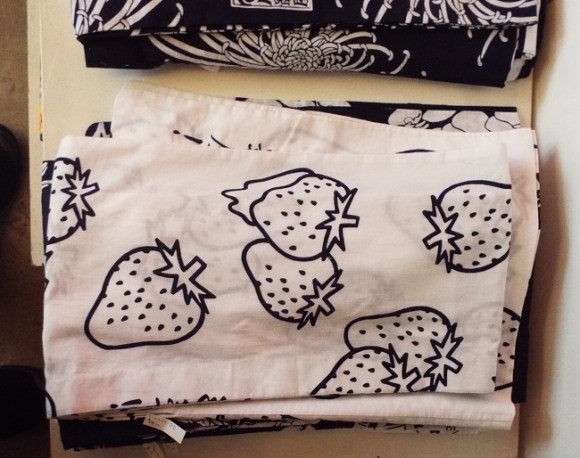
At this point, I have to address a burning question I’ve had since I discovered the shop. In an old interview from 2007, Natsuki mentioned that there weren’t as many artisans making geta (the Japanese wooden “sandals” that are worn with yukata), obi (the wide belts worn with yukata and kimono), or even the yukata themselves. At the time she expressed some concern about there not being enough artisans to keep producing her designs in the future. Was that still the case?
“It depends on the item,” she tells me, pointing to a row of geta. “Like these. The artisan who makes them can’t do it anymore, so I’m looking for someone else who can. But for yukata, […] there are a lot more young people working with them, so that’s not much to worry about.”
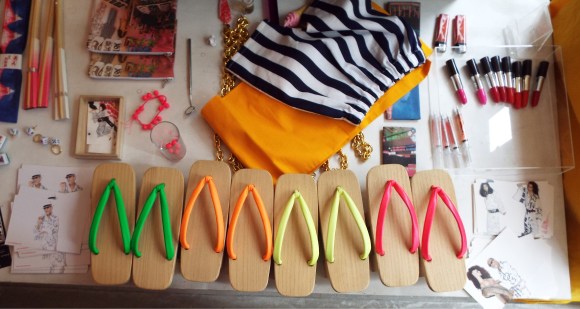
It’s a bit of a relief to hear that since, as we learned from the Japanese katana maker last month, the number of traditional Japanese artisans seems to be dwindling. I can’t help asking, “Were you looking to possibly increase the number of artisans by creating cool designs?”
For a moment, Natsuki becomes very serious. “That’s been one result, but I never really thought about it at first!” She laughs suddenly. “I was just thinking about the visual!” However, she’s not unsympathetic to the artisans’ circumstances and explains that she actually really like “old” things from kabuki to classic bands and singers from the 60s and 70s.
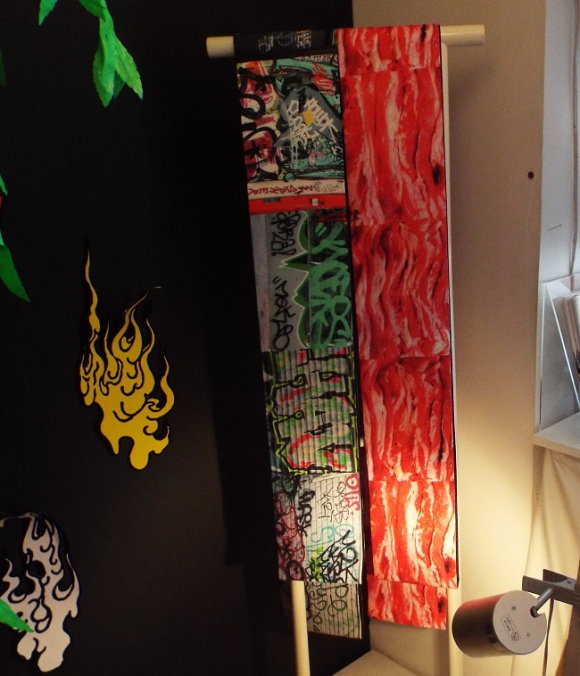
Nevertheless, she’s on the forefront of yukata fashion. Perhaps the best example are her colorful obi, like the “printed” ones below. “I’m not sure, but I think I was the first to produce something like this. And everyone else copied me.”
▼ The graffiti image is actually a photo Natsuki took in Paris.

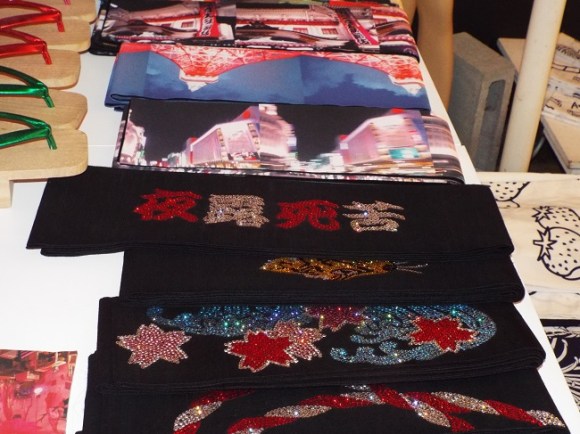
▼ She also produces these “sparkling” obi. The kanji can be read as
“yoroshiku,” basically a combination of “please” and “I’m counting on
you,” but it’s written with the kanji for “night,” “mist,” “death,” and
“suffering.” It doesn’t have any special meaning — it just looks cool.
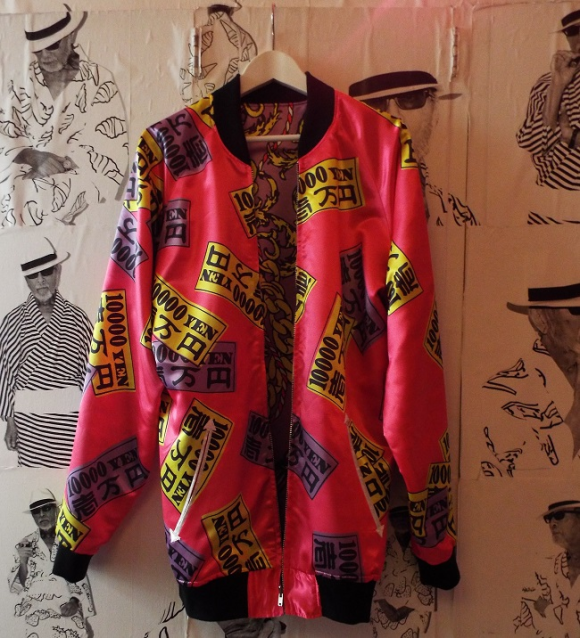
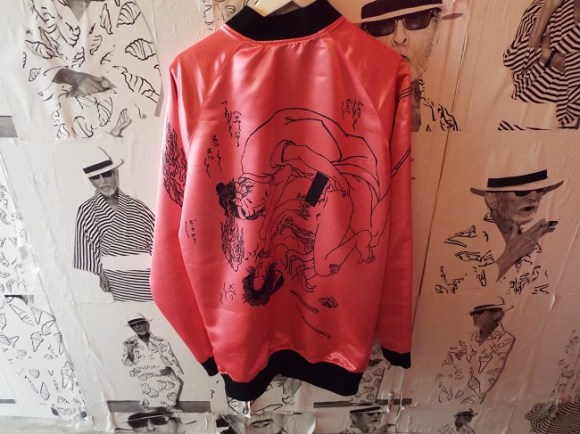
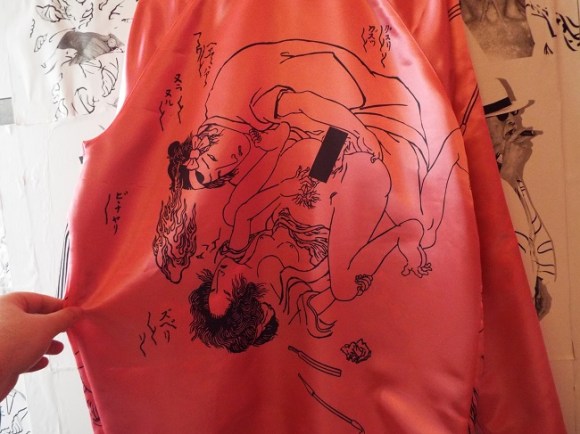
In addition to yukata, obi, and geta, Tsukikageya also produces sukajan (souvenir jackets) and suteteko (a kind of shorts and jacket that can be worn as pajamas or mid-summer clothing). Natsuki has an online store set-up for people to order from, but she suggested that for people ordering from overseas, the best thing would be to email her directly. You can take a look at all the yukuta and other items on the Tsukikageya Online Shop.
If you are in Tokyo and you want to stop by the store, Tsukikageya is generally open Monday and Thursday to Sunday from noon until 20:00. However, Natsuki says to be sure to give her a call or email before coming, since she often has errands and can’t guarantee the store will be open consistently. But if you contact her in advance, she’ll be sure to be open for you!
Finally, we asked Natsuki if she had any message for the stylish, incredibly good-looking readers of RocketNews24.
“If you’re interested in yukata, don’t go to some cheap place — come here! You only wear a yukata a few times a year, so you only need one. It’s better to get one really nice one than a few cheap ones. And you can support Japanese artisans, too! Help save traditional Japanese arts!”
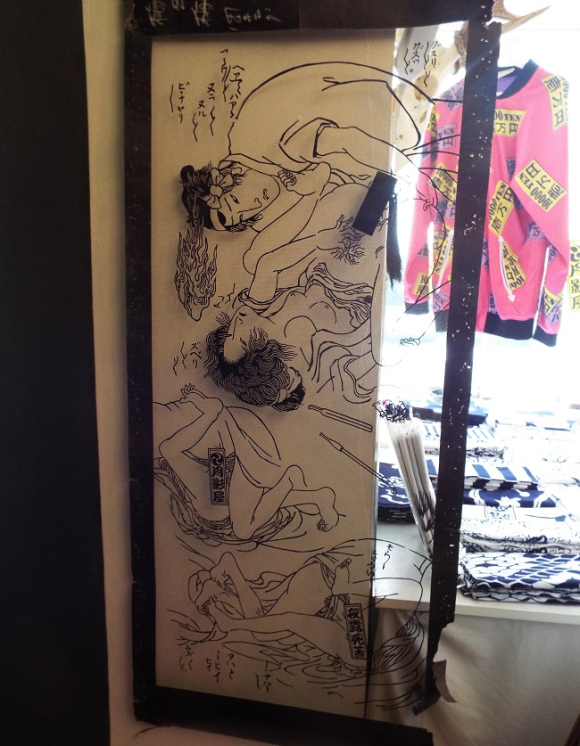
▼ A yukata silk screen hanging in front of a kamidana
Natsuki explained that she’d had so much good luck in her business
that she felt she had to get one of the small Shinto alters to say thanks.

▼ A closer look at the silk screen
Finally, here are the “visuals” for this year’s collection of Tsukikageya yukata, inspired by ghosts! It might set you back a pretty penny, but these designs are sure to turn some heads when you take a stroll through the local festival!
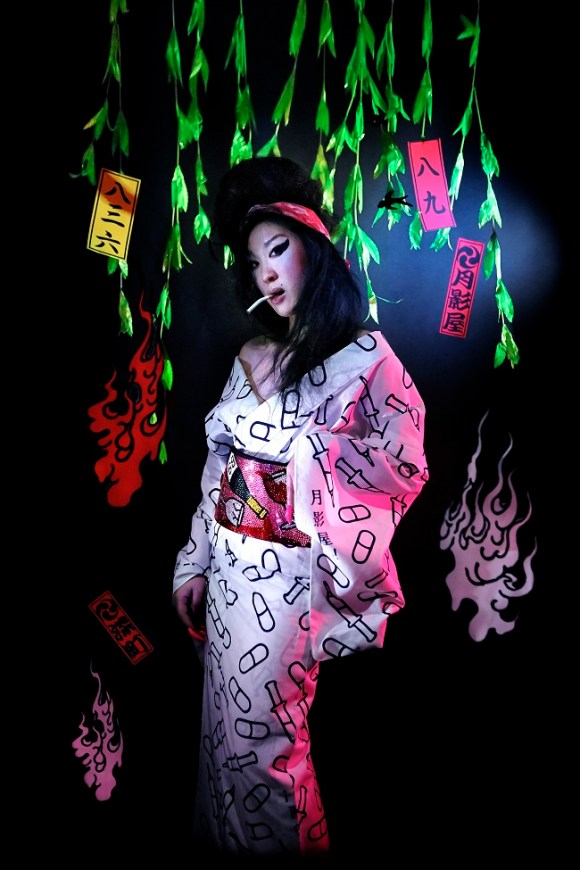
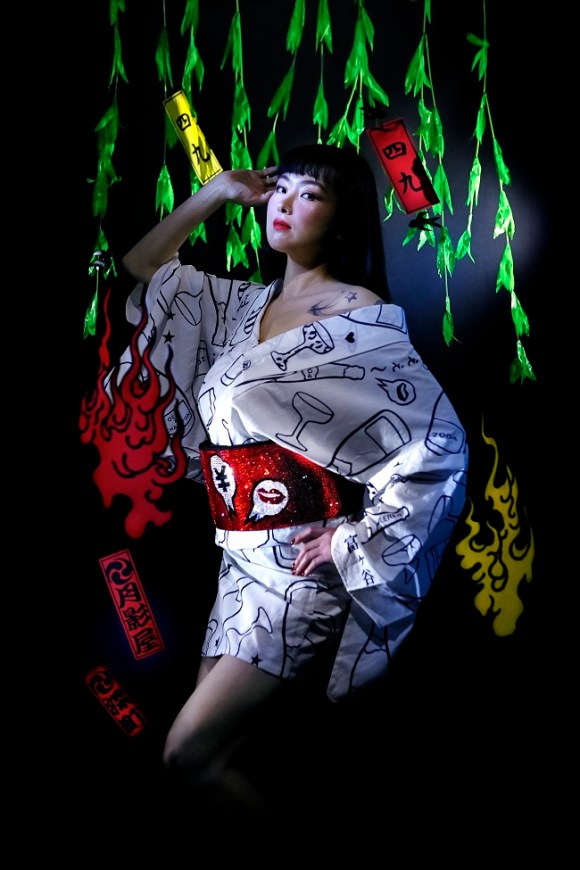
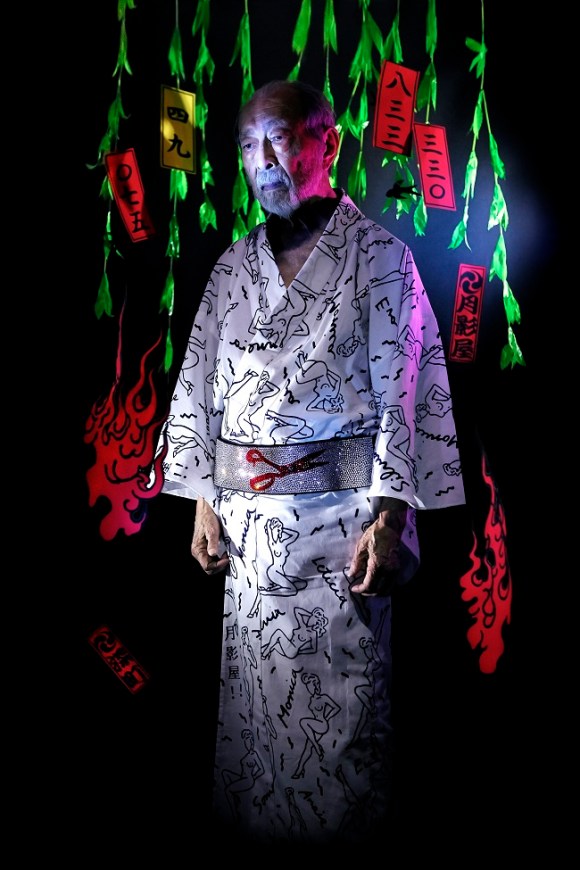
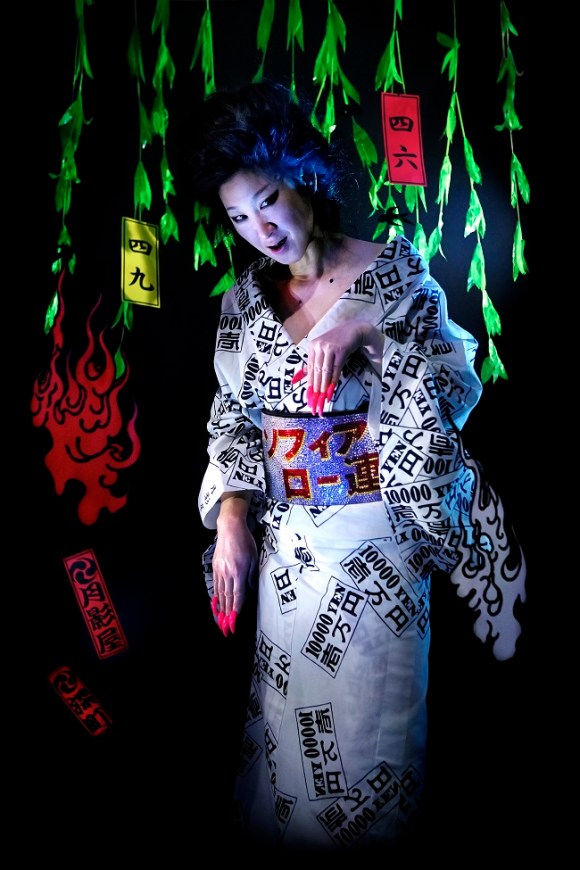
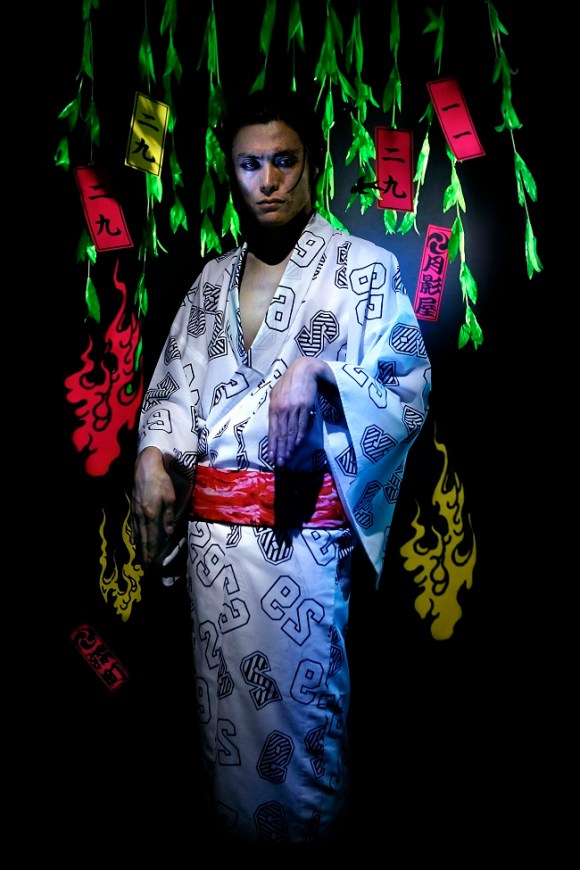
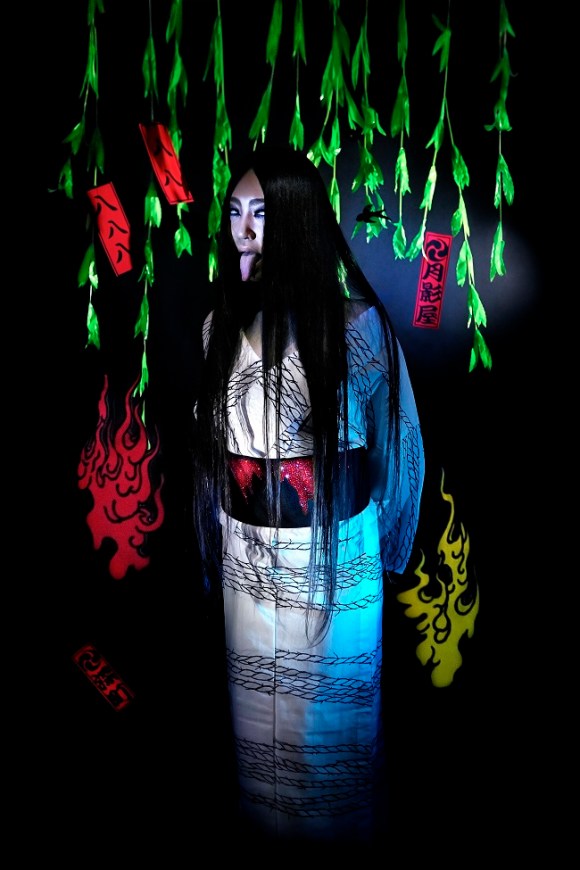
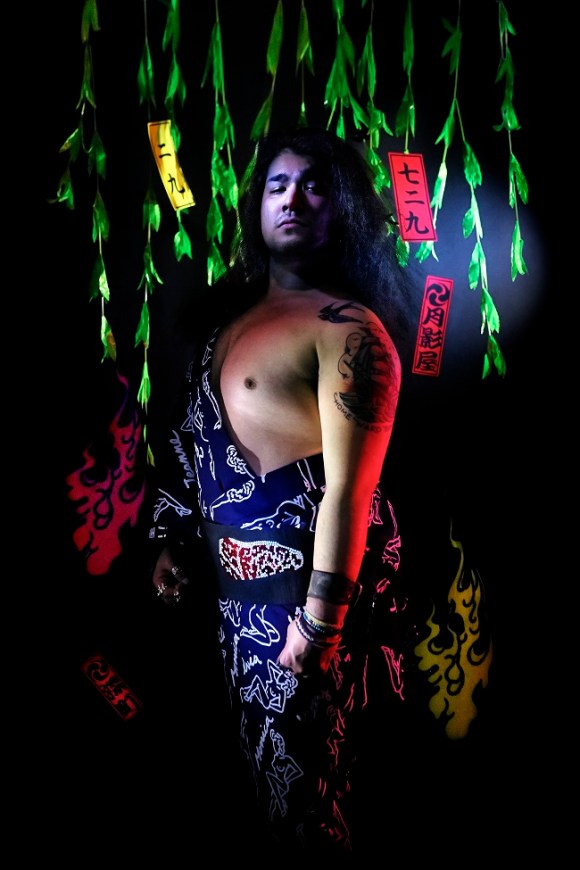
We want to extend a big thank you to Nastuki for talking with us and letting us snap photos of her shop. There are some really cool designs and we bet there’s something for everyone. Be sure to check Tsukikageya out next time you’re in the Yoyogi area!
Tsukikageya
Address: 東京都渋谷区富ヶ谷1丁目9−19代々木公園Qビル1階B号室 (Google Maps)
Hours: Monday and Thursday through Sunday, noon to 20:00 (Strongly recommend calling in advance to confirm the store is open)
Phone number: 03-3465-7111
Email address: natsukishigeta@gmail.com
Website: Tsukikageya
All images © RocketNews24 unless otherwise noted.