

Here are some Japanese words that can drive English-speakers crazy when learning Japanese!
While learning Japanese can be a lot of fun, there are a few things that can be a real pain – one of the most frustrating being the oddities that surround foreign loan words. Here are the ten I’ve found the most irritating and how long it’s taken me to get used to each one of them – if at all.
No. 10
ボタン (“Botan”/Button)
Irritation Meter 7/10
Average years of study to get used to the term: 4 years
 Coming in at number 10 we have ボタン (“botan”). Not バトン (“baton”), but ボタン (“botan”). Oh, the Japanese language really got us with this one. Okay, so this one is easy to comprehend but difficult to say without first pausing for a moment to collect your thoughts. After about four years of practice this one will finally begin to come naturally.
No. 9
トランプ (“Toranpu”/Playing cards)
Irritation Meter 7/10
Average years of study to get used to the term: 3 years
 At number 9 is トランプ (“toranpu”), no not the American “politician” with the strange wig, but playing cards. The word トランプ (“toranpu”) can be fairly confusing given there are also trump cards for certain games when playing with a deck of cards – which is actually where the origin of the word トランプ (“toranpu”) came from. You could just imagine a Japanese person hearing people use the word “trump” while playing a game of cards and using this term to describe it to others. Incidentally, the trump card in a deck of cards is not トランプ (“toranpu”) in Japanese, it is 切り札 (きりふだ, “kirifuda”).
(*Admittedly “playing cards” is also a pretty annoyingly long-winded term in English for one of the most common tools for playing games in the world.)
No. 8
バイキング (“Baikingu”/Smorgasbord or buffet)
Irritation Meter 7.5/10
Average years of study to get used to the term: 3 years
There is so much wrong with this word it’s hard to know where to start. Firstly, why “viking”? And secondly, it sounds like “biking” (yes, unfortunately there is no sound for “v” in Japanese).
 The word バイキング (“baikingu”) apparently originates from the “Imperial Viking” restaurant in 1958 in the Tokyo Imperial Hotel, which was the very first place to serve food in a buffet style. The name of the Imperial Hotel buffet, “Imperial Viking” is said to be inspired by the American movie “The Vikings”. Fortunately, once you begin to understand the history behind the origins of this word its level of irritation does begin to subside.
No. 7
○○選手 (○○せんしゅ/”senshu”) (Player, athlete)
Irritation Meter 8/10
Average years of study to get used to the term: Never
 Yes, this isn’t a foreign language word but it’s annoying enough to make our list. It’s not the word itself that is irritating; it’s the way it is used – relentlessly. If you switch on a sports show late at night you will hear this word at least 78 times within a half an hour broadcast. Every person that plays sport will have their name presented ending in the word 選手 (せんしゅ/”senshu”). Okay, I get that they play sport — do you have to remind me every single time? Figure skaters also get the word 選手 (“senshu”) after their names, as if we didn’t hear the words 浅田真央 (Asada Mao) and 羽生結弦 (Hanyuu Yudzuru) enough.
No. 6
マイ○○ (”Mai”/My … )
Irritation Meter: Varies
Average years of study to get used to the term: Varies
I suspect this term could go either way in terms of its affability – you could either love it or hate it. My frustration probably stems from the phrase マイブーム (“mai buumu”, a thing you are currently passionate about or interested in), which just sounds really odd when directly translated into English as “my boom”. Although it sounds weird you will probably find yourself using it as it has more of a nuance for describing something you are into right now rather than using the phrase 好きなこと (“sukina koto”), which implies you’ve probably liked the thing for a long time. In the end it will probably become indispensable to your vocabulary, like the word めんどうくさい (“mendokusai”), which basically expresses that something is a pain in the butt but doesn’t have a really good equivalent in English. Even so, a part of your English-speaking soul may die every time you say it.
マイ (“mai”) is also used for the terms マイカー (“mai kaah”, my car), マイワイフ (“mai waifu”, my wife), マイペース (“mai peehsu”, my pace), and マイダーツ (“mai datsu”, my darts).
No. 5
メタボ (“Metabo”/Metabolic syndrome; used to describe someone who is overweight)
Irritation Meter: 8/10
Average years of study to get used to the term: 2 years
Here we have another word that is counter-intuitive to what you would naturally think. You would think someone who is described as メタボ would have a skinny physique. Apparently not. This word doesn’t come from the word metabolism, which you would naturally think refers to someone who has a very good metabolism. In actual fact, it comes from the term metabolic syndrome. Therefore, someone described as such will be overweight – and no, it’s not a very nice thing to say.
No. 4
スナック (“Sunakku”/Snack bar)
Irritation Meter: 8.5/10
Average years of study to get used to the term: 5 years
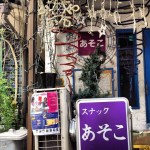 スナック (“sunakku”) is the name for a small bar serving drinks and small dishes, usually managed by a woman who is called ママ (“mama”) by the mostly male patrons who visit. First of all, why? Secondly, why remove the most important word from the term? If you have a shoe shop, you can’t then just call it a shoe. Frustration from this term probably was borne out of the fact that I had no idea what it meant for the first three years of living in Japan.
No. 3
ガッツポーズ (“Gattsu pohzu”/Fist pump)
Irritation Meter 9/10
Average years of study to get used to the term: 2 years
You would think this would be フィストポーズ (“fisuto pohzu”, fist pose) but alas it entered the Japanese vernacular as ガッツポーズ (“gattsu pohzu”, guts pose). Why? Apparently it was first used by the bowling magazine 週刊ガッツボウル (“Shuukan Gattsu Bouru”, The Guts Bowling Weekly) in 1972, which coined the term “guts pose” for bowlers carrying out fist pumps after attaining a strike. The word ガッツ (“gattsu”, guts) has the same meaning in English, i.e. to have guts or to have courage. I guess once you know the convoluted evolution of the word it doesn’t seem so irritating.
No. 2
ストーブ (“Sutohbu”/Heater)
Irritation Meter 9/10
Average years of study to get used to the term: 10 years
A stove is a こんろ (“konro”), and a heater is a ストーブ (“sutohbu”). Ipso facto, irritating. This is a case where the English language has evolved but the Japanese language didn’t come along with it. Centuries ago, wood burning stoves were used for heat and cooking but in modern times we just use the stove for cooking, hence the confusion. The word stove in English is now usually only reserved for a stove for cooking, but the Japanese term ストーブ (“sutohbu”) is still stuck back in the 18th century representing the humble heater.
No. 1
サンド (“Sando”/Sandwich)
Irritation Meter 10/10
Average years of study to get used to the term: Never
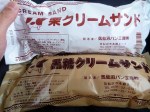 To round off our top 10 we have サンド (“sando”), a real killer, not so much when you hear the word but more when you see it written. “Yes please, I would love some sand for lunch.” Okay, so this is just a shortened version of サンドイッチ (”sandoicchi”, sandwich), but it still seems extremely odd when you see “sand” written as a food item in stores or advertisements. Come to think of it, why did English decide to put sand in the word for sandwich anyway?
Perhaps it’s best to never question foreign linguistic anomalies and just accept them the way they are – a bit like cultures that are foreign to your own.
Source: Wikipedia, Imperial Hotel, Imdb, Wikipedia
Images: Flickr/Kay Kim, Flickr/Annie Pilon, Flickr/ccarlstead, Flickr/Ed Brambley, Flickr/DozoDomo, Flickr/Taeko Akatsuka, Flickr/Hajime Nakano
 Top 10 most irritating Japanese borrowed words – Part 2 (The people’s top 10)
 Five more Japanese words we’d love to import into English
 W.T.F. Japan: Top 5 most confusing Japanese counter words【Weird Top Five】
 Yahoo! Japan finds most alphabetic and katakana words Japanese people want to find out about
 W.T.F. Japan: Top 5 most confusing Japanese compound words【Weird Top Five】
 Pokémon and Ikea Japan cross over into each other’s worlds with collaboration events
 Two food hacks take Japan’s convenience store fried chicken to amazing new sandwich heights
 Tokyo teahouse serves up a sakura matcha dessert you won’t find anywhere else
 Japan now has a special desk for people who work at home with a pet cat[Photos]
 Upcoming themed cafe answers the question “What if Hokusai had opened an eatery?”
 The Sailor Moon theme song is based on another song about drinking a lot of tequila【Video】
 Otaku husband returns home after argument to find wife has destroyed his anime robot collection
 Muscly Japanese men fill stock photo site with hilarious poses in unusual settings
 Hayao Miyazaki gifts autographed Ghibli anime cel to president of France[Photo]
 Starbucks Japan unveils epic Frappuccino hunt with five to find in new Star birthday campaign
 Famous Tokyo cherry blossom spot installs view-blocking screens to fight overcrowding[Video]
 Tokyo’s best museum for foreign travelers finally reopens after being closed for four years
 Pokémon lacquerware series expands for Year of the Horse with new handcrafted design[Video]
 Uniqlo announces new T-shirts for One Piece, Naruto and more for manga publisher’s 100th birthday
 Picturesque Tokyo park plays host to millions of flowers and soap bubbles this spring
 Tokyo subway and almost all Tokyo train lines now accepting credit card tap payments
 Totoro and Calcifer become little light-up lanterns for Ghibli-style excursions or at-home decor
 Fading Tokyo – Searching for signs of the Showa era as local neighborhoods evolve[Photos]
 Train station platform ramen store closes its doors on half a century of history in Tokyo
 Starbucks Japan releases new My Fruit³ Frappuccino at only 34 stores around the country
 Studio Ghibli releases Catbus pullback keychain that runs like the anime character
 Krispy Kreme releases Super Mario doughnuts in Japan for a limited time
 Japanese onsen egg maker from 100-yen store Daiso needs to be on your shopping list
 Starbucks Japan unveils new sakura cherry blossom collection for hanami season 2026
 Survey asks foreign tourists what bothered them in Japan, more than half gave same answer
 Japan’s human washing machines will go on sale to general public, demos to be held in Tokyo
 Starbucks Japan releases new drinkware and goods for Valentine’s Day
 We deeply regret going into this tunnel on our walk in the mountains of Japan
 Studio Ghibli releases Kodama forest spirits from Princess Mononoke to light up your home
 Starbucks Japan releases new sakura goods and drinkware for cherry blossom season 2026
 Japan’s newest Shinkansen has no seats…or passengers [Video]
 Major Japanese hotel chain says reservations via overseas booking sites may not be valid
 Put sesame oil in your coffee? Japanese maker says it’s the best way to start your day【Taste test】
 No more using real katana for tourism activities, Japan’s National Police Agency says
 Tokyo ranked as most expensive city in the world for expats, three other Japanese towns in top 10