
My entries for the “Top 10 most irritating Japanese borrowed words” weren’t irritating enough for some people – so I’ve formulated a part two (“tsuu”) with your help!
We received a lot of feedback for the first instalment of irritating Japanese borrowed words, so I’ve compiled a second Top 10 along with my estimates for how long it would take to get used to each one. I guess you could call this the people’s Top 10!
No. 10
ゼリー (“Zerii”/Jelly)
Irritation Meter 6/10
Average years of study to get used to the term: 4 years
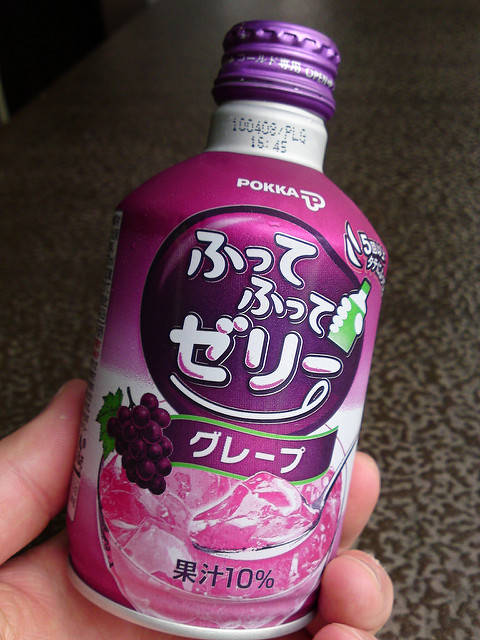
Creeping in at number 10 we have ゼリー (“zerii”), another one of those pronunciation irritants. We have the necessary phonetics in Japanese to say ジェ “je” but unfortunately someone chose to use ゼ “ze”. It’s like choosing a fork to eat your jelly when you have a spoon – well, maybe not that bad. “Zerii” instead of “Jerii” is a bit easier to pronounce for Japanese people, so it obviously stuck.
Elliot from Facebook says:
“What still get[s] me are the loanwords where ‘j’ has been converted to ‘z,’ like ゼリ (zeri, ‘jelly’) and ゼネラル (zeneraru, ‘general’). Japanese has a ‘j’ sound, and people use it all the time. じゃ〜”
No. 9
エネルギー (“Enerugii”/Energy)
Irritation Meter 7/10
Average years of study to get used to the term: 6 years
Who decided to put the “ru” in this one? Is it really necessary? “Enegii” would have been just fine. I can see where they were trying to go with this one but it just didn’t come out right. I can just imagine a group of people in the boardroom for the Japanese language saying, “What are we going to do with this “r”, we can’t just leave it out can we? People were mad when we didn’t use the proper ‘je’ for jelly, so we’ll just have to go with ‘enerugii’.”
A special mention here must go to “allergy”, which is translated into アレルギー (“arerugii) – there’s that “ru” again making a nuisance of itself.
No. 8
ハイテンション (“Hai-tenshon”/Enthusiastic, High levels of energy)
Irritation Meter 7.5/10
Average years of study to get used to the term: 5 years

If a rope has high tension, you may be forgiven for thinking it is highly strung. But in Japan, if a rope has high tension, it is full of energy and enthusiasm. This one can be irritating at first, but once you get used to it, the irritation does dissipate. And you have no choice if you are working as an English teacher for children – which often has two professional requirements: being at least a near native English speaker and being able to produce “Hai-tenshon”.
William from Facebook says:
“What, no ‘tension’?! I’m a translator, and it took me years and years to understand ‘tension’!”
No. 7
スタジオ (“Sutajio”/Studio)
Irritation Meter 7.5/10
Average years of study to get used to the term: 5 years
This is another easy one to understand why it can be irritating for English native speakers. But you know, even if the phonetic conversion of studio from English into Japanese were correct it would become “suchujio” – and yes we would find a way to complain about that one too.
Josh from Facebook says:
“I have no idea where キャベツ [“kyabetsu”, cabbage] came from. And why studio is written スタジオ?”
No. 6
マクドナルド (“Makudonarudo”/McDonald’s)
Irritation Meter 7.5/10
Average years of study to get used to the term: 15 years
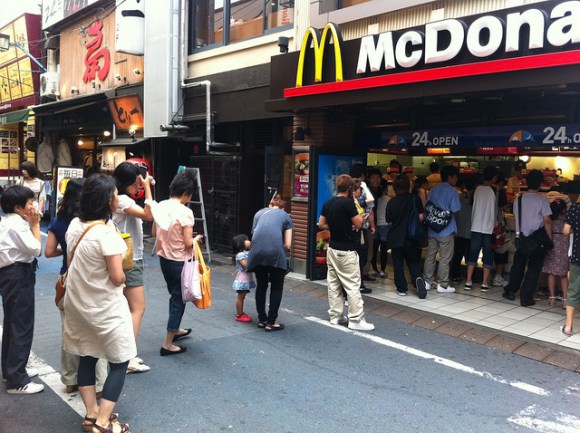
I can see the logic behind this one, it’s almost a straight phonetical translation from English, which does reduce its irritability. Although this doesn’t make it any easier to say. I must admit I have practiced saying this in my spare time over the years to try to master the pronunciation, and it’s still difficult to say. I think we’ll all be happier if we just stick to the abbreviated version of “makudonarudo”, which is “makku”.
Christine from Facebook says:
“マクドナルド took me months of active effort. Seeing people’s heads explode that it’s really McDonald’s is never not funny.”
Lauranne from Facebook replied:
“I will never be able to say that in Japanese. Thank goodness マック is sufficient.”
No. 5
シール (“Shiiru”/Sticker)
Irritation Meter 8/10
Average years of study to get used to the term: 5 years
It appears as if this is one of those terms that has become more convoluted with time. If you were to seal something you would imagine fastening something shut. So why “shiiru” for a sticker? Apparently, according to Japanese wikipedia, the term “shiiru” comes from the olden days when a “seal” was used to seal an envelope, and then this term evolved to also mean sticker. But perhaps an even stronger sticking point for native English speakers is the fact that the term “shiiru” can also be used for labels.
Erik from Facebook says:
“The woooorst is シール, ‘seal’, which is the loan word for stickers. Like, no one ever uses stickers to seal stuff. Calling them seals makes them sound WAY too serious-business.”
No. 4
ジュース (“Jyuusu”/Drink)
Irritation Meter 8.5/10
Average years of study to get used to the term: 7 years
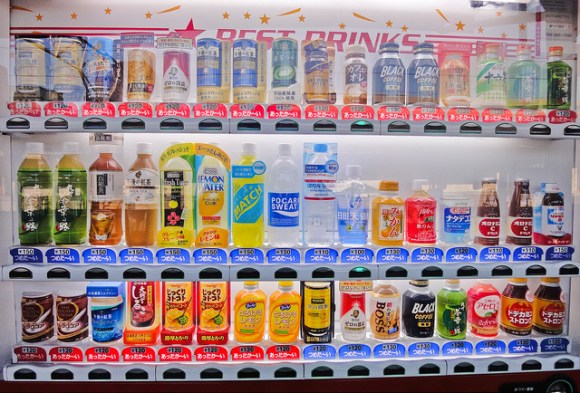
I think we can safely say that juice almost always comes from a fruit or a vegetable. How is Coca-Cola juice!? Well, the word “jyuusu” in Japanese does include coke and basically any drink you can get out of a vending machine – in fact it really just means any drink that isn’t alcoholic. Yes, I agree with Kyle from Facebook on this one. He says:
“One that (in my opinion) ranks right up there with sando is jyu-su. Just as annoying, but FAR more prevalent. You’d expect it to refer to, y’know, juice… but no, the word is used for pretty much any canned beverage. I can understand how it happened, but still, no.”
No. 3
オーマイガー (“Oomaigaa”/Oh my God)
Irritation Meter 9/10
Average years of study to get used to the term: never
How did I miss this one in Part 1? Irritating because we lost a ‘d’ in translation (I wish that would have happened to some ‘r’s along the way). Whenever I hear this phrase there is always a sense of a lack of finality as we wait for a ‘d’ that never comes – like waiting for that final jolt when pulling into a train station that never comes.
No. 2
マンション (“Manshon”/Condominium or high quality apartment)
Irritation Meter 9/10
Average years of study to get used to the term: 4 years

Coming in at two we have a false friend. I think this one confuses everyone when they first arrive in Japan. The term “manshon” (condominium) comes from the British term mansion block, which is a block of apartments, according to Japanese wikipedia. Now the term has evolved to mean a larger better quality apartment – usually an apartment made from concrete, rather than wood or steel. But one can’t help but think of a lavish grand multi-storey house whenever they hear the word “manshon” – for the first few years living in Japan anyway.
Steve from Facebook says:
“マンション ‘mansion’ meaning a block of small flats. I thought my JLT was being sarcastic when she kept saying, ‘Steve lives in a mansion’ and I was thinking ‘I live in the smallest room I’ve ever seen!'”
No. 1
なう (“Nau”/Now)
Irritation Meter 9.5/10
Average years of study to get used to the term: still unknown
This one became a buzzword a few years ago. I remember my friends posting “nau” (now) online and thinking surely this can’t mean “now”. But unfortunately it did. I’ve never really thought about why this word was so irritating but it’s probably because of the way it is used. It’s usually only written in messages – for example, “Shibuya nau”. It’s probably the fact that people feel the need to report to the world where they are – which really isn’t that necessary. And what’s wrong with “Ima (now) Shibuya” – I guess it probably doesn’t sound as cool.
Rui from Facebook says:
“I think なう irritates me. I understand it’s borrowed from the English word ‘now’ but when people begin posting 大阪なう [Osaka nau], etc. it gets frustrating.”
So there you have it, the top 10 most irritating Japanese borrowed words – part tsuu (2). And yes, I agree, ツー “tsuu” should be トゥー “tuu” instead.
So, have I managed to cover them all this time?
Sources: Wikipedia/シール, Wikipedia/マンション
Top Image: Flickr/Kay Kim
Insert images: Flickr/Kalleboo, Flickr/Noriqnub, Flickr/Horaguchi, Flickr/Howe-Ely, Flickr/June29
 Top 10 most irritating Japanese borrowed words
 Beauty Clinic Survey Reveals Japan’s “Top 10 Words”- All Remarkably Positive and Upbeat
 Renowned Japanese calligraphy teacher ranks the top 10 kanji that foreigners like
 Top 10 Japanese school lunch food items that adults miss the most
 Yahoo! Japan finds most alphabetic and katakana words Japanese people want to find out about
 Train station platform ramen store closes its doors on half a century of history in Tokyo
 Starbucks Japan releases Matcha White Chocolate Frappuccino
 Studio Ghibli adds new Mother’s Day gift sets to its anime collection in Japan
 Virtual idol Hatsune Miku redesigned with look that adds new elements and brings back old ones
 Komachi Shokudo: Japanese mum’s-style cooking for breakfast, lunch and dinner in Tokyo
 Starbucks Japan opens new Kyoto store in Place of Scenic Beauty
 The Crocodile Who Dies in 100 Days is due to die today and people can’t bear it
 Japanese ad showing Mom doing all the housework and childcare has people steamed at Dad【Video】
 Cowboy Bebop creator’s Samurai Champloo anime to become live-action series from Hollywood studio
 Why don’t black-and-white cats have light-coloured backs and black bellies?
 Studio Ghibli releases Catbus pullback keychain that runs like the anime character
 Nine great places to see spring flowers in Japan, as chosen by travelers (with almost no sakura)
 Starbucks Japan opens new cafe and art gallery in top Tokyo tourist neighbourhood
 Is Japan’s Crab-shaped Cup Ramen Timer worth the hype?
 Pizza Hut Japan teams up with creator of one of the country’s best kinds of ramen for ramen pizza
 Starbucks Japan releases a new Cream Puff Frappuccino for a limited time
 The top 10 graduation songs in Japan as chosen by current Japanese high school students
 Pikachu and Eevee become handmade Lladró porcelain sculptures to celebrate Pokémon’s 30th birthday
 Starbucks Japan releases new sakura goods and drinkware for cherry blossom season 2026
 Starbucks Japan unveils new sakura cherry blossom collection for hanami season 2026
 Foreign tourists in Japan will get free Shinkansen tickets to promote regional tourism
 The 10 most annoying things foreign tourists do on Japanese trains, according to locals
 Super-salty pizza sends six kids to the hospital in Japan, linguistics blamed
 Starbucks Japan unveils new sakura Frappuccino for cherry blossom season 2026
 Naruto and Converse team up for new line of shinobi sneakers[Photos]
 Starbucks Japan releases first-ever Hinamatsuri Girls’ Day Frappuccino
 Survey asks foreign tourists what bothered them in Japan, more than half gave same answer
 Japan’s human washing machines will go on sale to general public, demos to be held in Tokyo
 Starbucks Japan releases new drinkware and goods for Valentine’s Day
 We deeply regret going into this tunnel on our walk in the mountains of Japan
 Studio Ghibli releases Kodama forest spirits from Princess Mononoke to light up your home
 Japan’s newest Shinkansen has no seats…or passengers [Video]
 Major Japanese hotel chain says reservations via overseas booking sites may not be valid
 Put sesame oil in your coffee? Japanese maker says it’s the best way to start your day【Taste test】
 No more using real katana for tourism activities, Japan’s National Police Agency says
 Our Reporter’s Top 10 Awesome Things About North Korea
 Top 10 series with the most epic fights in Shonen Jump history, as voted by Japanese readers
 10 Japanese words you know now that irritate some Japanese businessmen (because they’re English)
 Why does Japanese writing need three different sets of characters? (Part 2)
 Wasei English: 20 Words of English Origin that Japanese People Often Mistake for the Real Thing
 The top 10 words to describe Japanese people (according to foreigners)
 Number of foreigners studying Japanese in Japan hits record high, but are there enough teachers?
 W.T.F. Japan: Top 5 most confusing Japanese compound words【Weird Top Five】
 Japanese survey reveals the top 10 most popular ice creams in Japan
 W.T.F. Japan: Top 5 Japanese words with cool ancient origin stories【Weird Top Five】
 Tokyo ranked as most expensive city in the world for expats, three other Japanese towns in top 10
 10 misconceptions Japanese people think foreigners have about Japan
 W.T.F. Japan: Top 5 myths about learning Japanese【Weird Top Five】
 Japanese city makes list of world’s top 10 most livable cities, but not one most people expected
 W.T.F. Japan: Top 5 craziest Japanese certification exams 【Weird Top Five】