
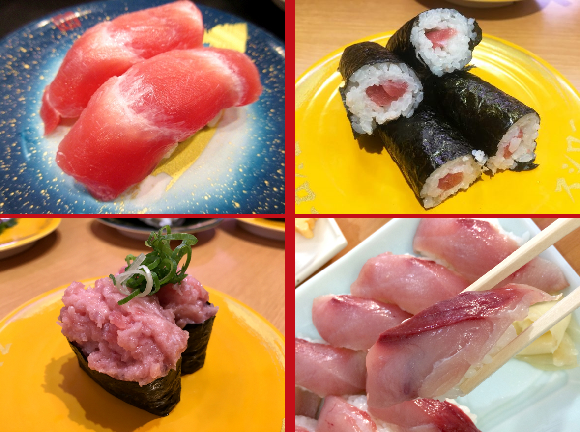
You can love many kinds of sushi, but for your last piece, you can only have one, so which one should it be?
Kaitenzushi restaurants, where you grab plates of sushi off a conveyor belt as they stream past you, are a fantastic choice for indecisive diners. Since you’re not locked into any sort of set meal, you can grab whatever you like, in whatever quantity you like, on a whim, allowing you to make adjustments on the fly like a seafood-loving dynamo.
But while the freedom and flexibility of kaitenzushi may be limitless, your stomach capacity, of course, is finite. So as you feel yourself getting full, at some point you’re going to have to answer a difficult question: What should your last piece of sushi be?
That’s one of the things Japanese fishery company Maruha Nichiren asked Japanese diners in its annual kaitenzushi survey, which this year collected responses from 1,000 participants (500 men and 500 women). Let’s take a look at the top 10 choices for how to cap a sushi meal (and if you think you can never have too much sushi, you’ll be happy to know that thanks to ties and Japanese linguistic quirks, there are actually 12 types of sushi in this “top 10”).
10 (tie). Otoro (3.2 percent of respondents)
10 (tie). Negitoro (3.2 percent)
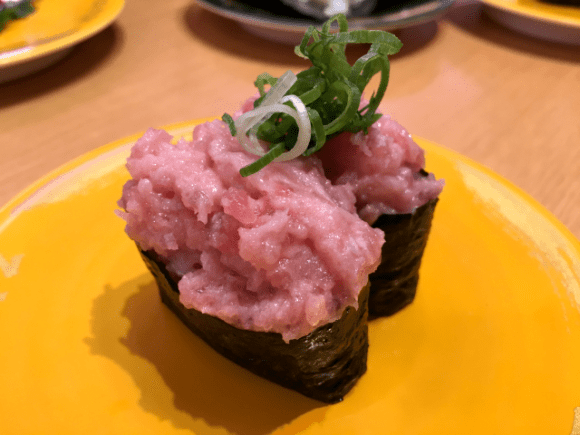
Otoro (extra-fatty tuna) and negi toro (minced tuna belly with green onions, as seen above) are tasty, but also two of the more decadent items on the menu at a sushi restaurant, and perhaps a bit heavy of an ending note for some people’s tastes. There’s also the fact that otoro is just about the most expensive kind of sushi, so if you’ve already plowed through several other plates of premium-priced selections, you might find yourself reaching for something that’s lighter in your stomach and on your wallet (as proof, we’re too cheap to even have a picture of otoro).
8 (tie). Uni (3.5 percent)
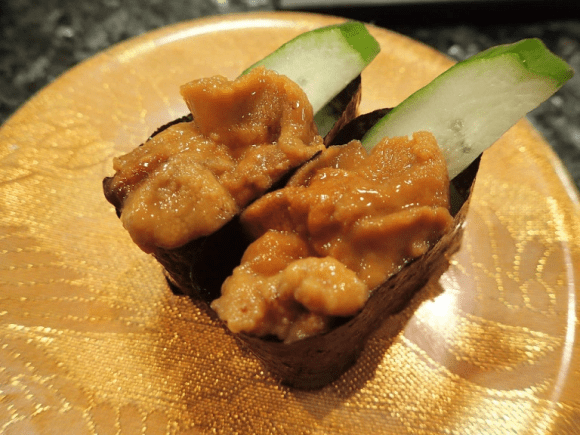
8 (tie). Hamachi/buri (3.5 percent)
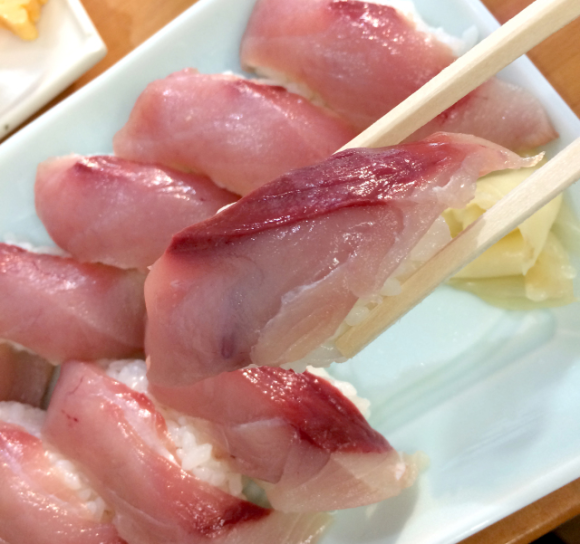
Another tie, one half of which is uni (sea urchin). On the other end, we’ve got hamachi and buri, which are both actually the same fish: yellowtail. Certain species of fish get called by different names in Japanese depending on how old the fish is, so younger yellowtail are hamachi while more mature specimens are buri, highly prized for its firm texture and especially sweet flavor when caught in winter (and while we’re at it, there’s also inada, yellowtail that’s even younger than hamachi, which is also delicious, though somewhat harder to find in restaurants).
7. Maguro akami (3.6 percent)
We’re going to see tuna on the list several times, but in this case we’re referring to the standard, lean cut of the fish, which has always been a sushi stalwart.
6. Engawa (3.9 percent)
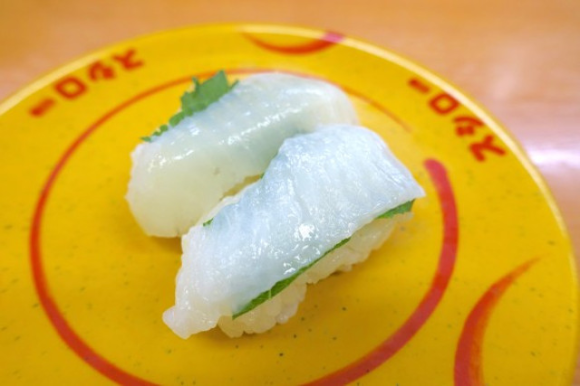
If you’re learning Japanese, engawa is a two-for-one vocabulary word. Not only does it refer to the outer edge of a cut of flounder (seen here sitting atop slices of shiso, or Japanese basil), it also means “veranda,” since that’s the part of a house found at its outer edge.
4 (tie). Tekkamaki (4.7 percent)

4 (tie). Ebi (4.7 percent)
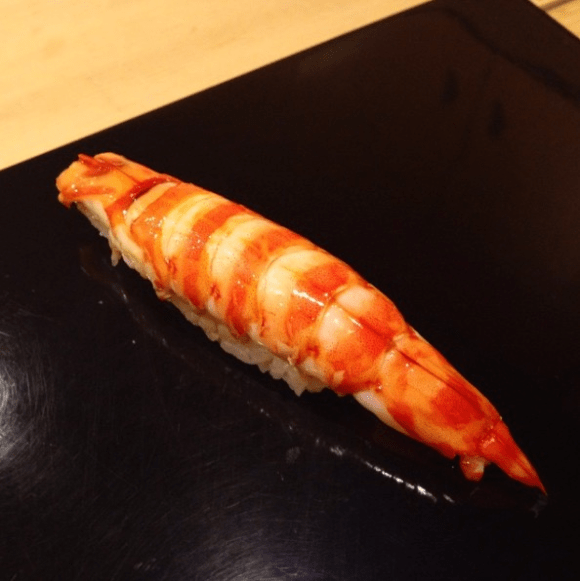
Tekkamaki, thin tuna rolls, usually comes sliced into either four or six morsels, making it a convenient thing to share with friends if you’re all craving just a bit more sushi, but don’t think you can finish off a whole plate by your selves. Meanwhile, ebi (shrimp) being served boiled instead of raw provides a clean, non-fishy flavor to finish on.
3. Chutoro (5.4 percent)
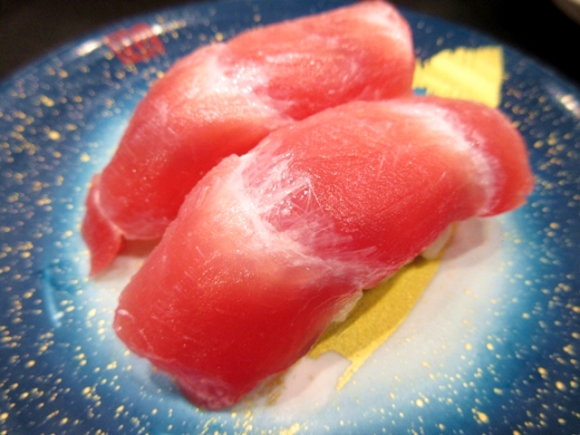
Medium-fatty tuna is more moderate in price and fattiness than otoro, and so it’s a comfortably affordable luxury to have lingering on your taste buds as you walk away from the counter.
2. Tamago (5.8 percent)
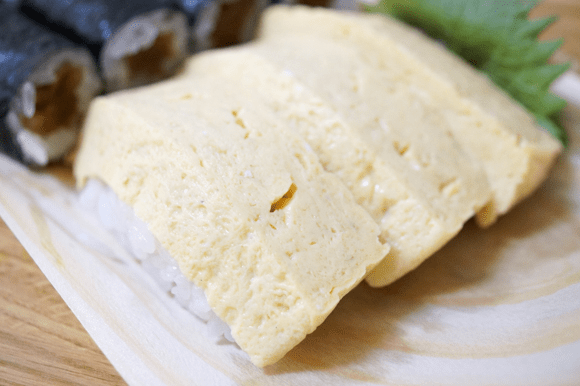
The humble tamago (egg) might seem like an anticlimactic closer, but Japanese-style omelets have an enticing sweetness to them, and so making your last piece of sushi tamago is almost like eating a refreshing dessert.
1. Salmon (10.5 percent)
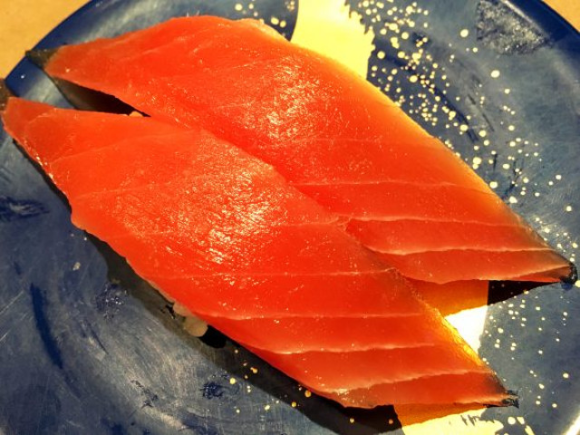
And finally, the survey participants’ favorite finale was salmon, which gets called by the corrupted pronunciation saamon as often as it does the indigenous Japanese “shake.”
Salmon has a number of things going for it. Delicious as it is, it’s also got a clean finish, so you won’t find yourself in need of a palate cleanser. It’s also low-priced and light in oil, making it a guilt-free option in more ways than one.
But salmon no doubt owes a lot of its first-place finish to the simple fact that it’s consistently picked by Japanese diners as their favorite kind of sushi, and that trend continued in Maruha Nichiro’s most recent poll. In addition to being the top choice for final piece of sushi, salmon was the number-one pick for “first piece of sushi to eat,” and also for “type of sushi you often eat” at kaitenzushi restaurants. Oh, and it swept those ranking regardless of whether you’re counting the 1,000 respondents as a whole or dividing them into responses from men and women. Just one more arrow to have in your quiver should some ill-informed foodie try to tell you that “people in Japan don’t eat raw salmon.”
Cast your vote:
Source: Maruha Nichiro
Photos ©SoraNews24
[ Read in Japanese ]
Follow Casey on Twitter, where he says there’s never a bad time for amberjack sushi.
 Which Japanese conveyor belt sushi chain has the best yellowtail sushi?【Taste test】
 We eat 13 of the most highly recommended sushi items at Sushiro and pick the best of the best
 This type of conveyor belt sushi tastes different in Tokyo than it does in Osaka, but why?
 Japan super budget dining – What’s the best way to spend 1,000 yen at sushi restaurant Sushiro?
 What’s the best way to spend 1,000 yen at Kura Sushi?【Japan Super Budget Dining】
 Solo travel in Japan: Hidden beer garden in Tokyo is a haven for single visitors
 One Piece Day 2026 brings new art, music, and new cast announcements
 Studio Ghibli unveils new anime calendars and diary planners for 2027
 Flock to Tomarigi, the viral app that lets you perch in over 1,000 spots throughout Japan
 Tamagotchi evolves into a ring for its 30th anniversary, preorders now open
 Family Mart releases Famima convenience store products nationwide, but which ones are worth buying?
 Japan’s birth rate rose for the first half of the year for the first time in over a decade
 Family Mart releases new Human Made Cup Noodle in Japan, with freebies for Nigo fans
 Hobonichi unveils new 2027 planners, diaries and stationery with One Piece, Suica Penguin, Hello Kitty and a must-buy Mini Techo
 7-Eleven Japan goes viral for chilled soba that’s “too salty to eat”
 Japan’s final Penguin Suica train cards have already shipped, and when they’re gone, they’re gone
 Japan approves foreign resident visa renewal fee increases of up to 967 percent, starts soon
 Japan tripled its departure tax to fund tourism but is using the money on cherry blossoms and bears
 Farewell Final Ceremony announced for Tokyo’s life-size Gundam statue, will stream live
 Nike x One Piece collection brings Devil Fruits to sneakers and streetwear in Japan
 Police in Japan looking for who’s responsible for dumping 80 loaves of bread on side of road [Video]
 12-year-old British girl who went missing in Tokyo found safe after visiting anime sites around Yokohama
 7-year-old boy left behind on Mt. Fuji by his own dad
 Air-conditioned dress shirts arrive in Japan to save working professionals from sweltering heat
 Sushi Bus: Japan’s first conveyor-belt bus lets you eat sushi while sightseeing around Tokyo
 Pokémon Center Online designates first Pokémon items that will require Japanese ID card to buy
 Japanese toilet aims to attract foreign tourists but not everybody is happy about it
 New Japanese vending machine at Shinkansen station sells cups of ice on platform
 Study finds hundreds of people in Indonesia legally named after Naruto, Inuyasha, other anime stars
 Japan announces sudden 400-percent increase in visa fees for foreigners entering the country
 Japan’s human washing machines will go on sale to general public, demos to be held in Tokyo
 Studio Ghibli has a new anime out, and there’s only one place in the world where you can see it
 Starbucks Japan releases new drinkware and goods for Valentine’s Day
 Starbucks Japan releases new sakura goods and drinkware for cherry blossom season 2026
 Japan’s newest Shinkansen has no seats…or passengers [Video]
 Tokyo subway installing new ticket gates that don’t accept payment through Suica or other IC cards
 Japanese ninja certification exam attracts 131 candidates from Japan and abroad
 Salomon releases Japan-exclusive Mt. Fuji hiking gear that doubles as an amazing souvenir
 Put sesame oil in your coffee? Japanese maker says it’s the best way to start your day【Taste test】
 Which Japanese conveyor belt sushi chain has the best bintoro sushi?【Taste test】
 Who loves revolving sushi? Only families, couples, and solo diners (so, just about everyone)
 Japan’s Sushiro revolving sushi chain stops revolving with conveyor-less food court branch
 There’s only one place in Japan where this kind of sushi isn’t red, but why?
 Japan super budget dining – What’s the best way to spend 1,000 yen at Hama Sushi?
 Which Japanese conveyor belt sushi chain has the best salmon sushi?【Taste test】
 Sharpen your sushi-selecting skills with the High Speed Sushi-Go-Round Quiz! 【Videos】
 Japanese diners pick their eight favorite types of sushi, create mouthwatering dinner blueprint
 Japan’s best conveyor belt sushi restaurant of seven years ago has now, finally, come to Tokyo
 Which Japanese conveyor belt sushi chain has the best ikura sushi?【Taste test】
 Which Japanese conveyor belt sushi chain has the best aburi salmon sushi?【Taste test】
 What happens in the kitchen of a conveyor belt sushi restaurant? Let’s find out at Sushiro!
 Esteemed Japanese sushi chain ranks the top 15 most popular sushi toppings among customers
 Which Japanese conveyor belt sushi chain has the best saltwater eel sushi?【Taste test】
 Which Japanese conveyer belt sushi chain has the best chutoro?【Taste test】