

A cutting comeback from a Japanese-proficient foreigner leaves one man with a permanent emotional scar, but there are softer ways to make your point too.
So there’s a situation that just about every foreigner who’s put in the effort to study and learn some Japanese runs into at one point or another in Japan. It basically goes like this:
1. Japanese-proficient foreigner opens their mouth to start speaking, in Japanese, to a Japanese person
2. Japanese person assumes that foreigner must not be able to speak Japanese, and is also a native English-speaker.
3. Japanese person immediately cuts the foreigner off by saying, in English, “I don’t speak English.”
However, when Japanese Twitter user @takah1yt jumped the gun and acted on his assumptions about a foreigner’s language skills, he found himself on the end of a completely unexpected comeback.
【悲報】外国人に話しかけられて、とっさに「I don't speak English!」と言ったら「ベンキョウしろ」と日本語で返されたこのダメージが消えそうにない
— YT(о´ω`о) (@takah1yt) December 21, 2019
“A foreigner was about to start talking to me, so I immediately said I don’t speak English! He responded, in Japanese, with ‘Benkyou shiro.’”
So what’s benkyou shiro mean, in this context?
“Then learn English.”
The beauty of the snarky retort is that it was delivered in Japanese. By speaking in Japanese, the foreigner showed that whether or not @takah1yt could speak English didn’t really have any effect on their ability to communicate with each other. If @takah1yt wanted to suddenly bring up his English skills, and lament them, that’s fine, but that dissatisfaction was entirely on him, since the foreigner wasn’t asking him to use English in the first place. “I don’t think the damage I sustained in that conversation will ever fade,” mused @takah1yt.
It turns out @takah1yt isn’t the only Japanese person to have had their misconception that the foreigner they were talking couldn’t speak Japanese corrected in a sudden and surprising way, as one commenter shared their story.
https://twitter.com/utchie/status/1208583925582352385“When I told a foreigner ‘I can’t speak English,’ they asked, in Japanese, ‘E-, hitokoto mo?’ [Japanese for “Not even a single word?”].”
But why are some Japanese people in such a rush to announce that they can’t speak English, doing so before the foreigner has made any indication that that’s the language they want to converse in? There are a couple of reasons, actually.
First off, in the grand scheme of things, it really wasn’t all that long ago that Japanese-proficient foreigners were a rarity. That’s no longer the case, with more non-natives now studying and speaking Japanese than at any other time in history, but for the average Japanese person, one who’s not a linguist with their finger on the pulse of language trends, the conception that most foreigners they encounter, even in Japan, can’t speak Japanese is yet to fade, and statistically speaking, might not even be entirely incorrect.
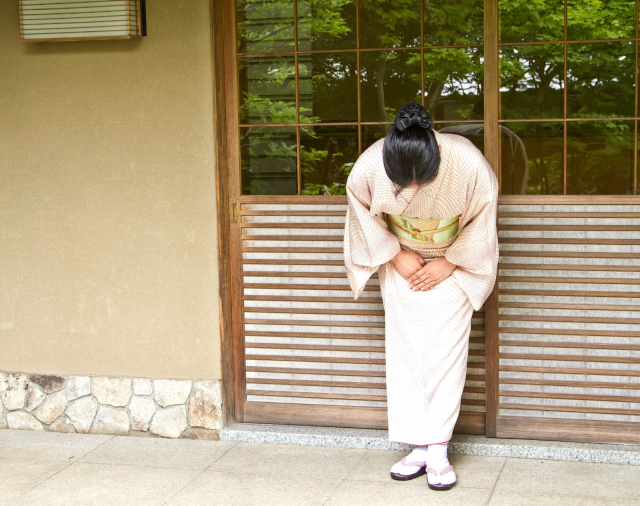
There’s also Japanese culture/society’s strong focus on responsibility and hospitality. Again, permanent foreign residents of Japan are still a rather small minority compared to temporary foreign residents and travelers from abroad. Many Japanese people perceive foreigners in Japan as their society’s guests, and feel a responsibility, and pressure, to accommodate them. Not being able to do so sometimes creates mini panic attacks, which can lead to premature apologies like “I’m sorry I can’t speak English,” since they’ve already played out the scenario of being unable to comply with an English-language request before a request, in any language, has actually been made.
 And finally, more than a few Japanese people are embarrassed about their lack of English skills. Among developed nations, Japan’s English proficiency is comparatively low, and a sense of preemptive shame can mix with anxiety to cause Japanese people to blurt out “I can’t speak English!” at the earliest possible moment.
Of course, those reasons don’t necessarily mean that’s the right way to be handling the situation, and another commenter had a much more logical, and respectful, way of dealing with the linguistic issue.
自分が警備員やってた時、観光施設近く(の駐車場入口)で色々な人種の人に道を聞かれましたが、頑張って日本語で受け答えできる人もけっこう居るので、正しい応答は「はい、どうしましたか?」と『まず日本語で聞き返す』事ですネ。(-_-)
— guldeen(五十肩悶絶中) (@guldeen) December 22, 2019
“I used to work as a security guard at a parking lot near a sightseeing destination, and people of many different ethnicities would ask me for directions. A lot of them have studied hard and can communicate in Japanese, so the correct thing to do is to first speak to them in Japanese, and ask ‘Hai, dou shimashita ka?’ [“What can I do for you?”].”
Meanwhile, if you’d like to know what you, as a Japanese-speaking foreigner, can do to get the conversation back on track, the best way to respond to a premature “I can’t speak English!” is with a calm “Dakara watashi ha Nihongo de ii desu yo” (“And that’s why it’s OK to speak to me in Japanese.”). Sure, it’s sometimes kind of a pain to have to add that extra step to the conversational process, but maybe after getting that response a few times, the Japanese person will learn to hold off on their “I can’t speak English!” until they’ve actually listened to the words coming out of the foreigner’s mouth.
Source: Twitter/@takah1yt via Jin
Top image: Pakutaso (edited by SoraNews24)
Insert images: Pakutaso (1, 2)
● Want to hear about SoraNews24’s latest articles as soon as they’re published? Follow us on Facebook and Twitter!
Feel free to follow Casey on Twitter and talk to him in English or Japanese.
 Japanese expat remembers the words that changed his life when he started working in Australia
 New book teaches Japanese people English to help out foreign travelers
 Japanese Twitter user embarrassed to learn why American friend is studying Japanese, not Chinese
 English conversation school in Japan has clever reminder that students don’t have to be perfect
 Foreign English teachers in Japan pick their favorite Japanese-language phrases【Survey】
 Mt. Fuji decorated with a 500,000-flower pink carpet is Japan’s ultimate spring view
 30 Pikachus want to share a Tokyo hotel room with you that has separate Grass, Water, Fire spaces
 New Travelling Bento pouches turn your luggage into a Japanese lunch box
 Howl’s Moving Castle’s scene-stealing dog is here to clean your home as a plushie mop
 Drink vending machines disappearing in Japan as number drops to lowest in 30 years
 Which Japanese conveyor belt sushi chain has the best salmon sushi?【Taste test】
 Japan super budget dining – What’s the best way to spend 1,000 yen at McDonald’s?
 The town with Japan’s best castle also has one of Japan’s best breakfasts. Here’s where to eat it
 New Japanese KitKats come in sakura flavour, with poetic symbolism for success
 Home workout fun: Get in shape with Creamy Mami magical girl anime exercise videos
 Japan reportedly adding Japanese language skill requirement to most common foreigner work visa
 Pokémon and Ikea Japan cross over into each other’s worlds with collaboration events
 Starbucks Japan closing only Shinkansen platform branch for popularity-triggered renovations
 You can assemble a well-balanced team of Pokémon, them eat them, thanks to Japanese cake chain
 Two food hacks take Japan’s convenience store fried chicken to amazing new sandwich heights
 7-Eleven Japan’s new baked-in-store sweet treat is only available in three parts of the country
 Man bites woman at cherry blossom park in Japan, dies shortly after
 Peanuts and Coke becomes a viral hit in Japan, but is it a trend worth joining?
 Can a downtown Tokyo super sento bathhouse beat a hotel for a one-night stay?
 Japan now has a special desk for people who work at home with a pet cat[Photos]
 Famous Tokyo cherry blossom spot installs view-blocking screens to fight overcrowding[Video]
 Uniqlo announces new T-shirts for One Piece, Naruto and more for manga publisher’s 100th birthday
 Train station platform ramen store closes its doors on half a century of history in Tokyo
 Starbucks Japan releases new My Fruit³ Frappuccino at only 34 stores around the country
 Krispy Kreme releases Super Mario doughnuts in Japan for a limited time
 Studio Ghibli releases Catbus pullback keychain that runs like the anime character
 Japanese onsen egg maker from 100-yen store Daiso needs to be on your shopping list
 Survey asks foreign tourists what bothered them in Japan, more than half gave same answer
 Japan’s human washing machines will go on sale to general public, demos to be held in Tokyo
 Starbucks Japan releases new drinkware and goods for Valentine’s Day
 We deeply regret going into this tunnel on our walk in the mountains of Japan
 Starbucks Japan releases new sakura goods and drinkware for cherry blossom season 2026
 Studio Ghibli releases Kodama forest spirits from Princess Mononoke to light up your home
 Japan’s newest Shinkansen has no seats…or passengers [Video]
 Major Japanese hotel chain says reservations via overseas booking sites may not be valid
 Put sesame oil in your coffee? Japanese maker says it’s the best way to start your day【Taste test】
 No more using real katana for tourism activities, Japan’s National Police Agency says
 To –san or not to –san? Should you use the Japanese honorific suffix when speaking English?
 The reason why Japanese students don’t pronounce English properly
 Pronunciation anxiety: many Japanese people don’t want to speak English unless it’s “perfect”
 Record number of foreign children in Japan need help understanding Japanese in school
 Testing English “loan words” on people who don’t speak Japanese (Spoiler: they don’t make sense)
 Seven mistakes foreigners make when speaking Japanese—and how to fix them
 How should a guy say “I” in Japanese? Japanese women give their opinions【Survey】
 Japan reportedly adding Japanese language skill requirement to most common foreigner work visa
 Hachiji juppun mae – A Japanese phrase that even Japanese people can’t agree on the meaning of
 Japanese mayor suddenly speaks fluent English with AI video that surprises even him
 Words they don’t teach you in Japanese class: How to say “straw man” in Japanese
 Foreign English teacher in Japan calls student’s ability garbage, says it was an “American joke”
 Japanese man says “I’m a Vietnamese” while pointing knife at convenience store worker to rob her
 English teachers in Japan apologize for having low-proficiency kids say “poison” in assigned video
 Does Comiket need to revise its booth code system for foreigners who don’t understand Japanese?
 When “yes” means “no” — The Japanese language quirk that trips English speakers up