
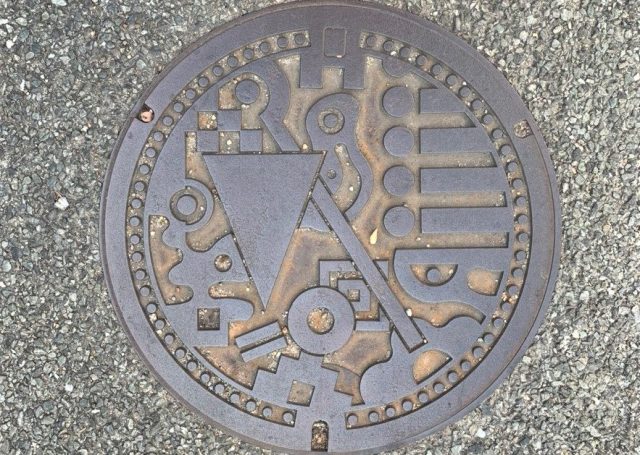
You too might be able to save lives just by staying regular!
The fight against COVID-19 continues as global infections continue to mount. Even with strong social measures such as lockdowns, closed borders, and free anime, its scourge continues to spread. One of the reasons for this is its ability to asymptomatically infect certain individuals, allowing them to go about their lives without being diagnosed and unknowingly transmitting the virus to others.
But now, Toyama Prefectural University may have found a pair of powerful weapons that could very well turn the tables and save countless lives: pee and poo.
On 16 June, researchers at the school announced that they have successfully identified traces of the novel coronavirus from the gallons of human fecal matter and urine which course through a city’s sewers like its lifeblood. This gives them a smelly but accurate window into the COVID-19 situation of a given area.
▼ Right this way to our testing facility…

The researchers are simply conducting regular PCR tests, only instead of directly from human sinuses, samples are extracted from large pools of excrement at sewage treatment facilities to determine if COVID-19 is present.
The university also believes that the amount of COVID-19 found in the waste is also indicative of the number of infected persons in a given area by comparing their test results with the number of reported cases in each area. In one instance, they were even able to find the virus before any cases were reported.
This makes this method potentially far more effective than individual PCR tests both in simplicity and the fact that asymptomatic carriers are automatically included in the sample groups, provided they’re getting enough fluids and fiber.
▼ And provided they remember to flush, for all our sakes

The experiment was conducted at three treatment plants in Ishikawa Prefecture and one in Toyama Prefecture from 5 March to 24 April, but now over 20 municipalities in Japan have begun examining their sewage.
If widespread use proves effective, it could be a major tool in containing the spread of COVID-19 and stopping potential second waves before they happen. Readers of the news, however, largely seemed to overlook that.
“So this means I shouldn’t drink sewage?”
“That’s why you should always wash your hands after using the toilet.”
“I wonder if hospitals are making sure their toilets are sterile.”
“This means that a rat could spread the virus too?”
“Good, then they can just test my poop instead of sticking that thing up my nose.”
“I hope this doesn’t lead to scams like ‘anti-COVID’ water filters.”
“It’s just like what happened in Resident Evil 2 then.”
“Tokyo Bay smells like poo. They should test that too.”
“This is amazing. They can use if to give warnings on a regional basis!”
At least one person got it. With this method it would be theoretically possible to identify the presence of COVID-19 in a community even if no one is experiencing symptoms at the time. It would than be up to that particular government to decide the next move, whether it’s a precision lockdown or testing, but either way they’ll have a crucial head-start on the problem.
Hopefully this method will prove more successful and become more widely adopted. Then, we can all help save lives just by doing what comes natural. Isn’t that right Mr. Sato?
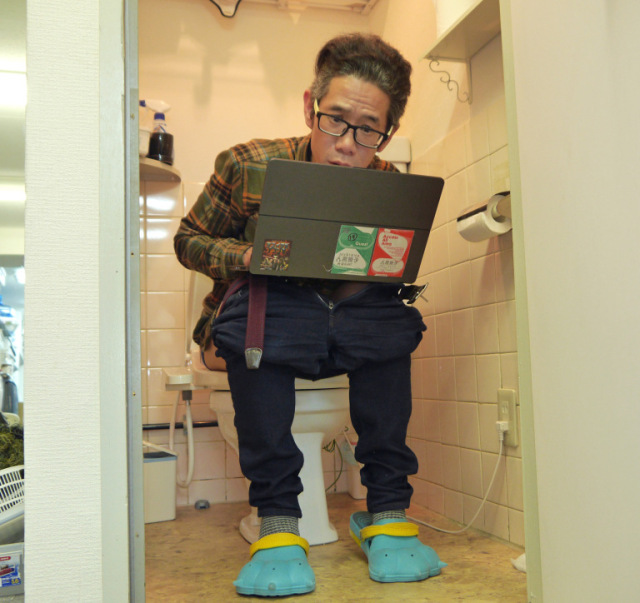
That’s the spirit!
Source: Nikkei Shimbun, My Game News Flash
Photos ©SoraNews24
● Want to hear about SoraNews24’s latest articles as soon as they’re published? Follow us on Facebook and Twitter!
 Chief Cabinet Secretary Kato asks China to stop anally testing Japanese visitors for COVID-19
 COVID-19 cases plummeting in Japan, doctors puzzled why
 We visited Akihabara’s PCR Test Center and here’s what you should expect
 Kyoto University finds alpacas may hold the key to preventing all COVID-19 variants
 Nara University study finds some common teas can neutralize COVID-19
 Fading Tokyo – Searching for signs of the Showa era as local neighborhoods evolve[Photos]
 Studio Ghibli adds new My Neighbour Totoro 2026 Corn Gift to its anime store for Mother’s Day
 Tokyo’s best museum for foreign travelers finally reopens after being closed for four years
 The Almost All Lettuce Burger from Dom Dom Burger really lives up to its name
 New cafe in trendy Tokyo neighborhood is staffed by grannies and grandpas with average age of 73
 Which Gundam is the favorite for fans in different countries? Gundam election announces results
 Why is Yoshinoya called Yoshinoya?
 Famous Tokyo cherry blossom spot installs view-blocking screens to fight overcrowding[Video]
 Real life yandere? Japanese man’s ex-girlfriend sneaks into his home, cooks up something crazy
 First-ever foot-operated vending machine appears in Japan during pandemic
 Japan now has a special desk for people who work at home with a pet cat[Photos]
 Uniqlo announces new T-shirts for One Piece, Naruto and more for manga publisher’s 100th birthday
 Krispy Kreme releases Super Mario doughnuts in Japan for a limited time
 Totoro and Calcifer become little light-up lanterns for Ghibli-style excursions or at-home decor
 Pokémon lacquerware series expands for Year of the Horse with new handcrafted design[Video]
 Picturesque Tokyo park plays host to millions of flowers and soap bubbles this spring
 Tokyo subway and almost all Tokyo train lines now accepting credit card tap payments
 Fatal stabbing at Pokémon Center in Tokyo reignites concern over rising stalking cases in Japan
 Starbucks Japan unveils new sakura cherry blossom collection for hanami season 2026
 Train station platform ramen store closes its doors on half a century of history in Tokyo
 Starbucks Japan releases new My Fruit³ Frappuccino at only 34 stores around the country
 Studio Ghibli releases Catbus pullback keychain that runs like the anime character
 Japanese onsen egg maker from 100-yen store Daiso needs to be on your shopping list
 Nine great places to see spring flowers in Japan, as chosen by travelers (with almost no sakura)
 Survey asks foreign tourists what bothered them in Japan, more than half gave same answer
 Japan’s human washing machines will go on sale to general public, demos to be held in Tokyo
 Starbucks Japan releases new drinkware and goods for Valentine’s Day
 We deeply regret going into this tunnel on our walk in the mountains of Japan
 Studio Ghibli releases Kodama forest spirits from Princess Mononoke to light up your home
 Starbucks Japan releases new sakura goods and drinkware for cherry blossom season 2026
 Japan’s newest Shinkansen has no seats…or passengers [Video]
 Major Japanese hotel chain says reservations via overseas booking sites may not be valid
 Put sesame oil in your coffee? Japanese maker says it’s the best way to start your day【Taste test】
 No more using real katana for tourism activities, Japan’s National Police Agency says
 Japanese Twitter user offers explanation for why Japan’s coronavirus outbreak has been so small
 Why have no COVID-19 clusters occurred in pachinko parlors?
 Japanese Red Cross releases important video on dealing with COVID-19 in a different way
 The Internet reacts to Osaka governor’s comical COVID-19 countermeasure with stunned disbelief
 Hot spring in Gunma Prefecture found to reduce COVID-19 infectivity by over 90 percent
 COVID-19 appears to be suppressing the flu in Japan, number of cases down and decreasing
 Several McDonald’s branches closing across Japan due to COVID-19 infections
 Only three COVID-19 infected people registered on Japan’s contact tracing app after a month
 74-year-old Japanese politician starts Instagram account for open dialog about COVID-19
 Don’t uninstall that Covid-tracking app yet, warns Japanese government
 Some of Japan’s COVID-19 contact tracing apps haven’t been working since last September
 World-first confirmation that masks can protect you from coronavirus【Video】
 Japanese chemistry professor shows why three kinds of masks could be effective against the virus