
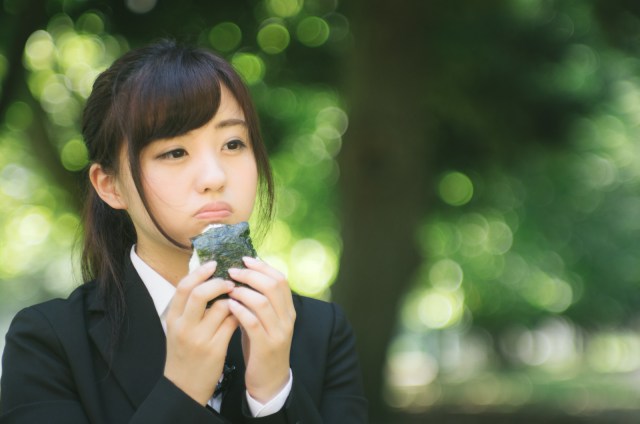
Even the humble onigiri isn’t safe from the complexities of Japanese etiquette.
With rules regarding chopstick use and taboos dictating the order in which dishes should be eaten, the world of Japanese food can be a confusing one to navigate, not just for foreigners but locals as well.
Now, a new morsel of eating etiquette has appeared on the culinary landscape, with a recent revelation made by Michiko Honda, Vice-Principal of “Infinity Finishing Academy” in Fukuoka City. She’s made waves online for pointing out the proper way to eat onigiri rice balls, and now people around the country aren’t sure what’s right or wrong anymore.
According to Honda, the best way to understand the importance of the rice ball is to first understand the importance of rice itself in Japanese culture. Not only is it an important food staple in Japan, rice cultivation has been credited with helping people form permanent settlements in ancient times, increasing the population and encouraging a group-centred way of life due to its production and related harvest festivals.
▼ Planting and harvesting large fields of rice is too big a job for one person to take on.

Prayers to the gods for ideal weather conditions led to rituals which are still performed today, even influencing ceremonies seen in traditional performing arts and sports like sumo. Major turning points in life also include rituals where rice is indispensable, like ubutatemeshi, a thanksgiving rice made for the gods after safe childbirth, and okuizome, the ceremonial first meal made for a baby on their 100th day of life.
So much of Japanese culture can be traced back to the importance of the grain, and rice balls themselves have a long and interesting history that deserves a mention. In the Nara Period (710-794), before the use of chopsticks became common, rice was often shaped into small balls so they could be picked up easily. Then in the Heian Period (794-1185), rice was shaped into small oval shapes and known as tonjiki.
The word “onigiri” came into use in the Edo Period (1603-1868), when these rice balls became triangular in shape and were widely popularised as a food that could travel well, allowing people to enjoy them on journeys, at hanami cherry blossom viewing picnics, and while watching plays.
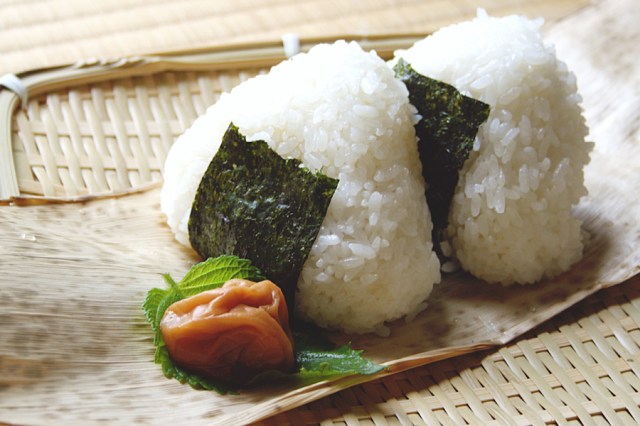
Rice balls as we know them today are commonly purchased from supermarkets and convenience stores, but nothing beats the fresh taste of a homemade onigiri. Making a perfect triangle requires firm but gentle pressure from the palms of both hands, and it’s often said that thinking fond thoughts of the one you’re making the rice ball for is an act of love that will help it taste even more delicious. Honda points out that the word for palm, “tanagokoro“, means “te no kokoro” (“the hand’s heart”), which connects it to deeper meanings of love.
So, now that we’ve learnt about the history of onigiri and the importance of rice in daily life, what’s the right way to eat a rice ball? Well, according to Honda, the first thing people should be careful of is concealing the bitten part of the onigiri. Honda says the bitten portion is unsightly for others to see, so after taking a bite you should either keep the onigiri horizontal to your mouth as you eat it or split it in two before taking a bite, as this will make it easier to eat.
▼ Onigiri etiquette lesson: failed
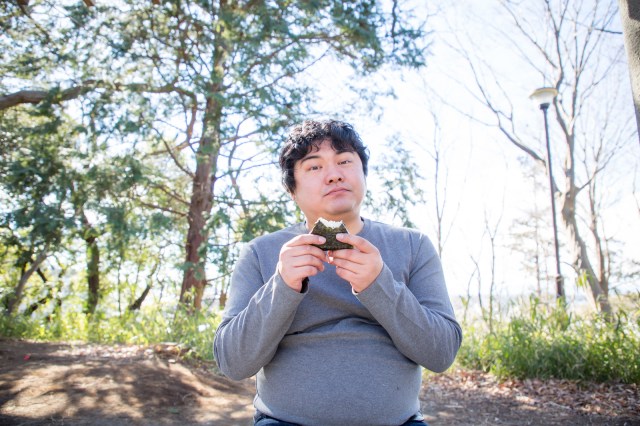
The second point to remember is that you shouldn’t let the grains of rice stick to your hands in public. If this happens, licking the grains of rice off your fingers might seem like the most unwasteful option, but this doesn’t make a good impression on anyone, even if you tilt your head to try to hide what you’re doing. So use a hand towel to remove the rice grains instead.
One last thing to remember is that, as a general rule, if onigiri rice balls are included in bento boxes, they should be eaten with chopsticks and not with your hands.
With most people in Japan eating onigiri without any regard to etiquette, these three manner points immediately sparked debate online.
“What? It’s going to look a lot worse if the rice ball breaks and falls when you’re trying to halve it.”
“Onigiri is eaten by hand – it’s not designed to be elegant.”
“Next we’ll be told that all rice balls should be eaten with chopsticks instead of hands!”
“Isn’t it still too big to eat in one bite if you halve it?”
“Maybe they should just make rice balls bite-sized to avoid all this confusion.”
This pushback against onigiri etiquette is largely tied to the casual nature of the rice ball, which is commonly eaten in laid-back, relaxed situations. However, as an etiquette coach, Honda is always thinking of ways to add elegance and refinement to even the most casual situations.
She believes it’s good manners to show respect to the rice ball, and the rice within it, by acknowledging the hard work of farmers and communities involved in its production. And given that there are said to be seven gods in every grain of rice, it’s not a bad thing to consider.
Still, people in Japan are more than happy to leave manners by the wayside when it comes to eating rice balls. Because there’s already enough to keep in mind when it comes to food etiquette in Japan.
Source: Nishinippon Shimbun via Hachima Kikou
Top image: Pakutaso
Insert images: Gahag, Pakutaso (1, 2)
● Want to hear about SoraNews24’s latest articles as soon as they’re published? Follow us on Facebook and Twitter!
 Say hello to the Big Bomb Onigiri, a beast of a Japanese rice ball
 What are Japan’s best, and most unique, regional rice balls?
 Bowl or chopsticks: Which one should you pick up first?
 The 10 best types of onigiri rice balls to try in Japan【Survey】
 What’s it like to eat an enormous panda onigiri rice ball that weighs over two pounds?
 You can assemble a well-balanced team of Pokémon, them eat them, thanks to Japanese cake chain
 Japan reportedly adding Japanese language skill requirement to most common foreigner work visa
 Japan named most sleep-deprived country for fourth year in a row, according to survey
 Starbucks Japan closing only Shinkansen platform branch for popularity-triggered renovations
 A Kyoto factory vending machine sells gourmet mystery meals at bargain prices
 Daiso opens massive new 25,392-square foot Tokyo flagship store with its two sub-brands included
 Two food hacks take Japan’s convenience store fried chicken to amazing new sandwich heights
 Can a downtown Tokyo super sento bathhouse beat a hotel for a one-night stay?
 Pokémon and Ikea Japan cross over into each other’s worlds with collaboration events
 Tokyo teahouse serves up a sakura matcha dessert you won’t find anywhere else
 Tokyo’s best museum for foreign travelers finally reopens after being closed for four years
 Pokémon lacquerware series expands for Year of the Horse with new handcrafted design[Video]
 Tokyo subway and almost all Tokyo train lines now accepting credit card tap payments
 Totoro Fund line of beautiful artwork and apparel lets you help the real-world Totoro Forest
 Fading Tokyo – Searching for signs of the Showa era as local neighborhoods evolve[Photos]
 Famous Tokyo cherry blossom spot installs view-blocking screens to fight overcrowding[Video]
 Tokyo turns its phone booths into free Wi-Fi hotspots, and here’s how to use them
 Studio Ghibli adds new My Neighbour Totoro 2026 Corn Gift to its anime store for Mother’s Day
 Japan now has a special desk for people who work at home with a pet cat[Photos]
 Uniqlo announces new T-shirts for One Piece, Naruto and more for manga publisher’s 100th birthday
 Train station platform ramen store closes its doors on half a century of history in Tokyo
 Starbucks Japan releases new My Fruit³ Frappuccino at only 34 stores around the country
 Studio Ghibli releases Catbus pullback keychain that runs like the anime character
 Krispy Kreme releases Super Mario doughnuts in Japan for a limited time
 Japanese onsen egg maker from 100-yen store Daiso needs to be on your shopping list
 Nine great places to see spring flowers in Japan, as chosen by travelers (with almost no sakura)
 Survey asks foreign tourists what bothered them in Japan, more than half gave same answer
 Japan’s human washing machines will go on sale to general public, demos to be held in Tokyo
 Starbucks Japan releases new drinkware and goods for Valentine’s Day
 We deeply regret going into this tunnel on our walk in the mountains of Japan
 Studio Ghibli releases Kodama forest spirits from Princess Mononoke to light up your home
 Starbucks Japan releases new sakura goods and drinkware for cherry blossom season 2026
 Japan’s newest Shinkansen has no seats…or passengers [Video]
 Major Japanese hotel chain says reservations via overseas booking sites may not be valid
 Put sesame oil in your coffee? Japanese maker says it’s the best way to start your day【Taste test】
 No more using real katana for tourism activities, Japan’s National Police Agency says
 The Big Bomb Onigiri Japanese rice ball helps us conquer mountain race but conquers us in the end
 Should you warm up your convenience store onigiri rice balls in the microwave?【Taste test】
 In celebration of Onigiri Day, we compare rice balls from three different convenience stores
 Discovered: An even better way to open Japanese convenience store rice balls【Video】
 Lawson now sells old rice as “vintage” onigiri in Japan
 The surprising semi-secret ingredient in many Japanese convenience store rice balls: oil
 Tapioca onigiri brings boba to the world of rice balls
 Japanese convenience store packs a whole bento into an onigiri rice ball
 How good is this popular wooden onigiri mould, made by a Japanese rice specialist?
 Less than half of Japanese people OK with bare hand-pressed rice balls, survey says, but why?
 Onigiri without the nigiri – Japan’s traditional rice balls get an update
 Onigiri in Paris: Small lunch shop brings traditional Japanese rice balls to France
 Problem solved: How to open a Japanese convenience store onigiri rice ball【Pics and video】
 Survey ranks convenience store rice balls – salmon, sea-dwelling poultry & plants steal the show
 Haneda Airport’s new rice ball stand — Sister shop Tokyo’s best out-of-the-way onigiri spot
 The difference between onigiri rice balls in Tokyo and Osaka