
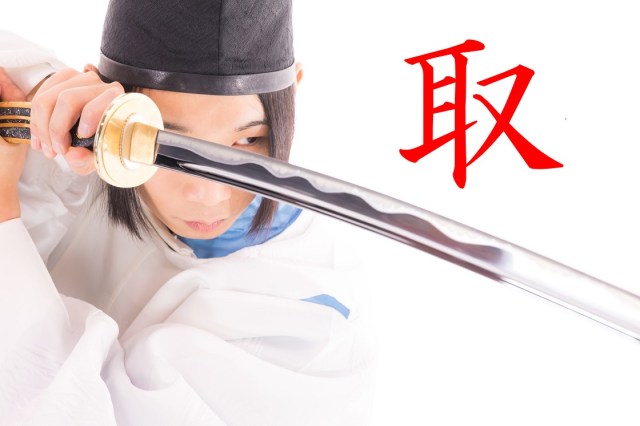
Commonly used kanji’s components don’t make a lot of sense nowadays, but once upon a time…
The Japanese language has three types of writing, and kanji are by far the most difficult. There are more than 2,000 kanji characters to remember, and that huge number is a daunting goal not just for foreigners learning Japanese as a second language, but for kids growing up in Japan as well.
But while learning kanji is always going to be a challenge, there’re a few ways to make it more manageable, and one of the best is to look for ways to break a single kanji down into its component parts. For example, the kanji character for “rest,” seen here…
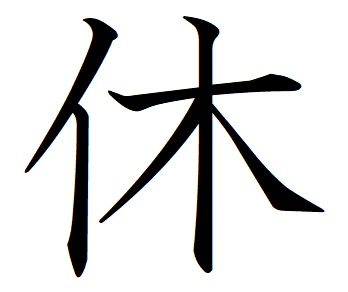
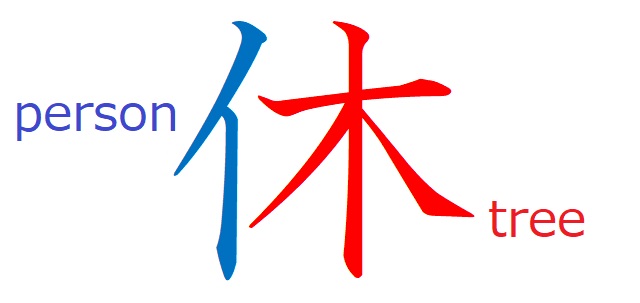
…becomes easier to remember if you already know that 木 is the kanji for “tree,” and the left portion of 休 represents a person. In other words, the kanji for “rest” is a picture of a person leaning against a tree, taking a break and relaxing in the shade.
So yeah, kanji can be tough, but the more you learn, the easier they get…at least that’s usually how it goes. However, you might find yourself scratching your head when you come to the kanji for “take…”
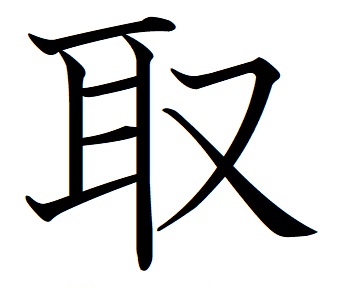
…since the left half is pretty much the same as the kanji for ear.

But maybe things instantly make sense when you add in the right half of 取? Not really, since the right portion means “hand,” making 取 a visual representation of “holding an ear.”
And it’s not like the metaphor is “grab someone by the ear to take them somewhere with you” either, since that meaning for the English word “take” (i.e. forcibly leading someone somewhere) is a completely separate word/kanji in Japanese (連). No, 取 is strictly for the idea of willfully obtaining something, but why is it the concept connected to ears?
Because long ago, if you were a soldier on the field of battle, and you wanted to bring proof back to camp that you’d killed a bunch of dudes, you’d cut off the ears of your fallen foes.
▼ It was, after all, an age where far more people had swords on them than camera-equipped phones.

With “take” being such a necessary, fundamental communication concept, and kanji having been in use for centuries, originally in China and later in Japan, 取, and the reason it’s written the way it is, aren’t new linguistic developments. 取 is one of the most commonly written/typed kanji, though, and with its components themselves being fairly simple and easy to remember, many Japanese people haven’t really bothered to dig into its conceptual origins. Recently, though, Japanese Twitter user and linguistics tutor @tutor_gonta brought the violent backstory to people’s attention while sharing that he himself only learned about it recently when a third-grade pupil asked him why 取 is written that way, and both of them were shocked when he looked into the reason.
小3の生徒に「どうして『取る』っていう字は耳へんなんですか?」と聞かれ、私も知らなかったのでその場で漢字字典で調べたところ『捕虜や敵の耳を戦功の印としてしっかり手に持つことを表す』と書かれていて、生徒と二人でぶるぶる震えた。
— ごん太@家庭教師 (@tutor_gonta) March 13, 2021
In the meantime, if you’d like to learn the origins of a less bloodstained kanji, can we interest you in why “cherry blossom” is written the way it is in Japanese?
Sources: Fusen Arare no Kanji Blog, OKjiten
Top image: Pakutaso (edited by SoraNews24)
Insert images: SoraNews24, Pakutaso
● Want to hear about SoraNews24’s latest articles as soon as they’re published? Follow us on Facebook and Twitter!
Follow Casey on Twitter for more about Japanese linguistics and/or swords.
 Why does Japanese writing need three different sets of characters? (Part 2)
 How to write “sakura” in Japanese (and why it’s written that way)
 Why does Japanese writing need three different sets of characters? (Part 1)
 One simple kanji character in super-simple Japanese sentence has five different pronunciations
 Japanese government tells teachers not to be so strict, at least about some kanji radicals
 Famous Tokyo cherry blossom spot installs view-blocking screens to fight overcrowding[Video]
 Japan now has a special desk for people who work at home with a pet cat[Photos]
 Rumors say this is Japan’s very best McDonald’s branch, but what makes it special?[Taste test]
 Uniqlo announces new T-shirts for One Piece, Naruto and more for manga publisher’s 100th birthday
 Totoro and Calcifer become little light-up lanterns for Ghibli-style excursions or at-home decor
 Picturesque Tokyo park plays host to millions of flowers and soap bubbles this spring
 Final Fantasy invites you to adventure in Fukushima with Fukushima Fantasy Chocobo fun[Video]
 Japanese kindness restores our faith in humanity after a highway bus accident in Tokyo
 Cup Noodle pouch satisfies our never-ending need for instant ramen
 Does this video about an abandoned dog leave you wiping your eyes or shaking your fist?
 Krispy Kreme releases Super Mario doughnuts in Japan for a limited time
 7-Eleven Japan releases a crazy new viral sandwich: Chocolate Sprinkles and Whipped Cream
 Japan now has a “for foreign tourists only” Mt. Fuji sightseeing train[Video]
 Starbucks Japan releases new My Fruit³ Frappuccino at only 34 stores around the country
 Studio Ghibli releases the My Neighbour Totoro tea caddy, with a magical self-closing lid
 Create a tiny Ghibli anime world on your bookshelf with new miniature papercraft art kits
 Stunning central Japan wisteria festival is like a purple fantasy straight out of a Ghibli movie
 Starbucks Japan unveils new sakura cherry blossom collection for hanami season 2026
 Train station platform ramen store closes its doors on half a century of history in Tokyo
 Studio Ghibli releases Catbus pullback keychain that runs like the anime character
 Japanese onsen egg maker from 100-yen store Daiso needs to be on your shopping list
 Nine great places to see spring flowers in Japan, as chosen by travelers (with almost no sakura)
 Cherry blossoms begin blooming in Japan with record-early starts for sakura season
 Survey asks foreign tourists what bothered them in Japan, more than half gave same answer
 Japan’s human washing machines will go on sale to general public, demos to be held in Tokyo
 Starbucks Japan releases new drinkware and goods for Valentine’s Day
 We deeply regret going into this tunnel on our walk in the mountains of Japan
 Studio Ghibli releases Kodama forest spirits from Princess Mononoke to light up your home
 Starbucks Japan releases new sakura goods and drinkware for cherry blossom season 2026
 Japan’s newest Shinkansen has no seats…or passengers [Video]
 Major Japanese hotel chain says reservations via overseas booking sites may not be valid
 Put sesame oil in your coffee? Japanese maker says it’s the best way to start your day【Taste test】
 No more using real katana for tourism activities, Japan’s National Police Agency says
 Why is the Japanese kanji for “four” so frustratingly weird?
 What does a kanji with 12 “kuchi” radicals mean? A look at weird, forgotten Japanese characters
 Discrimination fears lead Japanese genetics society to replace words for dominant, recessive gene
 Japanese study tip: Imagine kanji characters as fighting game characters, like in this cool video
 Japanese teacher shares surprising reason why the kanji for crow has one less line than bird
 Students of Japanese despair – you’ve probably been writing some of the simplest kanji wrong
 Japanese writing system gets turned into handsome anime men with Hiragana Boys video game
 How to tell Japanese’s two most confusing, nearly identical characters apart from each other
 Ariana Grande stops learning Japanese following backlash over her “7 Rings” BBQ grill tattoo
 Awesome Japanese elementary school teacher rewards kids who use independent learning on his tests
 W.T.F. Japan: Top 5 most confusing Japanese compound words【Weird Top Five】
 Words they don’t teach you in Japanese class: How to say “straw man” in Japanese
 W.T.F. Japan: Top 5 myths about learning Japanese【Weird Top Five】
 “Bear” voted Japan’s Kanji of the Year for 2025 in extremely close race
 Eat shit and learn Japanese with educational poo-inspired candies from Japan
 Duolingo free language learning app released their first Japanese lessons, so we tested them out!
 Japan’s Kanji of the Year announced for 2021, and it’s a familiar choice