
With local customs linked to Judea, this is a very unusual Japanese community.
Did you know that the tomb of Jesus Christ is located in Aomori Prefecture? Well, that’s what’s been long reported at least, and it exists in Christ Park, around 40 minutes by car from JR Hachinohe Station.
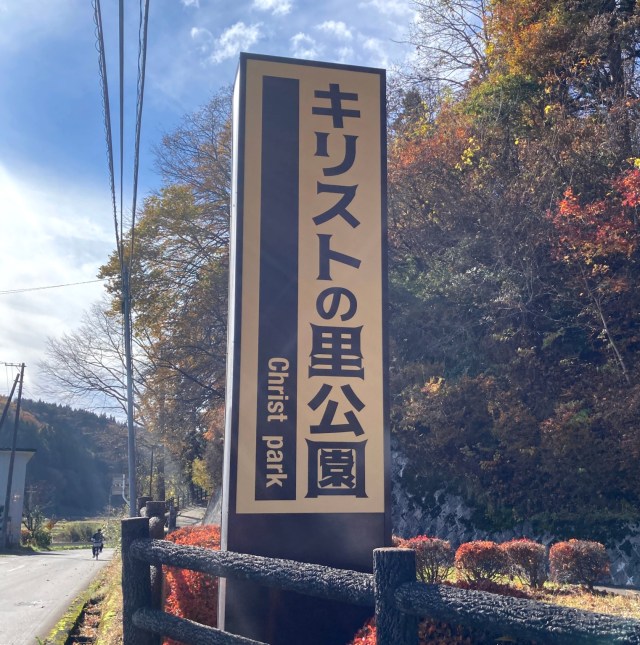
Located in Shingo Village, Christ’s tomb isn’t the only surprising site at the park, as it’s also home to the Oishigami Pyramid.
▼ Oishigami Pyramid translates to “Big Rock God Pyramid”, and it’s marked as number three on the local tourist signboard
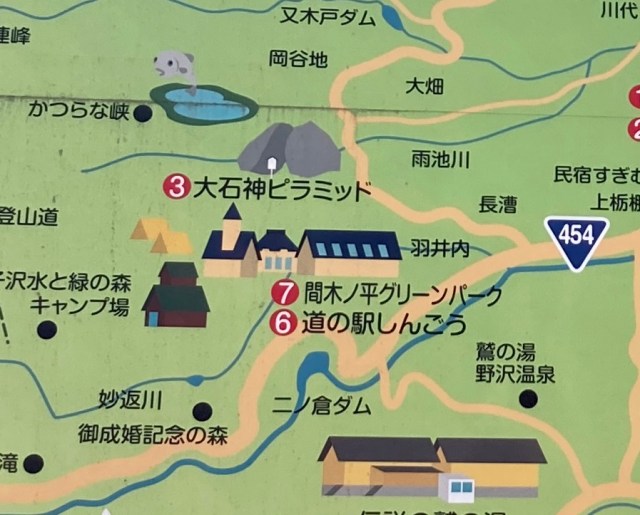
▼ Christ and a pyramid at one location…no wonder Shingo is dubbed “The Village of Mystery and Romance“.
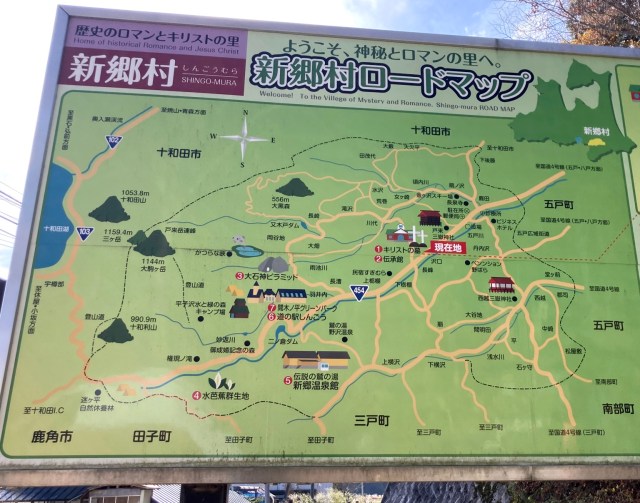
Christ’s tomb is marked as number one on the signboard above, and it can be found at the end of a short trail.
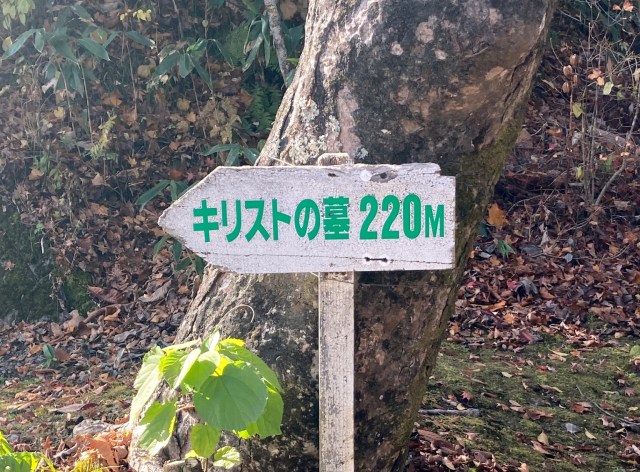
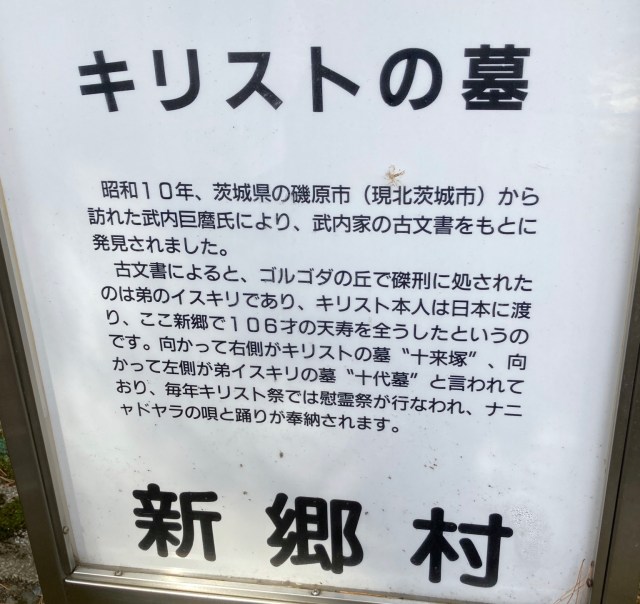
So what’s the deal with Christ’s tomb? Well, the sign below goes some way to explaining its history.
“It was first discovered in 1935 by Kiyomaro Takeuchi, who visited from Isohara City (now Kitaibaraki City) in Ibaraki Prefecture, based on an ancient document belonging to the Takeuchi family. According to the ancient document, it was Christ’s younger brother Isukiri who was crucified on the hill of Golgotha, and Christ himself went to Japan and lived here in Shingo until the age of 106. The tomb of Christ, known as “Toraizuka”, is on the right , and on the left is “Juudaihaka”, the tomb of his younger brother Isukiri, and every year a memorial service is held at the Christ Festival, where the Nanyadoyara song and dance is performed as an offering.”
The official website for Shingo has even more intriguing information, listing some of the village’s unusual customs, which are similar to customs practiced in Judea:
- There is a theory that the name of the Herai district of Shingo Village comes from the word “Hebrew.” [“Herai” sounds similar to “Heburai”, the Japanese for “Hebrew”)
- In the local dialect, fathers are called “Aya” and “Dada,” and mothers are called “Apa” and “Gaga.”
- When a new born child is taken outdoors for the first time, a cross is drawn on the forehead with ink.
- There is an old family whose family crest has been the Star of David for generations.
Whether or not you believe the authenticity of the ancient document used by the Takeuchi Family to find the tomb of Christ, the points above are undeniably unusual for a community in Japan, adding to the intrigue of the site.
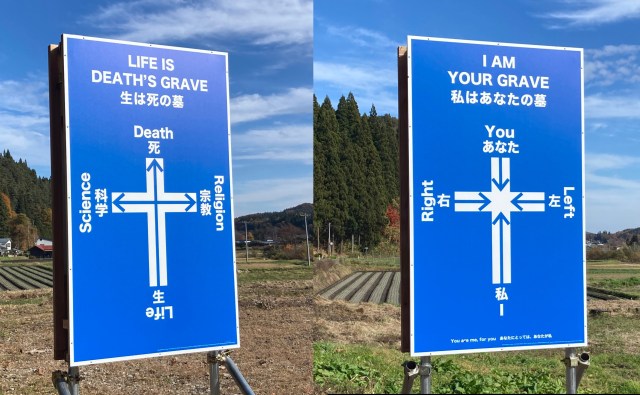
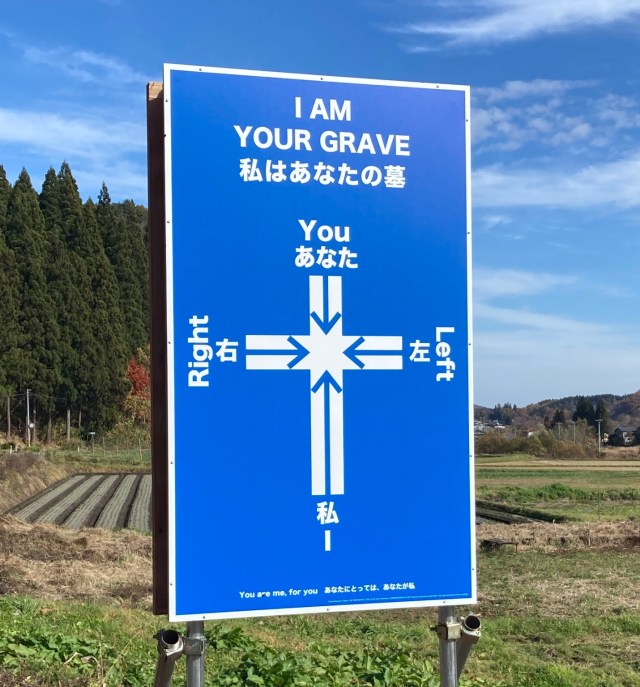
The area around the park is also unusual, as it’s being used as a place of expression through something called the “Art User Conference” that works to create a new art space.
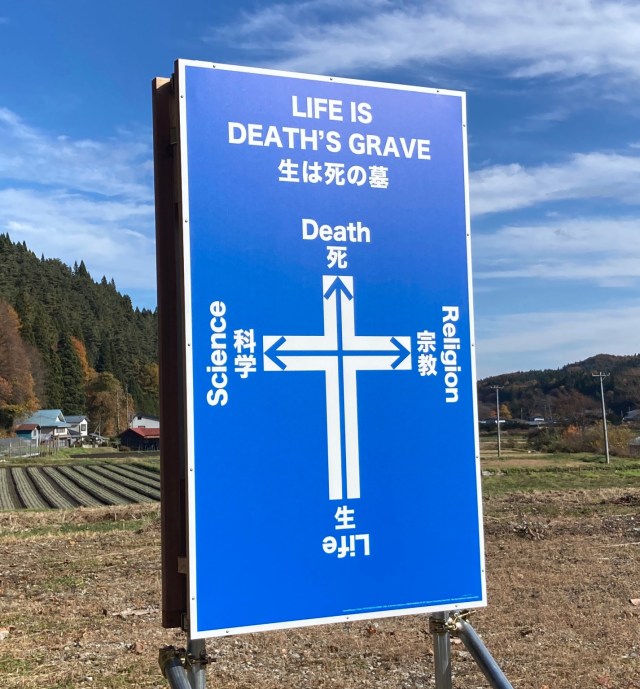
The works above and below, designed to look like road signs, blend into the local scenery while expressing a deep and profound message related to the site.
▼ There’s also an unusual souvenir shop that’s only open on weekends.
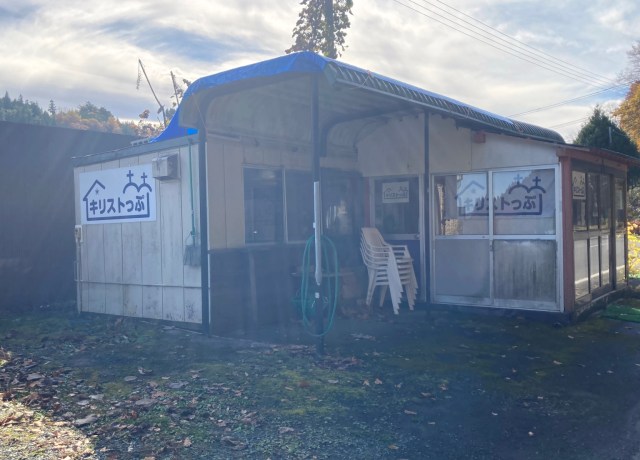
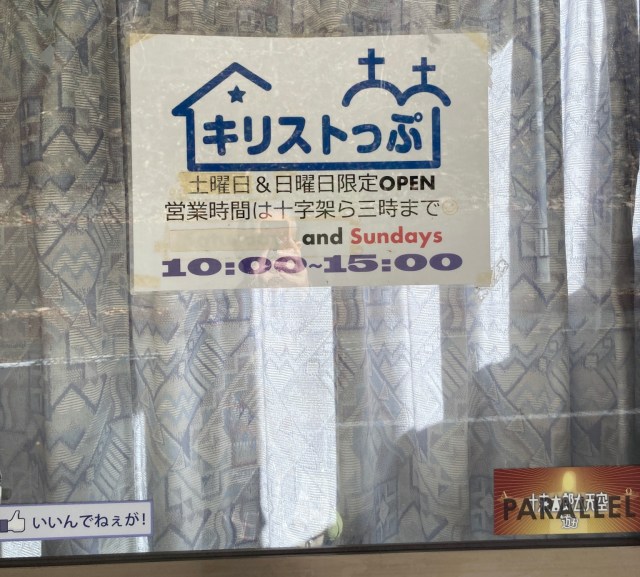
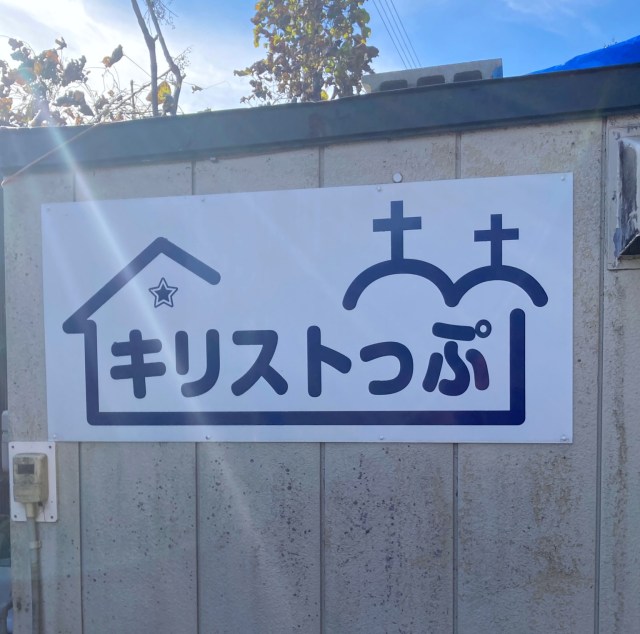
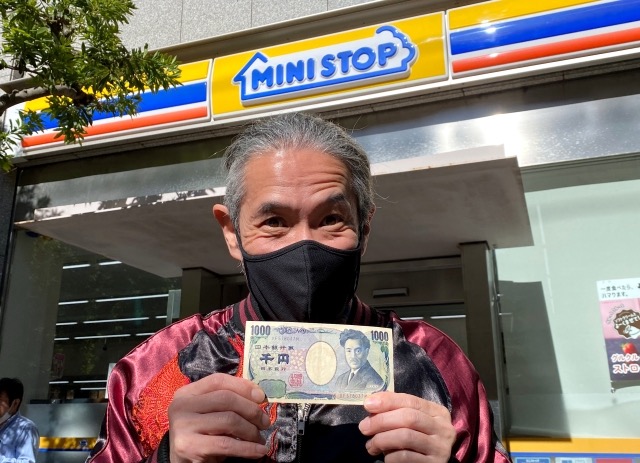
“Kirisutoppu” (“キリストっぷ”) combines the word “Christ” with “stop”, and appears to mimic Japan’s Mini Stop convenience store logo.
▼ The Mini Stop logo, seen behind Mr Sato’s head on one of his senbero visits.
Alas, Mr Sato was on a tight schedule while passing through Shingo, so although he didn’t have time to take photos of the burial mounds, which are each topped with a cross, he managed to snap some pictures of the pyramid.
▼ Oishigami Pyramid is about 10 minutes by car from Christ’s Tomb
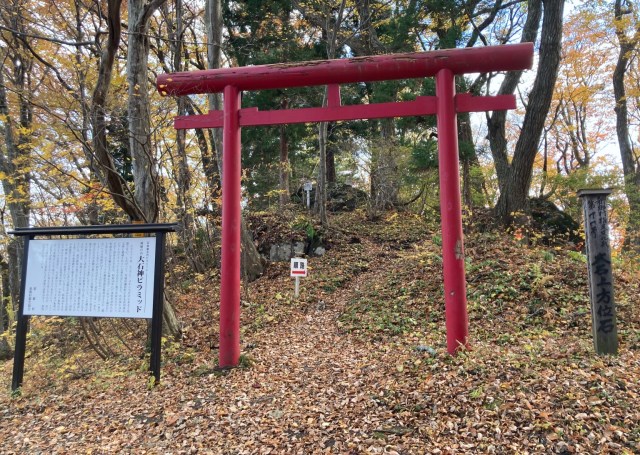
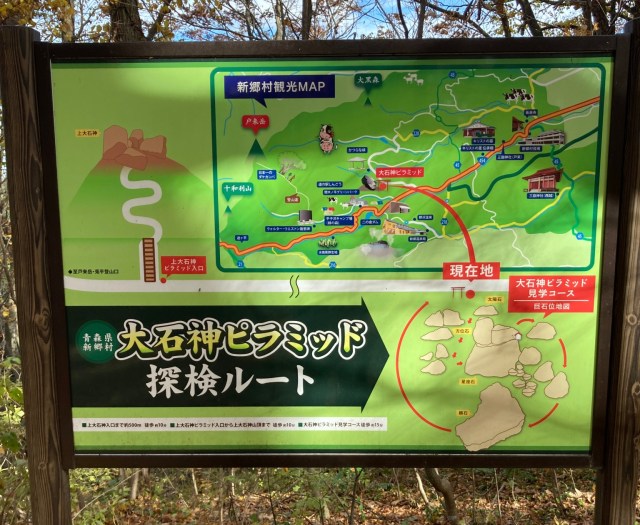
▼ The pyramid is made up of ancient stones with markings (bottom right on the sign below) and the route to get there is surprisingly steep
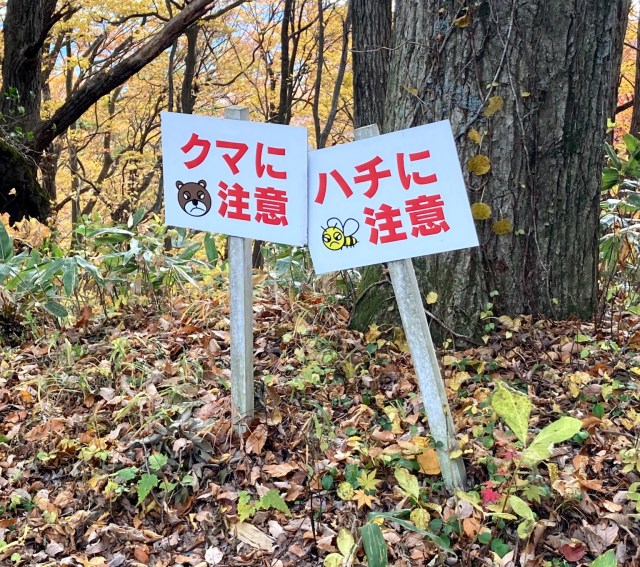
▼ You’ll have to mind the “Beware of Bears” and “Beware of Bees” signs along the way.
But once you arrive at the site, you’ll be in awe of the megaliths, which are estimated to be tens of thousands of years older than the pyramids in Egypt, and believed to have been used to worship the sun.
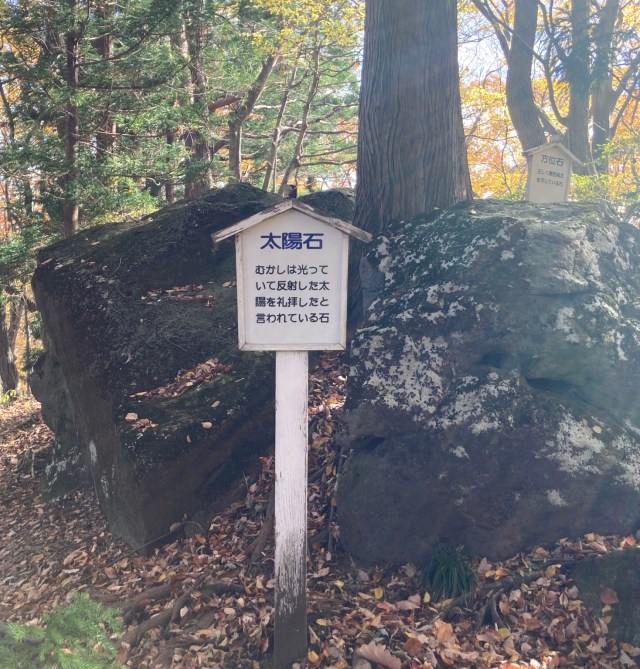
▼ Shingo Village truly is a place shrouded in mystery
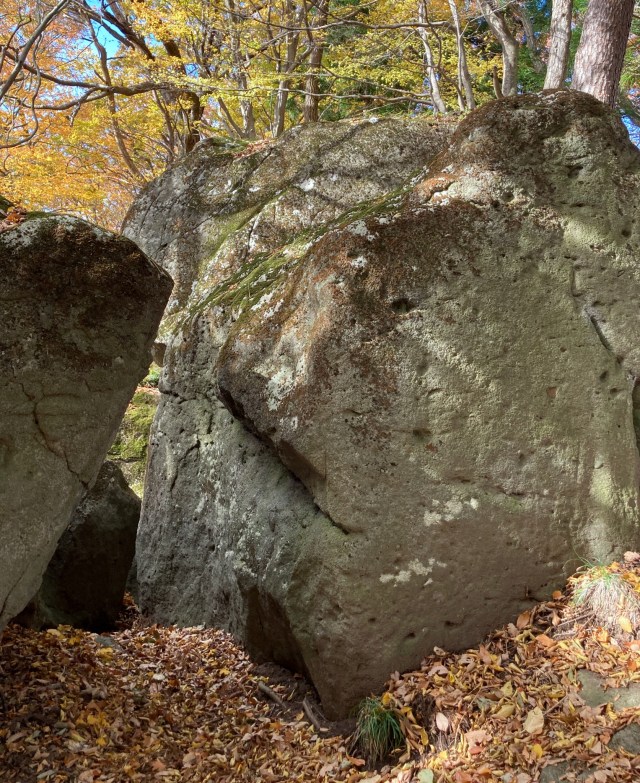
Before leaving the area, you can always stop in at Christ’s Village Museum to learn more about the site’s history, with admission costing 200 yen (US$1.37) for adults.
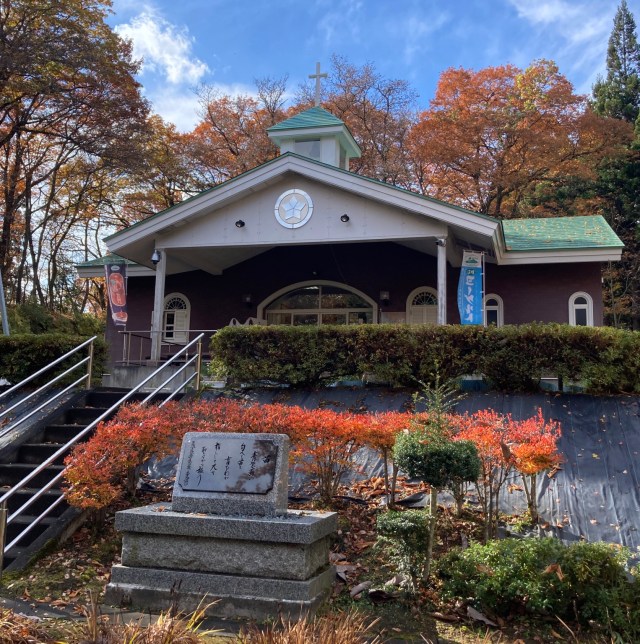
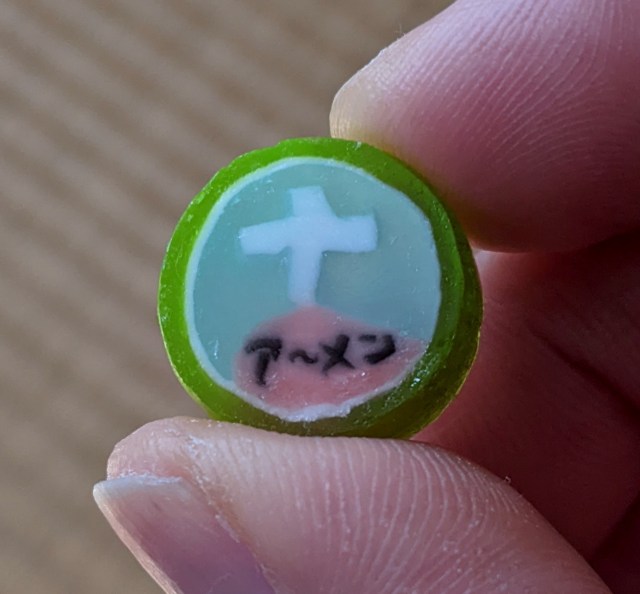
▼ And don’t forget to pick up some fun souvenirs, like “Christ’s Hakka Ame” (350 yen).
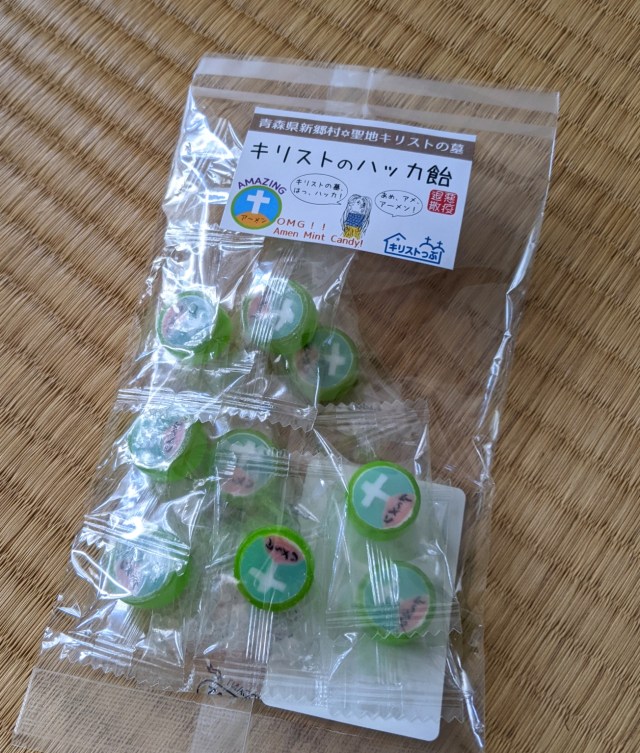
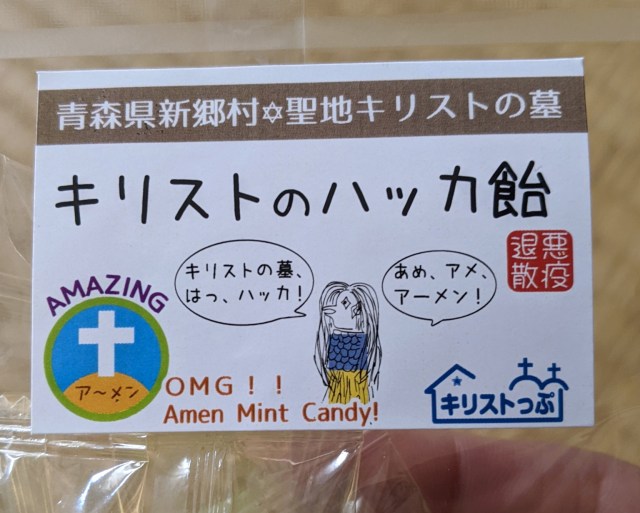
Hakka is Japanese mint, but it also sounds like “haka”, the Japanese word for “tomb” or “gravesite”, while “ame”, which means “candy” in Japanese, sounds like “Amen”, making it a very punny souvenir.
▼ Amabie explains the puns to us, while a sense of excitement about it all is conveyed with: “OMG!! Amen Mint Candy!”
And as if all that wasn’t enough, each candy features the image of a burial mound, with “アーメン” (“Amen”) written beneath it.
Whether or not you believe in Christ, or that his tomb exists in Aomori Prefecture, the mountain village of Shingo is a quiet and pleasant tourist site that’ll inspire your curiosity. It’s well-suited to travellers looking to explore off the beaten path, especially if you time your visit for June, when you’ll be able to witness the mysterious Nanyadoyara dance at the annual Christ Festival.
Location information
Christ-no-Sato Park / キリストの里公園
Address: Aomori-ken, Sannohe-gun, Shingo-mura, Torai, Notsuki 33-1
青森県三戸郡新郷村大字戸来字野月33-1
Hours: 9:00 a.m.-5:00 p.m.
Closed Wednesdays (open every day in summer, closed every day in winter)
Images © SoraNews24
● Want to hear about SoraNews24’s latest articles as soon as they’re published? Follow us on Facebook and Twitter!
[ Read in Japanese ]
 Japan’s UFO village, where the magnetic field is said to attract visitors from outer space
 Mt. Fuji decorated with a 500,000-flower pink carpet is Japan’s ultimate spring view
 30 Pikachus want to share a Tokyo hotel room with you that has separate Grass, Water, Fire spaces
 McDonald’s and Gundam team up for customized anime mecha and fried chicken sandwiches[Video]
 Pringles Chocolate, but with a Japanese twist, is the snack hack you should be trying right now
 Howl’s Moving Castle’s scene-stealing dog is here to clean your home as a plushie mop
 The 10 best day trips from downtown Tokyo【Survey】
 Does this video about an abandoned dog leave you wiping your eyes or shaking your fist?
 You can assemble a well-balanced team of Pokémon, them eat them, thanks to Japanese cake chain
 Japanese manhole lid raises eyebrows with fertility god symbol that looks like… well, you know
 Licca-chan dolls released in North America for first time in nearly 60 years
 Japan reportedly adding Japanese language skill requirement to most common foreigner work visa
 Pokémon and Ikea Japan cross over into each other’s worlds with collaboration events
 Starbucks Japan closing only Shinkansen platform branch for popularity-triggered renovations
 Two food hacks take Japan’s convenience store fried chicken to amazing new sandwich heights
 7-Eleven Japan’s new baked-in-store sweet treat is only available in three parts of the country
 Man bites woman at cherry blossom park in Japan, dies shortly after
 Peanuts and Coke becomes a viral hit in Japan, but is it a trend worth joining?
 Can a downtown Tokyo super sento bathhouse beat a hotel for a one-night stay?
 New Japanese KitKats come in sakura flavour, with poetic symbolism for success
 Japan now has a special desk for people who work at home with a pet cat[Photos]
 Famous Tokyo cherry blossom spot installs view-blocking screens to fight overcrowding[Video]
 Uniqlo announces new T-shirts for One Piece, Naruto and more for manga publisher’s 100th birthday
 Train station platform ramen store closes its doors on half a century of history in Tokyo
 Starbucks Japan releases new My Fruit³ Frappuccino at only 34 stores around the country
 Krispy Kreme releases Super Mario doughnuts in Japan for a limited time
 Studio Ghibli releases Catbus pullback keychain that runs like the anime character
 Japanese onsen egg maker from 100-yen store Daiso needs to be on your shopping list
 Survey asks foreign tourists what bothered them in Japan, more than half gave same answer
 Japan’s human washing machines will go on sale to general public, demos to be held in Tokyo
 Starbucks Japan releases new drinkware and goods for Valentine’s Day
 We deeply regret going into this tunnel on our walk in the mountains of Japan
 Starbucks Japan releases new sakura goods and drinkware for cherry blossom season 2026
 Studio Ghibli releases Kodama forest spirits from Princess Mononoke to light up your home
 Japan’s newest Shinkansen has no seats…or passengers [Video]
 Major Japanese hotel chain says reservations via overseas booking sites may not be valid
 Put sesame oil in your coffee? Japanese maker says it’s the best way to start your day【Taste test】
 No more using real katana for tourism activities, Japan’s National Police Agency says