
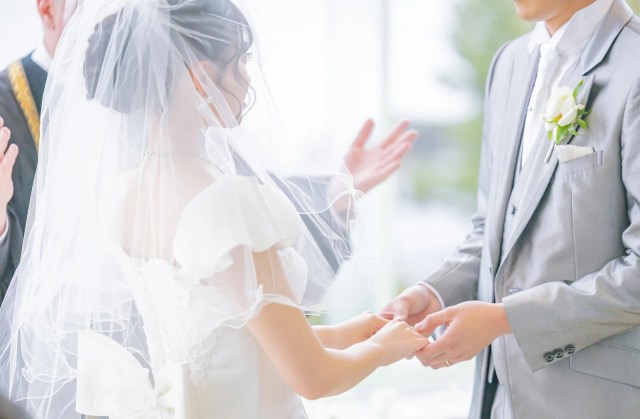
The Japanese constitution requires couples to share a family name if they get married, but only one age group in survey comes close to agreeing with it.
When a couple gets married in Japan, usually the wife takes her husband’s family name. However, it’s not shocking for the guy to give up his family name and take his bride’s instead. It’s not the norm, but it’s definitely something that’s more common in Japan than the U.S.
What you won’t see, however, is couples who tie the know and each retain their family name. As a matter of fact, that kind of arrangement is illegal under Japan’s current constitution, which stipulates that a married couple must have the same family name.
However, as time goes by social attitudes can shift and evolve, and in recent years an increasing number of people have been voicing their opinion that the requirement that married couples share a family name should be repealed. To gauge the public’s feelings on the matter, public broadcaster NHK conducted a randomly-dialed telephone survey last month, gathering responses from a total 1,534 people across Japan aged 18 and up.
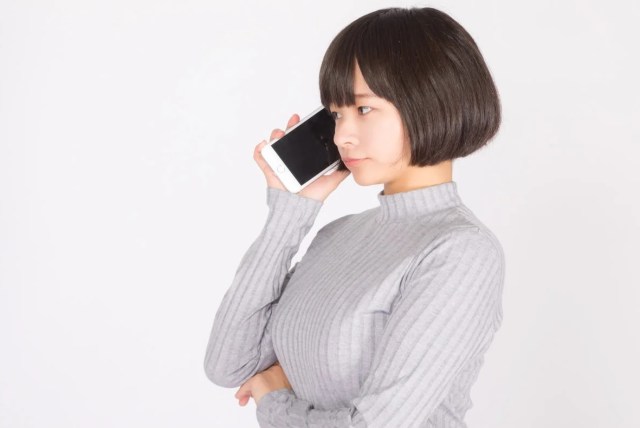
▼ “Hello! Do you, or your identical-family-name-spouse, have time to answer a few questions?”
When asked how they felt about the idea of men and women being allowed to retain their own family names after marriage, 62 percent were in favor of it, compared to just 27 percent opposed. What’s more, the survey participants showed even stronger support for letting married couples both keep their pre-marriage family names among respondents in all age brackets under 70.
Meanwhile, there was a pronounced dip in support for the idea among survey respondents in their 70s, out of whom only 48 percent are in favor of it. That’s still, thogh, a larger group than the 40 percent of respondents age 70 to 79 who said they’re opposed to giving married couples that option, and in every other age group “in favor of” beat out “opposed to” by a much larger margin.
When asked why they were in favor of letting married couples keep their own family names, the top responses were:
1. Having more options is better (selected by 56 percent of respondents)
2. Changing your family name can cause problems at work and in your daily life (18 percent)
3. Usually it’s the woman who changes her name, which is unfair (12 percent)
4. I think there are people who like and feel attached to their family name (10 percent)The number-two response might sound overly dramatic, but changing your family name can cause problems, or at least inconveniences, in Japan. In many work environments, people are known by their last names, and not only when dealing with outside clients. Coworkers, even ones on friendly terms, will often only call each other by their family names, and the same often goes for adult neighbors or other acquaintances in the community. If you get married and have to change your family name, for example, from Tanaka to Suzuki, suddenly everyone has to relearn your name, and things get even trickier if there’s also someone else in the office or apartment complex who already has your new family name.
On the other end of the survey responses, those who were opposed to separate family names for spouses gave the following reasons.
1. Having separate names will weaken the bonds and solidarity between family members (36 percent)
2. Parents having separate family name may have a negative influence on children (26 percent)
3. Having separate family names will confuse other people (18 percent)
4. There are now more situations than there were before in which someone can continue using their pre-marriage family name (12 percent)
Looking at this list, it’s not hard to see why support was lower for a separate-names option among the oldest age group in the survey. Reasons 2 and 3 largely boil down to the concept of members of the same family having different family names feeling strange and confusing, and they’re more likely to feel that way if you’ve spent the last seven decades-plus with “married couple = same family name” as a rocksteady part of Japanese society. Reason 1, and of course 2, also feel based on the assumption that the couple will be having children, but with fewer and fewer married couples in Japan these day having kids, weakening family bonds is probably something older generations are more worried about than younger ones.
Reason 4, an increasing number of situations in which someone can continue to use their pre-marriage family name, might seem like a contradiction to the “married couples must have the same family name” rule mentioned above. However, while couples are required to have the same last name on official documents such as government, banking, and housing forms, in professional and social interactions, it’s not unusual for Japanese women to continue to go by their maiden names. This is especially the case when a married woman continues working in the same office she was working in prior to tying the knot, in order to maintain consistency for communication with colleagues and customers.
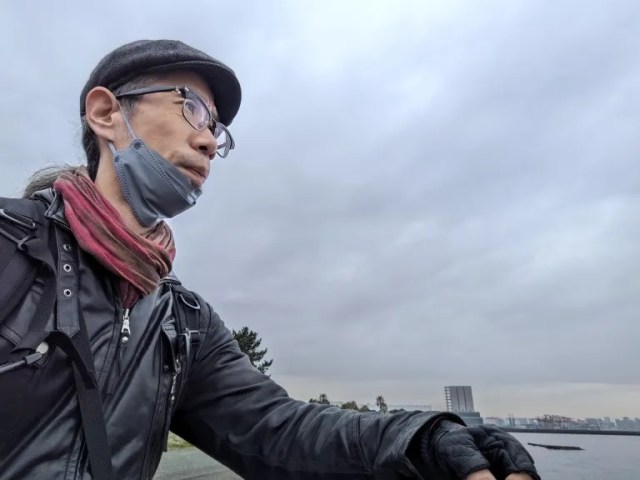
▼ Sometimes men who take their wife’s family name do the same thing, as with SoraNews24’s ace reporter Mr. Sato, whose legal family name hasn’t been Sato for several years now.
Ironically, though it wasn’t on the list of reasons why for people who support a separate-family names option, “an increasing number of situations in which someone can continue to use their pre-marriage family name” may eventually be the logic behind the decision to repeal the same-last-name rule, should the Japanese government decide to go that way, since it shows that people can potentially continue using their own family name without it causing communication chaos and confusion.
Source: NHK News Web via Hachima Kiko
Top image: Pakutaso
Insert images: Pakutaso, SoraNews24
● Want to hear about SoraNews24’s latest articles as soon as they’re published? Follow us on Facebook and Twitter!
 Should people in Japan be allowed to keep their surnames after getting married, survey asks
 Most of Japan’s new adults hope to fall in love and get married, according to recent survey
 Majority of Japanese women in survey regret marrying their husband, but that’s only half the story
 Japanese women sound off on their minimum height requirements for a husband【Survey】
 Over half of Japanese people in survey only dated three or fewer people before getting married
 Japanese trains in Sapporo might be better than those in Tokyo, thanks to one special feature
 Lawson convenience store at popular tourist site is one of the most unusual in Japan
 From cameos to creepy-crawlies: 15 little-known facts about Studio Ghibli movies
 Downtown Tokyo’s meaty monster Kaibutsu ramen will challenge your stomach, thrill your taste buds
 Hayao Miyazaki reveals the kind of otaku he hates the most
 “25 Potential Culture Shocks from around the World” infographic offers tidbits of travel wisdom
 Ghibli’s Miyazaki hints at possible Nausicaa sequel
 Studio Ghibli retailer now sells Japanese anime curry with all the special utensils
 This beautiful Nara inn was once home to a Living National Treasure
 The Hayao Miyazaki anime we never got – New art book reveals Ghibli legend’s unrealized concepts
 Japan reportedly adding Japanese language skill requirement to most common foreigner work visa
 Mt. Fuji decorated with a 500,000-flower pink carpet is Japan’s ultimate spring view
 Pokémon and Ikea Japan cross over into each other’s worlds with collaboration events
 Starbucks Japan closing only Shinkansen platform branch for popularity-triggered renovations
 You can assemble a well-balanced team of Pokémon, them eat them, thanks to Japanese cake chain
 30 Pikachus want to share a Tokyo hotel room with you that has separate Grass, Water, Fire spaces
 Man bites woman at cherry blossom park in Japan, dies shortly after
 7-Eleven Japan’s new baked-in-store sweet treat is only available in three parts of the country
 Peanuts and Coke becomes a viral hit in Japan, but is it a trend worth joining?
 Japan now has a special desk for people who work at home with a pet cat[Photos]
 Famous Tokyo cherry blossom spot installs view-blocking screens to fight overcrowding[Video]
 Uniqlo announces new T-shirts for One Piece, Naruto and more for manga publisher’s 100th birthday
 Train station platform ramen store closes its doors on half a century of history in Tokyo
 Starbucks Japan releases new My Fruit³ Frappuccino at only 34 stores around the country
 Krispy Kreme releases Super Mario doughnuts in Japan for a limited time
 Japanese onsen egg maker from 100-yen store Daiso needs to be on your shopping list
 Survey asks foreign tourists what bothered them in Japan, more than half gave same answer
 Japan’s human washing machines will go on sale to general public, demos to be held in Tokyo
 Starbucks Japan releases new drinkware and goods for Valentine’s Day
 We deeply regret going into this tunnel on our walk in the mountains of Japan
 Starbucks Japan releases new sakura goods and drinkware for cherry blossom season 2026
 Studio Ghibli releases Kodama forest spirits from Princess Mononoke to light up your home
 Japan’s newest Shinkansen has no seats…or passengers [Video]
 Major Japanese hotel chain says reservations via overseas booking sites may not be valid
 Put sesame oil in your coffee? Japanese maker says it’s the best way to start your day【Taste test】
 No more using real katana for tourism activities, Japan’s National Police Agency says
 Rich and bald or handsome and poor? Survey asks Japanese women who’d they’d rather marry
 What’s the minimum amount of money Japanese women want their husbands to earn? Survey investigates
 Japanese guys way more enthusiastic about moving in with girlfriends than vice-versa, survey says
 How many married people with children in Japan admit to cheating on their spouse? Survey says…
 Survey shows more Japanese married men, single Japanese women cheating on their romantic partners
 Rate of young Japanese people who want to get married someday drops to lowest ever in survey
 Is the ideal spouse someone who’s your best friend or your war buddy? Japanese singles sound off
 Do Japanese superfans really want to marry their favorite idol?【Survey】
 How many people in Japan have actually worn a couple’s outfit?
 Japanese men and woman both have the same top requirement for a spouse in konkatsu poll
 Japan Supreme Court rules it’s constitutional to require married men and women have same surname
 Survey asks Japanese women if they could marry a man who’s rich but ugly
 Married couples in Japan must have the same surname, so does Mr. Sato regret taking his wife’s?
 Japan to allow joint custody of children after divorce, survey investigates public’s attitudes
 Overweight, bald, or cheap? Japanese women pick the man they’d least want to marry in survey
 Survey reveals chance of marrying your first love in Japan, other romantic probabilities