
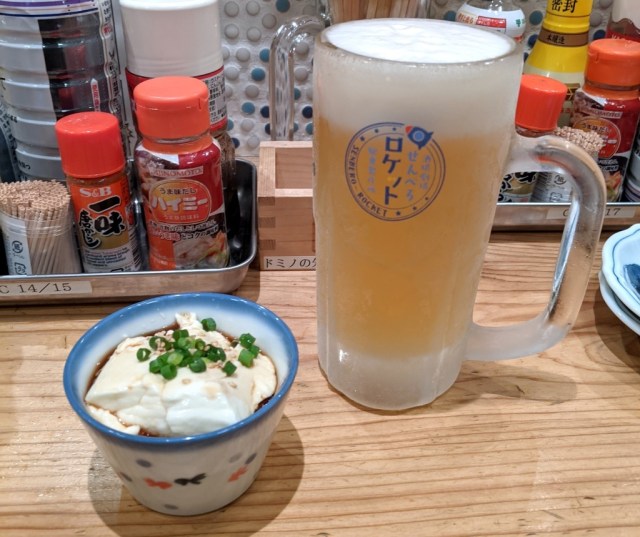
Otoshi is a unique part of Japan’s restaurant culture that can feel like a scam if you’re not ready for it.
With record-breaking numbers of foreign tourists visiting Japan, that means there are also record-breaking numbers of foreign tourists eating in Japanese restaurants. And while there’s a lot to love about dining out in Japan, from delicious food to sterling service, there’s also a potentially awkward, annoying, and confusing aspect to it.
When eating at non-fast-food restaurants in Japan, right after you’re seated the waitstaff will usually bring you a moist towel. Some restaurants might bring you a cup of tea as well, and another possibility is that your server will bring you an appetizer in a small dish. However, while unasked-for towels and tea are complementary services, the small dish of food is not, and you will be required to pay for it.
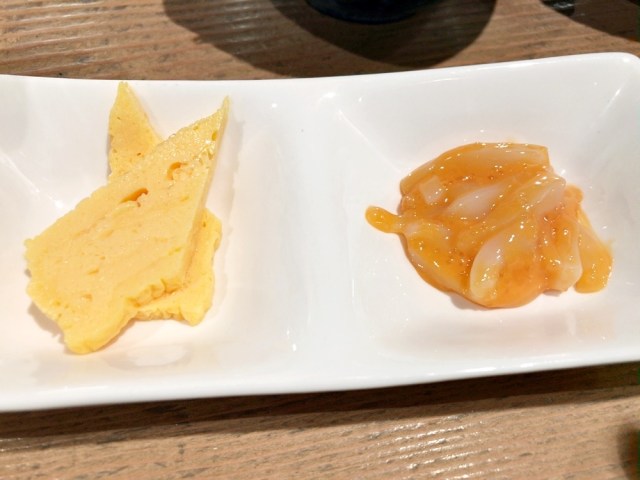
This unsolicited appetizer is called an otoshi, which comes from the word tosu meaning to pass or be led though, as in a customer being led through the restaurant’s entrance to their seat. In the vast majority of restaurants that have otoshi, the type of food you’re brought is entirely up to the restaurant, so you won’t be asked what sort of otoshi you’d like. A plate will simply be brought to the table for every member of your party, generally with the waitstaff matter-of-factly saying Otoshi desu or Otoshi de gozaimasu (“Here is your otoshi”).
The otoshi is never anything particularly fancy, often some pickled or simmered vegetables, a bit of tofu, or a morsel of meat or fish (the otoshi in the photo above is a few omelet slices and some squid). It’s also never very big. Most otoshi can be consumed entirely in two or three big bites. And no, otoshi aren’t especially tasty either. While they sometimes use regional or seasonal ingredients, otoshi are routinely the most forgettable part of the meal, in terms of flavor, and there aren’t any restaurants that have customers lining up because of their high-quality otoshi.
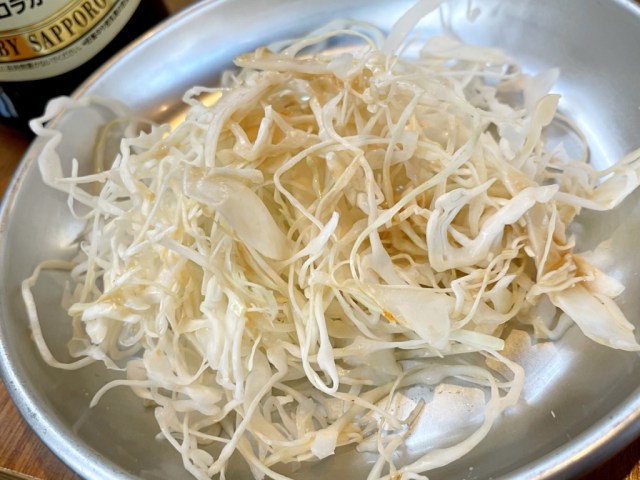
▼ Shredded cabbage with a bit of dressing, served as an otoshi
So why do otoshi exist? As a substitute for service charges. Japan, famously, has no tipping in its restaurant culture, and while bars (as in places that serve drinks only) often have a table charge, restaurants generally don’t. The otoshi is a sort of compromise: the restaurant doesn’t want to charge customers simply for the privilege of dining within its walls, but the otoshi’s small portion size and simple ingredients mean the cost to make them is negligible, and so the price customers pay for otoshi is almost entirely profit.
Still, for many foreign travelers in Japan, being bought something you didn’t order, aren’t allowed to send back, and yet have to pay for can be shocking, and perhaps the most confusing thing of all is that rarely, if ever, do restaurants mention how much they charge for their otoshi until they bring you your bill. There’s no sign at the door or sticker on the menu letting you know how much extra you’re going to have to pay for your meal.
You might expect that that sort of vagueness would make Japanese people angry too, but the otoshi system causes very few arguments between Japanese customers and restaurants. It’s rare for otoshi to be less than 300 yen (US$2.10), most are 600 yen or less, and even at more expensive places they’re unlikely to hit quadruple-digit prices. So when Japanese people are going out to eat at izakaya (Japanese-style pubs), “dining bars” (i.e. fancy izakaya), or high-end traditional Japanese restaurants, the types of restaurants where otoshi are most commonly encountered, they’re generally braced to pay about 500 yen or so more than the cost of the food and drinks they ordered. What’s more, the clientele at those kinds of restaurants tends to be either groups of friends or coworkers, for whom splitting the bill is the norm in Japan, or couples on dates, and so generally no individual person themselves is paying all that much extra. Meanwhile, at fast food or casual restaurants, including teishokuya (set meal restaurants), ramen joints, and revolving sushi restaurants, the sorts of places where you might find a family dining together and a parent paying for several other people’s meals, there’s no otoshi.
Still, it’s understandable if you, as a traveler in Japan, feel uneasy about otoshi. Maybe you’re still new to the Japanese restaurant scene and not 100-percent confident you can tell an izakaya from a teishokuya, or maybe you’re on a tight budget and not in a position to take a loosey-goosey attitude about how much your dinner is going to cost. And yes, while they’re by no means common, there are unscrupulous restaurants in Japan that charge exorbitant prices for woefully small and low-quality otoshi, but picking up on their shady aura can be tricky if you’re only recently arrived in the country. So with that in mind, here are two Japanese phrases to keep in your linguistic back pocket in case you want to confirm the otoshi situation before you sit down and get brought a dish:
● Otoshi wa arimasu ka? / お通しはありますか?
“Is there an otoshi?”
● Otoshidai wa ikura desu ka? / お通し代はいくらですか?
“How much is the otoshi charge?”
That way you can be sure that you and the restaurant are on the same page regarding Japan’s appetizers that don’t appear on the menu.
Photos ©SoraNews24
● Want to hear about SoraNews24’s latest articles as soon as they’re published? Follow us on Facebook and Twitter!
Follow Casey on Twitter, where he could really go for some chilled edamame right now.
 Otōshi: Japan’s Curious Compulsory Appetizers
 10 tips to remember for your first trip to izakaya, Japan’s awesome traditional pubs【Video】
 Five reasons there’s no tipping at restaurants in Japan
 Tough times for Japanese pubs as izakaya bankruptcies come at highest rate in more than a decade
 All-you-can-drink whisky cocktails for under a buck at seafood restaurant with branches in Tokyo
 Krispy Kreme releases Super Mario doughnuts in Japan for a limited time
 Starbucks Japan releases new My Fruit³ Frappuccino at only 34 stores around the country
 7-Eleven Japan releases a crazy new viral sandwich: Chocolate Sprinkles and Whipped Cream
 Ramen restaurant in top Tokyo tourist neighborhood skips price gouging, but how does it taste?
 Japan’s ministry of economy reminds us to “use sound judgment” before buying toilet paper
 New smartphone game turns car models into anime girls with model-worthy looks
 Ghibli Museum building becomes a cuddly cushion
 “Online streamer” tops dream job poll for young Japanese kids, older kids not so interested
 Pronto Pokémon cafe collab brings exclusive merch and a clever way to take photos of your food
 We followed Tokyo’s mystery walking map and ended up creating our own bar-hopping adventure
 Japanese onsen egg maker from 100-yen store Daiso needs to be on your shopping list
 Tokyo government organizes food truck event to clear out delinquent/homeless teen gathering area
 Cherry blossoms begin blooming in Japan with record-early starts for sakura season
 Nine amazing off-the-beaten-path cherry blossom spots in Japan for yaezakura and shidarezakura
 Stunning central Japan wisteria festival is like a purple fantasy straight out of a Ghibli movie
 Create a tiny Ghibli anime world on your bookshelf with new miniature papercraft art kits
 Studio Ghibli releases the My Neighbour Totoro tea caddy, with a magical self-closing lid
 Japan now has a “for foreign tourists only” Mt. Fuji sightseeing train[Video]
 When will the cherry blossoms reach full bloom in Japan this year?[Forecast]
 Starbucks Japan unveils new sakura cherry blossom collection for hanami season 2026
 Train station platform ramen store closes its doors on half a century of history in Tokyo
 Studio Ghibli releases Catbus pullback keychain that runs like the anime character
 Nine great places to see spring flowers in Japan, as chosen by travelers (with almost no sakura)
 Starbucks Japan releases first-ever Hinamatsuri Girls’ Day Frappuccino
 Studio Ghibli adds new Mother’s Day gift sets to its anime collection in Japan
 Virtual idol Hatsune Miku redesigned with look that adds new elements and brings back old ones
 Survey asks foreign tourists what bothered them in Japan, more than half gave same answer
 Japan’s human washing machines will go on sale to general public, demos to be held in Tokyo
 Starbucks Japan releases new drinkware and goods for Valentine’s Day
 We deeply regret going into this tunnel on our walk in the mountains of Japan
 Studio Ghibli releases Kodama forest spirits from Princess Mononoke to light up your home
 Starbucks Japan releases new sakura goods and drinkware for cherry blossom season 2026
 Japan’s newest Shinkansen has no seats…or passengers [Video]
 Major Japanese hotel chain says reservations via overseas booking sites may not be valid
 Put sesame oil in your coffee? Japanese maker says it’s the best way to start your day【Taste test】
 No more using real katana for tourism activities, Japan’s National Police Agency says
 Awesome Tokyo restaurant caps diners’ dinner price, and after that anything you order is free!
 Restaurant payment app starts its second attempt to make tipping a thing in Japan
 Tokyo pub explicitly soft-bans customers older than 39 from entering
 How a bar in Kabukicho scammed one diner out of their money, and how it can happen to you too
 We create a Japanese izakaya pub at home with an amazing all-in-one kitchen gadget
 Japanese pubs in Tokyo, Osaka now have special seats for online drinking party customers
 Tokyo lifehack: How to get rid of the “customer pullers” who’ll pester you in the bar district
 Should you say “Itadakimasu,” Japan’s pre-meal expression of thanks, when eating by yourself?
 Akihabara pub offering monthly all-you-can-drink passes with durations up to half a year
 Golden Japanese toilet appears at “multi-millionaire” izakaya in Tokyo
 You might not be in a real Japanese restaurant when…
 At under a buck, Tokyo restaurant’s all-you-can-eat fried chicken is a ticket to poultry paradise
 This Japanese pub with one-yen bottles of sake broke our brain and made our day
 Survey responds to the most important factors when deciding which izakaya to go to
 Japanese wife creates izakaya pub at home during coronavirus outbreak
 Everything you need to know about dining at a sushi restaurant—in handy infographics!【Pics】