
Sometimes the secret to an unforgettable flavor lies in just one simple step.
Living in Japan, you’ll soon notice the seasonal availability and pricing of fruits and vegetables. At some points during the year, for example, trying to get your hands on those fresh strawberries you’ve been craving is nigh impossible. You then learn to enjoy the seasonal shifts in availability and take the opportunity of those periods to gorge on your favorite types of produce, and maybe even try processing them to enjoy in different forms, such as pickling plums to get umeboshi.
Our Japanese-language reporter Go Hatori first tried out making umeboshi in the summer of 2021, and this year he’s going to teach us how to make homemade red pickled ginger using the leftover umezu (plum vinegar) from the process, plus shiso (a Japanese variety of the perilla herb).
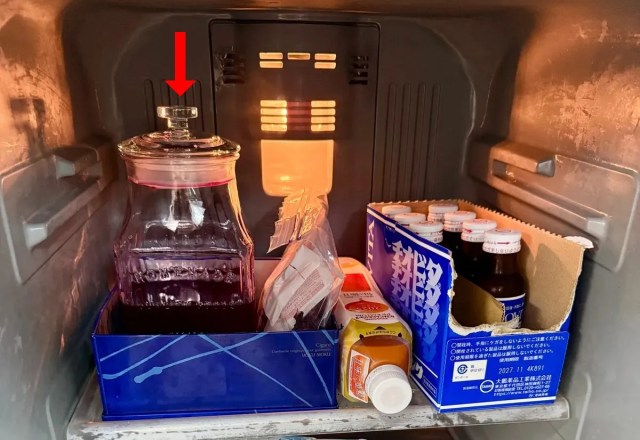
Of course, if you haven’t been making you own pickled plums, you might not have your own batch of leftover umezu. Not to worry, though, because umezu/plum vinegar can also be purchased in supermarkets, and online through Amazon Japan and Rakuten too.
Go has tried his hand at making red pickled ginger with umezu in the past, but it was just a simple version with finely-chopped regular ginger, thrown straight into the umezu. This year was going to be different, as he decided to not cut corners and try out an authentic method. After doing some online research, he narrowed down the key to its creation, and that was to use young ginger. So, he popped down to the supermarket, picked some up, and washed them well.

The next step was to thinly slice it, and sprinkle on some salt to help draw out the moisture.

Go then placed a weight on top for about an hour…
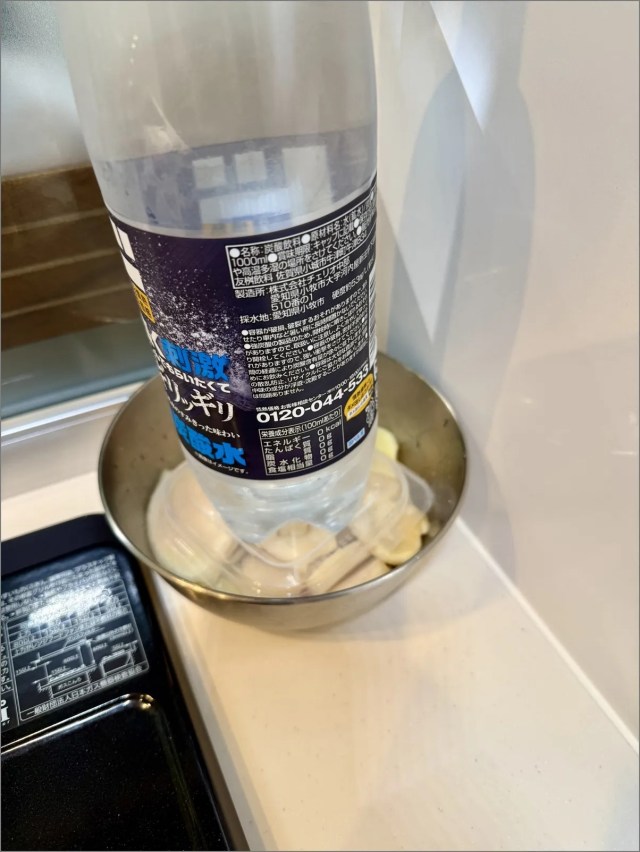
… and when he came back, he found a lot of liquid had been squeezed out. He proceeded to squeeze a little more by hand to force out even more liquid.

Once the ginger was wrung as dry as possible, Go laid out the slices inside the net he usually uses to make umeboshi (he bought his at Daiso, but they’re easy to find in home/garden centers too)…

… and dried them overnight.
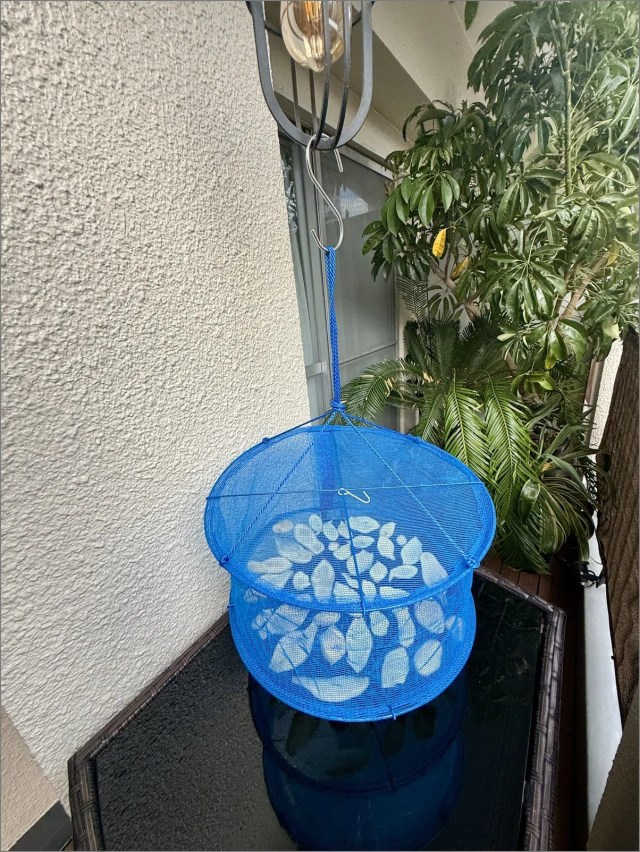
Returning the next day, he found that they had dried out nicely.

They weren’t completely bone-dry, but a great deal of the moisture had evaporated.

Go cut them into bite-sized pieces…
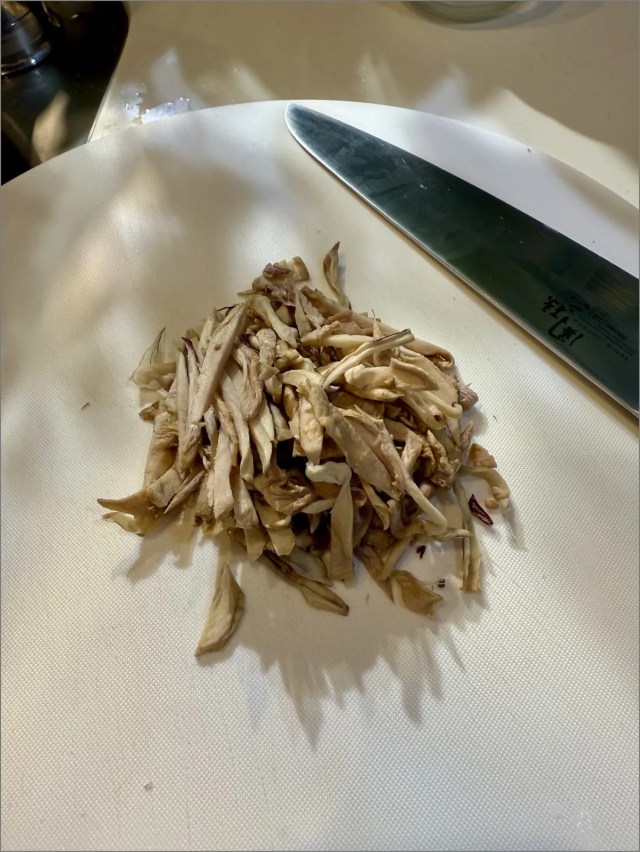
… put them into a jar, poured in umezu…
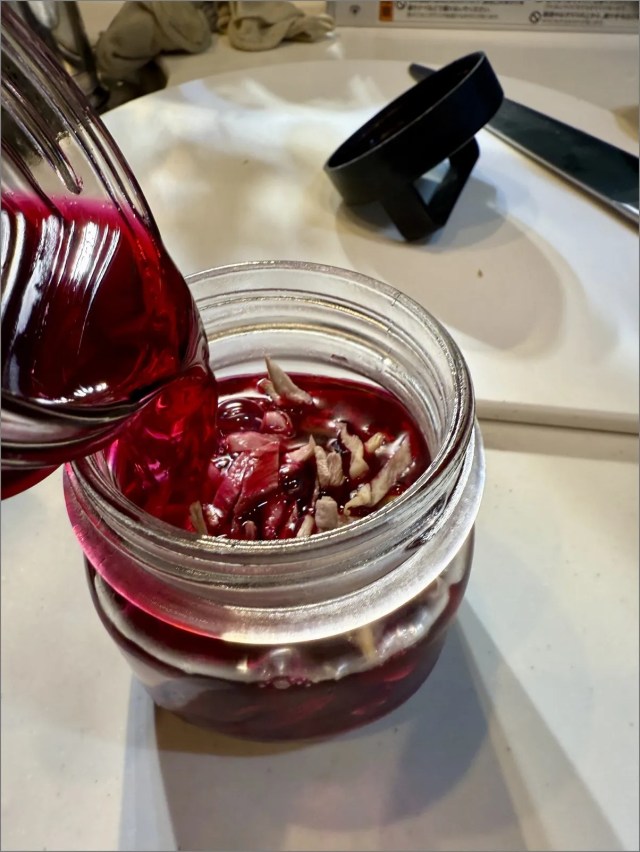
… until the slices were fully submerged…
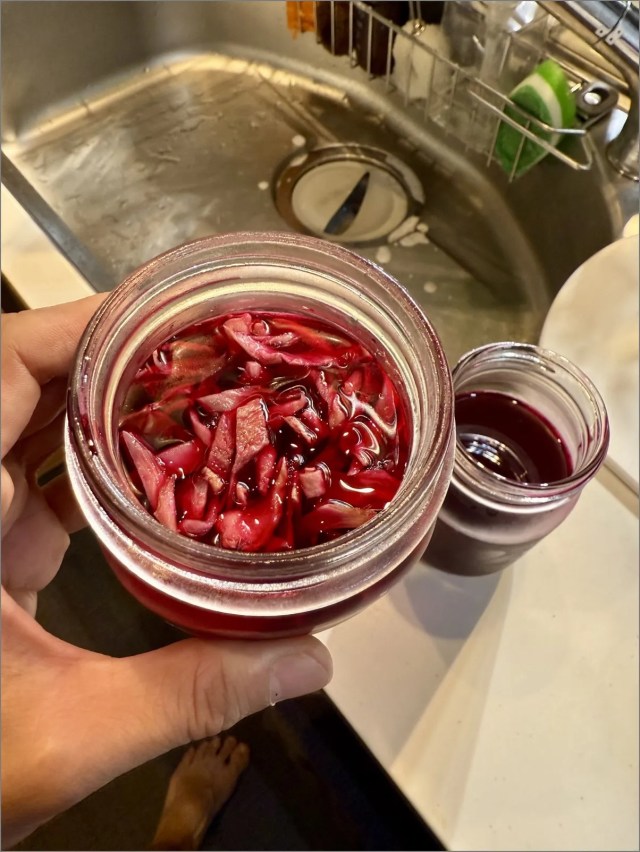
… and let them rest for a few days to soak up the flavor.
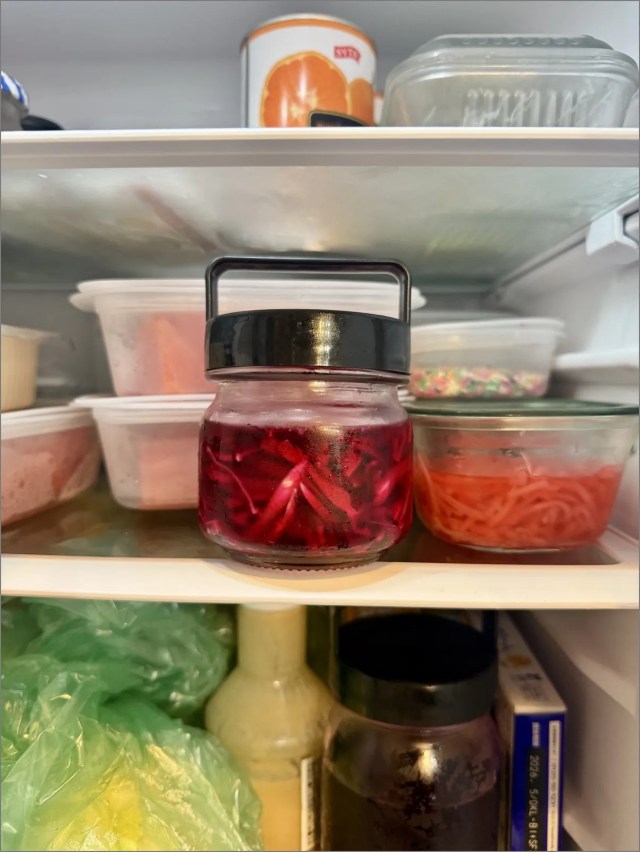
They were finally ready.
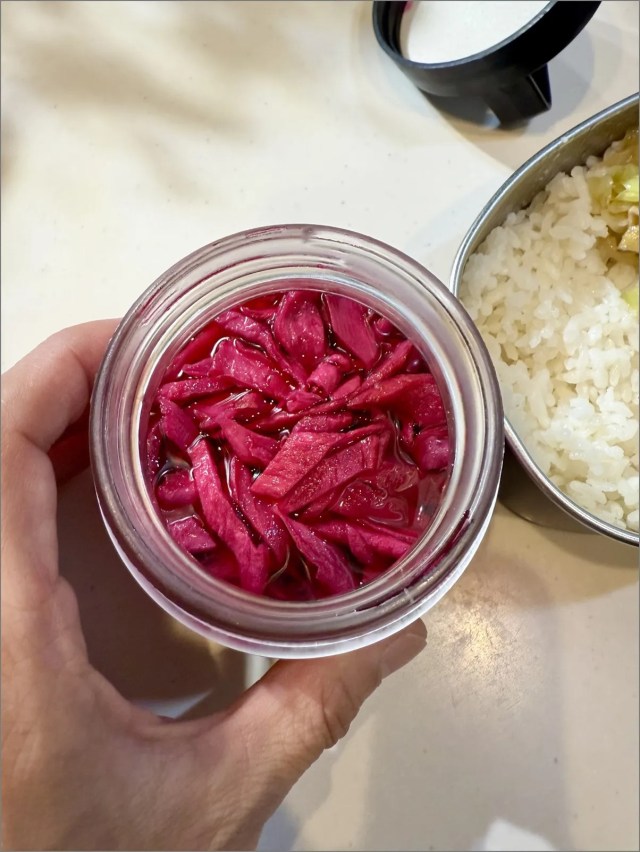
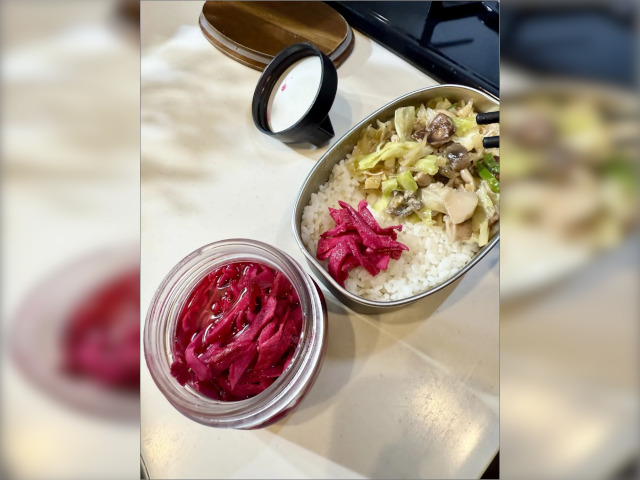
Go put a pinch of pickled ginger into the bento he was planning to eat for lunch.
▼ “Wooooaahhhh!!!”
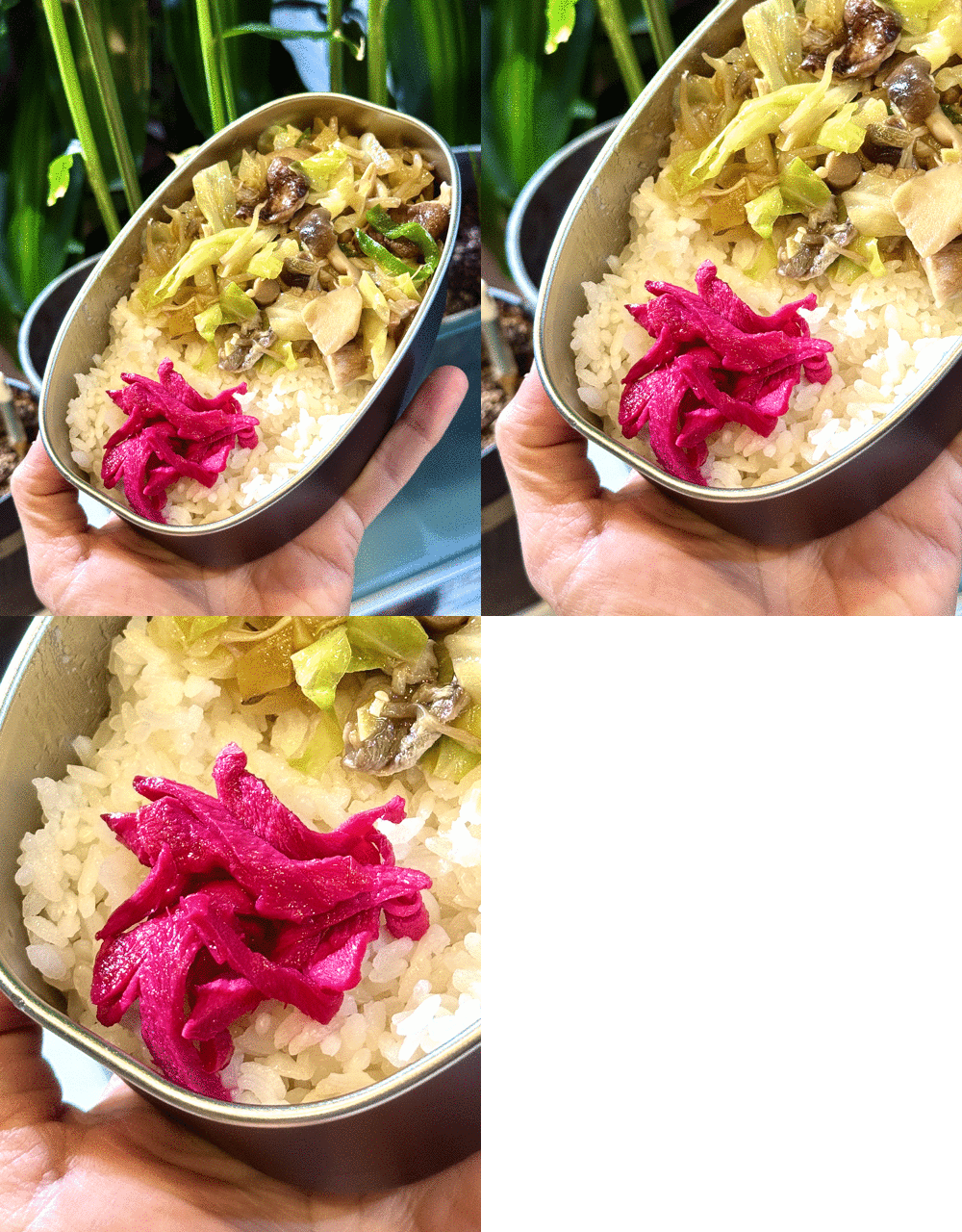
And it was shockingly delicious!
Go has always enjoyed red pickled ginger, but this was by far the most delicious that he had ever had. There were no unnecessary flavors; just the taste of natural and fresh red pickled ginger. The level of saltiness was also perfect.
Comparing his recent creation to store-bought versions, as well as the homemade red pickled ginger he had attempted before, the difference was as clear as night and day. Go believes the key lay in the moisture removal and drying step.
In fact, Go loved this red pickled ginger so much that…
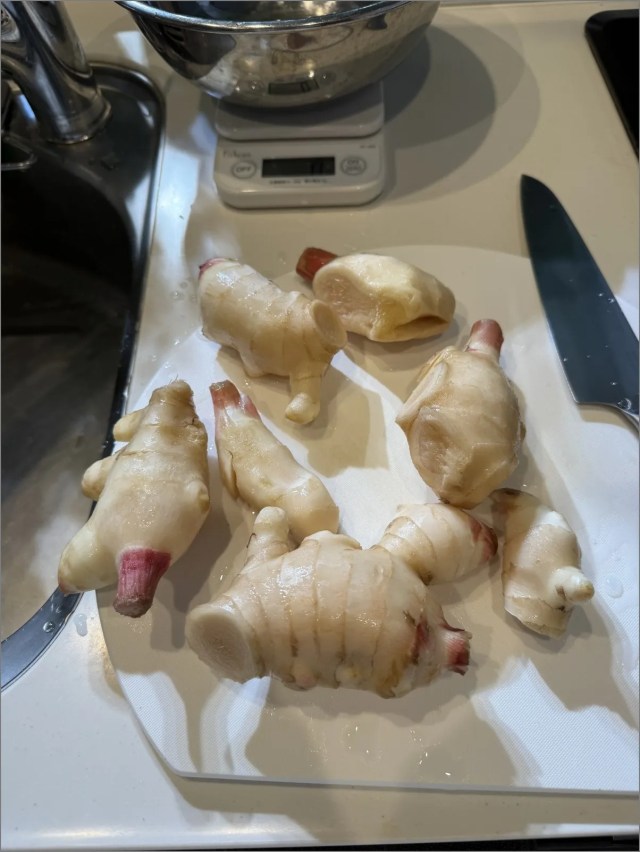
… he immediately went out and bought some more young ginger.
Go processed it the same way…
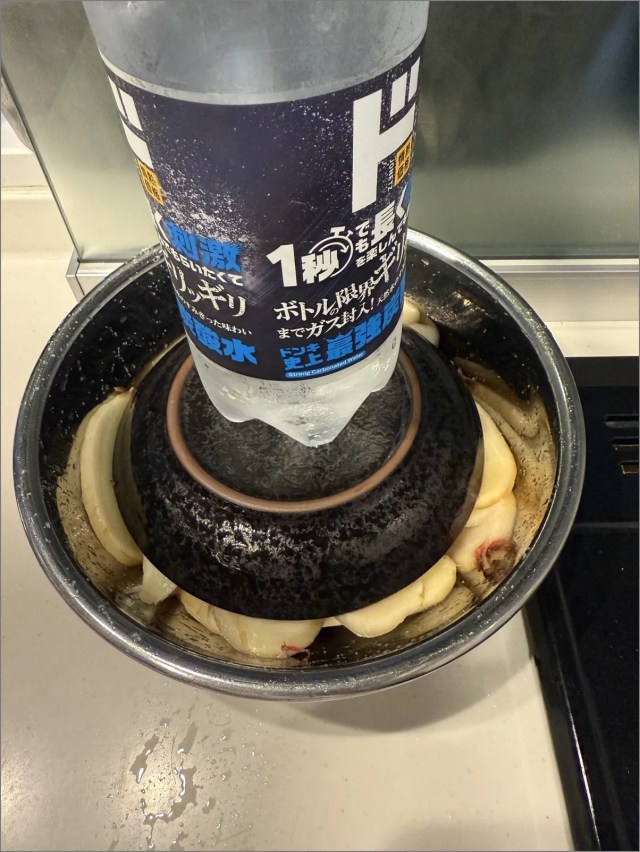
… but this time using about three times the amount of ginger.

He devoted every last remaining drop of umezu to making red pickled ginger, demonstrating just how much it had captured his heart (and stomach).
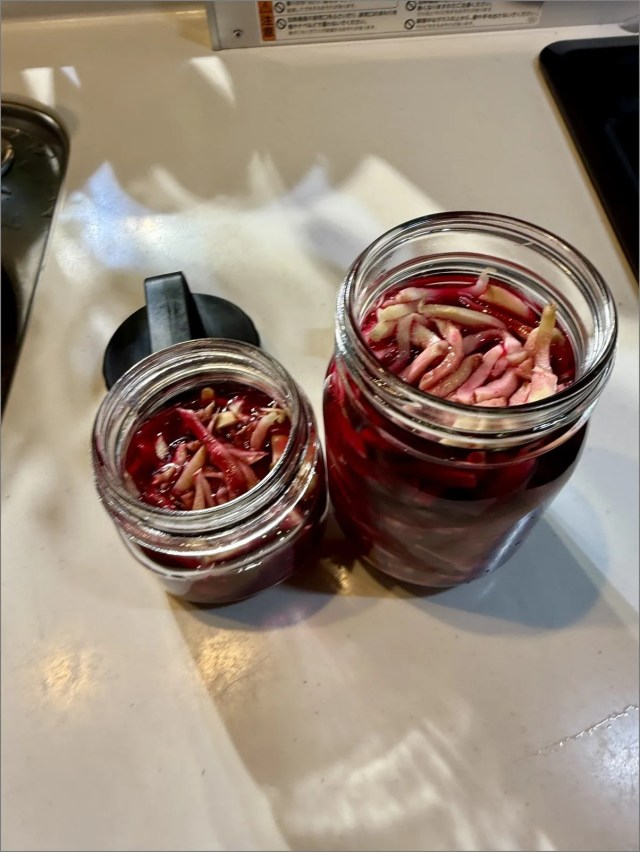
Finding out that red pickled ginger keeps for about a year was music to his ears. Certainly, with the amount that he made, it would take him about a year to get through it all anyway.

There is still young ginger in Japanese supermarkets available to purchase, so if you want to try your own hand at making some, you should go and pick some up. Of course you shouldn’t forget the umezu if you don’t have any to hand. If you don’t manage to make it in time for this season’s young ginger, there’ll be a second batch from the spring planting around October.
Photos ©SoraNews24
● Want to hear about SoraNews24’s latest articles as soon as they’re published? Follow us on Facebook and Twitter!
[ Read in Japanese ]
 How to make pickled plums like the Japanese grandparents you may or may not have【Part 1】
 Easy yet tasty instant miso soup ball recipe will help you clear out your kitchen【SoraKitchen】
 How to make no-rice “fried rice”【SoraKitchen】
 How to make epic umeboshi like a Japanese grandpa
 New pickled ginger drink takes ginger shots to a whole other level
 Starbucks Japan closing only Shinkansen platform branch for popularity-triggered renovations
 You can assemble a well-balanced team of Pokémon, them eat them, thanks to Japanese cake chain
 Sailor Moon’s Artemis is part of the Artemis II NASA mission control team[Video]
 Pokémon and Ikea Japan cross over into each other’s worlds with collaboration events
 Japan reportedly adding Japanese language skill requirement to most common foreigner work visa
 What is Teru Teru Bozu? The tragic history behind the Japanese fine weather doll
 Licca-chan dolls released in North America for first time in nearly 60 years
 Japan’s full-facemask Ninja Parka still lets you eat ice cream[Photos]
 Japan named most sleep-deprived country for fourth year in a row, according to survey
 Japanese kindness restores our faith in humanity after a highway bus accident in Tokyo
 Tokyo’s best museum for foreign travelers finally reopens after being closed for four years
 Pokémon lacquerware series expands for Year of the Horse with new handcrafted design[Video]
 Two food hacks take Japan’s convenience store fried chicken to amazing new sandwich heights
 Tokyo subway and almost all Tokyo train lines now accepting credit card tap payments
 Totoro Fund line of beautiful artwork and apparel lets you help the real-world Totoro Forest
 Fading Tokyo – Searching for signs of the Showa era as local neighborhoods evolve[Photos]
 Famous Tokyo cherry blossom spot installs view-blocking screens to fight overcrowding[Video]
 Tokyo turns its phone booths into free Wi-Fi hotspots, and here’s how to use them
 Studio Ghibli adds new My Neighbour Totoro 2026 Corn Gift to its anime store for Mother’s Day
 Japan now has a special desk for people who work at home with a pet cat[Photos]
 Uniqlo announces new T-shirts for One Piece, Naruto and more for manga publisher’s 100th birthday
 Train station platform ramen store closes its doors on half a century of history in Tokyo
 Starbucks Japan releases new My Fruit³ Frappuccino at only 34 stores around the country
 Studio Ghibli releases Catbus pullback keychain that runs like the anime character
 Krispy Kreme releases Super Mario doughnuts in Japan for a limited time
 Japanese onsen egg maker from 100-yen store Daiso needs to be on your shopping list
 Nine great places to see spring flowers in Japan, as chosen by travelers (with almost no sakura)
 Survey asks foreign tourists what bothered them in Japan, more than half gave same answer
 Japan’s human washing machines will go on sale to general public, demos to be held in Tokyo
 Starbucks Japan releases new drinkware and goods for Valentine’s Day
 We deeply regret going into this tunnel on our walk in the mountains of Japan
 Studio Ghibli releases Kodama forest spirits from Princess Mononoke to light up your home
 Starbucks Japan releases new sakura goods and drinkware for cherry blossom season 2026
 Japan’s newest Shinkansen has no seats…or passengers [Video]
 Major Japanese hotel chain says reservations via overseas booking sites may not be valid
 Put sesame oil in your coffee? Japanese maker says it’s the best way to start your day【Taste test】
 No more using real katana for tourism activities, Japan’s National Police Agency says
 How to make tuna sashimi HAM with less than a minute of work【SoraKitchen】
 Now’s your once-in-12-years chance to order this special $850 pot of pickled plums!
 Tired of your usual camping fare? Try this easy Japanese festival favorite【SoraKitchen】
 We make nori seaweed mayo toast, just like Mama Hatori used to make!【SoraKitchen】
 We try pickling a mysterious fruit gifted to us by a man in the mountains【SoraKitchen】
 Making igisu, a traditional Japanese food even most Japanese people don’t know about【SoraKitchen】
 Rice ball melon bread – A treat Japanese bakeries aren’t crazy enough to make, but we are【SoraKitchen】
 Pad Thai oatmeal?? Our reporter tries another oatmeal cooking experiment【SoraKitchen】
 3 quick tips to turn your bowl of home-made noodles into a restaurant-beautiful dish【SoraKitchen】
 We make yakisoba hot sandwiches, the next trendy camping meal【SoraKitchen】
 A whole new way to eat somen noodles: Homemade somen canapés!【SoraKitchen】
 Japanese mom cooking – A super easy recipe for daikon, Japan’s giant radishes【SoraKitchen】
 We recreate the KFC-Kenya-exclusive Nyama Nyama Burger in Japan【SoraKitchen】
 How to make a Big Mac in Tokyo at a fraction of the price with minimal effort【SoraKitchen】
 We make a Russian Kentucky Fried Chicken sushi ginger sandwich
 We try cooking yakisoba with real Japanese buckwheat soba【SoraKitchen】