

It’s time to go out and see the ume.
Pretty much as soon as the new year starts, people in Japan start looking ahead to sakura season, and with good reason, as the cherry blossoms are Japan’s most famous flowers. They’re not the country’s only beautiful flora, though, and if you want to head out and see some breathtaking blossoms without waiting for winter to wrap up, we’re getting into the best time of year to see ume, or plum blossoms.
Plum blossoms tend to start blooming in late January or early February, depending on the exact variety, with colors ranging from white to soft pink to a reddish purple. And while you won’t find quite as many high-profile spots for plum blossom viewing as you will for their cherry counterparts, there are a number of great places to see the ume, even as day-trip excursions from downtown Tokyo.
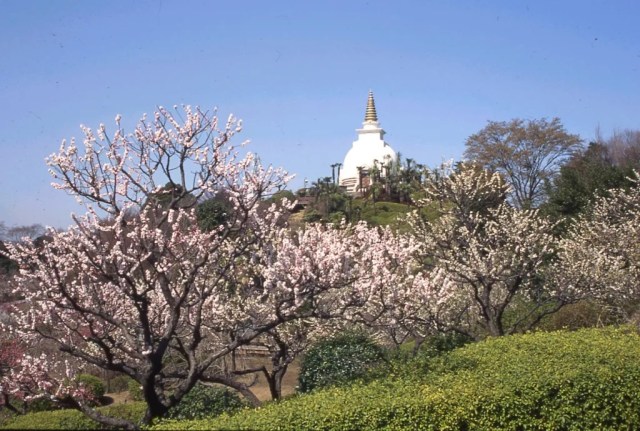
For example, there’s Hana Biyori, a flower park managed by the same company that runs the nearby Yomiuriland amusement park in Tokyo’s western Tama district. Though it’s less than 30 minutes from Shinjuku Station in the Tokyo city center, there are roughly 200 plum trees to admire on the Hana Biyori grounds, with their flowers expected to be at their most beautiful this year from February 20 to 27. That timing overlaps nicely with Hana Biyori’s nighttime Hana Akari light-up event…
…and there will also be plum scents added to the outdoor bath Hana Biyori’s on-site onsen hot spring facility, Kakeinoyu, if you want to rest and warm yourself up after around while there still might be a bit of a winter chill in the air.
▼ Hana Biyori, by the way, is also right next to Yomiuriland’s brand-new Poképark Kanto Pokémon amusement park section.
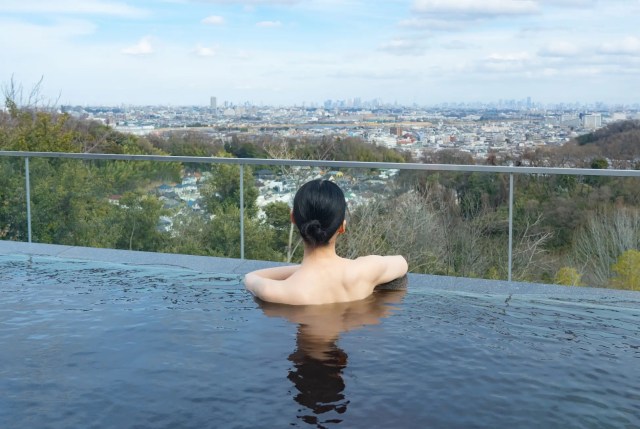
Heading in the opposite direction from downtown Tokyo will instead take you to Mukojima Hyakkaen, across the Sumida River and a bit north from the Asakusa neighborhood.
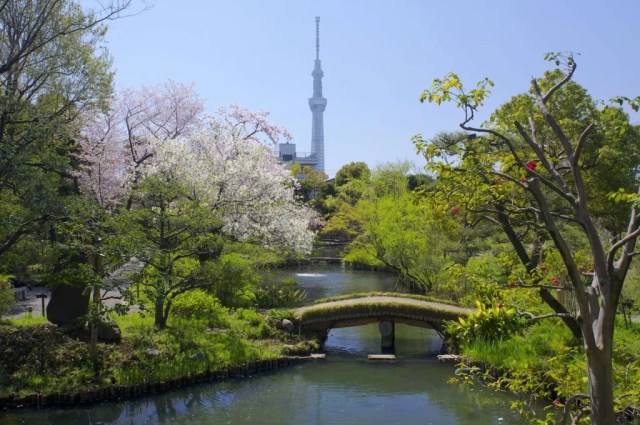
Hyakkaen, which means “Garden of a Hundred Flowers,” was created by a merchant who planted 360 plum trees on the property in the late Edo period, and became a gathering place for artists and poets.
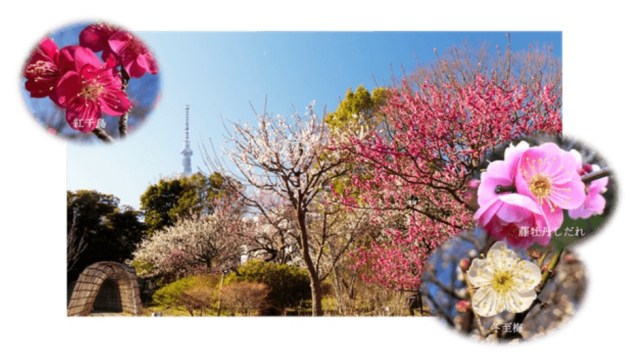
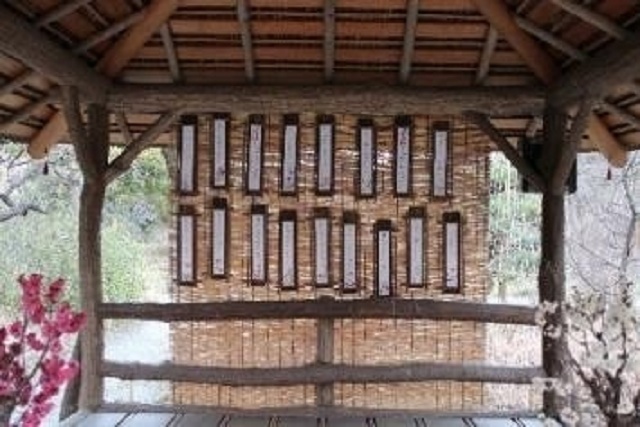
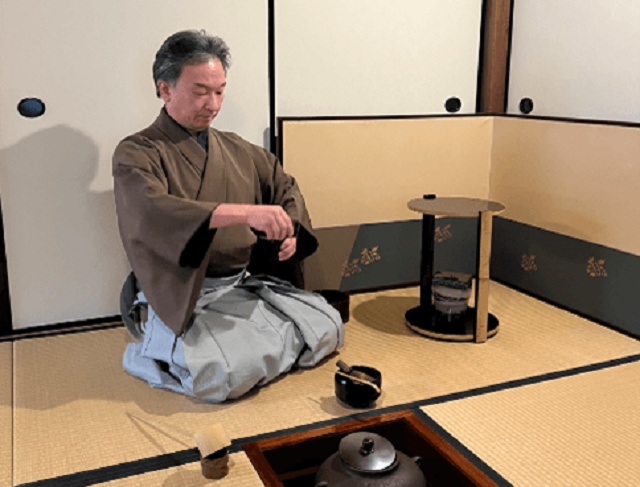
So though the Tokyo Skytree, Japan’s tallest structure and a marvel of modern engineering, can be seen poking up behind the trees, Hyakkaen retains a traditional feel, and during its Ume Fetival, which runs from February 7 to March 1 this year, visitors can compose poems to leave behind for others to read, take part in a relaxed tea ceremony (February 14 and 15), and enjoy watching traditional dance performances (February 8 and 22).
For those willing to venture outside the Tokyo city limits, though, one of the best places to see plum blossoms in east Japan is the town of Atami, on the coast of Shizuoka Prefecture.
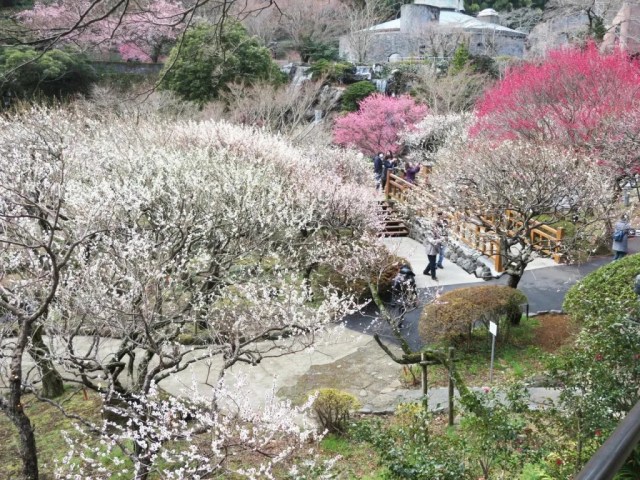
Atami Baien (Atami Plum Garden) boasts 468 plum trees, but the even more impressive number is that they represent 60 different varieties. So not only do they make for an immersive environment of flowers, because the different ume have different blossoming times, the viewing season here is especially long. As shown in the video below, Atami Baien kicked off its Ume Festival all the way back in the second week of January, but the flowers are still going strong, and the festivities, which include events such as open-air footbaths and free amazake sweet non-alcoholic sake, depending n the day, will continue until March 8.
Compared to the other two locations, Atami is a fair bit farther from Tokyo, but it’s reachable in less than 40 minutes if you take the Shinkansen, and once you factor in the delicious green tea culture attractions that Shizuoka also offers, it definitely starts to feel like a train ride worth taking.
Related: Hana Biyori, Kakeinoyu, Mukojima Htyakkaen, Atami Baien
Source: PR Times, @Press, PR Times (2)
Top image: PR Times
Insert images: PR Times, @Press, PR Times (2, 3)
● Want to hear about SoraNews24’s latest articles as soon as they’re published? Follow us on Facebook and Twitter!
[ Read in Japanese ]
 Fives places around Japan to appreciate the plum blossoms this season
 Now is the time to visit one of Tokyo’s best off-the-beaten-path plum blossom gardens
 Japan’s plum blossom season is here, and after-dark garden is one of the best spots to see them
 It’s time to get a jump on beautiful pink blossoms at this forest garden in Japan【Photos】
 Japan’s weeping plum trees are so beautiful they’ll bring tears to your eyes【Photos】
 You can assemble a well-balanced team of Pokémon, them eat them, thanks to Japanese cake chain
 Can a downtown Tokyo super sento bathhouse beat a hotel for a one-night stay?
 Japan’s full-facemask Ninja Parka still lets you eat ice cream[Photos]
 Animal Crossing plushie pouch towels and cozy socks show up at Family Mart convenience stores
 Licca-chan dolls released in North America for first time in nearly 60 years
 Pokémon and Ikea Japan cross over into each other’s worlds with collaboration events
 Starbucks Japan closing only Shinkansen platform branch for popularity-triggered renovations
 Tokyo turns its phone booths into free Wi-Fi hotspots, and here’s how to use them
 Universal Studios’ Sailor Moon theme park attraction is finally coming to America
 Haku is…Chihiro’s dead brother? Studio Ghibli fans blown away by Spirited Away theory
 Tokyo’s best museum for foreign travelers finally reopens after being closed for four years
 Pokémon lacquerware series expands for Year of the Horse with new handcrafted design[Video]
 Two food hacks take Japan’s convenience store fried chicken to amazing new sandwich heights
 Tokyo subway and almost all Tokyo train lines now accepting credit card tap payments
 Totoro Fund line of beautiful artwork and apparel lets you help the real-world Totoro Forest
 Fading Tokyo – Searching for signs of the Showa era as local neighborhoods evolve[Photos]
 Famous Tokyo cherry blossom spot installs view-blocking screens to fight overcrowding[Video]
 Studio Ghibli adds new My Neighbour Totoro 2026 Corn Gift to its anime store for Mother’s Day
 Japan now has a special desk for people who work at home with a pet cat[Photos]
 Uniqlo announces new T-shirts for One Piece, Naruto and more for manga publisher’s 100th birthday
 Train station platform ramen store closes its doors on half a century of history in Tokyo
 Starbucks Japan releases new My Fruit³ Frappuccino at only 34 stores around the country
 Studio Ghibli releases Catbus pullback keychain that runs like the anime character
 Krispy Kreme releases Super Mario doughnuts in Japan for a limited time
 Japanese onsen egg maker from 100-yen store Daiso needs to be on your shopping list
 Nine great places to see spring flowers in Japan, as chosen by travelers (with almost no sakura)
 Survey asks foreign tourists what bothered them in Japan, more than half gave same answer
 Japan’s human washing machines will go on sale to general public, demos to be held in Tokyo
 Starbucks Japan releases new drinkware and goods for Valentine’s Day
 We deeply regret going into this tunnel on our walk in the mountains of Japan
 Studio Ghibli releases Kodama forest spirits from Princess Mononoke to light up your home
 Starbucks Japan releases new sakura goods and drinkware for cherry blossom season 2026
 Japan’s newest Shinkansen has no seats…or passengers [Video]
 Major Japanese hotel chain says reservations via overseas booking sites may not be valid
 Put sesame oil in your coffee? Japanese maker says it’s the best way to start your day【Taste test】
 No more using real katana for tourism activities, Japan’s National Police Agency says
 Nine great places to see spring flowers in Japan, as chosen by travelers (with almost no sakura)
 Japan’s 10 most beautiful hydrangea spots to visit【Photos】
 Japan’s best rose gardens to visit in 2025
 Nine amazing off-the-beaten-path cherry blossom spots in Japan for yaezakura and shidarezakura
 Japan’s cherry blossom season predicted to start earlier than we’d thought, especially in Tokyo