I’ve lost count of the number of Japanese people I’ve met who were disappointed to find out I don’t have what they consider quintessential American eating habits. The last time I had a steak was a year ago. I’m perfectly happy eating rice, and I love fish, since, you know, I grew up in California, which is a coastal state (same ocean as Japan has, too).
But there’s one stereotype I do conform with, and that’s how much I love milk, despite being a full-grown adult. Many Japanese people, on the other hand, associate the drink with their childhood, since it’s been served in elementary schools for decades.
One city in Niigata Prefecture, though, has decided it has no more tolerance for drinkable lactose, and starting this month, is removing milk from its school lunches.
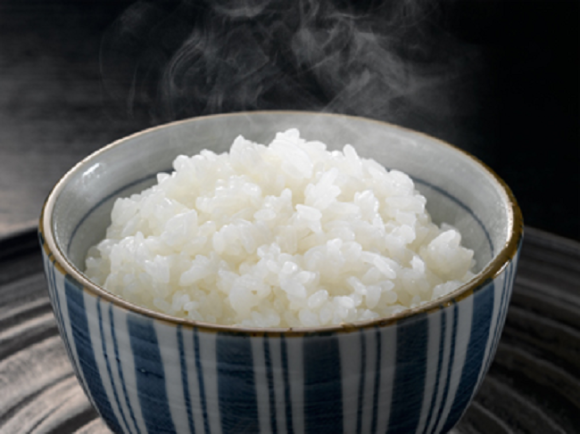
While a corner of unused agricultural land anywhere in the country is a prime candidate for being turned into a rice paddy, Niigata is especially fond of Japan’s favorite grain. Not only is the prefecture Japan’s second largest producer of rice, its flavor is highly praised, especially the strain known as Koshihikari.
▼ That’s some nice rice.
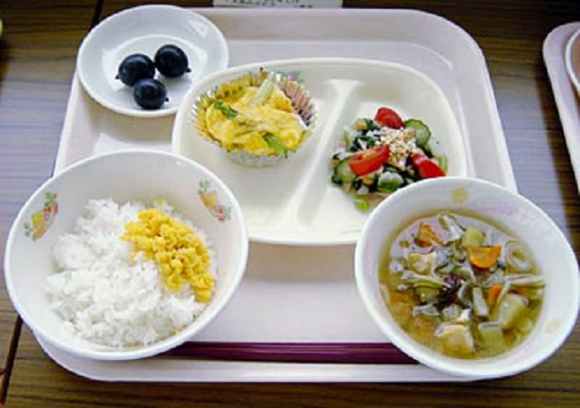
Figuring if they were surrounded by so many high-quality crops, they may as well use them, six years ago the elementary schools of Niigata’s Sanjo City reevaluated their school lunches, eventually deciding to phase out breads and noodles, and replace them with locally grown rice. Along with this switch came an increased focus on Japanese-style dishes and sides, such as fish, stewed meats and vegetables, and miso coup.
▼ A Sanjo school lunch
We’ll admit, that sounds a lot more gourmet than tater tots and chicken nuggets. But while parents seem generally pleased with what their kids have been eating at school for the past six years, some of them have been complaining about what their kids have been drinking: milk.
The issue doesn’t seem to be so much that parents think milk itself is bad for kids. It simply doesn’t go well with the flavor of Japanese food, says the most vocal group opposing milk in school lunches.
Enough members of the Sanjo Board of Education agreed that on December 1, the 30 city-run elementary schools in the town have stopped distributing packs of milk with students’ lunches. Currently, it’s only a temporary, four-month initiative, set to end with the Japanese school year next spring. Depending on the results of the trial period, however, the board may decide to make the switch permanent.
Although most of the lunch entrees are Japanese, some, such as pork cutlet and Szechuan-style pork, originate in western or Chinese cooking. Almost all are served with miso soup, though, which was singled out by some parents as an especially odd thing to pair with milk.
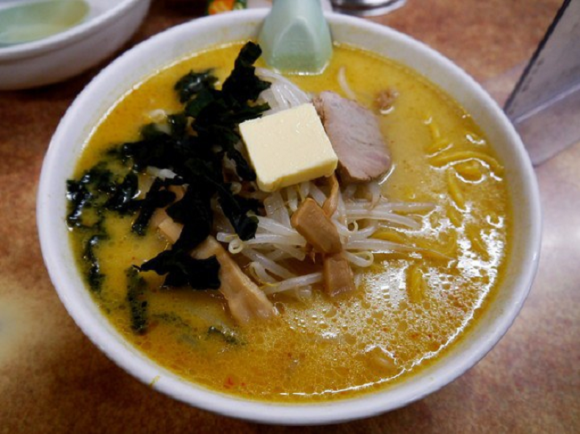
▼ We’re guessing they’ve never tried miso curry milk ramen.
Strangely enough, while some are against serving milk because they don’t think it’s an enjoyable compliment to the meal, others are worried about kids drinking too much milk with their Japanese-style food. Each pack contains 200 milliliters (6.8 ounces) of milk, and the anti-dairy camp says that’s space in the children’s stomachs that would be better occupied by bigger portions of nutritious rice or entrees.
That stance is a bit simplistic, though, because it assumes that milk doesn’t have any nutritional value. Most prominently, it’s a fantastic source of calcium, and several nutritionists are worried about Sanjo’s new school lunches contributing to deficiencies among pupils. They cite the importance of calcium in warding off conditions such as osteoporosis, and point out that it’s vital during childhood, as a lack of the nutrient can result in poor bone density, a serious problem that can be difficult to address after finishing puberty.
The Japan Dietetic Association is also backing milk advocates. In a statement, the organization emphasized that many children don’t receive sufficient amounts of calcium in the diets at home, and that school lunch milk plays a vital role in addressing this problem.
Traditional Japanese cuisine is healthy in many ways, but pretty calcium-poor, which is why my host dad used to encourage me to eat fish bones.
In response, the Board of Education is considering a number of countermeasures. The simplest ideas are to just serve more food each day, or to designate a day of the week in which the children are given meals that contain extra high quantities of protein or calcium. There’s also what would probably be the kid-pleasing proposal of having the kids make and eat dairy-based desserts once a week, but once you weigh the negatives of eating sweets against the positives of getting more calcium, nutritionally, it’s kind of a wash.
Although if our schools had taught it, you can bet our favorite subject would have been “cake.”
There’s one more positive those in favor of getting rid of milk permanently point to. Earlier this year, Japan’s consumption tax jumped from five to eight percent, meaning just about everything in the country suddenly got more expensive. Sanjo budgets 250 yen (US $2.20) for its elementary school lunches, and a pack of milk eats up one fifth of that amount. We’re not sure how the savings from cutting out milk offset against the potential extra costs from increasing the portions of rice and other foods, but still, having an extra 50 yen to work with is, taken strictly by itself, a good thing.
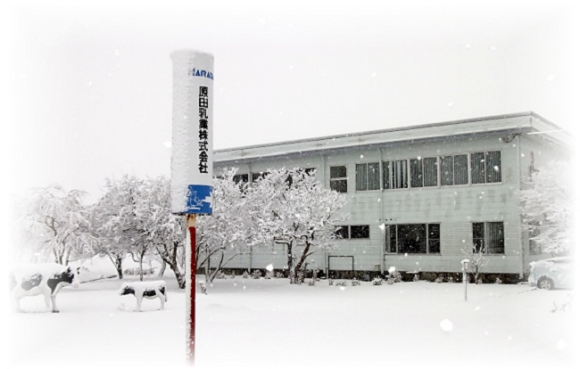
Unless, of course, you were counting on that 50 yen per student to keep your business going. Niigata’s Harada Milk was founded in 1887, and has been a major supplier to Sanjo’s elementary schools, previously providing 8,000 packs a day. Multiplied out over the course of four months of school, the company expects to lose some 22 million yen (US $191,000) of revenue as a result of the new lunch policy.
▼ It looks like Harada Milk and its employees are in for a long, cold winter.
President Haruo Harada is hoping milk makes a return to Sanjo schools once the test period is over. “Both dairy farmers and milk processors rely on the demand from school lunches to keep their doors open,” he said.
Right now, the kids themselves seem divided over how they feel about not having any milk. Some who didn’t care for it are glad to see it gone, while others have expressed hope that it comes back soon, especially since some schools have reportedly offered absolutely nothing as a beverage in exchange.
Either way, though, Sanjo’s schools are milk-free until the spring, at least. In the meantime, if Harada or any other dairy farmers are looking for new business opportunities, we could really use some butter.
Source: Naver Matome
Insert images: Niigata Kankou, Kenoh, RocketNews24, Harada Milk